Tag: Façade

  • William Walton Rediscovered Lost Works Revealed

    William Walton Rediscovered Lost Works Revealed

    Sir William Walton, beloved for his coronation marches and film scores, also wrote operas, symphonies, concertos, chamber music and choral works. As is often the case, posterity has been astonishingly reductive.

    This week on “The Lost Chord,” we’ll hear two long-out-of-print recordings of works composed more than three decades apart.

    At the time of the premiere of his Symphony No. 2, in 1957, Walton was perceived as a musical throwback. Indeed, despite the fact that it is more tightly argued, the piece has always been regarded as a poor stepsister of the Symphony No. 1, composed in 1935, a work full of grand gestures, written under the spell of Sibelius.

    What apparently escaped critics of the day was the subtlety of its craftsmanship. The finale, in particular, is a set of variations based on a twelve-note row, a technique not unlike that employed in the kind of serial composition so much in vogue at the time.

    George Szell gave the American premiere of the symphony, with the Cleveland Orchestra, in December of 1960. A few months later, they made the first recording.

    Walton was viewed as an enfant terrible, when, more than three decades earlier, he set Edith Sitwell’s poetry as an entertainment, titled “Façade.” The work was first performed publicly in 1923. The premiere was a succès de scandale, with Sitwell herself speaking her poems into a megaphone protruding from the mouth of a painted face by John Piper, Walton conducting an ensemble of six instruments.

    The displeasure of performers, audience and critics was evident, with Noel Coward ostentatiously marching out. However, the work quickly caught on, even becoming downright popular in a variety of arrangements. Within a decade, a purely orchestral version was choreographed by Frederick Ashton.

    We’re going to be listening to selections from a treasured recording, unavailable in this country for many years, featuring Dame Peggy Ashcroft and Paul Scofield as the reciters. Both were noted Shakespearean actors, who did much of their best work on stage. Ashcroft received an Academy Award for Best Supporting Actress in 1985, for her part in David Lean’s final film, “A Passage to India,” and Scofield was honored with an Academy Award for Best Actor two decades earlier, in 1966, for his performance in “A Man for All Seasons.”

    I hope you’ll join me for “Will’s Wonders Never Cease” – rarely heard recordings of the works of William Walton – on “The Lost Chord,” now in syndication on KWAX, the radio station of the University of Oregon!


    Clip and save the start times for all three of my recorded shows:

    PICTURE PERFECT, the movie music show – Friday at 8:00 PM EDT/5:00 PM PDT

    SWEETNESS AND LIGHT, the light music program – Saturday at 11:00 AM EDT/8:00 AM PDT

    THE LOST CHORD, unusual and neglected rep – Saturday at 7:00 PM EDT/4:00 PM PDT

    Stream them, wherever you are, at the link!

    https://kwax.uoregon.edu/


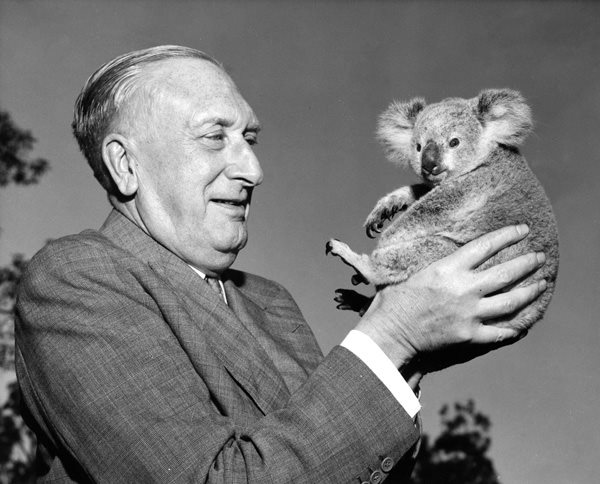
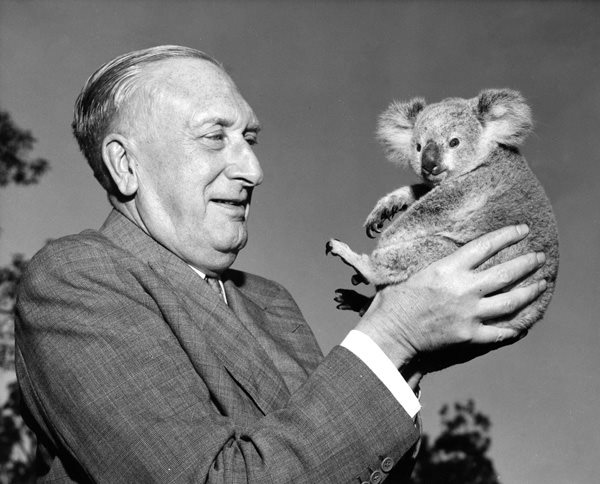
    PHOTO: Biggest click-bait image I could find of William Walton (left)

  • Walton’s Façade: Scandal to Success

    Walton’s Façade: Scandal to Success

    If Winter leaves you with a long face, imagine what it was like to be Edith Sitwell and William Walton. Both had very long faces indeed.

    It was on this day 100 years ago that Walton’s “Façade” was first performed at Sitwell’s home. An eccentric poet from an eccentric family of artistically-inclined English aristocrats, Sitwell also participated in the work’s first public performance, on June 12, 1923. She declaimed her verses through a megaphone from behind a painted screen to the accompaniment of a seven-piece jazz band.

    Cheekily, Walton set the poems to popular dance-styles of the period, with breakneck allusions to and quotations from other composers. The music is protean in its invention, encompassing paso doble and patter song, waltz, foxtrot, and mazurka. The texts are nonsense, most immediately striking for their rhythmic value – the settings are as much about the abstract SOUND of words as they are about their meaning – but once the listener acclimates, they actually do start to make a kind of sense.

    The June premiere was a succés de scandale, with much pearl-clutching and face-fanning by public and press alike. Needless to say, the work’s notoriety ensured its frequent revival.

    Worlds away from the coronation marches and Shakespeare scores for which Walton would be so well remembered, the music from “Façade” is also among his most popular. It is perhaps even more frequently performed without the texts. The composer arranged two suites for orchestra. In 1931, Frederick Ashton choreographed the piece as a ballet.

    Walton would go on receive a knighthood in 1951. Sitwell would be awarded a damehood in 1954. So it is that yesterday’s eccentricity becomes today’s respectability.

    There must be something to it, if it could make dour Paul Scofield sound like this, in my favorite recording of the work:

    Sitwell and Constant Lambert in the first recording in 1929. Is this the English “Pierrot Lunaire?”

    Selections from Sitwell’s later recording, from 1953, with Peter Pears:

    Having attained respectability, the orchestral suites:

    An interview with Dame Edith Sitwell:

    Walton remembers the Sitwells and the Roaring ‘20s:

    Dame Edith, English eccentric:

    http://thedabbler.co.uk/2011/04/edith-sitwell-and-the-english-eccentrics/

  • Rediscovering William Walton’s Genius

    Rediscovering William Walton’s Genius

    Sir William Walton is beloved for his coronation marches and film scores. But posterity has been woefully reductive. He also wrote operas, symphonies, concertos, chamber music, and choral works.

    This Sunday night on “The Lost Chord,” we’ll hear two long-out-of-print recordings of works composed more than three decades apart.

    At the time of the premiere of his Symphony No. 2, in 1957, Walton was perceived as something of a musical throwback. Indeed, despite the fact that it is more tightly argued, the piece has always been regarded as a poor stepsister of the Symphony No. 1, composed in 1935, a work full of grand gestures, written under the spell of Sibelius.

    What apparently escaped critics of the day was the subtlety of its craftsmanship. The finale, in particular, is a set of variations based on a twelve-note row, a technique not unlike that employed in the kind of serial composition so much in vogue at the time.

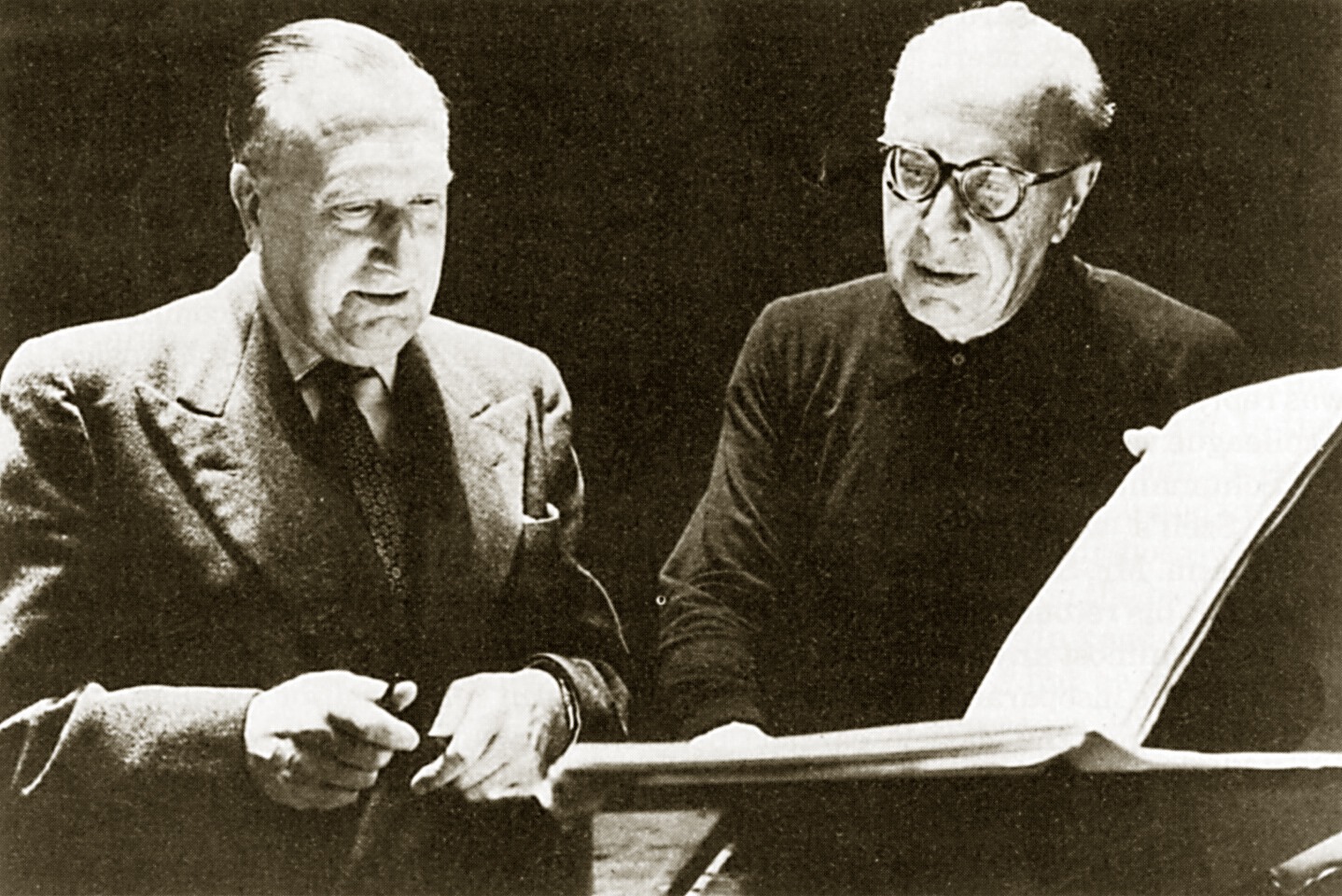
    George Szell (pictured, with the composer) gave the American premiere of the symphony, with the Cleveland Orchestra, in December of 1960. A few months later, they made the first recording.

    More than three decades earlier, Walton was viewed as an enfant terrible, when he set Edith Sitwell’s poetry as an entertainment, titled “Façade.” The work was first performed publicly in 1923. The premiere was a succès de scandale, with Sitwell herself speaking her poems into a megaphone protruding from the mouth of a painted face by John Piper, Walton conducting an ensemble of six instruments.

    The displeasure of performers, audience, and critics was evident, with Noel Coward ostentatiously marching out. However, the work quickly caught on, even becoming downright popular in a variety of arrangements. Within a decade, a purely orchestral version was choreographed by Frederick Ashton.

    We’ll hear selections from a treasured recording, unavailable in this country for many years, featuring Dame Peggy Ashcroft and Paul Scofield as the reciters. Both were noted Shakespearean actors, who did much of their best work on stage. Ashcroft received an Academy Award for Best Supporting Actress in 1985, for her part in David Lean’s final film, “A Passage to India,” and Scofield was honored with an Academy Award for Best Actor two decades earlier, in 1966, for his performance in “A Man for All Seasons.”

    I hope you’ll join me for “Will’s Wonders Never Cease” – rarely heard recordings of the works of William Walton – this Sunday night at 10:00 EDT, on WWFM – The Classical Network and wwfm.org.

  • Rediscovering William Walton’s Lost Masterpieces

    Rediscovering William Walton’s Lost Masterpieces

    Sir William Walton, beloved for his coronation marches and film scores, also wrote operas, symphonies, concertos, chamber music and choral works. As is often the case, posterity has been astonishingly reductive.

    This Sunday night on “The Lost Chord,” we’ll hear two long-out-of-print recordings of works composed more than three decades apart.

    At the time of the premiere of his Symphony No. 2, in 1957, Walton was perceived as a musical throwback. Indeed, despite the fact that it is more tightly argued, the piece has always been regarded as a poor stepsister of the Symphony No. 1, composed in 1935, a work full of grand gestures, written under the spell of Sibelius.

    What apparently escaped critics of the day was the subtlety of its craftsmanship. The finale, in particular, is a set of variations based on a twelve-note row, a technique not unlike that employed in the kind of serial composition so much in vogue at the time.

    George Szell gave the American premiere of the symphony, with the Cleveland Orchestra, in December of 1960. A few months later, they made the first recording.

    Walton was viewed as an enfant terrible, when, more than three decades earlier, he set Edith Sitwell’s poetry as an entertainment, titled “Façade.” The work was first performed publicly in 1923. The premiere was a succès de scandale, with Sitwell herself speaking her poems into a megaphone protruding from the mouth of a painted face by John Piper, Walton conducting an ensemble of six instruments.

    The displeasure of performers, audience and critics was evident, with Noel Coward ostentatiously marching out. However, the work quickly caught on, even becoming downright popular in a variety of arrangements. Within a decade, a purely orchestral version was choreographed by Frederick Ashton.

    We’re going to be listening to selections from a treasured recording, unavailable in this country for many years, featuring Dame Peggy Ashcroft and Paul Scofield as the reciters. Both were noted Shakespearean actors, who did much of their best work on stage. Ashcroft received an Academy Award for Best Supporting Actress in 1985, for her part in David Lean’s final film, “A Passage to India,” and Scofield was honored with an Academy Award for Best Actor two decades earlier, in 1966, for his performance in “A Man for All Seasons.”

    I hope you’ll join me for “Will’s Wonders Never Cease” – rarely heard recordings of the works of William Walton – this Sunday night at 10 ET, with a repeat Wednesday evening at 6; or that you’ll listen to it later as a webcast at wwfm.org.

    PHOTO: Biggest click-bait image I could find of William Walton (left)
Tag Cloud

Aaron Copland (92) Beethoven (94) Composer (114) Conductor (84) Film Music (109) Film Score (143) Film Scores (255) Halloween (94) John Williams (184) KWAX (228) Leonard Bernstein (98) Marlboro Music Festival (125) Movie Music (124) Opera (196) Philadelphia Orchestra (85) Picture Perfect (174) Princeton Symphony Orchestra (106) Radio (86) Ross Amico (244) Roy's Tie-Dye Sci-Fi Corner (290) The Classical Network (101) The Lost Chord (268) Vaughan Williams (98) WPRB (396) WWFM (881)

DON’T MISS A BEAT

Receive a weekly digest every Sunday at noon by signing up here


RECENT POSTS