Tag: Aaron Copland

  • No Picnic:  “Requiescat in pace” on “The Lost Chord”

    No Picnic: “Requiescat in pace” on “The Lost Chord”

    To a great many, Memorial Day is the unofficial start of summer, a time for picnics and trips to the shore, for Hollywood to flood the multiplexes with soulless blockbusters, a signifier of the end of school, and the beginning of three long, lazy months of way too much daylight.

    But it didn’t always bear those associations. The precursor of Memorial Day was Decoration Day, first widely observed in 1868, to honor and remember those who died in the Civil War. It was a time for decorating graves, making solemn speeches, and marching in parades. These customs metamorphosed to the point where, after World War I, Memorial Day was seen as an occasion to honor those who died in ALL American wars.

    Regardless of how one may perceive armed conflict, of whether any given war may be called just or unjust, it is not war itself or conflict in general that is being celebrated. Rather, it is the sacrifice of those who died in defense of a larger cause, and ostensibly that cause has been for the common good.

    One would think, were one an idealist, that by this stage of our collective development, when any disruption in the global fabric obviously effects all of us, that wars would be considered obsolete. But sadly, human nature being what it is, there will probably always be reasons to remember.

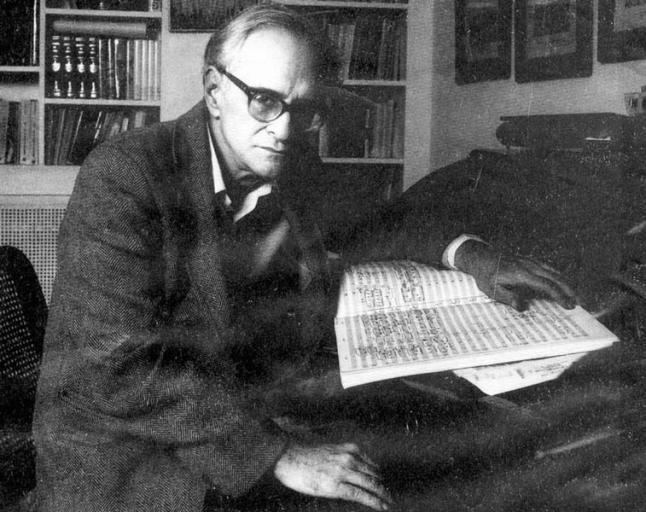
    This week on “The Lost Chord,” we’ll salute those who made the ultimate sacrifice, by listening to three works commemorating the dead of World War II, including “For the Fallen,” a berceuse for orchestra by Bernard Herrmann; Aaron Copland’s Violin Sonata, dedicated to Lt. Larry H. Dunham, who was killed in the Pacific in 1943; and the peace cantata “A Time for Remembrance,” by John Duffy.

    Duffy himself was a World War II veteran, who lied about his age when enlisting. He became part of the Amphibious Scouts and Raiders, forerunners to the Navy SEALs, before deploying on the USS Hopping, a destroyer escort in the Pacific. His duties included detonating Japanese mines by shooting them from ship deck. When his ship took fire from shore batteries at Okinawa, the sailor standing next to him was killed. Duffy had to stand guard over the dead man’s body until burial at sea in the morning. That night watch determined the course of his life. “Since our time is so fleeting and unpredictable,” he later commented, “I knew I had to dedicate my life to music.”

    War is no picnic. I hope you’ll join me for “Requiescat in pace,” on “The Lost Chord,” now in syndication on KWAX Classical Oregon.

    ——–

    Clip and save the start times for all three of my recorded shows:

    PICTURE PERFECT, the movie music show – Friday at 8:00 PM EDT/5:00 PM PDT

    SWEETNESS AND LIGHT, the light music program – Saturday at 11:00 AM EDT/8:00 AM PDT

    THE LOST CHORD, unusual and neglected rep – Saturday at 7:00 PM EDT/4:00 PM PDT

    Stream them, wherever you are, at the link!

    https://kwax.uoregon.edu

    ——–

    John Duffy on his war experiences and his decision to become a composer:


  • Julián Orbón Composer of Four Worlds

    Julián Orbón Composer of Four Worlds

    Julián Orbón was a composer with his feet in four worlds.

    In 1925, one hundred years ago today, he was born in Avilés, Spain. As a child, he studied music with his father, composer Benjamin Orbón. At 10, he entered the Oviedo Conservatory to begin his formal training.

    When he was 13, the family moved to Cuba. There Orbon studied with José Ardévol, with whom he assembled a group of aspiring young composers, Grupo de Renovación, whose mission it was to promote new Cuban music. He was still in his teens when he stepped up to take over the direction of the then only recently-established Orbón Conservatory, following his father’s death.

    Not long after, he won a scholarship to study composition with Aaron Copland at Tanglewood. Afterward, he returned to his position at the conservatory until the Cuban Revolution began in 1953. In 1960, he left Cuba permanently, to teach at Mexico City’s National Conservatory of Music alongside Carlos Chávez.

    In 1963, he moved to the United States, where he taught at Lenox College, Washington University in St. Louis, Barnard College, and the Hispanic Institute of Columbia University.

    For the rest of his life, he made New York his home. He died in Miami while undergoing cancer treatment in 1991.

    Orbón’s experiences in four countries allowed him to assimilate many influences in his music: Spanish, Cuban (and by extension Afro-Cuban), American, Gregorian chant, neoclassicism, and a kind of melancholy romanticism shaped by the collapse of his world during the Cuban Revolution. He was friendly with Copland, Chávez, and Heitor Villa-Lobos, all of whose music he clearly admired.

    His own music is attractive, personal, and accessible. It’s a mystery why it isn’t heard more often. Like many composers of his generation, he seems to have fallen through the cracks between the classics and the new. A pity, because one could do worse than to program any of the pieces below.

    ¡Feliz centésimo, Julian Orbon!


    Danzas sinfónicas (1955)

    Tres versiones sinfónicas (1953)

    Concerto Grosso for String Quartet and Orchestra (1958)

  • Thanksgiving Music: Home with Rogers & Copland

    Thanksgiving Music: Home with Rogers & Copland

    With Thanksgiving right around the corner, it’s hardly surprising our thoughts, memories, and desires would be full of home. It’s a good time then to listen to John Fitz Rogers’ “Magna Mysteria.”

    This week on “The Lost Chord,” we’ll hear this 2010 work, which weaves together Latin biblical texts and poetic verse of the 6th century philosopher Boethius, to elevate the idea of home – and the seeking of home – to a metaphorical or spiritual realm. If you have a fondness for the choral music of Morten Lauridsen or Stephen Paulus, I think you’ll really enjoy this, though Rogers is very much his own man. The music is tonal, melodic, and quite lovely.

    Also on the program will be Aaron Copland’s “Letter from Home,” from 1943-44. The work was commissioned by Paul Whiteman for his Radio Hall of Fame Orchestra, and suggests the emotions of an American soldier, as he experiences a bittersweet reprieve, if only for a few moments, while savoring a letter from his family.

    There’s no place like home for the holidays. I hope you’ll join me for “Homebodies,” on “The Lost Chord,” this week on “The Lost Chord,” now in syndication on KWAX, the radio station of the University of Oregon!


    Clip and save the start times for all three of my recorded shows:
    PICTURE PERFECT, the movie music show – Friday at 8:00 PM EST/5:00 PM PST

    SWEETNESS AND LIGHT, the light music program – ALL NEW! – Saturday at 11:00 AM EST/8:00 AM PST

    THE LOST CHORD, unusual and neglected rep – Saturday at 7:00 PM EST/4:00 PM PST

    Stream them, wherever you are, at the link!

    https://kwax.uoregon.edu/

  • American Dreams Movie Music and Thanksgiving

    American Dreams Movie Music and Thanksgiving

    I swear I don’t even know my country anymore, but I’m doing my best to hang on to the dream.

    This week on “Picture Perfect,” it’s the gift to be simple. We count our blessings and aspire to do better, with music from movies reflective of what’s best in human nature and most admirable in the American character.

    Aaron Copland’s work on “The Cummington Story” (1945), a semi-documentary produced by the Office of War Information, underscores the gradual acceptance of European war refugees into a cautious but fundamentally decent New England community. The music is pure Americana, with some of the material later finding its way into Copland’s Clarinet Concerto and “Down a Country Lane.”

    “Field of Dreams” (1989) is one of those rare films that has the ability to reduce manly men – even those without father issues – to a pool of tears. Phil Alden Robinson’s superior adaptation of W.P. Kinsella’s novel, “Shoeless Joe,” is a male wish-fulfillment fantasy, in which a man finds redemption, and a new understanding of his father, in the enchanted cornfields of America’s heartland. And it’s all brought about courtesy of America’s pastime, baseball. The evocative score, much indebted to Copland, is by James Horner.

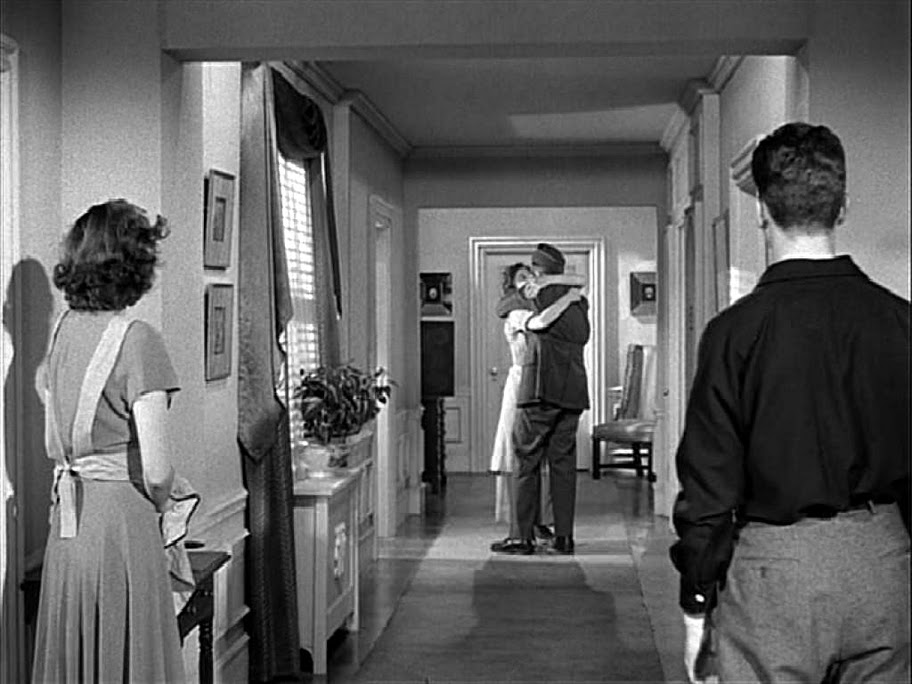
    “The Best Years of Our Lives” (1946) is one of the great American classics. This touching film tells the tale of the three WWII veterans struggling to readjust to civilian life. It isn’t easy, but with the support of family and friends, there’s plenty of hope for the future. Hugo Friedhofer wrote the Academy Award-winning score, earning the film one of its seven Oscars. The orchestrations were by Copland protégé (and composer of “The Big Country”) Jerome Moross.

    Finally, Daniel Day-Lewis elevates Steven Spielberg’s “Lincoln” (2012) to greatness with one of the uncanniest performances ever captured on film. Day-Lewis’ gentle but shrewd Man of Destiny would go to any lengths to hold the country together. John Williams taps into America’s proud musical heritage, clearly influenced by Copland and Ives to create a score of stirring nobility.

    There’s more to Thanksgiving than turkey and football, and we can still dream the dream. I hope you’ll join me as we give thanks for family, community, and country on “Picture Perfect,” music for the movies, now in syndication on KWAX, the radio station of the University of Oregon!


    Clip and save the start times for all three of my recorded shows:

    PICTURE PERFECT, the movie music show – Friday at 8:00 PM EST/5:00 PM PST

    SWEETNESS AND LIGHT, the light music program – ALL NEW! – Saturday at 11:00 AM EST/8:00 AM PST

    THE LOST CHORD, unusual and neglected rep – Saturday at 7:00 PM EST/4:00 PM PST

    Stream them, wherever you are, at the link!

    https://kwax.uoregon.edu/

  • Copland’s Lincoln Portrait Still Inspires Today

    Copland’s Lincoln Portrait Still Inspires Today

    Suddenly the pride and optimism of “A Lincoln Portrait” has come to seem so quaint. But I will always carry its idealism in my heart.

    Incorporating texts from Lincoln’s speeches, most notably “The Gettysburg Address,” Aaron Copland’s work for speaker and orchestra has been embraced by narrators across the political spectrum, from William Warfield and Carl Sandburg to Margaret Thatcher and Charlton Heston.

    Regardless of one’s personal ideology, the work has the power to stir and inspire. When it was performed under the direction of the composer in Venezuela in 1957, in the presence of reigning dictator Marcos Pérez Jiménez, it was so passionately received by the audience that it may have contributed to Jiménez’ overthrow and exile only a few days later. So clearly, it can be heady, even incendiary stuff.

    Maybe it is, after all, the very thing we need at the present time. The message is one of unity, not division, in serving the greater good and honoring our responsibility to the nation and our fellow citizens in rising to the challenges of “the stormy present.” (“The fiery trial through which we pass will light us down in honor or dishonor to the latest generation.”) The elevating marriage of Lincoln’s words and Copland’s music humbles in its persuasive espousal of the American ideals of fairness and sacrifice. it’s not surprising that the work has appealed to people across the political spectrum. It’s not about partisanship. It’s about embracing the democratic ideals of the United States of America.

    This weekend will bring the opportunity to experience the work live, as Copland’s “A Lincoln Portrait” will be the centerpiece of a program on American and often patriotic themes, to be presented this Friday night at 8:00 by the Main Line Symphony Orchestra, at Valley Forge Middle School in Wayne, PA.

    Jamie Bernstein, Leonard Bernstein’s daughter, will be the narrator. Also on the program will be her father’s “Candide Overture,” Samuel Barber’s Violin Concerto (with Marc Rivetti, assistant concertmaster of the Philadelphia Orchestra, the soloist), William Schuman’s “New England Triptych” (based on melodies of Revolutionary Era composer William Billings), and selections from John Williams’ “Lincoln” and “The Patriot.”

    The conductor will be the orchestra’s music director, Don Liuzzi, whose day job is as principal timpani of the Philadelphia Orchestra.

    The program will be repeated at Reform Congregation Keneseth Israel in Elkins Park, PA, on Sunday at 2 p.m.

    On Aaron Copland’s birthday (today), it’s a timely reminder of the kind of thinking that really made this country great. For more information on these concerts and upcoming performances of the Main Line Symphony Orchestra, follow the link.

    https://www.mlso.org/concerts.htm

    Leonard Bernstein conducts “A Lincoln Portrait,” with William Warfield narrating. Watch for Gerard Schwarz as co-principal trumpet. Schwarz would go on to make his own recording of “A Lincoln Portrait,” as music director of the Seattle Symphony, with James Earl Jones as the speaker.

Tag Cloud

Aaron Copland (93) Beethoven (95) Composer (114) Film Music (129) Film Score (143) Film Scores (255) Halloween (94) John Williams (192) KWAX (229) Leonard Bernstein (103) Marlboro Music Festival (125) Movie Music (144) Mozart (88) Opera (206) Philadelphia Orchestra (89) Picture Perfect (174) Princeton Symphony Orchestra (108) Radio (88) Ross Amico (244) Roy's Tie-Dye Sci-Fi Corner (290) The Classical Network (101) The Lost Chord (268) Vaughan Williams (103) WPRB (396) WWFM (881)

DON’T MISS A BEAT

Receive a weekly digest every Sunday at noon by signing up here


RECENT POSTS