“Viva VERDI!” – the cry of Italian patriots on the eve of unification.
Italy of the 1850s was but a conglomerate of individual states, many of them still under foreign rule. The slogan “Viva VERDI!” was coined in 1859, following the premiere of the composer’s politically sensitive opera “Un ballo in maschera.”
Verdi’s ongoing troubles with the censors are well-known. It’s a safe bet that when he undertook an opera about a political assassination, he had a pretty good idea what to expect. The name VERDI was taken up by firebrands of the Risorgimento as an acronym for “Vittorio Emanuele, Re D’Italia.” King Vittorio Emanuele II of Piedmont was seen by many as the best hope for a free and united Italy.
This week on “The Lost Chord,” we’ll refrain for delving too much into Italy’s Second War for Independence, or of Garibaldi’s struggles with the Bourbons. Instead, we’ll enjoy examples of MUSICAL unification – various composers of Italian origin coming together to attempt cohesive works of art.
There are those who believe the serenata “Andromeda Liberata” may have been composed entirely by Antonio Vivaldi – but perhaps not. The likely impetus for its creation was the return to Rome of one Cardinal Ottobone, who was also a patron of both Arcangelo Corelli and Alessandro Scarlatti.
The story is that of Perseus and Andromeda. Andromeda has already been rescued from the sea serpent at the start of the piece, which mostly explores the ambiguous feelings of its characters, with a few extraneous love interests tossed into the mix to provide romantic conflict.
The two-hour entertainment contains in its second part a single aria known definitively to have been composed by Vivaldi. The authorship of the rest remains in doubt. The long-lost manuscript, dating from 1726, was rediscovered as recently as 2002.
In 1868, Verdi’s great operatic predecessor, the long-retired Gioachino Rossini, died. Rossini had completed his last opera nearly forty years before. Verdi undertook to bring together 12 of his contemporaries, now largely forgotten. The oldest, Carlo Coccia, at age 87, was actually a decade Rossini’s senior!
Within the year, a collaborative mass was compiled in Rossini’s memory, for which Verdi provided the concluding “Libera me.” In fact, the music looks forward to Verdi’s own masterful Requiem. The completed work doesn’t attain anywhere near the lofty heights of Verdi’s solo run. However, it’s an interesting compendium of contemporary styles, and even the music of lesser talents serves to cast Verdi’s genius in a new light.
Remarkably, the work lay unperformed in Verdi’s lifetime. Talk about politics! Here was Verdi, a Milanese, trying to kindle some sort of enthusiasm in Bologna (the location of Rossini’s earliest successes), for a project which was to bring together a bunch of compositional dinosaurs, to salute a figure who, for all intents and purposes, had retired from public life some four decades earlier. Bologna at the time was in the process of becoming a stronghold of the musical avant-garde.
All these factors, along with puzzling stipulations, such as the work being locked away after its first performance, to be trotted out only on special occasions, doomed the project virtually from the start. It remained unheard for another 120 years, resurrected only in 1988.
Roll over, Verdi; tell Rossini the news!
That’s “Viva VERDI!” (for Verdi’s birthday) – Italian unification through music – on “The Lost Chord,” now in syndication on KWAX Classical Oregon!
________________________________________
Clip and save the start times for all three of my recorded shows:
PICTURE PERFECT, the movie music show – Friday at 8:00 PM EDT/5:00 PM PDT
SWEETNESS AND LIGHT, the light music program – Saturday at 11:00 AM EDT/8:00 AM PDT (***now with a repeat Sunday at 9:00 PM EDT/6:00 PM PDT***)
THE LOST CHORD, unusual and neglected rep – Saturday at 7:00 PM EDT/4:00 PM PDT
Stream them, wherever you are, at the link!
https://kwax.uoregon.edu/
Tag: Opera
-
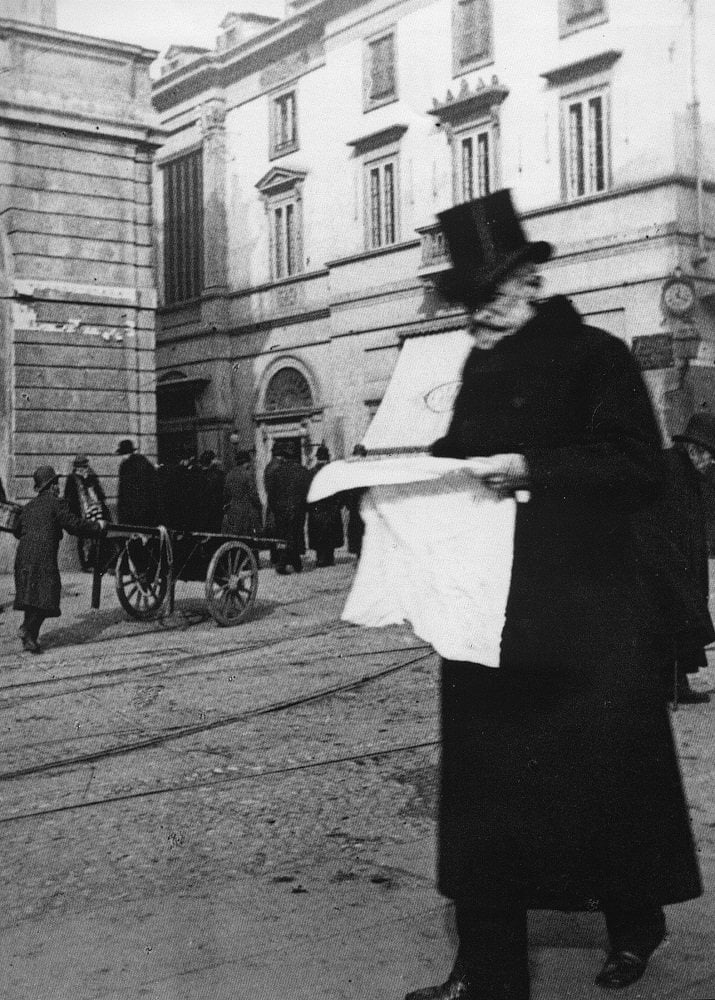
“The Lost Chord”: Roll Over, Verdi; Tell Rossini the News!
-
Philadelphia Music Writer and Romeo Cascarino Champion Tom Di Nardo
Every year on Romeo Casacarino’s birthday, I try to come up with a fresh angle, if I am able, to remember him and to promote the music of this rewarding Philadelphia composer, still too little heard, but gaining traction all the time. A longtime professor at the now-defunct Combs College of Music, Cascarino emerged from South Philadelphia a child prodigy, a “student” of Paul Nordoff (he was also invited to Tanglewood to take lessons with Aaron Copland), but really an autodidact, who dug deep into the collections of the Philadelphia Public Library.
He wrote a Bassoon Concerto for army buddy Sol Schoenbach, principal bassoonist of the Philadelphia Orchestra, which still gets a lot of play. He labored over a handful of exquisitely-crafted tone pictures that often radiate a seductively dreamy “magic hour” glow. If only he had written more. But he was a meticulous artist, always in search of “le mot juste” – or rather, “la note juste” – the absolute correct note or combinations of notes to express precisely what he intuited. No doubt he would have written more, had he not poured so much of himself into his magnum opus, the opera “William Penn,” which he labored at for a quarter century. The work was given its first performances at Philadelphia’s Academy of Music in 1982, with Metropolitan Opera bass-baritone John Cheek in the title role.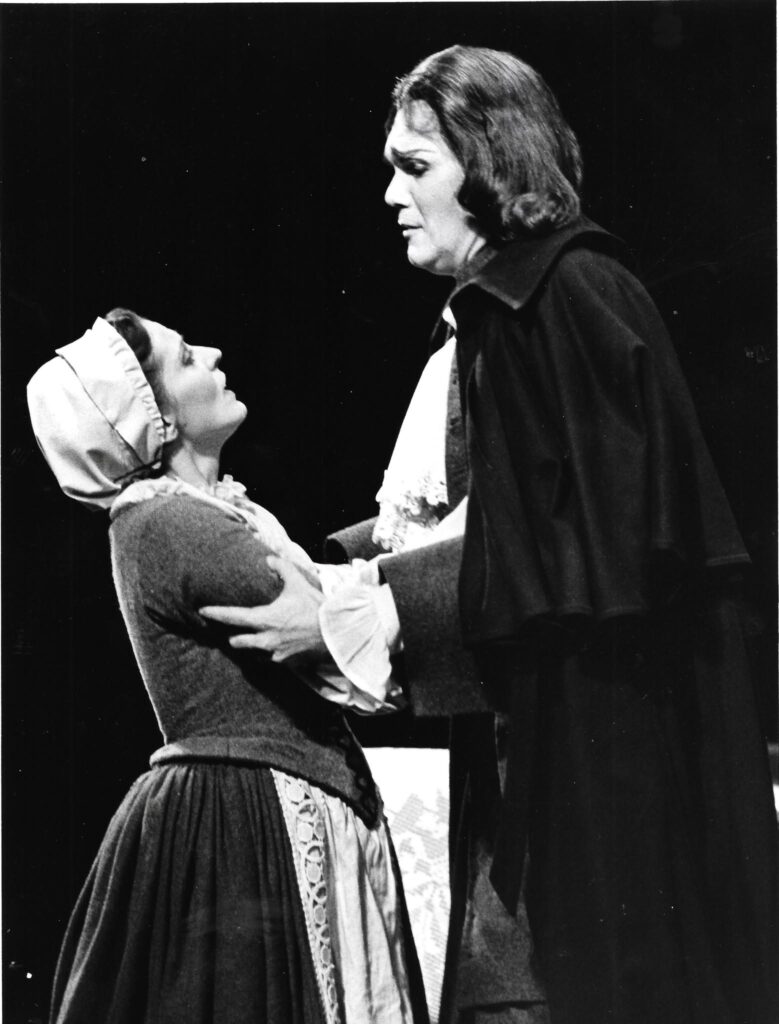
And this is where I come to the fresh approach, brought to mind, sadly, because of the passing of Cascarino’s champion and dear friend, Tom Di Nardo. Tom was a music writer for the Philadelphia Evening Bulletin and the Philadelphia Daily News, the author of several books, and a guy who, in his quiet, unassuming way, managed to move mountains. He did so without flash and often without recognition. He was the very definition of modesty and selflessness, always thinking of, and often doing things for, others. Some of these things could be extraordinary.
Several of his efforts contributed to Cascarino’s wider exposure and boosted his reputation significantly. I would go so far as to say that, after the composer’s wife, soprano Dolores Ferraro, Tom was Cascarino’s greatest champion. Somehow, without the composer’s knowledge, he managed to secure the Academy of Music (actually the easy part) and assemble an army of musicians and technicians to give “William Penn” its debut. He also saw to it that the performances were recorded and archived.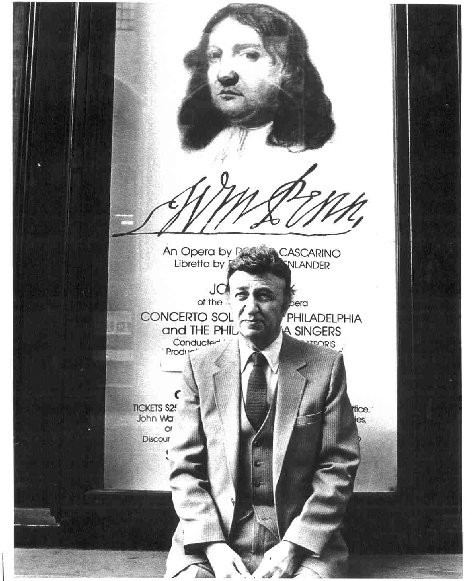
Furthermore, several years after Cascarino’s death, he was instrumental in pulling together an orchestra (principally musicians of the Chamber Orchestra of Philadelphia) and arranging for a recording with conductor JoAnn Falletta of Cascarino’s orchestral works, which was released on the Naxos label in 2006.
Still more recently, he assisted in securing performers for a recording of Cascarino’s collection of eight songs, “Pathways of Love,” and his setting of “Danny Boy.” These performances are now available as digital downloads.
Tom wrote about his experiences with staging the opera at the Academy of Music and arranging for the orchestral recordings for Naxos, and a great deal more. He made it a point to interview as many prominent musicians who came through Philadelphia as possible, classical or otherwise, including Renée Fleming, Stéphane Grappelli, Sarah Chang, Bill Evans, John Williams, Andrés Segovia, Eric Owens, Max Roach, Ignat Solzhenitsyn, Peter Schickele, and André Watts, as well as every Philadelphia Orchestra music director from Eugene Ormandy to Yannick Nézet-Séguin. He also shared anecdotes about his colorful encounters with Luciano Pavarotti, Mel Tormé, Betty Comden & Adolph Green, and Denyce Graves, among others.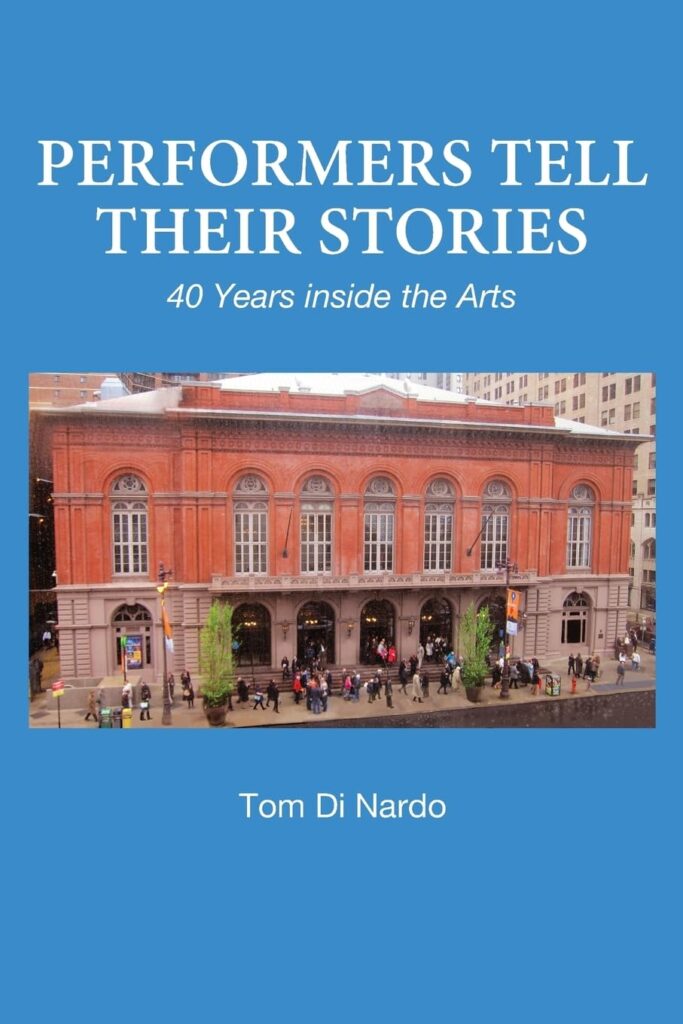
These achievements are all the more remarkable as music was Tom’s avocation, if his life’s great passion. To keep food on the table, he worked as an engineer for Philadelphia Electric Company (PECO).
Long since retired, Tom died last week while on a trip to Sicily. I was astonished to learn that he was 89 years old. I knew Tom through Dolores, so I encountered him socially on a number of occasions, and interviewed him once, about Romeo, for my radio program “The Lost Chord.” The last time I chatted with him was at a concert of the Main Line Symphony Orchestra a couple of years ago.
I share the news of his passing today, because I see some of his other friends have already done so and also because of his close association with Romeo Cascarino. I encourage you to check out the appreciation by Kile Smith at the first link below. For all I’ve written here, I couldn’t do it as well as Kile. My post is largely informational, as I wanted to talk about his connection to Romeo. Kile does a great job getting at the man with a lot fewer brush strokes and remembering him in human terms.
https://www.facebook.com/photo?fbid=10233423040573595&set=a.4017195143910
I also found this: Tom speaking with pianist Hugh Sung for Sung’s web series “A Musical Life.”
The Naxos album of Cascarino’s orchestral works, which Tom executive produced (and provided the liner notes for, naturally):
R.I.P. Tom Di Nardo. You will be remembered, and missed, by many.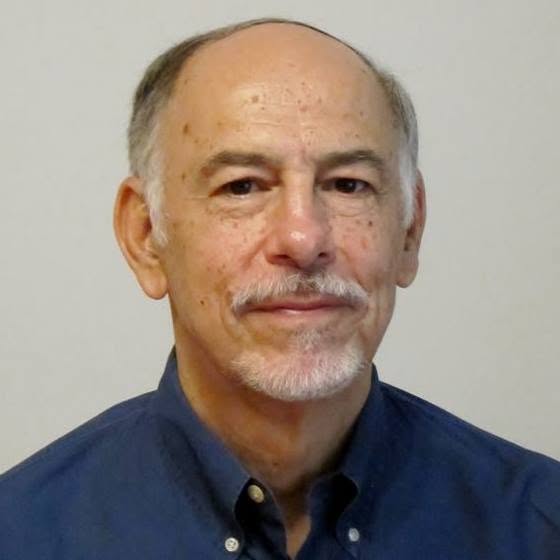
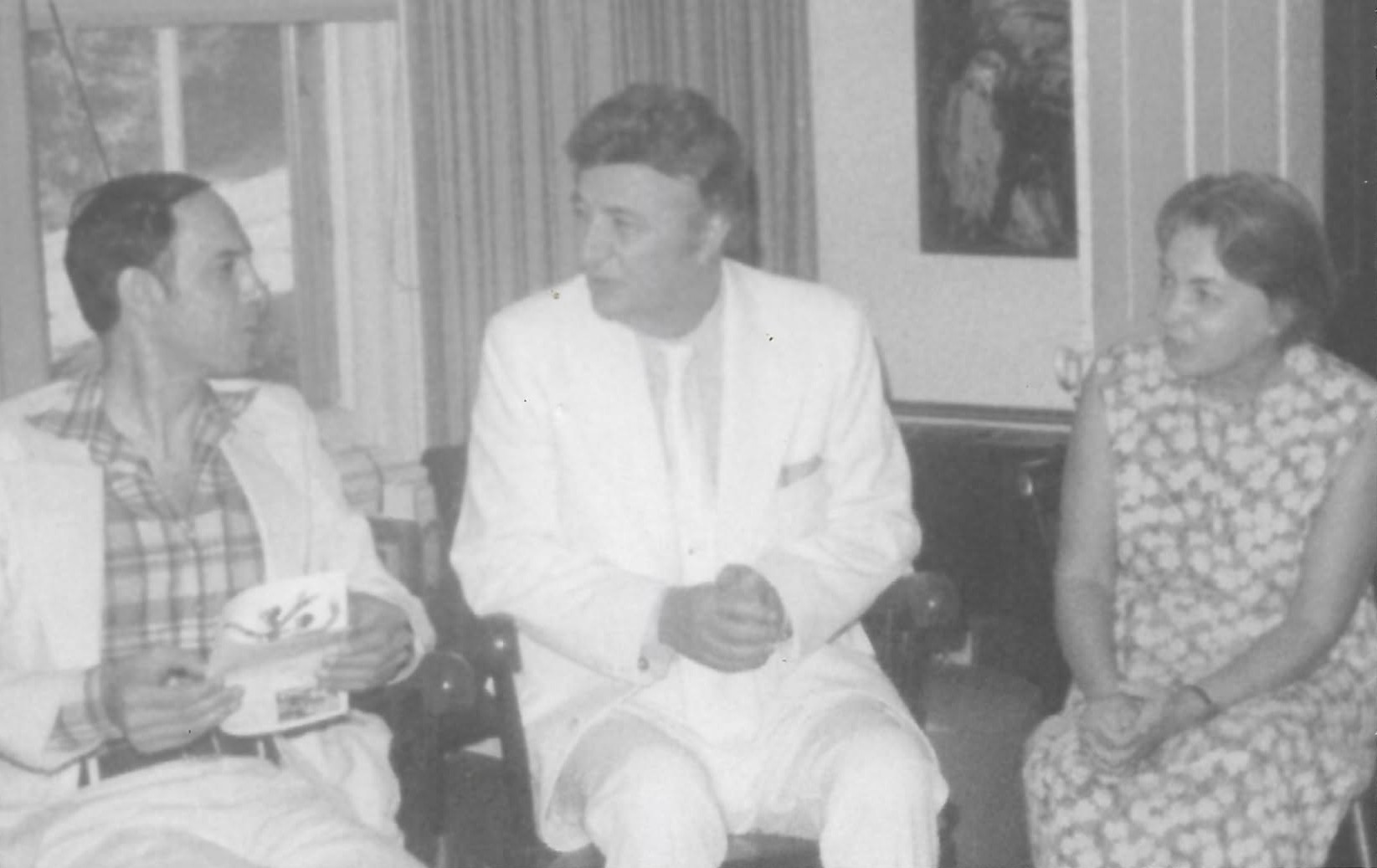
TOP PHOTO (left to right): Di Nardo, Cascarino, and “William Penn” librettist Peggy Gwynn -
Death on the Nile: Samuel Barber’s “Antony and Cleopatra” Opens the Met at Lincoln Center
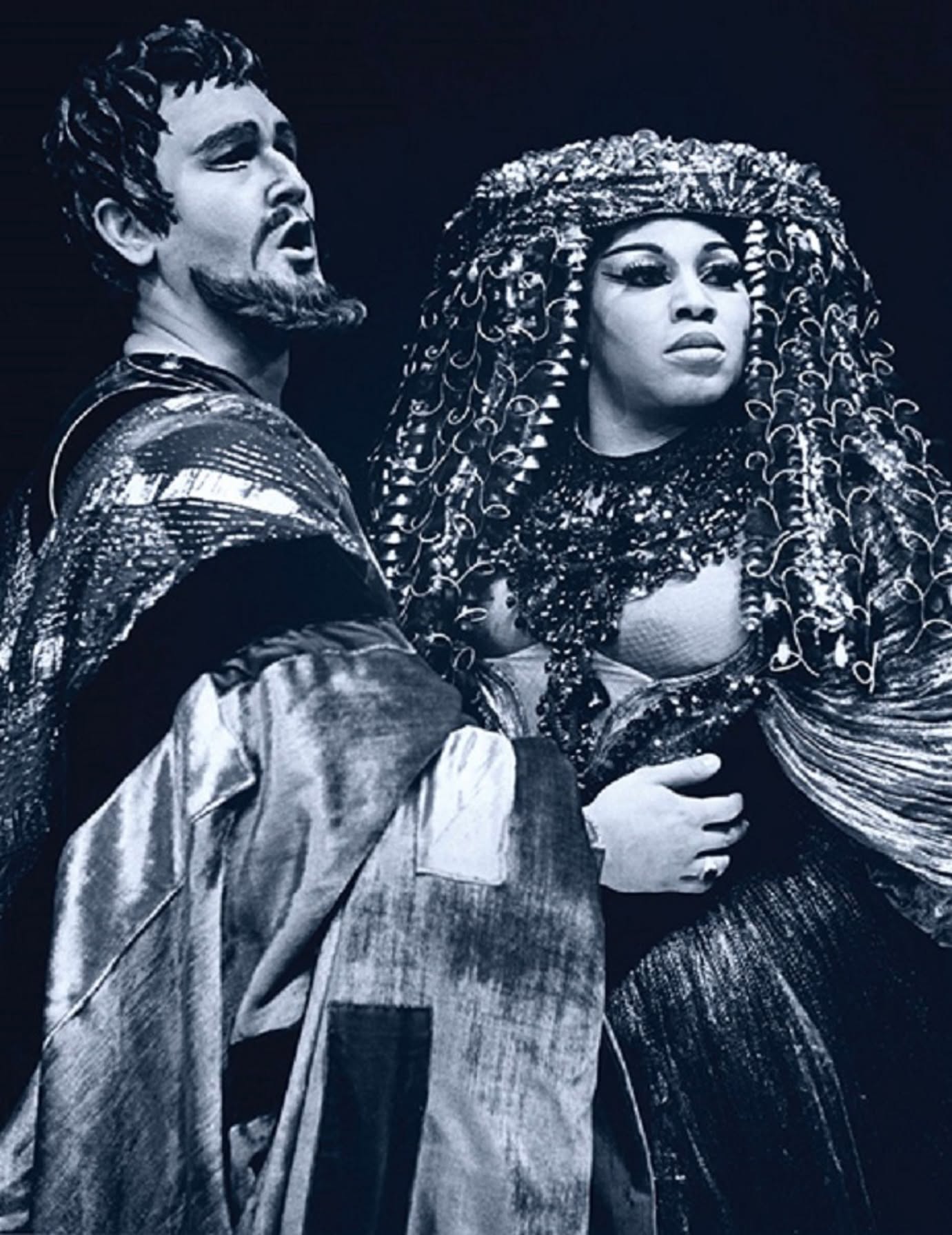
60 years ago today, the Metropolitan Opera consecrated its new house at New York’s Lincoln Center with the world premiere of Samuel Barber’s “Antony and Cleopatra.” Adapted from Shakespeare’s play, the libretto was fashioned by Franco Zeffirelli.
Zeffirelli could be a fine director, but in the opera house his lust for opulence and grandeur threatened to obscure the human drama. Here, his vision of “Cabiria”-style excess – with 22 principal singers, chorus, dancers (choreographed by Alvin Ailey), extras, and live camels – swelled the cast to 400 players. Many years later, I worked with Justino Diaz, who sang Antony, and he described the opulence of the production as being like Zeffirelli’s “Turandot” times 20.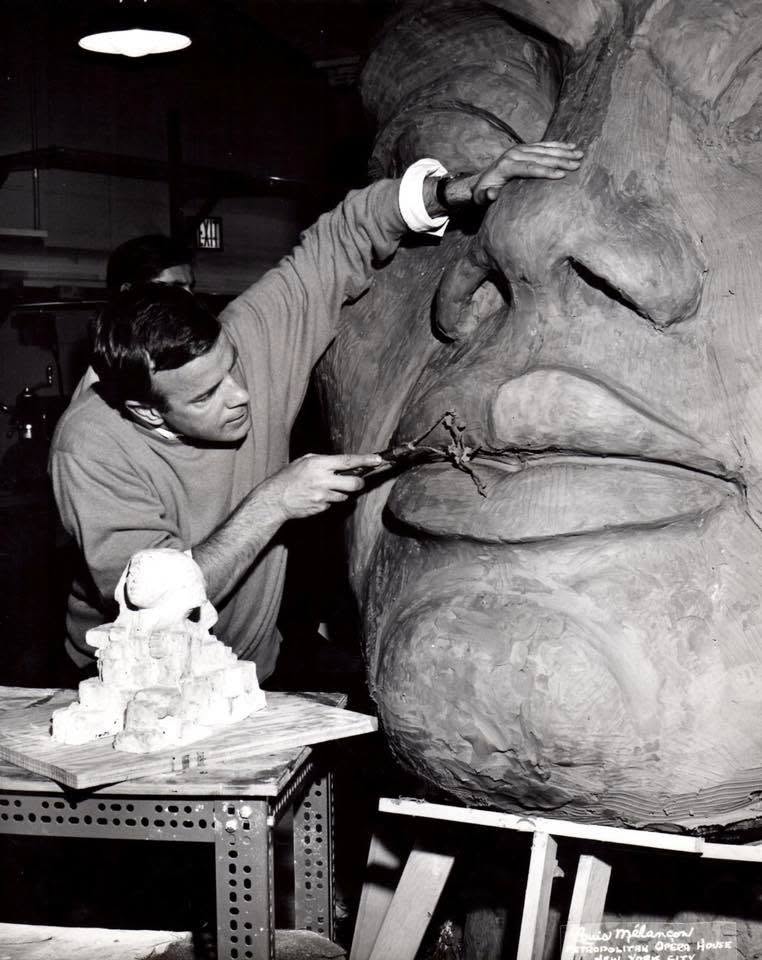
There was only so much of this that Barber, or even Shakespeare, could take. The excess of steel, brass, and aluminum sets pushed the house’s state-of-the-art technology to the literal breaking point. The weight proved too much for the newly installed revolving stage, and Leontyne Price, who sang Cleopatra, was trapped inside a hydraulically-operated pyramid. Fortunately, that was during rehearsals, but the costumes continued to prove cumbersome, the technical workarounds awkward, and the spectacle soul-numbingly vulgar. Audience response to the overinflated production made for a cool night in the desert. As for the critics… you think Julius Caesar had it bad?
You can imagine how Barber, elegant and reserved two-time Pulitzer Prize winner (one for an earlier opera, “Vanessa,” introduced at the Old Met) and composer of the ubiquitous “Adagio for Strings,” would have taken it. In the years following the work’s brutal reception, he struggled with depression and alcoholism.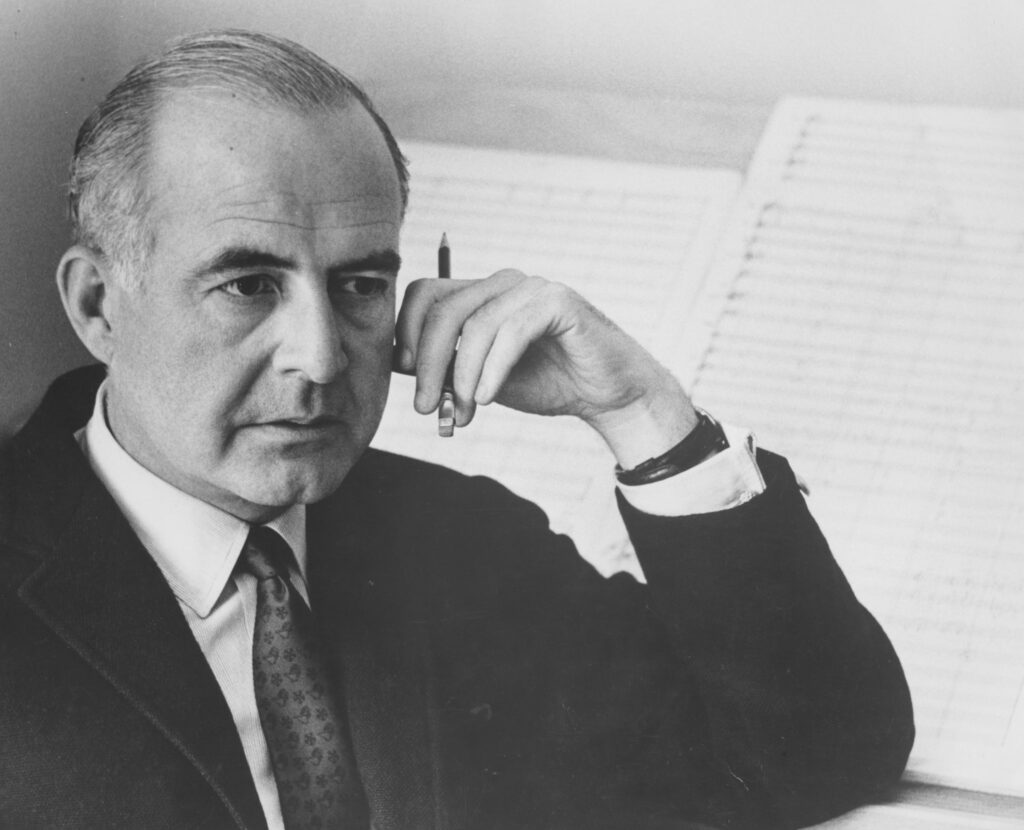
“Antony and Cleopatra” was extensively revised by Barber and Gian Carlo Menotti in an edition first performed in 1975. Barber also prepared a concert suite, “Two Scenes from ‘Antony and Cleopatra,’” for Price.
Barber provided two other works for the opening of Lincoln Center: the Piano Concerto, which earned him his second Pulitzer, and a piece for soprano and orchestra, “Andromache’s Farewell.” The former was performed by John Browning and the Boston Symphony Orchestra conducted by Erich Leinsdorf. The latter was performed by Martina Arroyo and the New York Philharmonic conducted by Thomas Schippers.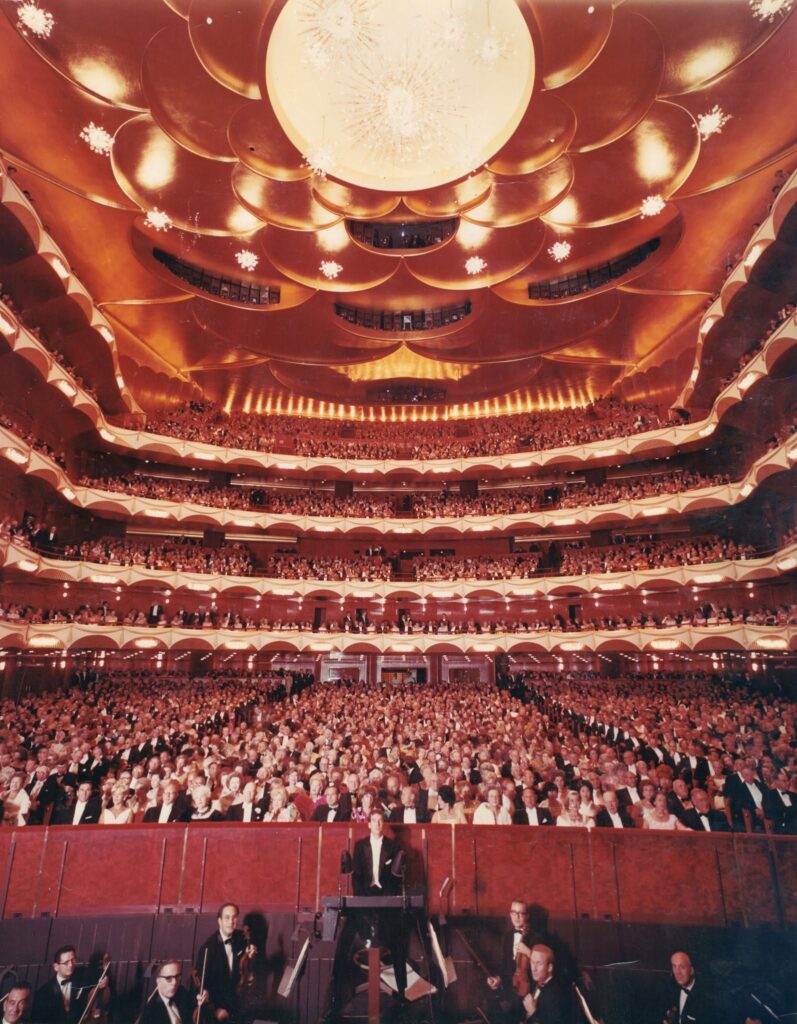
Thankfully, the Met transcended the failure of its opening run. The cavernous, 3800-seat opera house – the largest in the world – has seen some magnificent performances over the decades, featuring many of the world’s – and history’s – greatest singers.
As you can imagine, you need stellar voices, compelling music, and solid productions to fill such a venue night after night, and in recent years, the Met has struggled. There are plenty of performances that sell out – a lot of the new operas make for good theater, even if the composers can’t compete with Puccini – but new productions of the classics that go dark and contemporary, in a bid for “relevance,” often misfire. Most crucially, voices and personalities that can whip audiences into the kinds of frenzies that greeted the greatest singers of the past are always rare.
Not all the challenges facing the Met are of the house’s creation. The industry and culture have shifted enormously since the ‘90s. The collapse of the record industry, the selling off or dumbing down of classical music radio stations, the lack of television, magazine, and newspaper exposure, cuts to music education, a shift in the priorities of the donor class, changes in the approaches to vocal training, and lack of interest in opera or classical music within the home have marginalized opera, as an art form, as an entertainment, and as an aspirational, inspirational pursuit with the power to lift us outside ourselves.
Still, there’s plenty of magic left in the Met. This season, I’m curious to see – and hear – what Missy Mazzoli makes of “Lincoln in the Bardo.”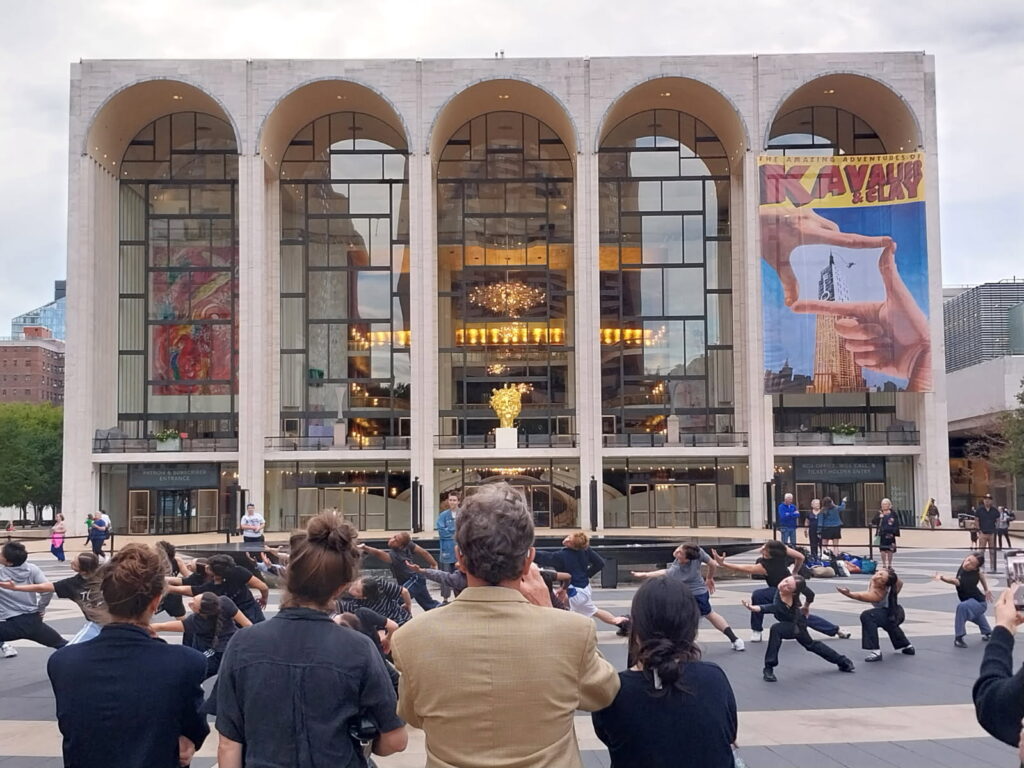
———-
Documentary teasing “Antony and Cleopatra,” with Barber, Zeffirelli, Price, Thomas Schippers, Rudolf Bing, and Marc Chagall, who painted the Met’s iconic dual murals – which the organization has been trying to sell, with the provision that they continue to be displayed in the Met lobby. -

First the Music, Then the Words: A Belated Farewell to Jill Gomez
When soprano Jill Gomez died on August 11, I was strangely silent. Ordinarily, I’m on the computer and pounding out an obituary or an appreciation as soon as I’m possibly able. But Gomez played such colorful, at times controversial parts, that I had a hard time figuring out how to write about some of them. I don’t even know if I can use certain words on Facebook without having the post removed or suppressed by the algorithm.
At any rate, this writer (uncredited!) does such a marvelous job of encapsulating her roles and sketching in her personality, I now need only link the article (see below), which originally ran in the British publication The Telegraph (there paywalled).
It’s interesting to note that her career also crossed several times with that of Ileana Cotrubaș, who died on Thursday at 86. (They both sang Britten’s Tytania and alternated in a production of Debussy’s “Pelléas et Mélisande”.) If not for Cotrubaș’ passing, I’m not sure I would have returned to Gomez. I am glad to finally be able to honor her and put it to rest.
https://www.aol.com/articles/jill-gomez-soprano-went-topless-105557000.html
From Britten’s “Les Illuminations”
She could sing Mozart, too.
Jill Gomez was 83 years old. R.I.P. -
Bad Day in Bucharest: Ileana Cotrubaș has died
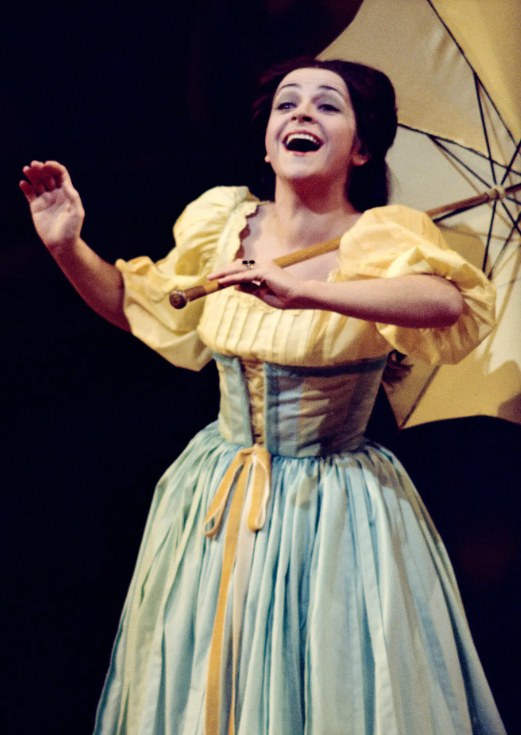
Yesterday, I posted about Romania’s most celebrated composer, George Enescu, on his birthday. Today, I share the sad news that one of Romania’s most renowned singers, the soprano Ileana Cotrubaș, has died.
Cotrubaș cracked the big time the old-fashioned way. Musical precocity and hard work led to engagements at the Bucharest Opera. Vocal competitions got her noticed abroad. She continued to hone her craft at Oper Frankfurt and Vienna State Opera. She also sang in Brussels, Hamburg, Berlin, Glyndebourne, Covent Garden, and Chicago.
It’s hard, then, to understand why some of her online biographies attribute her “international breakthrough” to her response to an emergency request in January 1975 for her to substitute for an indisposed Mirelli Freni – at the suggestion of Luciano Pavarotti, no less – in “La bohème” at La Scala. Big shoes to fill, in any case! She flew from her home, then in Kent (U.K.), to Milan, arriving at the theater 15 minutes before curtain. She did her makeup on the flight. Her performance as Mimì wound up enchanting both critics and audience.
We’ve all heard this kind of story. Cotrubaș was an overnight success twenty years in the making.
She made her Met debut, also as Mimì, in 1977, opposite José Carreras. Two of her Met characterizations, of Gilda (“Rigoletto”) and Violetta (“La traviata”) – a role for which she was particularly acclaimed – were televised. She also recorded her Violetta with Carlos Kleiber.
At least twice, she stormed out of productions over disagreements with her stage directors. I suspected she would not have been happy in this decadent era of Regietheater. Reading more about her, I learn that I am right.
Ileana Cotrubaș retired from public singing in 1990. She died today in Bucharest at the age of 87. Listen to her Mimì and try not to get a lump in your throat.
R.I.P.
Tag Cloud
Aaron Copland (94) Beethoven (95) Composer (114) Film Music (148) Film Score (143) Film Scores (255) Halloween (97) John Williams (196) KWAX (232) Leonard Bernstein (105) Marlboro Music Festival (125) Movie Music (163) Mozart (91) Opera (215) Philadelphia Orchestra (90) Picture Perfect (174) Princeton Symphony Orchestra (110) Radio (90) Ross Amico (244) Roy's Tie-Dye Sci-Fi Corner (290) The Classical Network (101) The Lost Chord (269) Vaughan Williams (107) WPRB (397) WWFM (881)