When someone lived as long as Carlisle Floyd, it seems as if no time has passed when we come to mark his centenary. Floyd, one of the most successful opera composers this country ever produced, died in 2021 at the age of 95.
In 1955, even as tonality was slipping out of fashion, Floyd achieved something quite wonderful. He transplanted the Apocryphal tale of Susannah and the Elders to rural Tennessee – writing libretto and music while on the piano faculty at Florida State University – and rendered it with touching, tuneful simplicity. He was not yet 30, when he enticed soprano Phyllis Curtin and baritone Mack Harrell to Tallahassee to sing in the world premiere.
The work’s success soon spread to New York City, and “Susannah” became one of the most frequently performed of American operas, said to be second only to Gershwin’s “Porgy and Bess.” It does feature two heart-melting arias that remain favorites of aspiring American sopranos: “Ain’t It a Pretty Night” and “The Trees on the Mountain.” The directness of the drama and the uncluttered musical language struck a chord with both performers and audiences.
Emboldened by his success, Floyd went on to compose ten more operas, all of them on his own librettos, drawing inspiration from such diverse sources as Emily Brontë’s “Wuthering Heights,” Robert Louis Stevenson’s “Markheim,” John Steinbeck’s “Of Mice and Men,” and Robert Penn Warren’s “All the King’s Men.”
“Cold Sassy Tree,” based on the novel of Olive Ann Burns, was given its premiere in 2000. The composer had intended it to be his swan song. He had become too busy caring for his wife, who was suffering from Alzheimer’s disease, to devote much further thought to composition. But following her death, he found the inspiration for one last hurrah. The result was “Prince of Players,” about 17th century actor Edward Kynaston, which was given its premiere at Houston Grand Opera in March 2016, when the composer was 90-years-old.
For his centennial year, there are more than 30 productions of his operas scheduled, as well as a Carnegie Hall celebration later this month. It’s heartening that his significance has not been overlooked.
Ain’t it a pretty night for Carlisle Floyd!
——–
Dawn Upshaw breaks hearts with “Ain’t It a Pretty Night,” from “Susannah”
Cheryl Studer sings “The Trees on the Mountain,” from a complete recording of the work
Samuel Ramey as the Reverend Olin Blitch
A taste of “Prince of Players” from Little Opera Theater of New York
The 2021 Grammy-nominated recording (Best Opera Recording; Best Contemporary Classical Composition; Producer of the Year, Classical)
Carlisle Floyd speaks
“Cold Sassy Tree”
——–
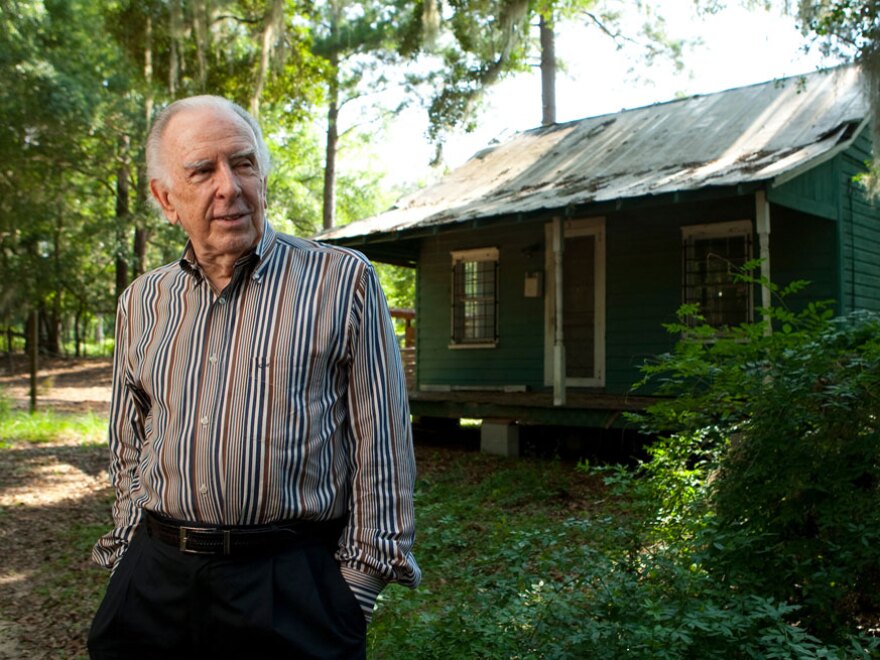
PHOTO: Floyd in 2009, outside the house in Tallahassee, FL, in which he composed “Susannah”
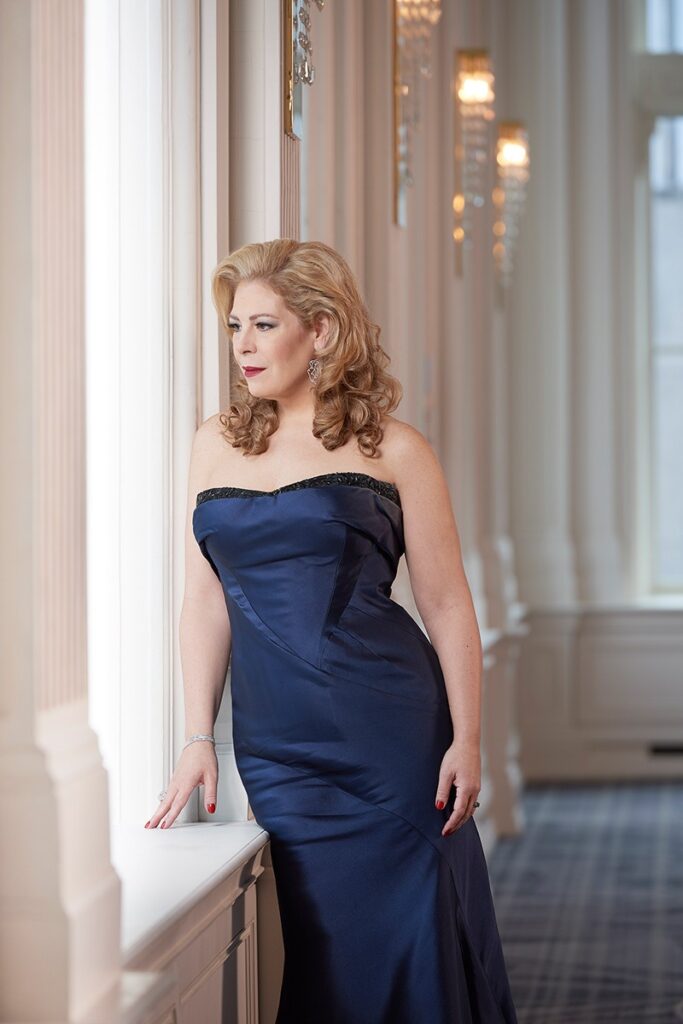
Because of safety concerns regarding the ill-timed thunderstorms that battered the region last night not long before curtain, it was nearly 9:00 before soprano Sondra Radvanovsky took the stage of the performance pavilion at Morven Museum & Garden for the second night of The Princeton Festival. But boy, when she did, did she deliver.
The program was perfectly tailored to suit her voice, with selections by Verdi (“La forza del destino”), Giordano (“André Chénier”), and Puccini (“Tosca” – which she’ll be singing at the Met next season – and an imperious Turandot). Her control was riveting, her dramatic presence hypnotic, and when she was under full sail, she flooded the tent with a magisterial voice that stirred overwhelming emotion.
She was joined by rising tenor Victor Starsky, a Princeton Festival veteran, who sang Cavaradossi in last year’s production of “Tosca” and will return next week as Pinkerton in “Madama Butterfly.” Starsky had his time in the spotlight with “Celeste Aida” and that old standby, “Nessun Dorma.” Nothing sets a crowd wild like a tenor in full voice.
But even more compelling, for me, personally, were his duets with Radvanovsky (from “Un Ballo in maschera” and “Manon Lescaut”), which allowed his passion to bubble over. I was left shaken by their concluding “Vicino a te s’acqueta,” from “André Chénier,” in which the couple anticipates fulfillment of their love in their impending death at the guillotine (“Viva la morte insiem!”) – so much so that, as I was chatting with some people behind me afterward, I nearly broke down.
No doubt there would have been encores, but it was already pushing 11:00. I’m sure a lot of contracted employees are going to be getting overtime.
Rossen Milanov conducted The Princeton Symphony Orchestra, in support of the singers, but also supplied the overtures and interludes by Verdi, Mascagni, and Leoncavallo. It was a late night, so I was thankful for having imbibed a strong cold brew beforehand. Even so, I think it would have been impossible to nod. It was definitely worth sweating it out in the car for an hour, waiting for the thunder and lightning to subside.
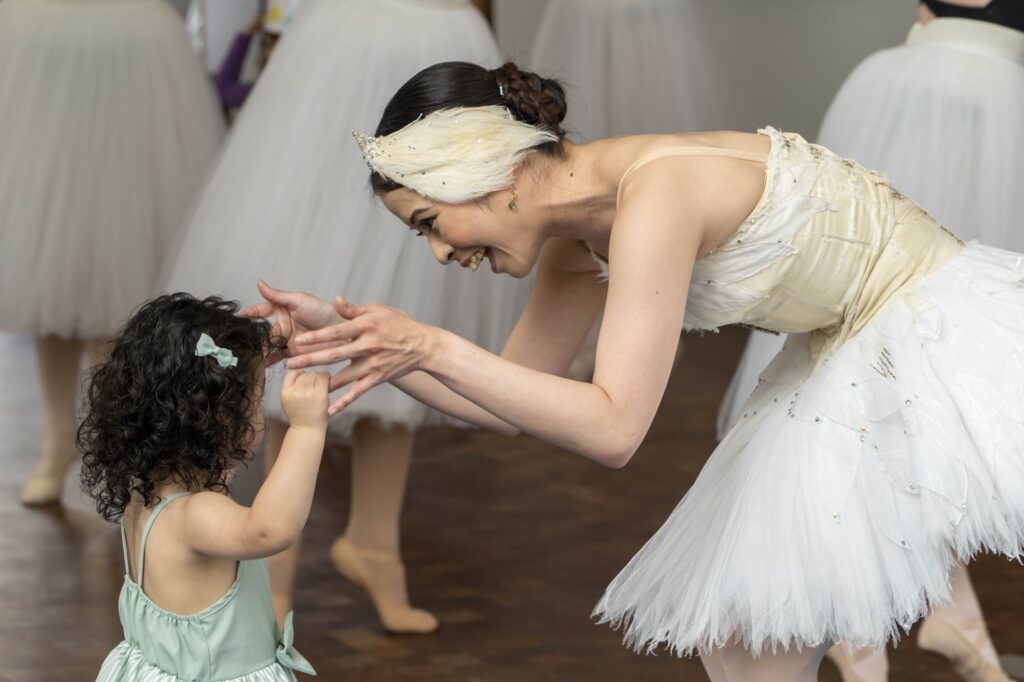
Today is the festival’s Community Day, with Yoga in the Garden (to live musical accompaniment) already underway. That will be followed this afternoon by family friendly activities, including an instrument “petting zoo,” a musical story time, a quilting exhibition, “Harriet Powers: American Icon,” with the Princeton Sankofa Stitchers Modern Quilt Guild, and American Repertory Ballet‘s 30-minute “Swan Lake Experience,” an accelerated story of the ballet with audience participation, from 12-3 p.m.
This evening, Milanov and the PSO will return to join the dancers for a program that will feature pas de deux from Tchaikovsky’s “Swan Lake” and “The Sleeping Beauty,” Samuel Barber’s “Adagio for Strings,” and a world premiere choreographed to music by Pulitzer Prize winner Caroline Shaw. But especially interesting to me will be a ballet set to Jean Françaix’s Piano Concerto, with Steven Beck the soloist. The event will commence in the performance pavilion on the Morven grounds at 7 p.m.
Morven Museum & Garden is located at 55 Stockton Street (Route 206) in Princeton, NJ.
The Princeton Festival runs through July 21. For tickets and information, visit princetonsymphony.org/festival.
——–
I didn’t take any pictures last night. I’ll add a more pertinent photo once the Princeton Festival makes one available!
It’s June, and the performance pavilion is up at Morven Museum & Garden! Who’s ready to hear some music? Opera, cabaret, Baroque, dance, Great Ladies of Jazz, Time for Three, the Bacon Brothers, Queen Nation, and a pops concert in celebration of America’s 250th birthday – the Princeton Festival will begin on Friday and run through June 21.
Main stage events will be held on the grounds of Morven, at 55 Stockton Street (Route 206), with Baroque concerts held across the way, at Princeton’s Trinity Church (33 Mercer Street).
On opening night, Broadway superstar Sierra Boggess (“The Little Mermaid,” “The Phantom of the Opera”) will perform cabaret-style, with piano, sharing showtunes, songs, and personal anecdotes (Morven, Friday at 7 p.m.).
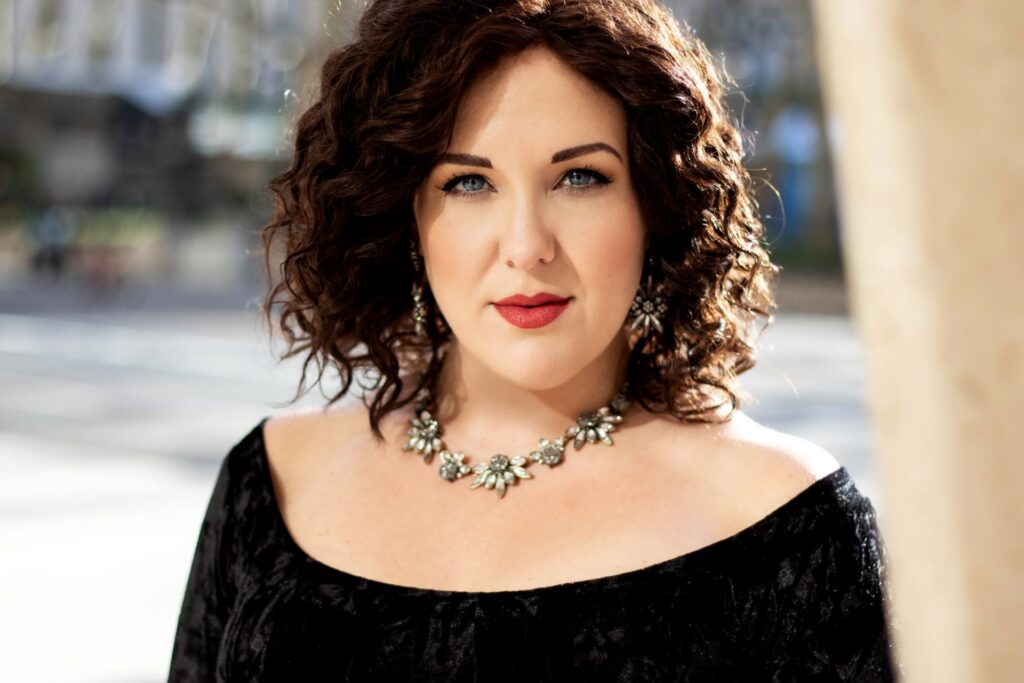
Then will be a big treat for opera lovers, as world-renowned soprano and Metropolitan Opera star Sondra Radvanovsky will headline a program of moving arias, duets, and orchestral interludes from the Italian repertoire, including works by Puccini, Verdi, Mascagni, and Giordano. For the duets, she’ll be joined by Festival veteran Victor Starsky, who will also perform the showstopper “Nessun Dorma.” The Princeton Symphony Orchestra will be conducted by Rossen Milanov (Morven, Saturday at 8 p.m.).
Sunday will be the Festival’s Community Day, which will include free morning Yoga in the Garden (9 a.m.) and, in the afternoon, family friendly activities, such as an Instrument Petting Zoo, a Musical Story Time, a Quilting Exhibition “Harriet Powers: American Icon,” with the Princeton Sankofa Stitchers Modern Quilt Guild, and American Repertory Ballet‘s 30-minute “Swan Lake Experience,” an accelerated story of the ballet with audience participation (12-3 p.m.).
In the evening, Milanov and the PSO will return in support of the dancers for a program including celebrated pas de deux from Tchaikovsky masterworks (including “Swan Lake”), a ballet set to a neglected gem by Jean Françaix – his Piano Concerto, with Steven Beck the soloist – and a world premiere choreographed to music by Pulitzer Prize winner Caroline Shaw (Morven, Sunday at 7 p.m.).
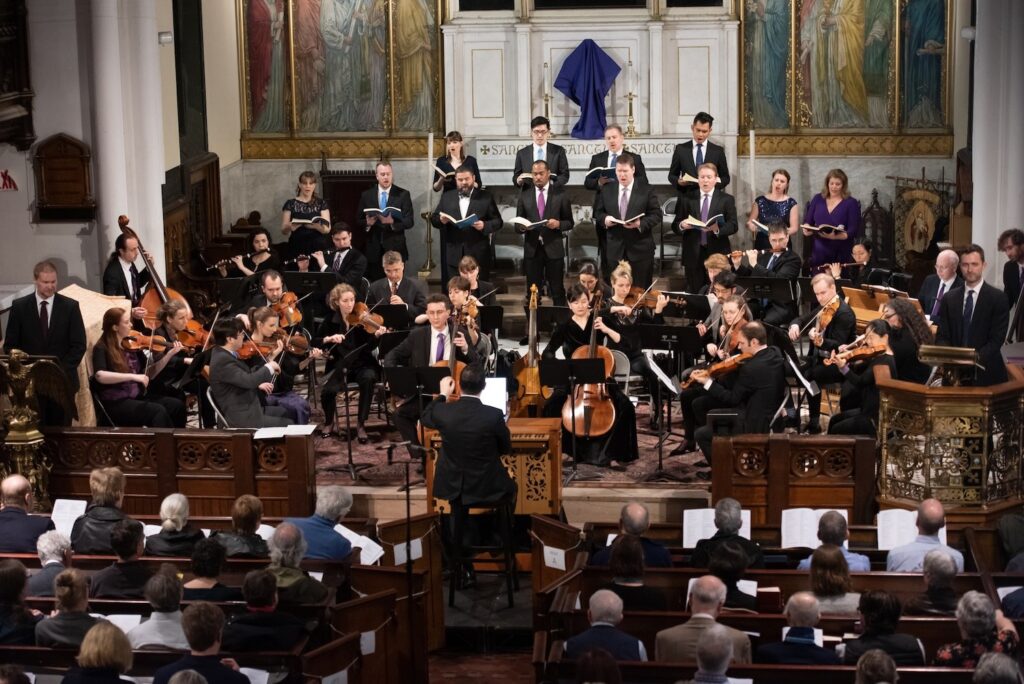
Two Baroque concerts will be offered on weeknights at Trinity Church, with The Sebastians performing a program of Bach cantatas, BWV 140 “Wachet auf, ruft uns die Stimme” (“Sleepers Awake”) and BWV 80 “Ein feste Burg ist unser Gott” (“A Mighty Fortress Is Our God”), alongside the Orchestral Suite No. 2 in B minor (Trinity, next Tuesday at 7 p.m.).
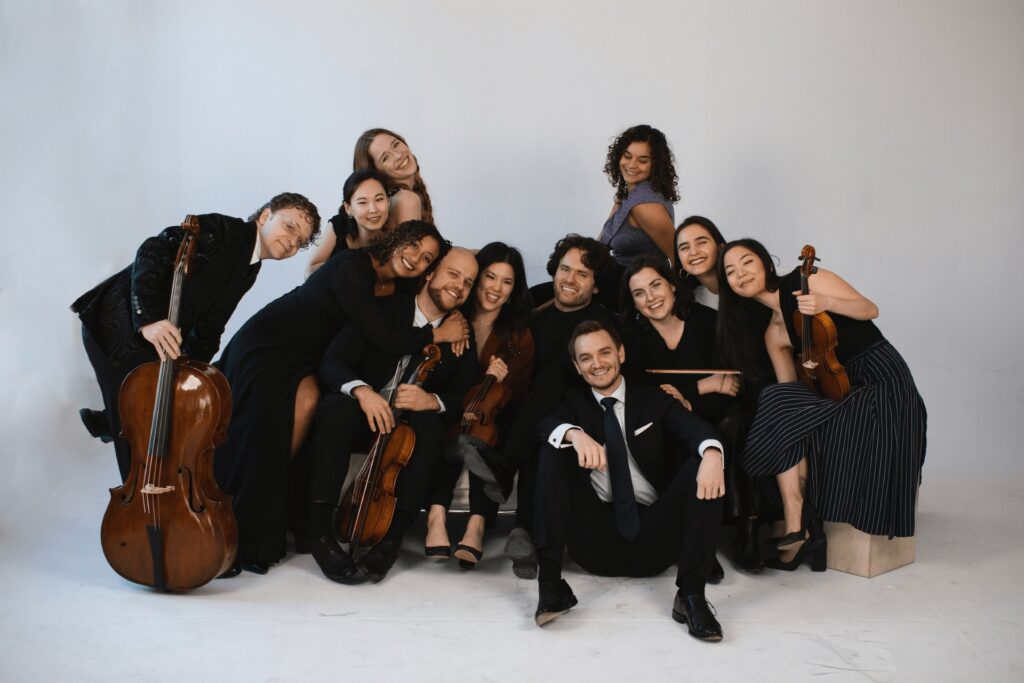
Vivaldi’s “The Four Seasons” will highlight a program performed by the ensemble Twelfth Night that will also include works by Pietro Locatelli, Arcangelo Corelli, and Francesco Durante (Trinity, next Thursday at 7 p.m.).
This year’s fully-staged opera will be Puccini’s “Madama Butterfly.” Soprano Toni Marie Palmertree, who really threw herself into the role (and off Castel Sant’Angelo’s parapet) last year as Tosca – and who recently sang “Butterfly” at the Met – will sing Cio-Cio-San. Victor Starsky, who gave an impassioned performance as Tosca’s lover, Cavarodossi (and, again, will sing with Radvanovksy this Saturday) – will return as Pinkerton. Once again, Milanov will conduct the PSO. The opera will be heard in two performances (Morven, Friday, June 12, at 7 p.m.., and Sunday, June 14, at 4 p.m.).
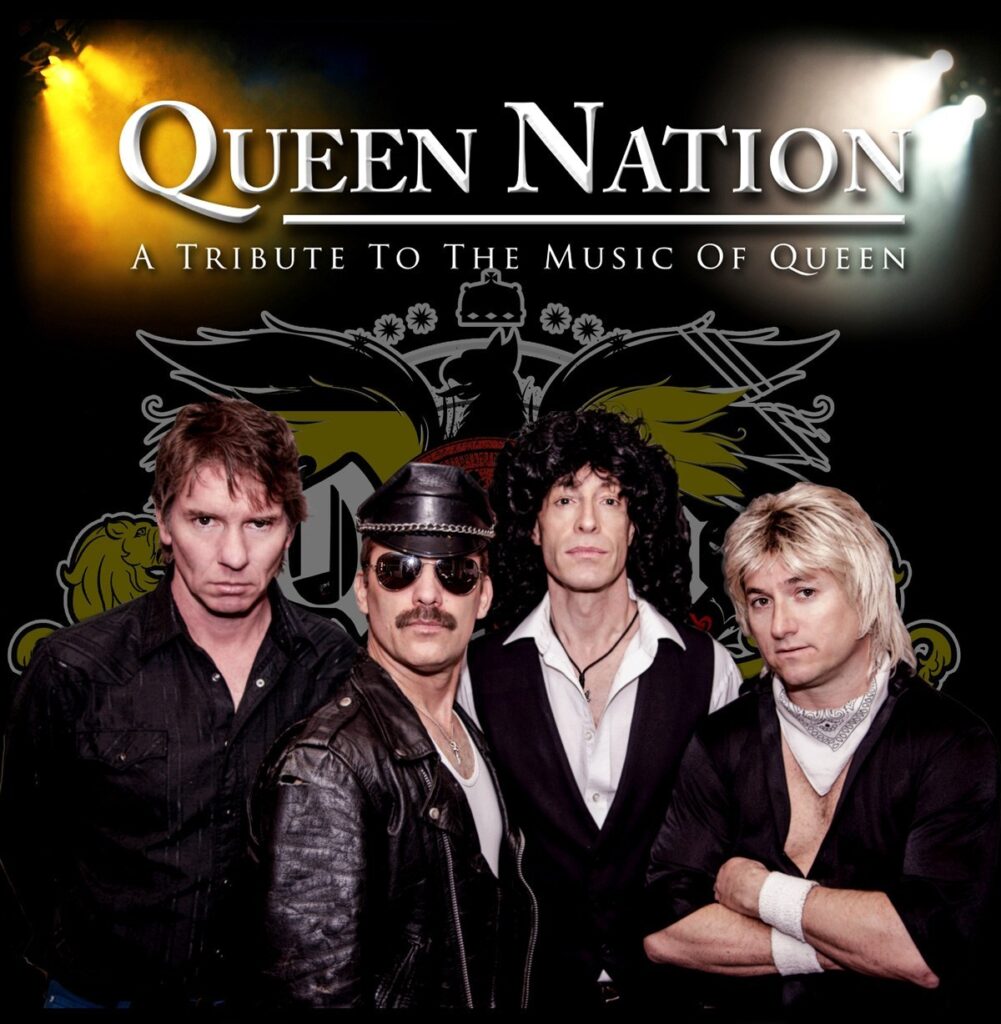
Impassioned music-making of another sort will rock the pavilion – and you – as musicians of Queen Nation, billed as the undisputed #1 Queen Tribute Band in the United States, declare themselves the champions in iconic Queen ‘70s and ‘80s-era costumes (Morven, Saturday, June 13, at 7 p.m.).
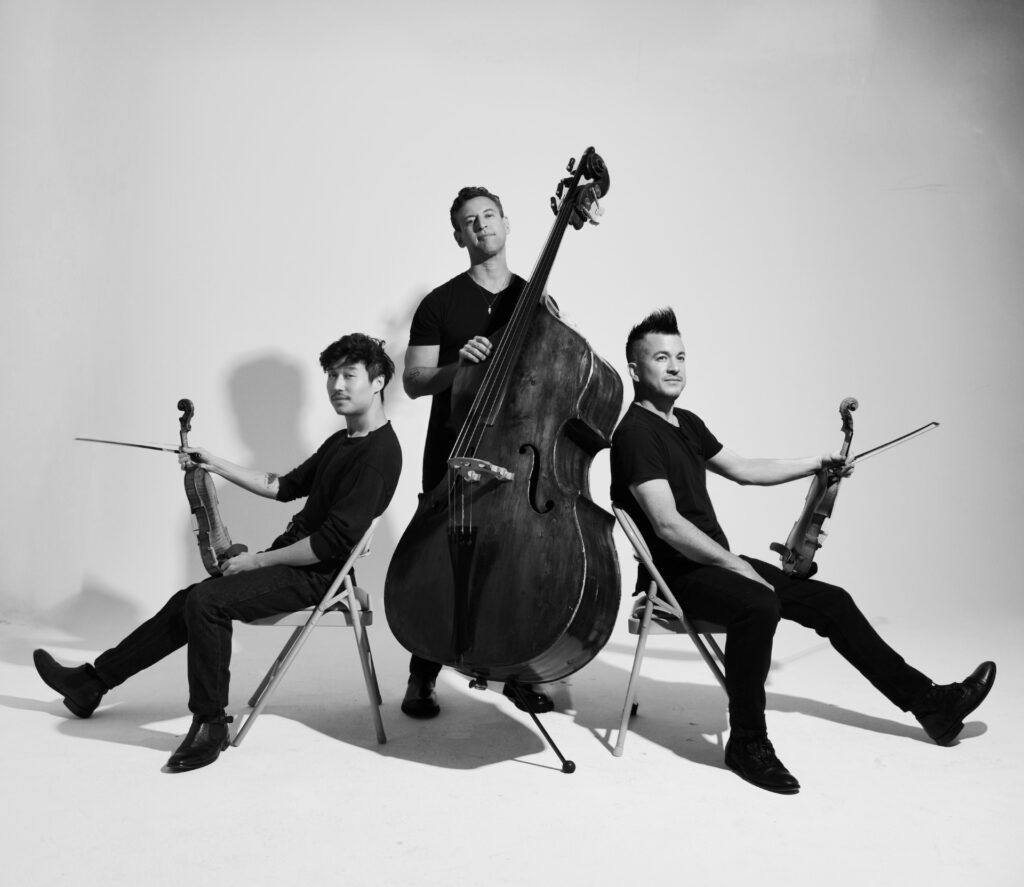
Grammy and Emmy Award-winning ensemble – and Festival favorites – Time for Three will return with another genre-defying program. The trio of Ranaan Meyer (double bass, vocals), Nicolas “Nick” Kendall (violin, vocals) and Charles Yang (violin, vocals) merge classical, Americana, and singer-songwriter traditions into a singular, remarkable sound. As always, in the spirit of spontaneity, as always, the group will announce its selections from the stage (Morven, Thursday, June 18, at 7 p.m.).
The concluding weekend will be a three-day showcase of American music, in celebration of America’s Semiquincentennial, with additional family events on Sunday. The weekend will be presented in partnership with the Municipality of Princeton.
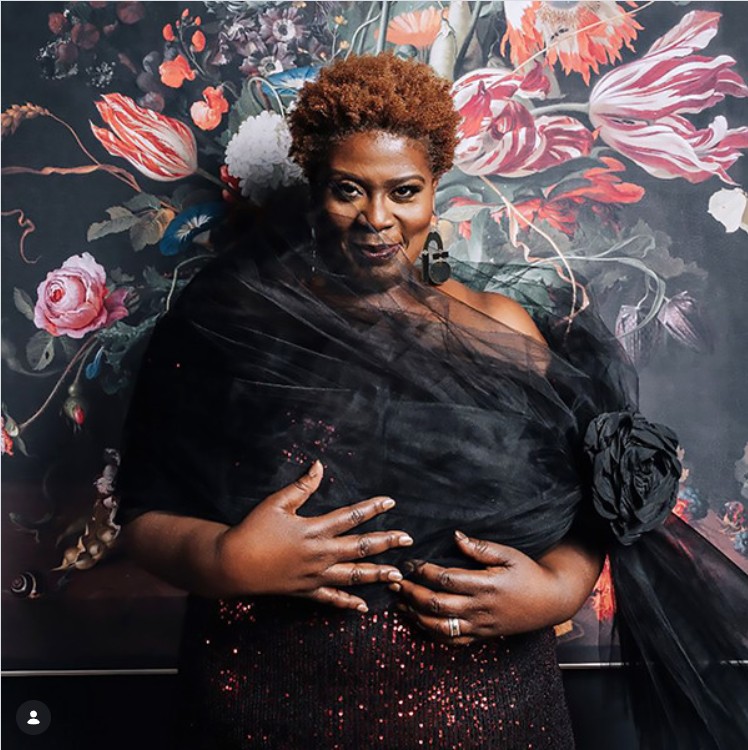
Great Ladies of Jazz will be a tribute to Ella Fitzgerald, Sarah Vaughan, Billie Holiday, Judy Garland, and Ginger Rogers, among others, starring Capathia Jenkins and Aisha de Haas. Lucas Waldin will conduct the Princeton Symphony Orchestra (Morven, Friday, June 19, at 7 p.m.).
A pre-concert talk, “Jazz and the Civil Rights Movement,” will be delivered by Princeton University voice teacher Dr. Rochelle Ellis. Treats will be available to sample from Tipple & Rose, and Morven’s Museum will be open with free admission from 5-7pm in recognition of Juneteenth.
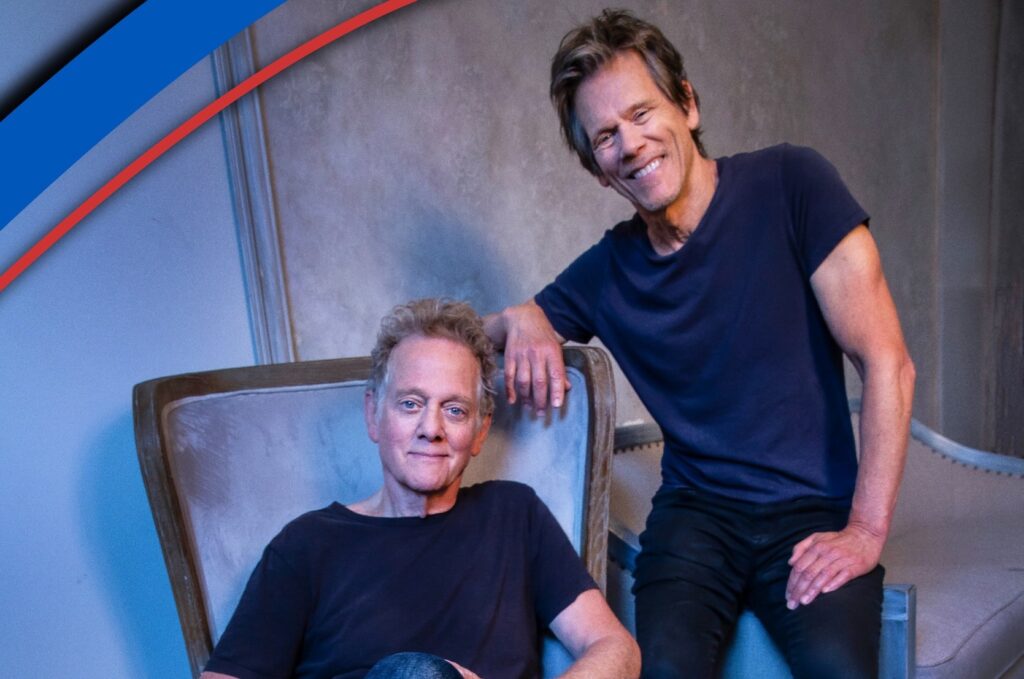
The Bacon Brothers, Emmy-winner composer Michael and A-list actor Kevin (of “Footloose” and “Apollo 13” fame), will play a mix of folk, rock, soul, and country music. Olsson’s Fine Foods will be onsite with Happy Hour Boxes filled with gourmet cheeses and sandwiches. (Morven, Saturday, June 20, at 7 p.m.).
Finally, the Princeton Symphony Orchestra will offer a star-spangled salute with “American Fanfare,” featuring Broadway vocalist Julie Benko (“Funny Girl”). The patriotic program will include works by Aaron Copland, Valerie Coleman, Virgil Thomson, Richard Rodgers, Harold Arlen, and John Philip Sousa. America 250 flags and red, white, and blue pom-poms will be given out to the first 150 to enter the grounds (Morven, Sunday, June 21 at 3 p.m.).
Prior to the concert, free family fun for children of all ages will be available, beginning at 1:00.
Picnic boxes from Jammin’ Crepes may be pre-ordered up to 48 hours before each mainstage Festival performance, except the June 6 Sondra Radvanovsky concert.
Tickets and information are available by phone at (609) 497-0020 and online at princetonsymphony.org/festival.
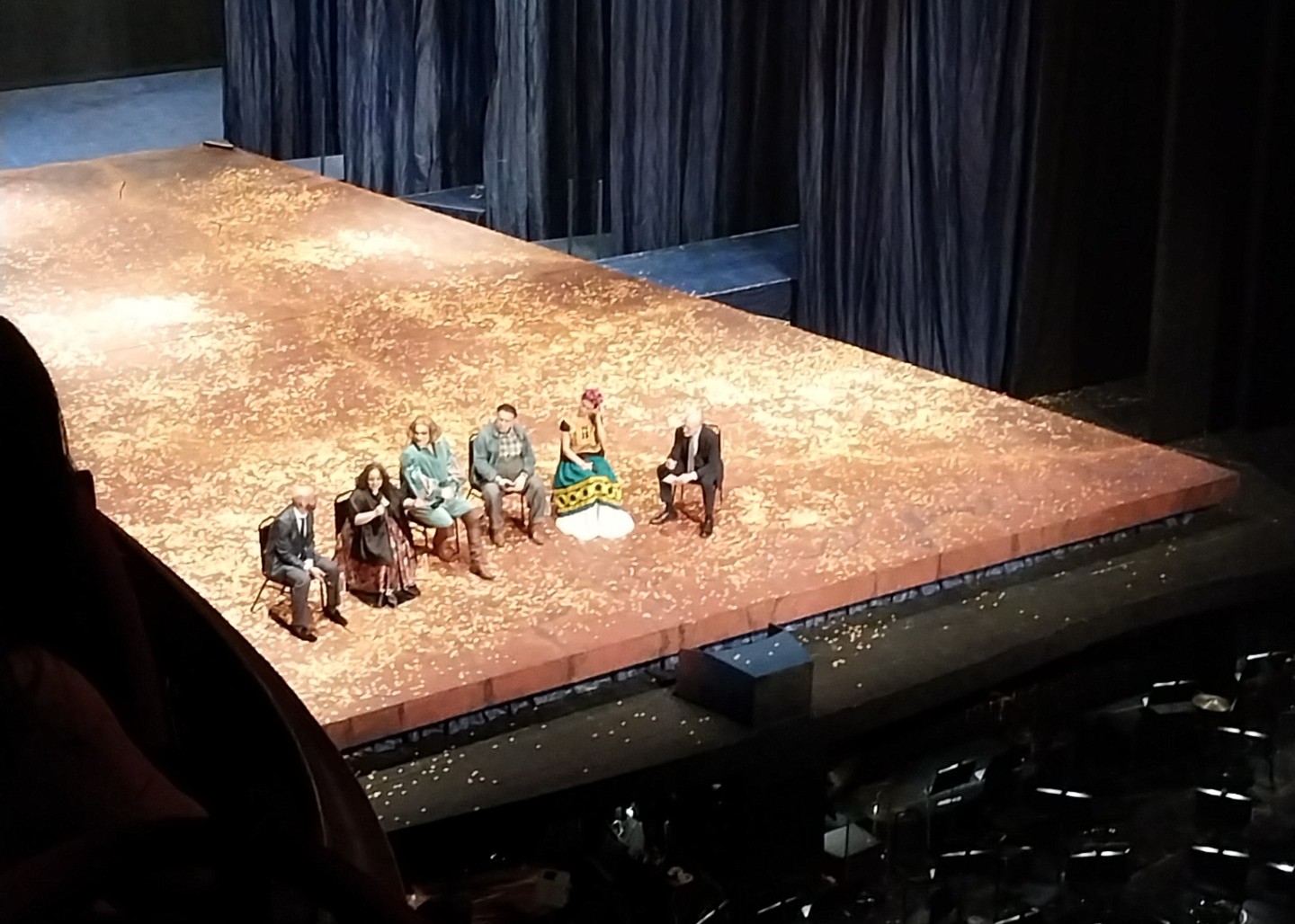
Following the Sunday matinee of Gabriela Lena Frank’s “El último sueño de Frida y Diego” (“The Last Dream of Frida and Diego”) at the Metropolitan Opera, the composer and some of the principals joined general manager Peter Gelb onstage for a post-performance conversation.
Seeing Frank in the flesh set me thinking: how many Pulitzer Prize winners (for music) have I encountered in person? Alphabetically, I think this is a comprehensive list: William Bolcom, George Crumb, David Del Tredici, Jennifer Higdon, David Lang, Wynton Marsalis, Gian Carlo Menotti, Paul Moravec, Bernard Rands, Shulamit Ran, Ned Rorem, Caroline Shaw, Joan Tower, Melinda Wagner, George Walker, Richard Wernick, Julia Wolfe.
Some of these composers I saw more than once, a few were chance encounters, some I basically said hello to or had a quick exchange with, some of them I interviewed, a few I had actual, candid conversations with.
Those of you who are a little older or who had more mobility than I did as a teenager may have interacted with more of the legends I would have loved to have seen. Sadly, for all my precocity, I was somewhat of a provincial child and not very proactive about figuring out how to buy concert tickets and climb on a bus to New York or Philadelphia.
I would be delighted to read about any of your Pulitzer-winner encounters, if you care to share them in the comments below!
——
PHOTO (left-to-right): librettist and Pulitzer Prize winning playwright Nilo Cruz, Pulitzer Prize winning 0composer Gabriela Lena Frank, countertenor Nils Wanderer (Leonardo), baritone Carlos Álvarez (Diego Rivera), mezzo-soprano Isabel Leonard (Frida Kahlo), general director Peter Gelb.
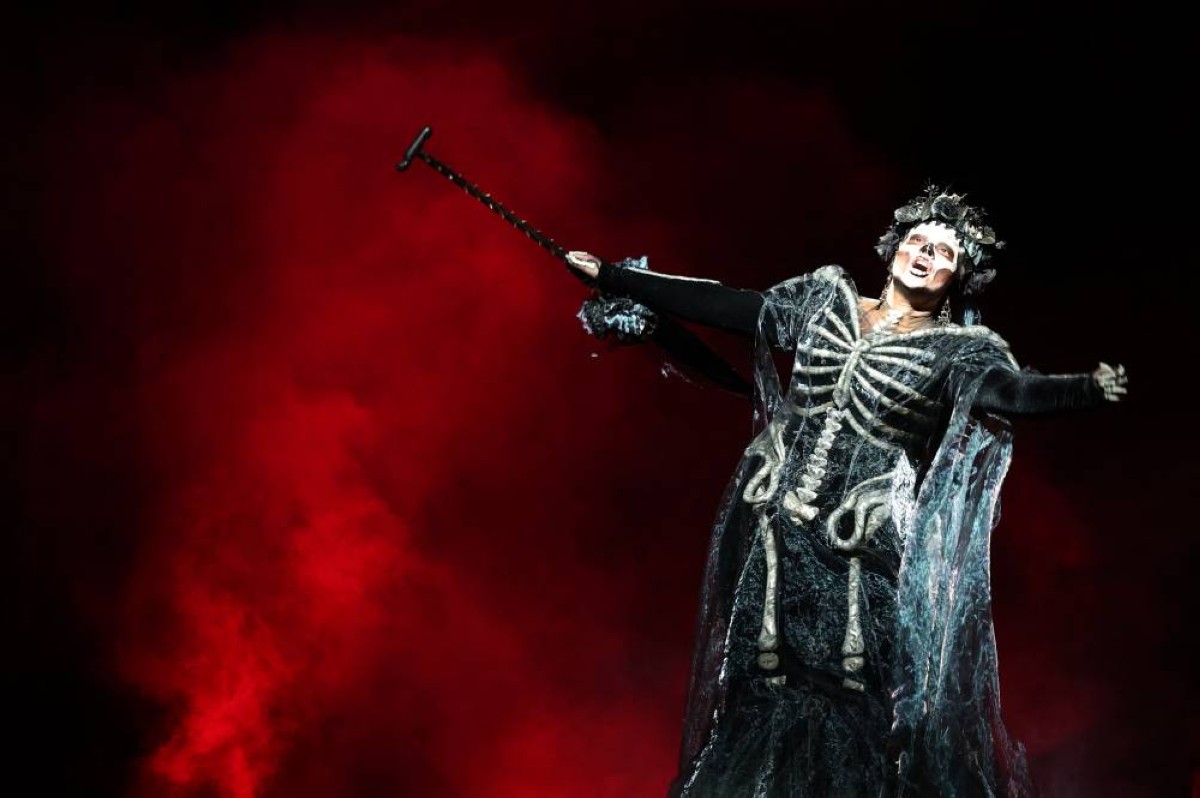
Gabriella Reyes (Catrina, Keeper of the Dead) was already backstage – Gelb explained that it takes an hour for her to remove her costume and make-up – and Yannick Nézet-Séguin was off to Germany to conduct the Berlin Philharmonic.
Since I was taken ill a few weeks ago, when I was hoping to get in to the Metropolitan Opera for a Saturday matinee of “Eugene Onegin,” my ticket was exchanged for a new opera by Gabriela Lena Frank, longtime composer-in-residence with the Philadelphia Orchestra, whose stock has since skyrocketed, as she was recently awarded this year’s Pulitzer Prize for Music. I had intended to catch “El último sueño de Frida y Diego” anyway, at the movies, as part of the Met Live in HD series (on May 30 or June 3). That said, how lucky I was to actually experience it in the house!
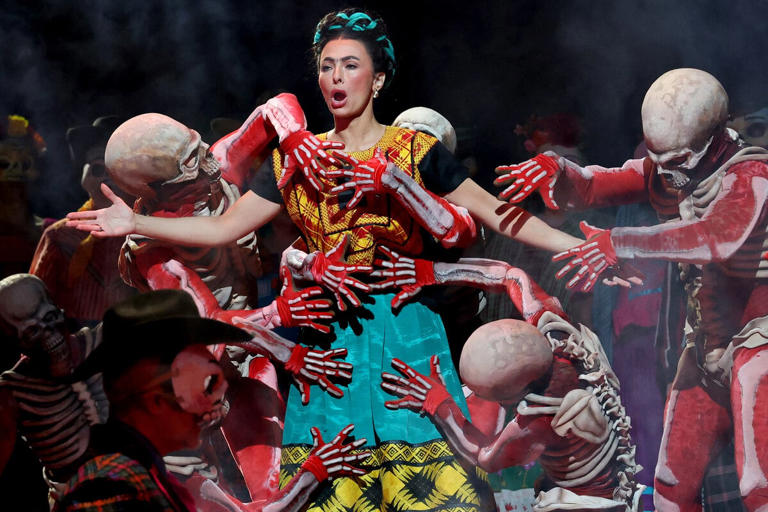
The opera, a postscript to the tempestuous real-life love story of Mexican artists Frida Kahlo and Diego Rivera, is ingeniously set during El Día del Los Muertos – the Day of the Dead. Kahlo’s spirit returns in a kind of reverse Orpheus and Eurydice story to guide Rivera to the afterlife. A great many operas can be summed up in a line or two, but any such synopsis cannot do justice to the Met’s production design (by Jon Bausor) and choreography (by director Deborah Colker). Predictably, some of Kahlo’s most iconic paintings are recreated, and Diego perches on a scaffold before one of his murals in its early stages, but the eyepopping supernatural element brings a whole other element of interest.
As with this season’s immigrant experience/proto-superhero comic book “The Amazing Adventures of Kavalier & Clay,” another Met debut, I was set to wondering how well the work succeeds as an opera, as opposed to a functional score elevated by all the superlative stagecraft. As I remarked about “Kavalier & Clay,” I’m not sure if the music in itself fits the bill, but I am unshakeable in my conviction that it’s one hell of a show. Frankly, comparing the two is kind of like comparing a corned beef sandwich and a tamale. Anyway, even a fabulous score can misalign on the opera stage, where words and music, conflict and emotion need to strike a perfect balance. There are plenty of great composers who have been unable to stick the landing.
My impression of “Frida y Diego,” on first hearing, is that the music is on an entirely different level than Mason Bates’ for “Kavalier & Clay,” perhaps less overtly melodic (“K&C” was almost like a movie in sound and execution), yet ultimately having greater resonance. The piece is marvelously orchestrated (although I can’t say I could really make out some of the more novel touches, such as when one of the percussionists ran bows along the keys of a marimba). But not all operas are driven by melody. It’s not that “Frida y Diego” is not “melodic” (it’s definitely tonal), it just doesn’t really have any big tunes. So don’t go into it expecting to luxuriate in bel canto.
That’s not to say it doesn’t have arias and even some showstopping moments. Mezzo-soprano Isabel Leonard, as always, is excellent as Frida – and my, did the make-up people transform her into the spitting image of Kahlo – even when she was called upon to lie down or execute certain pieces of choreography.
However, soprano Gabriella Reyes brought it big time as Catrina, Keeper of the Dead, transcending, rather than being swallowed up by, her incredible skull-and-bones costume. She positively owned the role.
It says something for countertenor Nils Wanderer that up against such a powerhouse that he would make such a strong impression as Leonardo, a Greta Garbo impersonator(!) dressed as Queen Christina. It’s hard to explain this element, but just go with it. It’s oddly moving, and it works. Also, watch “Queen Christina.” It’s a great movie.
It was good to see baritone Carlos Álvarez back on the Met stage, but especially in the scene where he’s standing on the scaffold, the acoustic did his voice no favors. It’s not that he sounded bad – he did not – it’s just that he didn’t carry as well as did his higher-voiced colleagues. With six levels and close to 4,000 seats, the Met is an enormous house. Speaking of enormous, I do hope that the costumers gave him a padded suit to play Rivera. I would hate to think that he let himself go to the point that he now has the physique of Fred Mertz. Since Rivera generally looked like Darius Milhaud on a bad day, I would think that it was an artistic transformation.
The skeletal dancers busted some very impressive moves. Some of them would not have been out of place in Michael Jackson’s “Thriller.” Even more astonishing was the ability of the dancers to stay in sync with one another in situations where they were either in cumbersome-looking, sight-obstructing masks or otherwise blocked from one another’s view.
Music director Yannick Nézet-Séguin was in the pit. In his other role, as music director of the Philadelphia Orchestra, he’s had a wealth of experience conducting Frank’s music. He didn’t conduct with quite the brio he can sometimes bring, whether you want it or not, but here that wasn’t necessarily a bad thing. Really, it’s a more atmospheric piece. There was plenty of energy onstage, and Frank’s sound-world kept the ear engaged, with the character of Leonardo getting the most sensuous music. I confess, there were times, given the subject matter, that I wondered if I might be watching a dry run for Missy Mazzoli’s “Lincoln in the Bardo,” set to make its Met debut next season.
Whether or not Frank’s opera will endure, no one can predict with any certainty, but experiencing it now at the Met is definitely worthwhile. You won’t leave the house (or the movie theater) whistling any of the tunes, but it is an absorbing magical realism experiment, and I think it works. I wouldn’t mind catching it again. Perhaps I will, at the movie theater.
Incredibly, it turned out to be a two-opera weekend for me, as Friday evening I drove down to Wilmington for OperaDelaware’s concluding performance of Umberto Giordano’s “Andrea Chénier.” This was a more traditional, blood-and-thunder operatic experience, composed during the height of the verismo craze (the libretto is by frequent Puccini collaborator Luigi Illica), though set during the French Revolution.
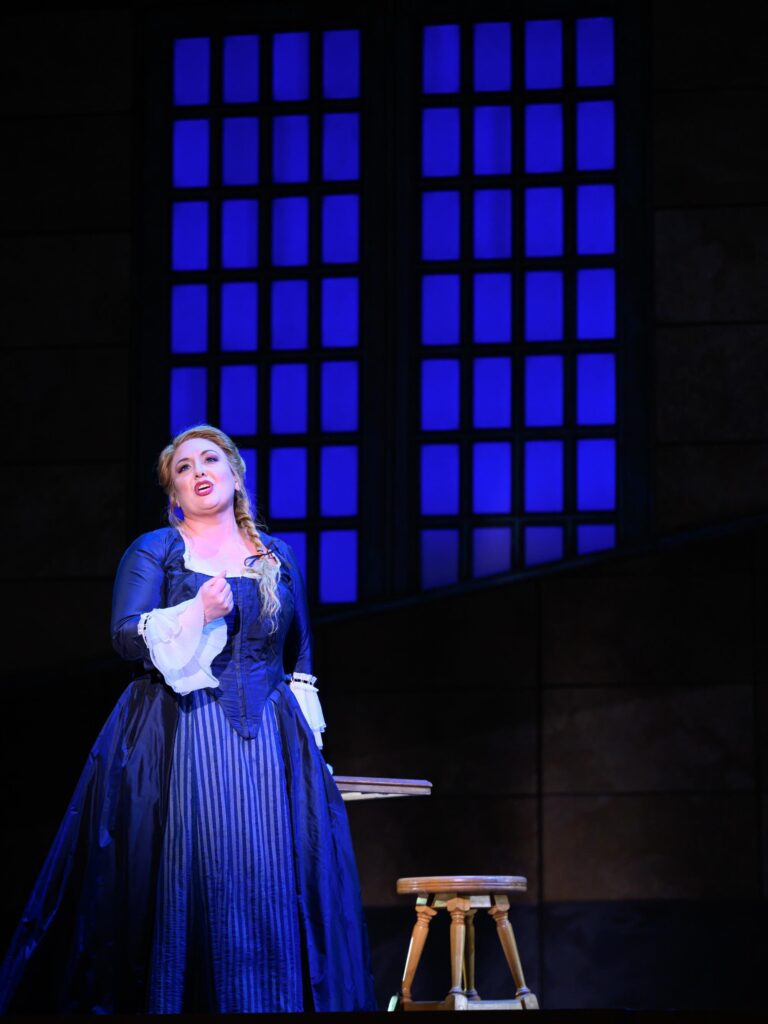
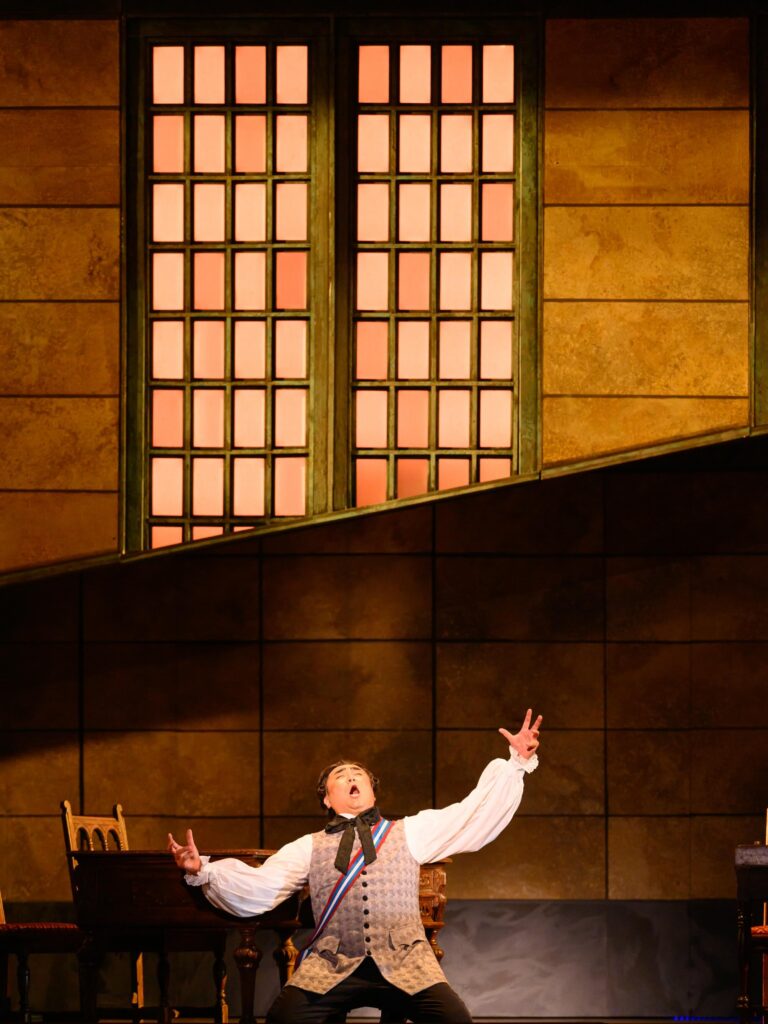
The work was sung with great passion by soprano Toni Marie Palmertree, tenor Dane Suarez, and baritone Gerald Moon. (Palmertree went for broke as Tosca at last year’s Princeton Festival; she’ll return to Princeton next month as Madama Butterfly – a role she sang this year at the Met!) Contralto Daryl Freedman deserves special mention for her poignant, showstopping aria as Madelon, a blind woman nearing the end of her days, who commits her grandson, the last of her line, to the cause of the Revolution.
The opera was presented with minimal props, a few tables and chairs, and some bleachers in the courtroom scene. Singers were in period costume. Stylized, bisected windows formed the backdrop throughout, but the mood was varied, in no small part through skillful lighting, whether supporting a garish party of willfully oblivious aristocrats or doomed lovers languishing in a prison cell. Most effective was a silhouetted guillotine, an imaginative touch toward the end, its blade dropping with shattering finality at the curtain. The chorus sang lustily, lending the performance a sense of grandeur and scope.
The experience was enhanced by the charmingly intimate and historic 1,140-seat Wilmington Grand Opera House. With its frescos and muraled ceilings, tiered wooden seats, and wraparound stalls and balcony, the theater embodies a kind of 19th century craftsmanship one rarely encounters these days. It’s practically a toy theater compared to the Met, more in line with what I imagine would have been the norm with many European houses, back in the day. Ingmar Bergman would have loved this place. Perhaps Wes Anderson too. What a great venue!
The orchestra played well, if not impeccably. The fact that it did play so well made the (very) occasional cracked note in the pit serve as a reminder that this was, after all, live music-making, not karaoke, and I wouldn’t have had it any other way. The dramatic sweep of the performance was authentic and all the more compelling for it. How many freelance musicians and singers are out there, playing regional houses, and making music of this quality?
Conductor Anthony Barrese directed a flowing, emotionally immediate performance. He generously offered the baton to an assistant for the opera’s eventful second act, citing the fact that he himself was only able to learn on the job and opportunities to do so in opera are scant. In the event – to my ears, anyway – the assistant acquitted himself beautifully. Barrese also provided one of the program booklet’s informative historical notes. He and outgoing general director Brendan Cooke, who share a rich history spanning decades and several opera companies, exchanged some poignant words before the evening’s performance. So not all the tears were on the stage!
I should mention that the stage director, Octavio Cardenas, also contributed to the booklet. His thought-provoking introduction brings into focus the dangerous – and innately human – factors that contributed to the tragedy and violence of a political movement that turned into one of history’s most horrific bloodbaths. (Keep in mind, the opera was written scarcely a hundred years after the period in which it is set.)
“This production of ‘Andrea Chénier’ is driven by a central question: what happens when idealism stops being a guiding principle and becomes a form of blindness? Set against the backdrop of the French Revolution, the opera is not presented as a celebration of political awakening, but as an examination of how moral certainty can harden into cruelty. The Revolution in this reading is not simply an historical force, but a mirror of human nature itself, capable of both aspiration and destruction, often at the same time.”
And later…
“Ultimately the production emphasizes that human nature resists purity. Even the most noble ideas are filtered through fear, desire, and self-preservation. The opera’s final moments do not offer resolution in a political sense, but instead reveal a more intimate truth: that love and cruelty, clarity and blindness, idealism and violence can coexist in the same human heart.”
Bravo. And God help us all.
——–
Gabriella Reyes raises the dead as Catrina in “El último sueño de Frida y Diego”
Isabel Leonard as Frida
Skeletons in rehearsal
Five more performances of “Frida y Diego,” through June 5
Can’t make it to New York? The Met Live in HD will bring it to select movie theaters, May 30 & June 3 (search by clicking the red bar beneath the banner, at the right of the screen)