Though Johann Michael Haydn’s entrance into a musical career was eased by his yet-to-be-famous older brother, he very much earned a reputation on his own merits. Michael started out as an organist and chorister (gone to Vienna at age 8; employed as an organist there by age 12). It’s said that Michael was the brighter student of the two and that his singing was more admired.
In 1762, Michael arrived in Salzburg, where he rose through the ranks to become concertmaster and organist to Archbishop Sigismund Schrattenbach. In Schrattenbach’s service, he churned out more than 360 compositions. The Haydns met Wolfgang Amadeus Mozart in Salzburg. Naturally, his music made a great impression. What’s surprising, perhaps, is that their music made a great impression on him, as well.
For years, Michael’s Symphony No. 26 was misidentified as Mozart’s Symphony No. 37. Mozart had borrowed the work to perform in Linz. On another occasion, Mozart stepped up to fulfill one of Michael’s commissions (anonymously) when Michael was too ill to do so himself. When he came to write his Requiem in 1791, Mozart clearly remembered the requiem mass Michael had composed some 20 years earlier on the death of his employer.
For his part, Mozart’s father, Leopold, disapproved of Michael’s heavy drinking. Perhaps that only made him all the more appealing to his son.
Joseph Haydn also thought very highly of his brother’s music. He found his sacred works to be particularly effective, bearing an intimate and devotional stamp in contrast to his own more secular, monumental approach. At a point, Michael received a job offer from Joseph’s former boss, Prince Nikolaus Esterházy, but he opted to remain in Salzburg. He would die there at the age of 68.
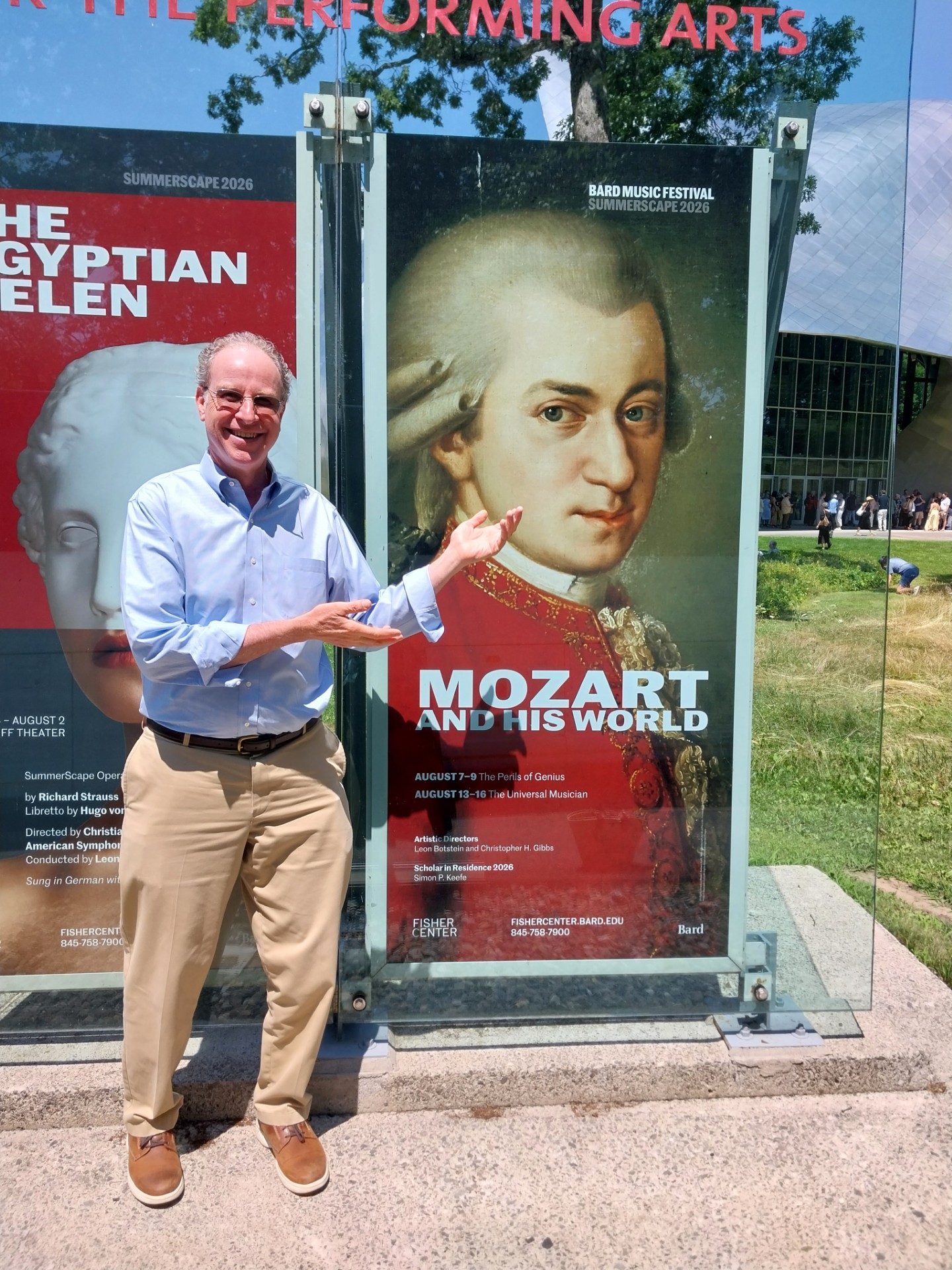
This summer’s Bard Music Festival, “Mozart and His World,” offered rare opportunities to hear Michael Haydn’s Requiem and the opening movement of his Symphony No. 26, long attributed to Mozart as his Symphony No. 37. Mozart only wrote the intro; the rest is hidden Haydn.
FUN FACT: Franz Joseph and Johann Michael had a still younger brother named Johann Evangelist. He was a tenor, whom the family nicknamed Hansl (without the “e”).
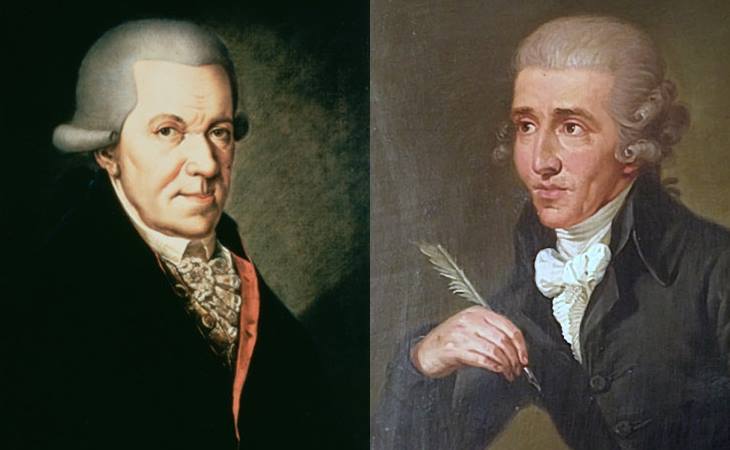
IMAGES: Those talented Haydn boys, Michael (left) and Joseph, knocking out another symphony
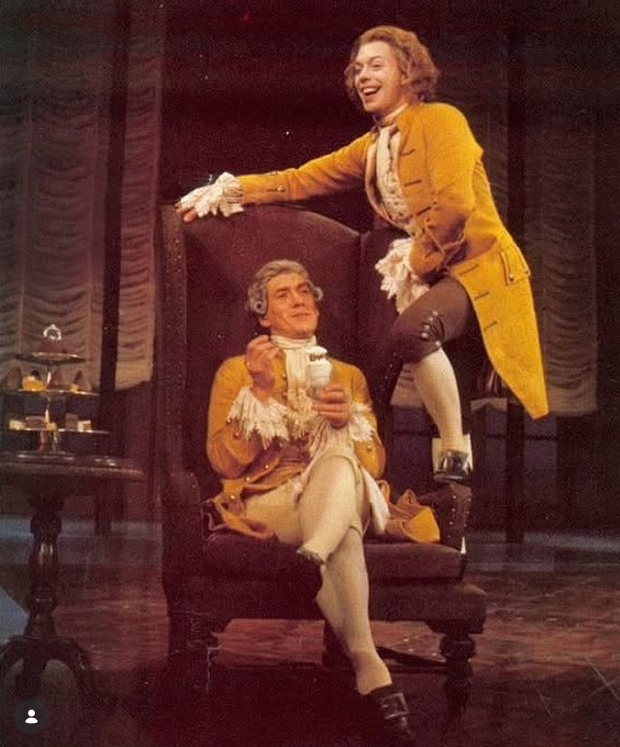
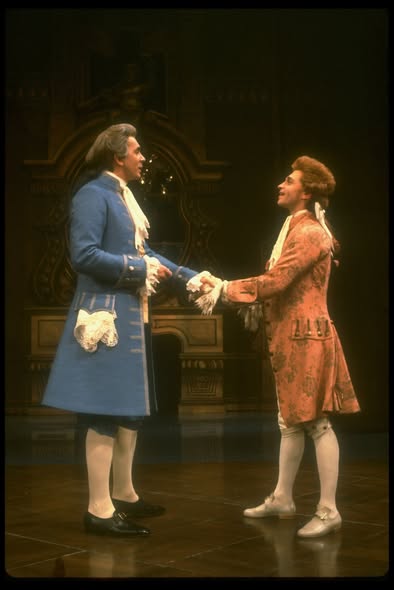
And now Tim Curry is gone. He’ll always be remembered for his audacious turn as Frank-N-Furter, but here he is as Mozart, with Ian McKellen as Salieri, in “Amadeus.” This production of Peter Shaffer’s play opened on Broadway in December 1980, its U.S. debut, also featuring Jane Seymour as Constanze. “Amadeus” was first presented in London in 1979, with Paul Scofield as Salieri and Simon Callow as Mozart. Curry’s death was announced yesterday. He was 80 years old.
There are a few Broadway shows I missed that I would have loved to have seen. In 1980, I was still basically a kid, and if my parents didn’t take me to see something, I didn’t see it. Thankfully, we did go to a few shows a year, mostly musicals, though my parents went to more (which I don’t begrudge them!). Given my burgeoning interest in classical music (I made them listen to a cassette of the “Eroica” Symphony on a drive in to the city), I don’t know why we didn’t see “Amadeus.”
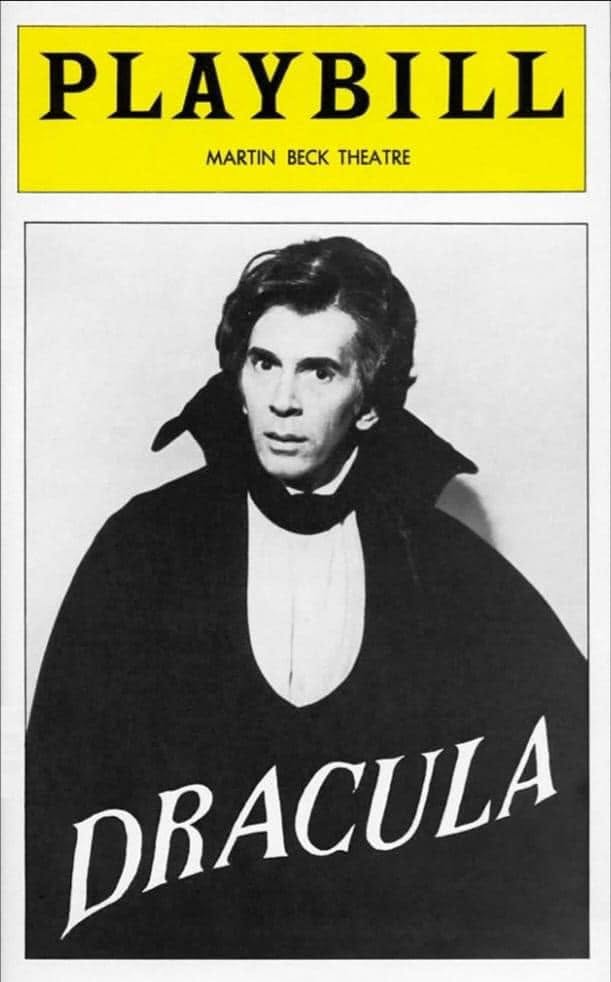
Another show I would have gone crazy for was the Edward Gorey production of “Dracula,” with Frank Langella (who also played Salieri on Broadway, opposite Dennis Boutsikaris as Mozart). Before I was bitten by the classical music bug, I was crazy for the Universal horror pictures. My parents did see this one. I don’t know why I wasn’t invited. I can’t complain, though. I saw a lot. I just should have seen these two!
From what I understand, there is an audio-visual recording of the McKellen-Curry “Amadeus” archived at the New York Public Library of the Performing Arts, but it is accessible only for research purposes. I don’t know if “Dracula” was documented.
I was beyond excited when I saw the trailer for Langella’s film version (with music by John Williams!), but by all accounts, the Broadway show was the one to see. The film was viewed as a disappointment (and, Langella aside, it is), but on Broadway it was a sensation, with Tony Awards for Gorey’s costume designs and for “Most Innovative Production of a Revival.”
Bela Lugosi appeared in the original Broadway production in 1927, 50 years earlier. Of course, Lugosi went on to star in the classic 1931 film and was typecast as a horror actor for the rest of his life.
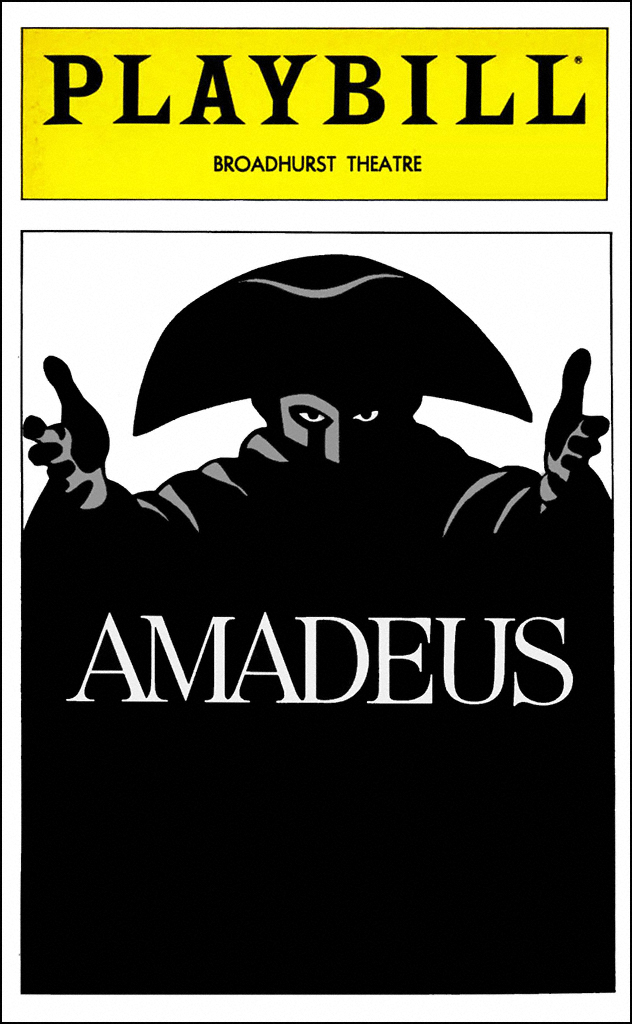
You’ll find images of the “Amadeus” Playbill at the link:
It’s been a busy weekend of concerts, panels, and pre-concert talks at Bard College. I’m hoping to compile my impressions of the first weekend of this year’s Bard Music Festival for your delectation tomorrow. “Mozart and His World” will continue in Annandale-on-Hudson, NY, through August 16.
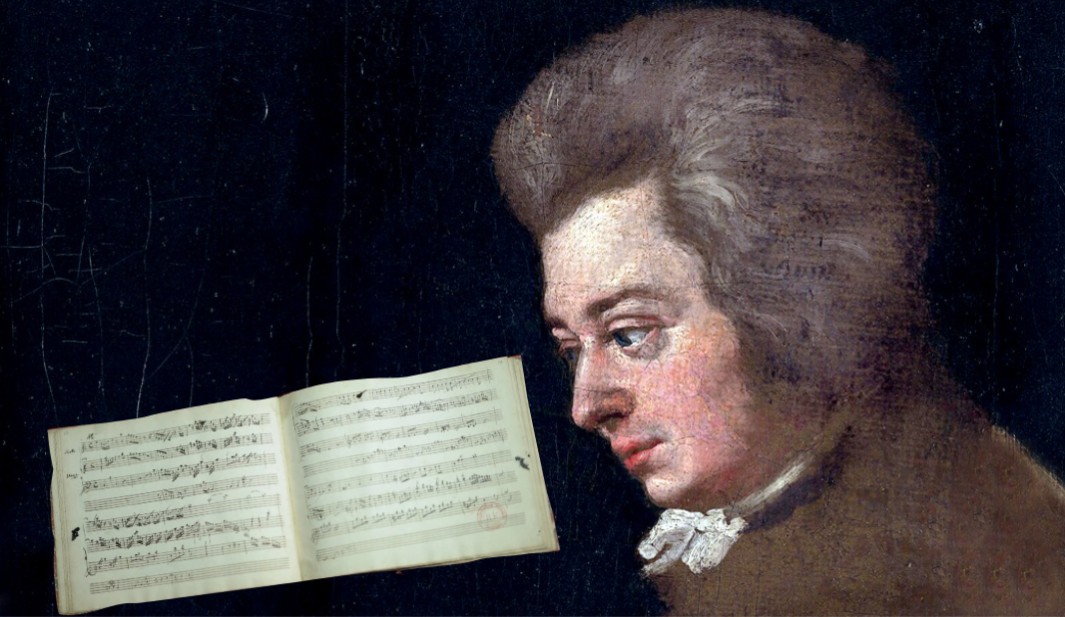
Last week, a 248-year-old notebook housed at France’s National Library was identified conclusively as having belonged to Mozart, when he was 22. The notebook, containing material set down between May and July 1778, was kept by the composer while he was employed as a music tutor in Paris for Marie-Louise-Philippine de Bonnières de Guînes. Her father, the Duke de Guînes, a highly-regarded flutist, commissioned Mozart’s Concerto for Flute and Harp, which you can’t help but encounter weekly if you ever listen to classical radio.
The notebook contains daily exercises for Mozart’s harp-playing protegée and seven original works for flute and harp, written under Mozart’s supervision. Mozart being Mozart, it appears he penned a substantial portion of the music himself. Presumably, these were designed to be played by Guînes and her father. The pieces were performed in public for the first time only yesterday at the library.
With the outbreak of the French Revolution, the Duke, a confidant of Marie-Antoinette, fled the country for England. Apparently, he stiffed Mozart for his work. In absentia, he authorized a butler to pay the composer half of what he was owed. Offended, Mozart refused to take it. Eat the rich!
As is so often the case, the rediscovery occurred when sorting through a pile of documents already stored at the library. A few years ago, somebody knocked over a stack at yet another library and discovered Stravinsky’s “Funeral Song,” a 12-minute orchestral piece composed in memory of his teacher, Nikolai Rimsky-Korsakov. It’s very important for librarians to catalogue their holdings well!
At any rate, the Mozart rediscovery is deemed to be a major one, a significant window into the mind, world, and creative and pedagogical processes of the 22 year-old master.
You’ll recall just the other week, a treasure trove of Salieri’s music was rediscovered. This seems then like an especially fortuitous summer for the Bard Music Festival to be focusing on “Mozart and His World” (to be held at Bard College in Annandale-on-Hudson, NY, August 7-16).
The thesis doesn’t mean it’s all Mozart. There will be works by his influences, his contemporaries and associates, and those he himself influenced and inspired; but as always at Bard, the real magic resides in the manner of the music’s presentation – the context, the juxtaposition of pieces, the pre-concert talks, and the scholarly panels. These are things you won’t find anywhere else.
The Bard Music Festival is part of the college’s larger celebration of the arts, Bard SummerScape (June 25-August 16), which encompasses opera, theater, dance, and cabaret at the campus’ Spiegeltent. If Mozart doesn’t really float your boat, there will be a fully-staged production of Richard Strauss’ opera “Die ägyptische Helena” (“The Egyptian Helen,” July 24-August 2). When’s the last time you heard that?
If I’m a little behind on sharing news of the discovery of the Mozart notebook, I take solace in the fact that the New York Times is only just getting around to reporting on it today as well! Read more about it at the link.
Today’s post began as a response to a question by Jon Haag at the bottom of yesterday’s remarks about the Bard Music Festival, in which I shared news of some newly-rediscovered music by Antonio Salieri: “Do these new found works bring a better appreciation of Antonio’s works or is that still up for debate?”
But of course, I got carried away – enough so that I thought, “Hey, I could use this for today’s post.” With that in mind, here are my two cents about Salieri.
*****
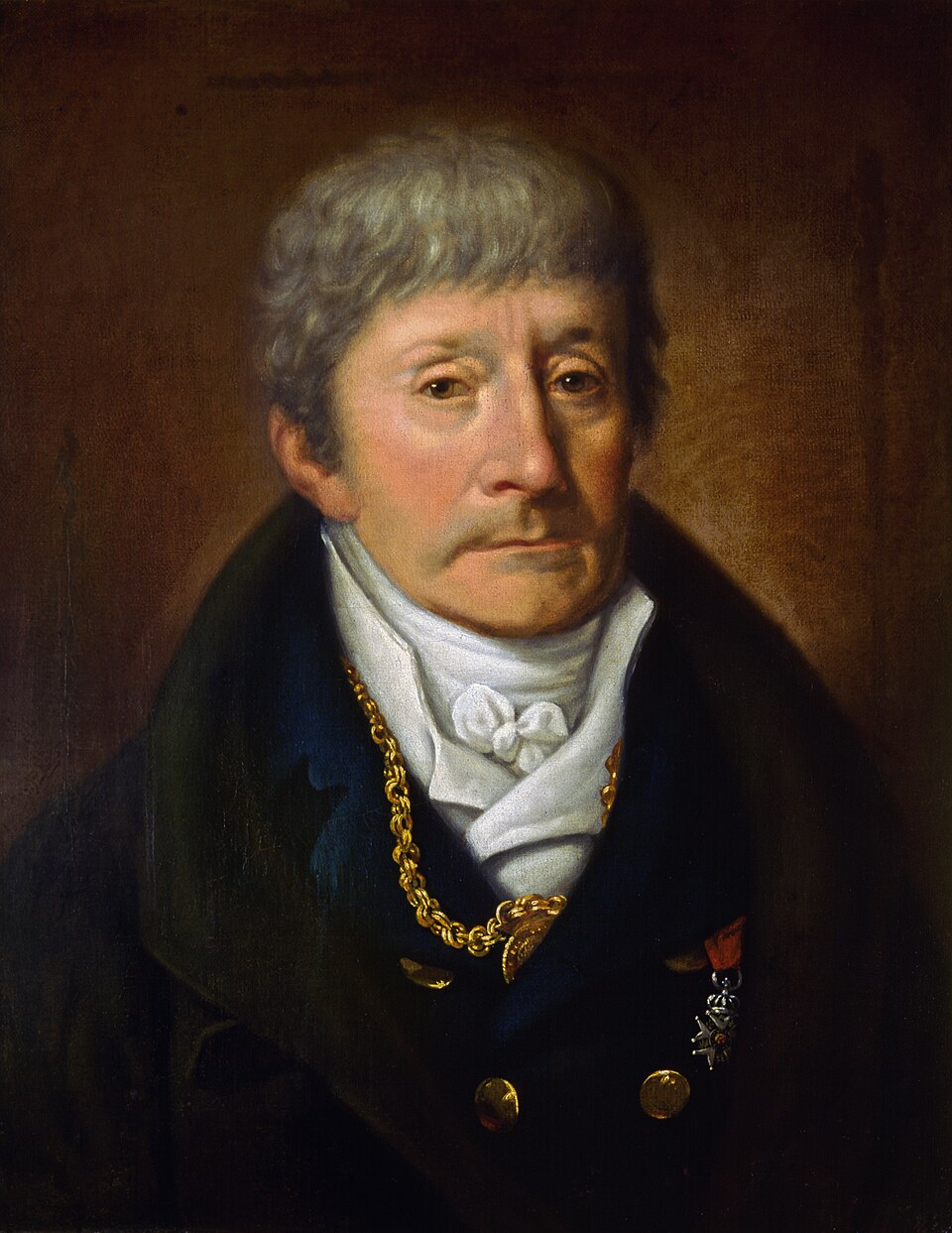
I’m not sure how much is up for debate, really, once people’s awareness is expanded beyond “Amadeus” – a great play and a great film, but reminiscent of my remark on your Freddie Mercury biopic comment the other day, the figure of Salieri was leveraged for dramatic purposes. The historic Salieri was never the envious, scheming hack of Peter Shaffer’s imagination. However, thanks to “Amadeus,” that’s how he is widely perceived.
Ironically, if not for the widespread success of the movie, most people would probably never even have heard of him. So poor Antonio has Shaffer to thank, at least, for making him a household name.
Incidentally, Shaffer was not the first to tell this story. Rumors of Salieri having contributed to Mozart’s early demise have followed him down the centuries. It was the subject of a play by Pushkin and an opera by Rimsky-Korsakov. But it’s all bunk.
Happily, the resulting prurient interest also spurred a revival of performances and recordings of his music. And you know what? The music is not half-bad. Don’t pay attention to the blithe dismissals of classical music know-it-alls (as the genre surely does attract its share of bitchy wisenheimers).
Was Salieri as “good” as Mozart? Of course not. But who was? His music may lack the facility, invention, and humanity of Mozart at his finest. But Salieri was certainly capable, he could delight or be dramatic, and he could write a good tune. I don’t claim to be a Salieri expert, but I have heard more of his music than most.
As for the rediscovery of these 149 pieces, I very much doubt they will change his standing, as it were, but yes, more information always brings a better appreciation, or at least a more complete understanding. It’s seldom that a musical manuscript is discovered that completely revolutionizes anyone’s perception of a composer. It’s more like filling in a detail on a portrait or finding a missing puzzle piece.
These particular works are interesting in that they reveal something of his friendship with confidant and kindred spirit Prince Joseph von Dietrichstein. The pieces were copied in the composer’s own hand, cherrypicked for inclusion in four red leatherbound volumes, presumably to commemorate works of his that were performed at the prince’s gatherings.
Lost works by major composers actually turn up with surprising frequency. A “new” song by Ralph Vaughan Williams was discovered only a few weeks ago. A couple of years ago, there was a waltz attributed to Chopin. The biggest one in recent memory was the rediscovery of a work by Stravinsky, written in memory of his teacher, Rimsky-Korsakov. It’s no masterwork, but it’s interesting, in light of the two composers’ relationship. But it’s still an early work and doesn’t particularly sound like the influential composer Stravinsky was soon to become.
Once in a while, somebody thinks they landed a big fish. In the early 20th century, a new “Beethoven” symphony was found. Of course, it turned out to be by somebody else. In the earlier ‘80s, there was a hullabaloo about a rediscovered Mozart symphony – also probably not by him, but I like it.
Salieri composed 37 operas, in addition to orchestral works, concertos, chamber music, and sacred pieces. His own music aside, he was an influential figure, as Imperial Kapellmeister at the Habsburg court in Vienna. Among his pupils were Beethoven, Schubert, Liszt, and Mozart’s son, Franz Xaver.
Far from blackballing his colleague, Salieri revived “The Marriage of Figaro.” He was also responsible for arranging first performances of Mozart’s Piano Concerto No. 22 (K. 482), the Clarinet Quintet, and the Symphony No. 40. He was full of praise for “The Magic Flute.”
The two composers even collaborated on a cantata, “Per la ricuperata salute di Ofelia” (“For the recovered health of Ophelia”), rediscovered in 2016. The cantata was written in 1785, to celebrate the recently-convalesced soprano Nancy Storace, who was soon to create the role of Susanna in Mozart’s “Figaro.”
This will be one of the works performed at this year’s Bard Music Festival, “Mozart and His World” – as mentioned in yesterday’s post, archived at the link: