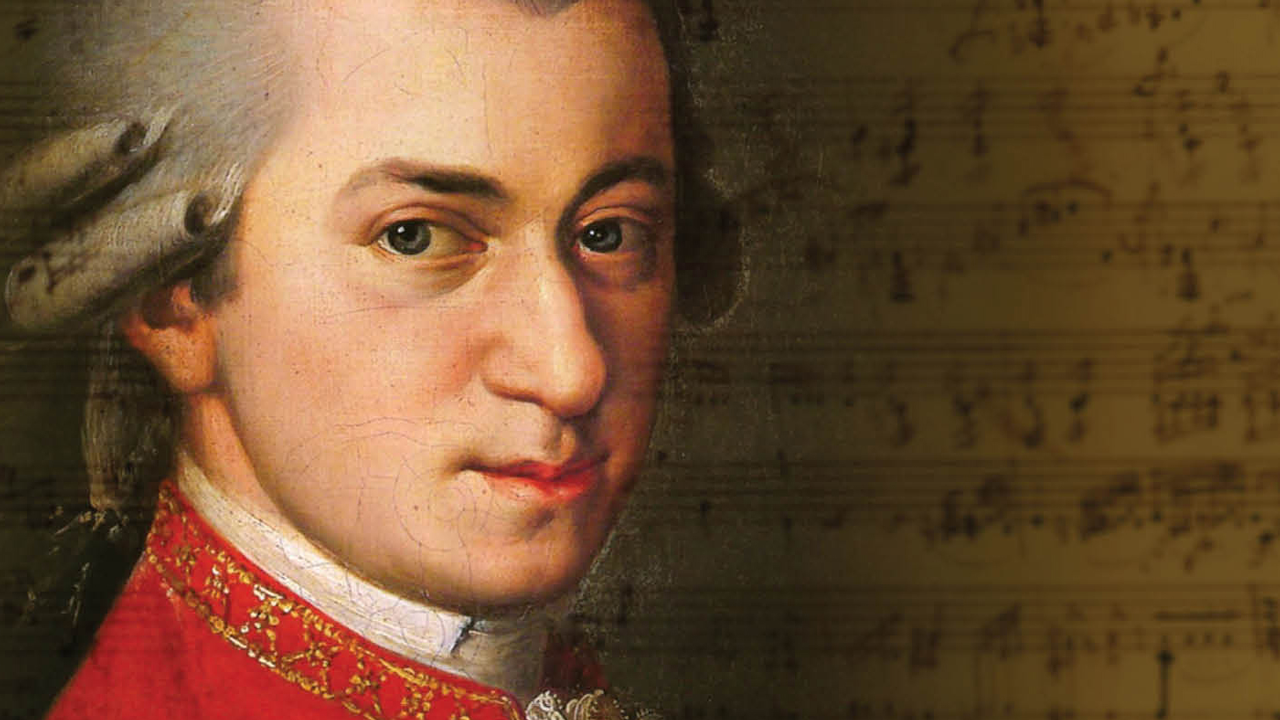
Tag: Mozart

  • Robert Stallman on The Lost Chord

    Robert Stallman on The Lost Chord

    This Sunday night on “The Lost Chord,” I’ll be joined by flutist Robert Stallman, who will talk about his new album, “Cosi fan Flauti,” recently issued on the Bogner’s Café label.

    On top of a lifetime of experience as a performer, Stallman (a former pupil of Jean-Pierre Rampal) has an unusually intimate knowledge of the scores of Mozart, having transcribed some 50 of his works for other combinations involving the flute. A superb album of “new” quintets for flute and strings, derived from some of the piano sonatas, was met with great acclaim upon its release in 2006, in large part for Stallman’s idiomatic grasp of the composer’s method. He went on to perform the same service for Franz Schubert, having arranged some 40 of his works, several of which were issued on another album in 2009.

    The centerpiece of his most recent issue is a new “Sinfonia Concertante” for two flutes and orchestra, based on a two-piano sonata, which Stallman transcribed and then had his friend, the English composer Stephen Dodgson (a descendent of Charles Dodgson, a.k.a. Lewis Carroll), orchestrate. We’ll be listening to this reimagining of Mozart’s original, as well as Dodgson’s own Concerto for Flute and Strings, which was dedicated to Stallman and recorded for the Biddulph Recordings label, back in 1994.

    Also on the new album is Mozart’s Concerto for Flute and Harp (with Stallman’s own cadenzas) and two selections from the “Haffner Serenade” performed on the flute.

    I hope you’ll join me for “Cosi fan Flauti,” this Sunday night at 10 ET, with a repeat Wednesday evening at 6; or that you’ll listen to it later as a webcast at http://www.wwfm.org.

  • Why I (Sometimes) Hate Mozart

    Why I (Sometimes) Hate Mozart

    Dear Wolfgang,

    Sorry for being such an idiot. I confess to feeling total disappointment when your music is listed on a concert program or announced on the radio, yet when I actually listen to it, it almost always yields rewards.

    You wrote my favorite opera of all time (“The Marriage of Figaro”). You wrote the favorite opera of my youth (“The Magic Flute”). You wrote a piece I could not stop listening to when I was in high school (“Eine kleine Nachtmusik”). There are pieces you wrote that I adore. So why do I bear so much prejudice against you?

    Maybe it’s for the same reason some people hate John Williams or Stephen King. If it’s popular, it can’t be good, right? Right?

    (Please note: I adore John Williams.)

    Happy birthday, Wolfgang Amadeus Mozart (1756-1791).

    With a shout-out to poor Edouard Lalo (1823-1892)!

    Very truly yours,

    R

  • English Chamber Orchestra Plays Mozart in Philly

    English Chamber Orchestra Plays Mozart in Philly

    One of William H. Scheide’s final acts of musical beneficence will be made manifest this Tuesday, when Mark Laycock conducts the English Chamber Orchestra at the The Kimmel Center for the Performing Arts in Philadelphia.

    The program will include Mozart’s Sinfonia concertante in E-flat Major, K. 364, and the Symphony No. 29 in A Major, along with English composer Robin Holloway’s “Ode for Four Winds and Strings” and Sir Edward Elgar’s “Serenade for Strings.” The event will mark the English Chamber Orchestra’s first appearance in Philadelphia.

    Proceeds from the concert, which will coincide with the 248th anniversary of Mozart’s birth, will benefit the Philadelphia-based non-profit organization Musicopia. Musicopia is devoted to providing music education and opportunities to the young, with the intent to inspire lifelong involvement in music and the application of related skills to all aspects of a child’s life.

    For more information, visit http://www.musicopia.net.

    Also, feel free to read my article in today’s Trenton Times:

    http://www.nj.com/times-entertainment/index.ssf/2015/01/classical_music_english_chambe.html

    PHOTO: Judith Scheide will be presenting the English Chamber Orchestra, in memory of her late husband

  • Salieri Beyond the Mozart Myth

    Salieri Beyond the Mozart Myth

    Poor, maligned Antonio Salieri. He was a second-rate hack. He murdered Mozart. You know the drill.

    While it’s true there’s no such thing as bad publicity, it would be nice if the man could transcend his notoriety to be recognized for his achievements. Especially since none of the charges happen to be true.

    I like “Amadeus” very much, and while I am happy it has served to keep Salieri’s name alive and perhaps lend a greater degree of commercial viability to subsequent recordings of his music, it is worth looking into the historical facts.

    In reality, Salieri was a generous teacher, who fostered Beethoven, Schubert, Liszt and even Franz Xaver Mozart, the composer’s son, who was born the year after his father’s death.

    Salieri was also a prolific and successful composer. He wrote 37 operas, in addition to orchestral works, concertos, chamber music and sacred pieces. While he was no Mozart – who was? – his music is finely crafted and often quite enjoyable, certainly no worse than that of a majority of his contemporaries.

    Yes, Mozart believed Salieri and the Italian faction ensconced at the Viennese court (including future Mozart librettist Lorenzo Da Ponte) were against him, and there may have been something to it at first. However, beyond a rivalry over certain specific jobs, Mozart and Salieri appeared often to be better than cordial acquaintances. The two even collaborated on a cantata (now lost), “Per la ricuperata salute di Ophelia,” a venture which was apparently entered into voluntarily (as opposed to an earlier juxtaposition of one-act operas composed for the edification of the emperor).

    When Salieri was appointed Kapellmeister in 1788, his first act was to revive “The Marriage of Figaro.” He was responsible for arranging first performances of Mozart’s Piano Concerto No. 22, K. 482, the Clarinet Quintet and the Symphony No. 40. He was full of praise for “The Magic Flute.” And as I said, he took it upon himself to educate Mozart’s son.

    Sadly, Salieri’s enormous compositional output gradually faded from memory already during the latter years of his life. Ironically, it is the scandalmongers who kept his name alive.

    Rumors of Salieri’s involvement in Mozart’s death were codified by Alexander Pushkin in 1831, a few years after Salieri himself had passed, in the tragedy “Mozart and Salieri.” This was later set as an opera, in 1898, by Nikolai Rimsky-Korsakov.

    Peter Schaffer picked up the thread in 1979, when he wrote the play “Amadeus,” which of course was adapted into the Academy Award-winning film in 1984.

    As the compact disc era progressed, more and more of Salieri’s repertoire became available for first-hand assessment – and guess what? A lot of it is quite good!

    Here’s one of my favorite Salieri works, his Concerto for Flute, Oboe and Orchestra:

    https://www.youtube.com/watch?v=cJK87k7jlHo&list=PL653040801EF6DF3A

    And Cecilia Bartoli, from the documentary “Why Salieri, Signora Bartoli?”:

    https://www.youtube.com/watch?v=eq1Fj77eqDw

    Happy birthday, Antonio Salieri!

  • Allegri’s Miserere Mozart’s Defiance

    Allegri’s Miserere Mozart’s Defiance

    Gregorio Allegri composed his setting of Psalm 51 (50), “Miserere mei, Deus” – or “Miserere,” for short – in the 1630s. The piece was designed for exclusive performance in the Sistine Chapel, as part of the Tenebrae service of Holy Wednesday and Good Friday.

    The work is conceived for two choirs, one intoning a simple chant, and the other, spatially separated, providing ornamentation. The effect of a stratospheric top C makes the “Miserere” one of the most haunting works in the choral literature of the late Renaissance.

    The Vatican, realizing it had a good thing, forbade performance of the piece or copies of the score outside its walls, under threat of excommunication.

    It was the 14 year-old Mozart who in effect liberated the piece, copying it down from memory and handing it off to author and music historian Charles Burney, who published it without delay.

    Mozart was summoned before the Pope, and rather than being excommunicated, he was showered with praise for his feat of musical genius. The ban on the “Miserere” was lifted.

Tag Cloud

Aaron Copland (92) Beethoven (95) Composer (114) Film Music (123) Film Score (143) Film Scores (255) Halloween (94) John Williams (187) KWAX (229) Leonard Bernstein (101) Marlboro Music Festival (125) Movie Music (138) Opera (202) Philadelphia Orchestra (89) Picture Perfect (174) Princeton Symphony Orchestra (106) Radio (87) Ralph Vaughan Williams (85) Ross Amico (244) Roy's Tie-Dye Sci-Fi Corner (290) The Classical Network (101) The Lost Chord (268) Vaughan Williams (103) WPRB (396) WWFM (881)

DON’T MISS A BEAT

Receive a weekly digest every Sunday at noon by signing up here


RECENT POSTS