With today’s technology, KWAX isn’t just for Oregon listeners anymore. I myself live on the East Coast, but I know a surprising number of people in my area, and through social media, who have turned to this station. We’ve been enjoying it through our internet radios and at kwax.com.
And why? Because KWAX offers things that aren’t so common in classical radio anymore. For one, KWAX broadcasts major works complete, the way a composer intended. I can’t emphasize how important that is to me, to not have a symphony or a concerto hacked off after a single movement, as has become the norm, sadly, on so many other stations.
Furthermore, the announcers – who are actually in-house and not pumped in from a satellite service somewhere – select ALL the recordings they broadcast themselves, making for an unpredictable and stimulating blend of familiar and unusual repertoire. Sometimes you don’t know how much you need Bohuslav Martinů or Gerald Finzi until they make an unexpected appearance.
This is no small thing. The abuse of satellite networks has changed the face of classical radio – eliminating local jobs, destroying the unique character of stations across the country, and dumbing down programming with slice-and-dice playlists. You get none of that with KWAX. It might not be your local station, but it definitely has local character. You will feel like you are a part of Eugene, Oregon.
Add to these qualities, the variety of content – the concert broadcasts, artist interviews, Saturday operas, and syndicated shows – and you have a classical music resource that is very precious indeed.
KWAX respects not only the music, but also its listeners. And it is worthy of listener support.
70 percent of the KWAX budget comes from people just like you, who understand their invaluable role in sustaining the high standards and quality programming, offered by knowledgeable folks, who palpably enjoy what they’re doing, without filling the airwaves with inane, extraneous chatter.
KWAX makes life more pleasant by sharing beautiful music every day.
If the station enhances the quality of your world, bringing you moments of solace, excitement, intelligence, and elevation, please consider making a donation – wherever you are, in whatever amount – by contributing online at kwax.com, or calling 541-345-9451, during regular business hours.
And if you’ve never tuned in, give it a shot! Obviously, today and tomorrow will be fundraising days, so perhaps they won’t be quite so characteristic. But I guarantee you will not be disappointed with what you hear on a regular basis. This is classical music radio the way it should be, presented commercial-free, without a set playlist, and offered with real integrity.
As host of “Picture Perfect,” “The Lost Chord,” and “Sweetness and Light,” I thank you – from behind the microphone AND as a fellow listener.
https://kwax.uoregon.edu/
Tag: Radio
-
The Last of “The Organ Loft”
When I listen to Roger Sherman’s “The Organ Loft” tonight, it seems I will touch her soft lips and part for the last time. “Touch her soft lips and part” from William Walton’s film score for “Henry V” serves as the closing theme for Sherman’s program, which he has produced for Seattle’s KING-FM since 1993. It has become part of my Sunday evening routine since my own shows have been picked up by KWAX Classical Oregon (which airs the “The Organ Loft” in syndication).
Alas, as Schiller tells us, even beauty must die. Today will mark the final broadcast of “The Organ Loft,” always an enjoyable balance of organ and choral music. Sherman, Associate Organist Emeritus at Seattle’s St. Mark’s Cathedral and Artistic Director Emeritus of Orcas Choral Society, is also CEO of Loft Recordings. Loft manages The Gothic Catalog and Clarion Records, among others. Unsurprisingly, many recordings on those labels have been presented on the program.
Gothic has left a big footprint in Princeton, NJ (where I live and work), through its recordings of Princeton University Chapel’s Aeolian-Skinner/Mander organ, organist Joan Lippincott at Princeton Theological Seminary, and Westminster Choir College alumni, such as organist Peter Richard Conte.
Sherman has further distinguished himself as executive producer of well over 100 choral and organ recordings and has engineered, edited, and mastered dozens of recordings for the Loft, Clarion, Gothic, and reZound labels.
Yet again, I thank my lucky stars for my internet radio, which brings so much beauty into my living room and into my life from around the country and around the world. Sherman’s show has been a warm and welcome visitor on Sunday evenings.
Walton’s wistful music is often the last thing I hear on Sundays before heading off to bed. For those 90 seconds, I stop whatever I’m doing and make sure that I am wholly present. Whenever I listen to this arrangement for cornet and organ (at the link), I will think of Roger Sherman.
“The Organ Loft” airs on KWAX Classical Oregon at 6:00 p.m. PDT, but when I stream it here on the East Coast it’s 9 PM.
I know from experience that a lot of love and a lot of sweat goes into producing a satisfying and polished radio program every week. Thank you, sir, for all your hard work and for sharing your knowledge and life’s passion with thousands of listeners you will never meet.
https://www.youtube.com/watch?v=OU9-M_zch6Y -
Lars-Erik Larsson’s Poetic Suites for Radio on “The Lost Chord”
During his time with the Swedish Broadcasting Corporation (1937-1944), Lars-Erik Larsson provided music for everything from cantatas to radio plays to brief vignettes to accompany the recitation of poetry.
Material from these projects would frequently find its way into the composer’s concert works. Most notably, three of the six movements of “Hours the Day,” from 1938, were organized into what went on to become the composer’s most famous piece, the “Pastoral Suite.”
This week on “The Lost Chord,” we’ll hear the world premiere recording, from 1994, of the complete, original, six-movement work, alongside another one of Larsson’s poetic suites for radio, “God in Disguise,” from 1940.
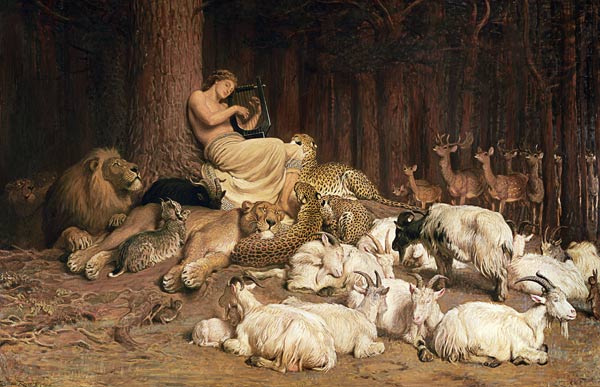
Larsson had been asked as early as 1930 if he would be interested in setting to music Hjalmar Gullberg’s cycle of poems. Gullberg, then the head of Swedish Radio’s drama division, took as his starting point Euripides’ “Alcestis,” in which the god Apollo, temporarily exiled from Olympus, acts as servant and shepherd to King Admetus of Thessaly.
It would be a full decade before the project was realized, in part due to the scale of the undertaking. By then, neighboring Denmark and Norway were under Nazi occupation. Gullberg wrote additional text to mold the work into a protest against violence in the world. In spite – or perhaps because – of the harsh reality of the times, “God in Disguise” retains an optimistic and indeed a determinedly pastoral outlook.
This too will be heard in a world premiere recording, from 1956, featuring speaker Lars Ekborg, soprano Elisabeth Söderström, and the orchestra and chorus conducted by Stig Westerberg.
Brush up on your Swedish, as we celebrate all that is worthy and simple. I hope you’ll join me for “Best at Verse” – Lars-Erik Larsson’s poetic suites for radio – on “The Lost Chord,” now in syndication on KWAX Classical Oregon!
——-
Clip and save the start times for all three of my recorded shows:
PICTURE PERFECT, the movie music show – Friday at 8:00 PM EDT/5:00 PM PDT
SWEETNESS AND LIGHT, the light music program – Saturday at 11:00 AM EDT/8:00 AM PDT
THE LOST CHORD, unusual and neglected rep – Saturday at 7:00 PM EDT/4:00 PM PDT
Stream them, wherever you are, at the link!
https://kwax.uoregon.edu -
Eight-Legged Approval for Mahler 8th
I was listening to a recording of Jascha Horenstein conducting Mahler’s Symphony No. 8 on Henry Fogel’s “Collectors’ Corner” last night on KWAX. Frequently identified as the “Symphony of a Thousand,” this is Mahler’s grandest statement, as if he took the choral finale of Beethoven’s Ninth Symphony, dialed it up to 11, and stretched it more or less to 90 minutes. It is hair-raisingly thrilling.
“Try to imagine the whole universe beginning to ring and resound,” Mahler wrote, in his characteristically overheated way. “There are no longer human voices, but planets and suns revolving.”
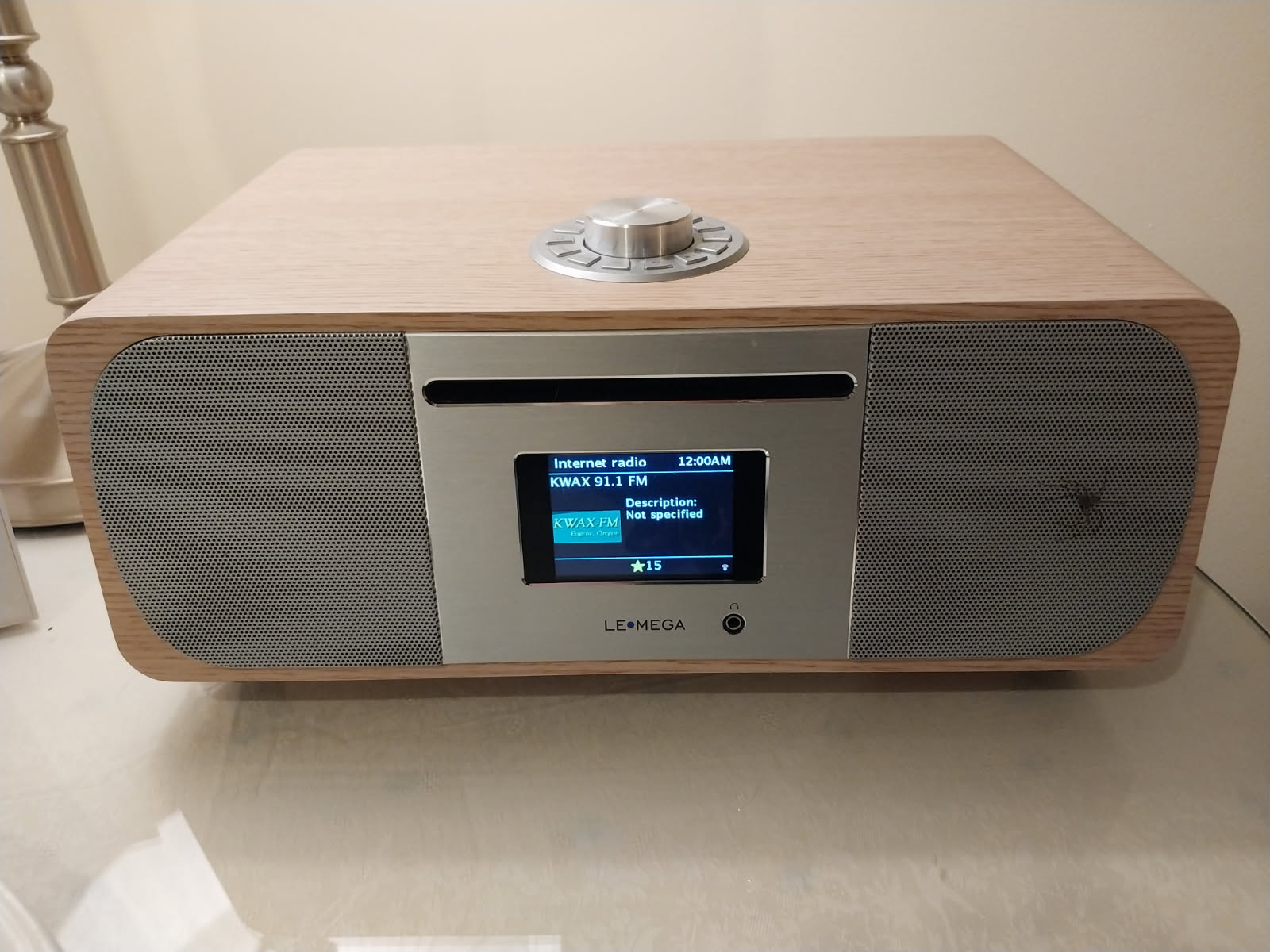
All the same, a man needs his sleep, and 11:00 (EDT) is already past my bedtime, especially if I want to do some reading. So I rose from my chair to turn out the lights and shut off my internet radio, when what did I notice on one of the speakers, but a spider with its legs splayed, unmistakably riding the grandiose waves of the music.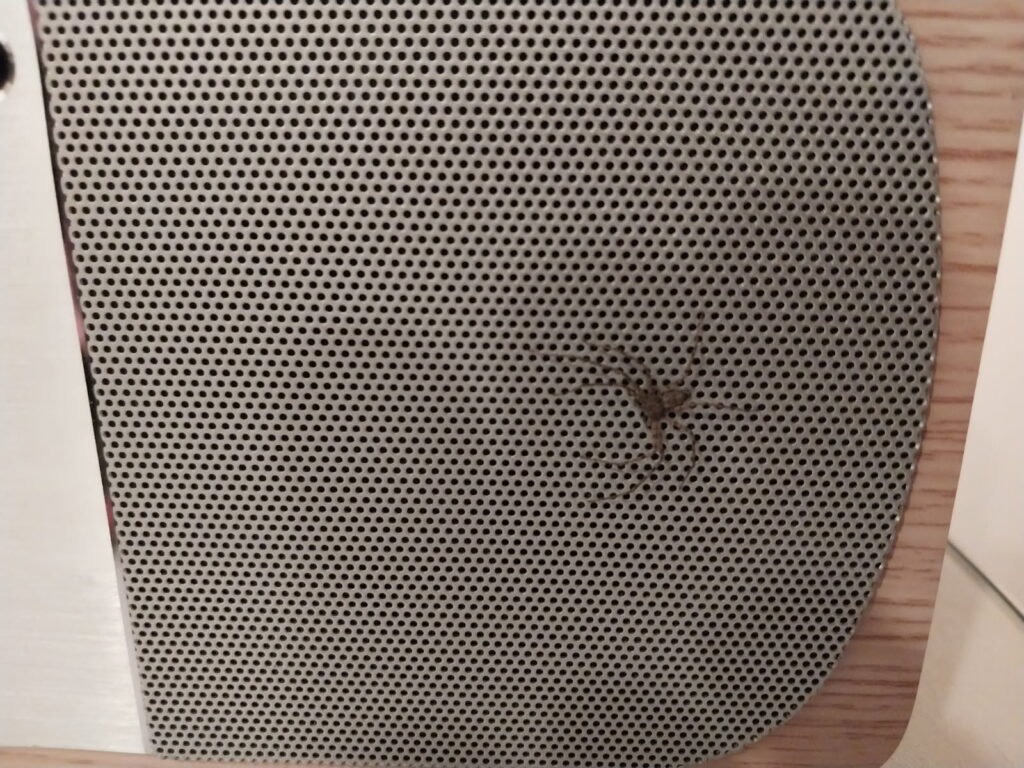
I couldn’t take that away from him. So I went back and sat down until the end of the first movement (about 25 minutes in duration).
I was reminded of Helen Keller, deaf and blind since she was a toddler, who experienced the thrill of Beethoven’s 9th purely through the vibrations of her radio speaker.
I waited until the end of the first movement to turn off the radio. I figured I’d allow the little guy his moment of ecstasy.
I’m not sure what I believe, exactly, but if I’m ever reincarnated, I hope someone will do as much for me.
Here’s a post I wrote about Keller in 2020.
https://rossamico.com/2020/12/31/beethovens-ninth-joy-freedom-2020/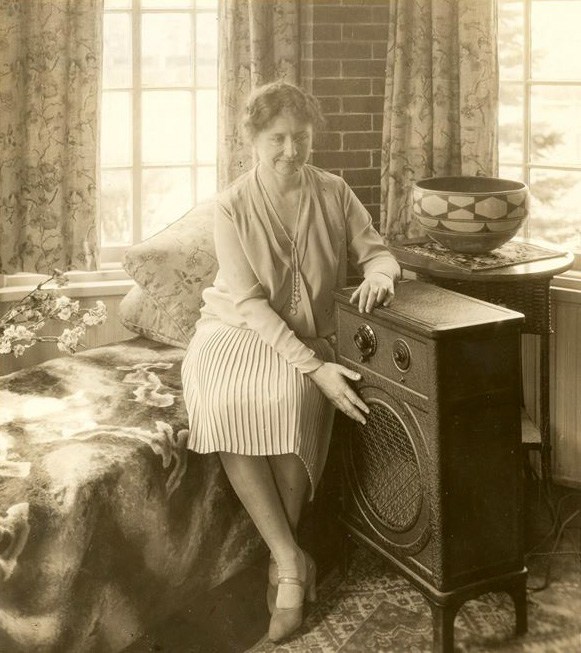
-

Where Have All the Oratorios Gone?
It’s January 6. Epiphany. The Feast of the Three Kings. The Christian feast day that marks, among other things, the Magi’s visit to the Christ Child.
I know I’ve lamented in the past about how so many of the magnificent classical music Christmas works of the past millennium have disappeared from the airwaves. Of the larger works, it seems only Handel’s “Messiah,” Bach’s “Christmas Oratorio,” and of course Tchaikovsky’s (secular) “The Nutcracker” are guaranteed.
Thankfully, I have an enormous record library with at least three shelves devoted exclusively to Christmas music, so I’m able to work through a lot of the forgotten and/or neglected masterworks at home and in the car. But it’s not the same as somebody else pulling and programming the music and knowing that I am part of a unified listening community.
I feel the same way when watching a movie that is broadcast, or actually in a theater, as opposed to playing it from my own collection or streaming it. It’s wonderful to live in an age when these things are possible, but it is just not the same as knowing that I’m a part of a communal experience. (That said, I’m certainly not going to watch “It’s a Wonderful Life” on network television with a thousand commercial breaks!)
I must give a tip of the Ebenezer Scrooge top hat to Yle Klassinen in Helsinki for airing Franz Liszt’s “Christus” complete. That station really is a marvel. Oh how I love my digital radio! Of course, I don’t speak Finnish, but I can usually make out the performers when they are announced and the playlists are posted online.
Anyway, I had already listened to the Dorati recording on my own time. I’ve done so for many, many years. It’s enriched my Christmases ever since I first encountered it on the air, broadcast on Philadelphia’s late, lamented WFLN, back in the early 1980s. Time was, when serious classical Christmas music commenced with Advent. Yes, it was leavened with gems like Victor Hely-Hutchinson’s “Carol Symphony,” the aforementioned “Nutcracker,” and Leopold Mozart’s “A Musical Sleigh-Ride,” in the hilarious recording by the Eduard Melkus Ensemble that includes the neighing horses and barking dogs. I looked forward to hearing that every year. I snapped it up when it was reissued on compact disc and have included it in my own broadcasts for decades.
Those works have their place, but it seems the serious, large-scale choral works are all going away. Commerce, secularism, short attention spans, ignorance, and grievance all work against the simple enjoyment of a lot of masterful music. It’s much safer to play three-minute arrangements of familiar Christmas carols. Over and over and over again.
I grant you, three hours is a lot of radio real estate to give up to Liszt’s “Christus.” But can’t anyone even carve out an hour for Vaughan Williams’ “Hodie?” I suppose I should just shut up and be thankful that RVW’s “Fantasia on Christmas Carols” is still in rotation.
I count myself very fortunate to have been able to share “Christus” many times over the years. I know I’ve played it complete on WXLV, WPRB, and WWFM – once I even preempted the weekly opera broadcast – and excerpted the purely orchestral movements even more frequently, working them into my morning and afternoon playlists. “The March of the Three Holy Kings” is a high point.
I am sorry I don’t have a stretch of air-time during which to play it for you now, but the entire Dorati recording of the oratorio (one of three recordings I own, and still my preferred) is posted on YouTube.
If you want to cut to the chase, here’s the march of the Kings.
Think it sounds an awful lot like Wagner’s Wotan? There’s likely a reason for that. I’ve posted about it before.
https://rossamico.com/2023/01/06/three-kings-music-mystery-wagner-liszt/
I try to be sensitive to other people’s faiths and belief systems, and frankly I am no zealot, but when it comes to music, I am very much a fundamentalist. This is not about pushing Christianity down anyone’s throat as much as a desire to preserve and disseminate the sublime Christmas works, many of them by top-tier composers, presented, like the classic movies on TCM, complete and uncut.Of course, most of these recordings I’ve played over the years are from my own collection. I was very fortunate to be able to do my own programming, for hours at a time, for the better part of three decades. In such a situation, when a radio host loses his platform, countless hours of repertoire go with him. You’ll still get “Messiah,” but you probably won’t get Josef Rheinberger’s “The Star of Bethlehem” (here posted as a playlist of nine separate videos).
Rutland Boughton’s “Bethlehem” is another Christmas work I’m crazy about. You won’t find it in many record libraries at radio stations here in the U.S. But I’ve got it, and I’ve aired it. Rather than write about it again, I’ll refer you to one of my teasers from a few years ago.
https://rossamico.com/2017/12/21/merlin-in-bethlehem-a-christmas-music-surprise/
If you’re a Vaughan Williams fan, I think you will find it delightful. For a long time, I was unable to share any of the audio online, due to Hyperion Records’ justifiably Draconian practice of not allowing any its recordings on YouTube. But the company is now in other hands, so here it is, finally, as a playlist – albeit with the tracks posted separately, so prepare to have to skip an occasional ad.On the Twelfth Day of Christmas, your resident classical music curmudgeon gives to you… three Christmas oratorios. If I splurged for a dozen, this post would be four times the length!
Have yourself a merry “Little Christmas!”
——–
IMAGE: Detail from Edward Burne-Jones’ “Adoration of the Magi”
Tag Cloud
Aaron Copland (94) Beethoven (95) Composer (114) Film Music (148) Film Score (143) Film Scores (255) Halloween (97) John Williams (196) KWAX (232) Leonard Bernstein (105) Marlboro Music Festival (125) Movie Music (163) Mozart (91) Opera (215) Philadelphia Orchestra (90) Picture Perfect (174) Princeton Symphony Orchestra (110) Radio (90) Ross Amico (244) Roy's Tie-Dye Sci-Fi Corner (290) The Classical Network (101) The Lost Chord (269) Vaughan Williams (107) WPRB (397) WWFM (881)