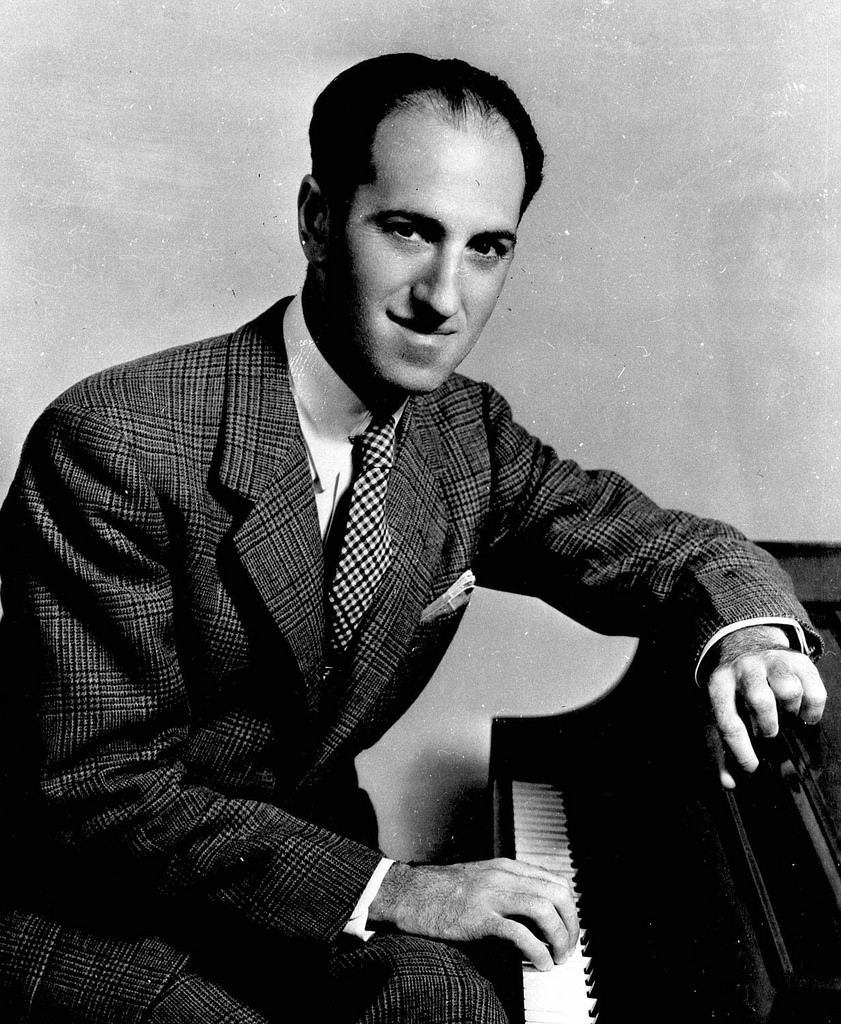
Why, it’s Gershwin’s birthday, by George! We’ll have two chances to celebrate today, on both my Saturday radio shows.
George Gershwin, of course, was one of our most versatile composers. He occupied a unique place in American music, rising from Tin Pan Alley scrapper to Broadway royalty. From there, he conquered the concert hall and even the opera house, with his blend of popular song, jazz, blues, spirituals, and European classical forms.
Like Franz Schubert a hundred years before, Gershwin managed to churn out an astonishing amount of music over a comparatively brief span. His songs, in particular, have been of enduring interest. His gift of lyricism and invention defied early critics as he bestrode the worlds of popular and classical music like an American colossus.
Sadly, at the peak of his success, he died of a brain tumor at the age of 38. But 89 years later, George, we’re still crazy for you.
This morning on “Sweetness and Light,” Gershwin will be one of four composers whose music we’ll enjoy in a salute to classic American musical theater. We’ll hear selections from Eubie Blake & Noble Sissle’s “Shuffle Along” (the 1921 all-Black musical that spawned the breakout hit “I’m Just Wild about Harry”), Leonard Bernstein’s “On the Town” (the ballet music, before it was distilled into the familiar “Three Dance Episodes,” with a 24-year-old Bernstein conducting), Gershwin’s “Porgy and Bess” (conceived by the composer as an opera, but produced on Broadway several times over the decades before finally being elevated to the pantheon), and Richard Rodgers & Lorenz Hart’s “On Your Toes” (the climactic “Slaughter on Tenth Avenue” sequence).
It’s guaranteed to get your toes tapping, for the most part, but I’ll also include a grand piano fantasy on themes from “Porgy” by Earl Wild. It’s showtime, this Saturday morning at 11:00 EDT/8:00 PDT!
Then later on today, on “The Lost Chord,” we’ll sample Gershwin’s artistry in recordings of his era, including several songs performed by Al Jolson, Fred Astaire, and Ella Logan. (So many excellent ones to choose from!)
We’ll also hear the world premiere recording of “An American in Paris” – performed by the Victor Symphony Orchestra (really members of the Philadelphia Orchestra), with the composer himself on the celesta – and the Concerto in F, performed as part of a Gershwin memorial concert at the Hollywood Bowl, with the composer’s friend, Oscar Levant, as soloist.
Three of these recordings date from 1937, the year of the composer’s death. All are from his era. I hope you’ll join me for “Vintage Gershwin,” this Saturday at 7:00 EDT/4:00 PDT.
It’s nice work if you can get it. Not that you need someone to watch over you, George. Our love is here to stay.
Strike up the band and let ‘em eat cake! Of thee I sing, on “Sweetness and Light” AND “The Lost Chord,” on KWAX Classical Oregon!
———-
Clip and save the start times for all three of my recorded shows:
PICTURE PERFECT, the movie music show – Friday at 8:00 PM EDT/5:00 PM PDT
SWEETNESS AND LIGHT, the light music program – Saturday at 11:00 AM EDT/8:00 AM PDT
THE LOST CHORD, unusual and neglected rep – Saturday at 7:00 PM EDT/4:00 PM PDT
Stream them, wherever you are, at the link.
https://kwax.uoregon.edu/
Tag: Philadelphia Orchestra
-
Our Love Is Here to Stay: Celebrating Gershwin on “Sweetness and Light” and “The Lost Chord”
-
Frankly Surprised: An Actual, Straight-Down-the-Middle Composer Wins the Pulitzer
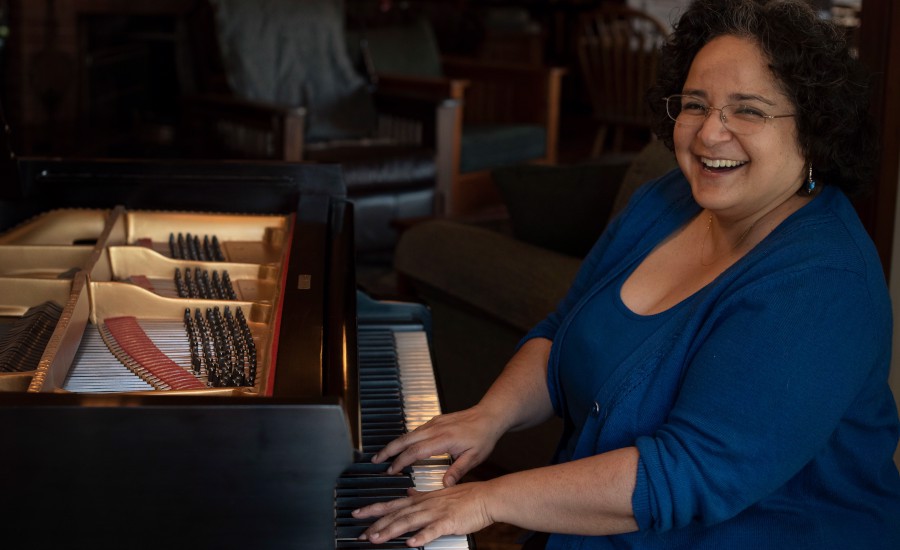
Gabriela Lena Frank is the recipient of this year’s Pulitzer Prize for Music. The prize was announced yesterday, but certain slow-to-react social media outlets are still catching up with the news.
Frank was recognized for “Picaflor: A Future Myth.” The work is tied to the composer’s personal experiences with the California wildfires and her knowledge Andean legend.
The composition was introduced in Marian Anderson Hall at the Kimmel Center for the Performing Arts on March 13, 2025, by the Philadelphia Orchestra conducted by Marin Alsop. It was a co-commission of the orchestra, the Oregon Symphony, and Bravo! Vail Music Center.
Cast in “ten powerful movements,” as characterized by the Pulitzer committee, “Picaflor” follows an original program, inspired by Andean-Peruvian mythology transplanted to a futuristic setting. “It draws upon the legends of a sky kingdom ruled by a sun god creator, a rebellious hummingbird… who tears through the sky, and the chaski – messengers of the Inca Empire. The piece is also immersed in the concept of pachacuti, the belief that era-worlds undergo cataclysmic transformations every few hundred years. These elements reflect the composer’s own climate activism in both art and life, and her pride as a generational daughter of Indigenous Perú.”
The work is dedicated to the late Finnish composer Kaija Saariaho and is the culmination of a residency with the Philadelphia Orchestra.
Frank, whose works have been frequently programmed, was born in Berkeley, CA, to a mother of mixed Peruvian/Chinese ancestry and a father of Lithuanian/Jewish descent. Following in the footsteps of musical heroes Béla Bartók and Alberto Ginastera, she serves as a kind of musical anthropologist. According to her bio, she’s “traveled extensively through South America, and her pieces often reflect and refract her studies of Latin American folklore, incorporating poetry, mythology, and native musical styles into a Western classical framework that is uniquely her own.”
I haven’t heard this particular piece yet, but her music is colorful and full of incident.
It’s nice to have a Pulitzer winner that can be performed by an actual symphony orchestra again.
———
Frank previews “Picaflor” in 90 seconds:
“Escaramuza” (2010)
“Leyendas: An Andean Walkabout” (2001)
“Elegía Andina” (2000)
“Three Latin American Dances” (2004)
Through a strange quirk of fate, because of my illness this weekend, I was unable to attend “Eugene Onegin” at the Met. So I traded my ticket for a seat at the Met debut of Frank’s recent opera, “El último sueño de Frida y Diego,” a magical-realist, upside-down Orpheus and Euridice story about painters Frida Kahlo and Diego Rivera.
https://www.metopera.org/season/2025-26-season/el-ultimo-sueno-de-frida-y-diegoThere’s my Cinco de Mayo connection!
You don’t have to go to New York to see it. It will be simulcast in select cinemas as part of the “Met Live in HD” series on May 30. Find a theater near you at the link (below the photo, there’s a red tab on the right).
https://www.metopera.org/season/in-cinemas/2025-26-season/el-ultimo-sueno-de-frida-y-diego/A 16-second teaser
Congratulations, Gabriela Lena Frank! -
In the Blink of an Eye, Michael Tilson Thomas Is No More
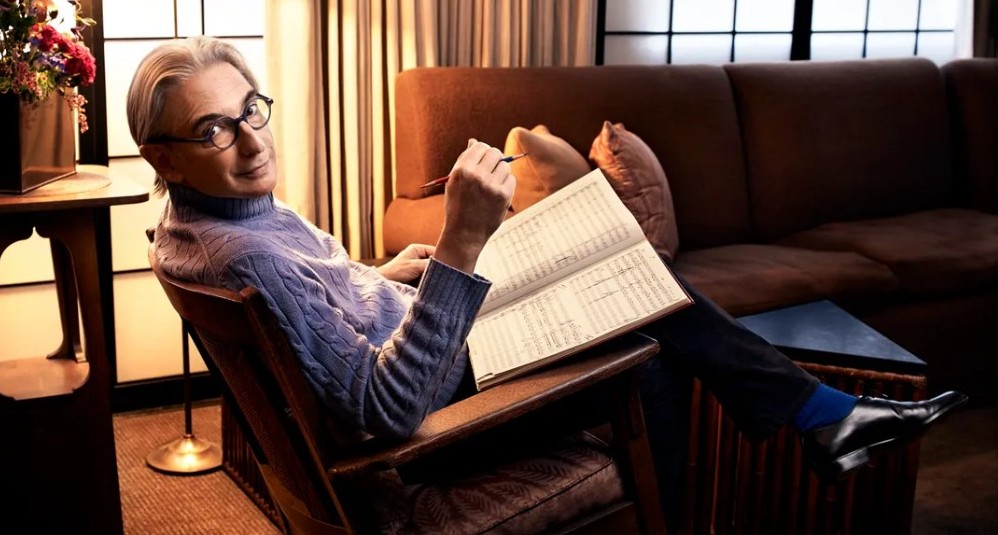
This is one of those days I always knew would come – at least for the last five years or so – and now I am very sorry it’s here. For the conductor Michael Tilson Thomas has died.
In my memory, Tilson Thomas will always be the effusive, boyish protégé of Leonard Bernstein. There are many, I’m sure, who during those early years predicted he would inherit Bernstein’s mantle as the most recognized and beloved American conductor. Alas, it did not come to pass. It’s not that he wasn’t recognized and beloved, but there could be only one Leonard Bernstein. Still, MTT had a great career and a rewarding life. You can’t fault excellence for not attaining superstardom.
At one time or another, he held positions as music director of the Buffalo Philharmonic, chief conductor of the London Symphony Orchestra, founder and artistic director of the New World Symphony (an ensemble made up of gifted young musicians), and music director of the San Francisco Symphony. He also enjoyed a fruitful relationship with the Boston Symphony Orchestra, of which he was once assistant conductor and with which he made some classic recordings.
Over0 the course of his career, Tilson Thomas amassed a cabinet full of Grammys, a Peabody Award, a National Medal of Arts, and a Kennedy Center Honor. Like Bernstein, he was also a composer. A few of his works reflected his Jewish heritage and honored his grandparents’ experience in the Yiddish theater. (He was the grandson of Boris and Bessie Thomashefsky.)
There’s plenty in his discography that’s given me great pleasure over the years: recordings of the symphonies of Charles Ives; orchestral works of Aaron Copland and Igor Stravinsky; a colorful selection of “Bachianas Brasileiras” by Heitor Villa-Lobos; a fascinating curio, “The American Flag,” by Antonín Dvořák; an album of the late choral works of Beethoven (including “Calm Sea and Prosperous Voyage”) that I acquired on vinyl from my local record store when I was in high school; of course his Gershwin records, especially the one with “Rhapsody in Blue” in its original version; and a knock-out disc of American orchestral works, including Walter Piston’s Symphony No. 2, Ives’ “Three Places in New England,” and that prickly masterpiece, Carl Ruggles’ “Sun-Treader.”MTT recorded the complete works of Ruggles, a cantankerous, problematic composer, who wrote music of uncompromising integrity and dissonance. These were released on a two-LP set on CBS Masterworks. It must have sold about five copies, because the label never bothered to reissue it on compact disc, so that it became a kind of Holy Grail among collectors. It finally reappeared on the independent label Other Minds, 37 years later, in 2017! It would have been nice had they retained the design of the original album, but some of the elements were the same. Significantly, they were able to hang on to the program notes, which were supplemented by photos and an essay by Lou Harrison.
Tilson Thomas conducted the first concert I ever saw with the Philadelphia Orchestra at the Mann Music Center in the summer of 1984, when he was joined by André Watts, the soloist in Rachmaninoff’s Piano Concerto No. 2, and after intermission led the ensemble in Bartók’s Concerto for Orchestra – with a thunderstorm looming, no less. Why they didn’t clear the lawn, I have no idea. You were just expected to pull your shirt over your head or run for cover in those days.
The last time I saw him was in Philadelphia in 2008, this time indoors at the Kimmel Center for the Performing Arts, when he was joined by Paul Jacobs for Copland’s Organ Symphony and then, on the concert’s second half, he conducted Mahler’s Symphony No. 5.
As is so often the case, we tend to take what’s available to us for granted. So it was like a splash of ice water, when five years ago, Tilson Thomas was diagnosed with glioblastoma, an aggressive form of brain cancer. Although he scaled back his activities for treatment and to husband his resources, he continued to perform, and during the period, a sort of sustained victory lap, he was received by audiences everywhere with notable warmth.
His husband, Joshua Robison, died only two months ago. The two met in junior high school and were together for 50 years.
Tilson Thomas is one of those figures I will always remember in the summer of his youth. I recollect watching him play Copland’s Piano Variations on a PBS television documentary about the composer, broadcast over 40 years ago now, and his commentary about the piece, which he compared to a skyscraper in sound. I can’t get over how quickly time passes.
Michael Tilson Thomas was 81 years-old. R.I.P. -
Leopold Stokowski on “Sweetness and Light” and “The Lost Chord”
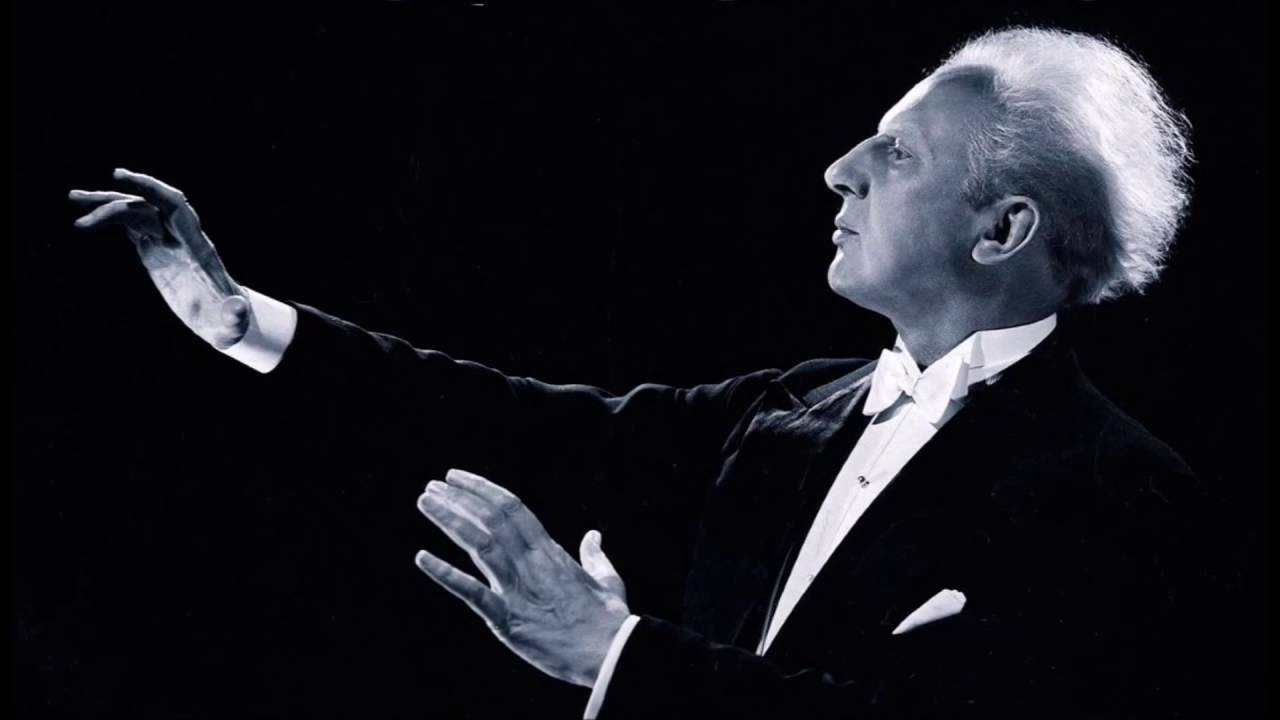
With wild hair, dove-like hands, and a faux middle-European accent (as the son of a Polish-born cabinet-maker who emigrated to and worked in London), Leopold Stokowski certainly knew how to work a crowd. But he also knew his way around a score.
He could be flamboyant in manner, controversial in his interpretations, and an easy target for parody. But he was also magnetic and, at his best, a true magician of the podium.
I hope you’ll join me today for both of my Saturday radio shows as I honor Stokowski on the anniversary of his birth. (He was born on this date in 1882). You’ll find more information at the bottom of this post.
Stokowski was a natural for the movies. He appeared in more than a dozen motion pictures and documentaries and was frequently parodied in cartoons during Hollywood’s golden age. His most enduring film has been Walt Disney’s “Fantasia,” in which he conjures flights of animated fantasy from his art deco perch, and even shakes hands with Mickey Mouse. The recordings made for the actual film pioneered multi-channel stereo.
Stokowski always did have a reputation for embracing experimental technologies to capture or even enhance the fidelity of sound. On stage and in the recording studio, he was meticulous in arranging his musicians to achieve the sonic results he desired. It was really he who established the so-called “Philadelphia sound,” with its celebrated string sonorities, which he managed to replicate to a greater or lesser extent with many of the orchestras he worked with.
The quintessential Stokowski performance often stood apart for its dramatic flair and opulence. He was often at his best in the colorful French and Russian classics, where he really knew how to make the instrumental colors pop. But he also had an insatiable curiosity and a drive to introduce new music and unusual, off-the-beaten-path works.
On the other hand, there were occasions when he could truly astonish by driving a Mozart symphony like a team of wild horses. You truly never knew what this sorcerer was going to pull out of his hat.
One should never come to a Leopold Stokowski performance with an air of complacency, even if one thinks one knows the music inside out. Equally, one should never learn a score from a Stokowski recording. The extent of his recreative powers can only be fully appreciated when listening to him once you’ve heard everyone else. (There was often a lot of creativity in his “recreativity.”)
Some of his inspirations were genius – I love when he holds the chorus at the end of his London Phase 4 recording of Ravel’s “Daphnis and Chloe” Suite No. 2 – and in case it isn’t provocative enough, he actually has the engineers thrillingly boost the sound – but even for me, his swooning additions to his 1970s recording of “Siegfried’s Funeral March” are a bridge too far. Not everything he did will delight everyone, but the guy was not afraid to take chances.
Stokowski, who trained as an organist, possessed intimate knowledge of the keyboard music of Johann Sebastian Bach. At a time when such repertoire would have been comparatively unknown to orchestra subscribers, Stoky brought Bach to the concert hall by way of his own imaginative transcriptions. Hard to believe these were considered controversial at the time.
Clearly, Stokowski was a remarkable figure for so many reasons. Among them was his astonishing longevity. At the time of his death in 1977, at the age of 95, he had signed a contract that would have kept him busy in the recording studio until he was 100. It’s astonishing that so many of his late recordings were as good as anything he had ever done.
In common with Oscar Wilde, Stoky knew there is only one thing worse than being talked about, and that is not being talked about. His ever-evolving origin story. His wealthy marriages. His celebrity love affairs. His elegant bearing and riveting showmanship. It’s not just because of Bugs Bunny that music-lovers still revere him or toss up their hands in incredulity and gasp “LEOPOLD!”
——–
Join me on KWAX Classical Oregon for “Sweetness and Light,” Stokowski conducts music by Ottokar Novacek, Paul Dukas, Fikret Amirov, Johann Sebastian Bach, Wolfgang Amadeus Mozart, and Claude Debussy, this Saturday morning at 11:00 EDT/8:00 PDT.
Then on “The Lost Chord,” Stokowski conducts Wagner in vintage recordings featuring the Philadelphia Orchestra, this Saturday evening/afternoon at 7:00 EDT/4:00 EDT.
Stream them, wherever you are, at the link!
https://kwax.uoregon.edu/ -
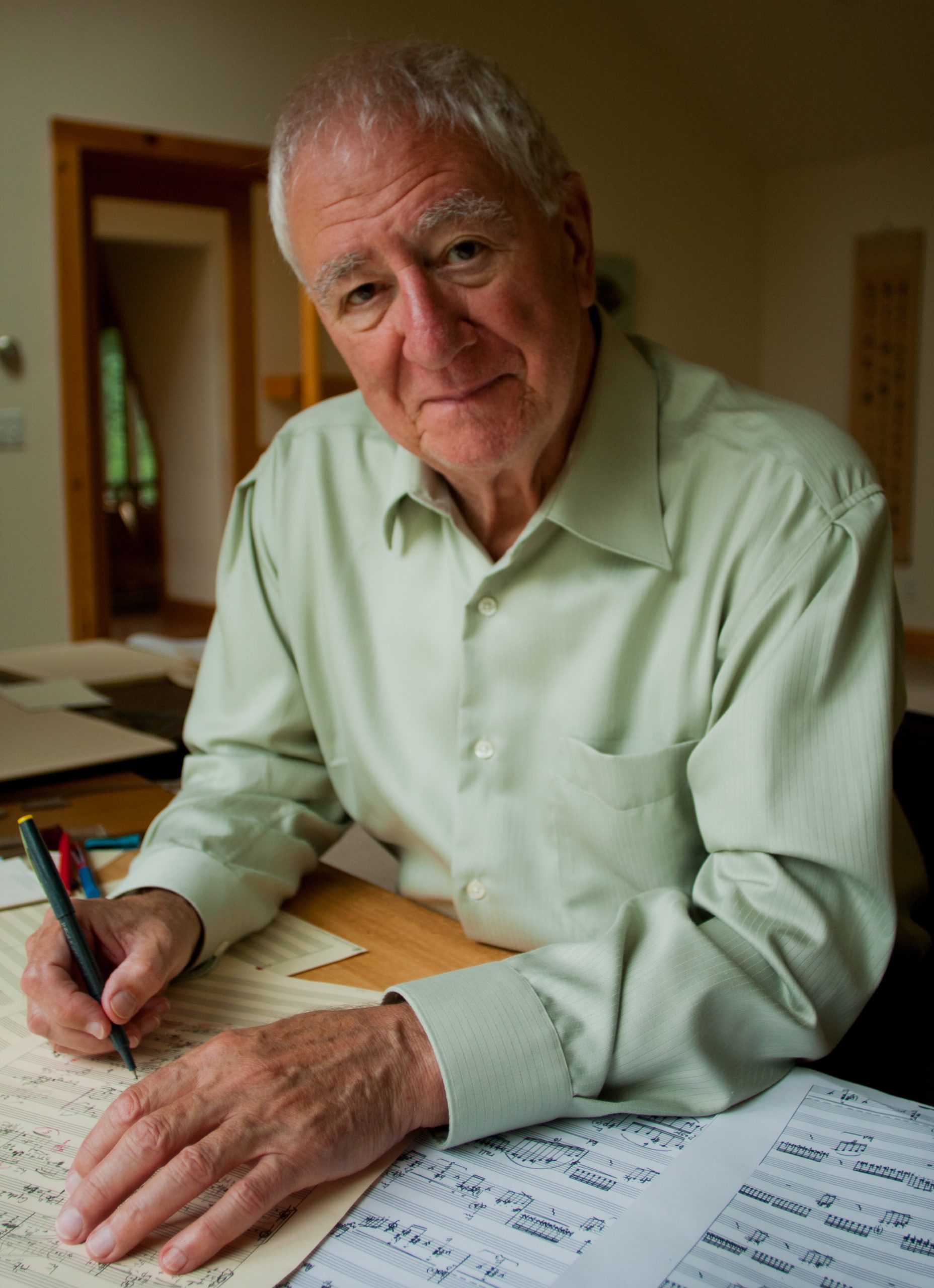
Adieu, Bernard Rands
My friend Mather Pfeiffenberger tipped me off last week that composer Bernard Rands died. I received the news with some amazement, as I could have sworn he’d been gone for some time. But Rands lived to a venerable age, passing on March 4, two days after his 92nd birthday.
He was a regular presence at Philadelphia Orchestra concerts during Riccardo Muti’s music directorship in the 1980s and ‘90s. He served as the orchestra’s composer-in-residence from 1989 to 1995. If I remember correctly, as part of his job description, he offered advice on new music and exercised enormous influence over Muti’s contemporary programming. I can’t say I took to very many of the works that were performed, but I was young then. I might appreciate them more now.
EDIT: I did NOT remember correctly. It was Richard Wernick who advised Muti. I wrote about Wernick when he died last April. (Please note, it was A.I. that generated the headline.)
https://rossamico.com/2025/04/28/richard-wernick-pulitzer-winner-almost-hit-me/
Born in Sheffield, England, Rands studied with Pierre Boulez and Bruno Maderna in Darmstadt and Luigi Dallapiccola and Luciano Berio in Milan. This certainly gave him a grounding in contemporary and avant-garde techniques – unquestionably he was well-versed in the multifarious musical idioms of the day, at least the more abstract ones – but I never detected anything that would frighten the horses in his own works.
Among his residencies in the United States was a stint at Princeton University. He emigrated to the U.S. in 1975 and became an American citizen in 1983. He also held teaching posts at the University of California, San Diego, Juilliard, Yale, Boston University, and from 1988 to 2005, Harvard University.
He was married to the composer Augusta Read Thomas. I actually had dinner with them once in Philadelphia, I believe in connection with an Orchestra 2001 concert in 2007. We were not the only guests, and if we talked at all it couldn’t have been about anything of substance, because I can’t remember anything about it.
Rands was an influential figure, no doubt, as an advisor and teacher. He composed around 100 works, which were widely performed, and many of them were recorded. I was a frequent enough attendee of Philadelphia Orchestra concerts back in the day that I was present at the performances that were documented on this New World Records release, including “Canti dell’Eclissi” conducted by Gerard Schwarz, who as I recall was an eleventh-hour substitution for Muti, who was down with the flu. “Canti” was the recipient of the Pulitzer Prize for Music in 1984.
I can’t say it was my favorite of his works.
I thought “Le Tambourin Suite No. 1” was more my speed, but it’s not hitting me right this morning. It would go down a lot easier if it sounded more like “Le tombeau de Couperin.”
In reviews, his music was often compared to that of Ravel and Debussy. This “Aubade,” the second of three movements that make up his English Horn Concerto, seems like something I could live with.
Rands always seemed like a nice guy. I wish I liked his music better.
R.I.P.
———
Rands on listening to new music
“Adieu”
Tag Cloud
Aaron Copland (94) Beethoven (95) Composer (114) Film Music (148) Film Score (143) Film Scores (255) Halloween (97) John Williams (196) KWAX (232) Leonard Bernstein (105) Marlboro Music Festival (125) Movie Music (163) Mozart (91) Opera (215) Philadelphia Orchestra (90) Picture Perfect (174) Princeton Symphony Orchestra (110) Radio (90) Ross Amico (244) Roy's Tie-Dye Sci-Fi Corner (290) The Classical Network (101) The Lost Chord (269) Vaughan Williams (107) WPRB (397) WWFM (881)