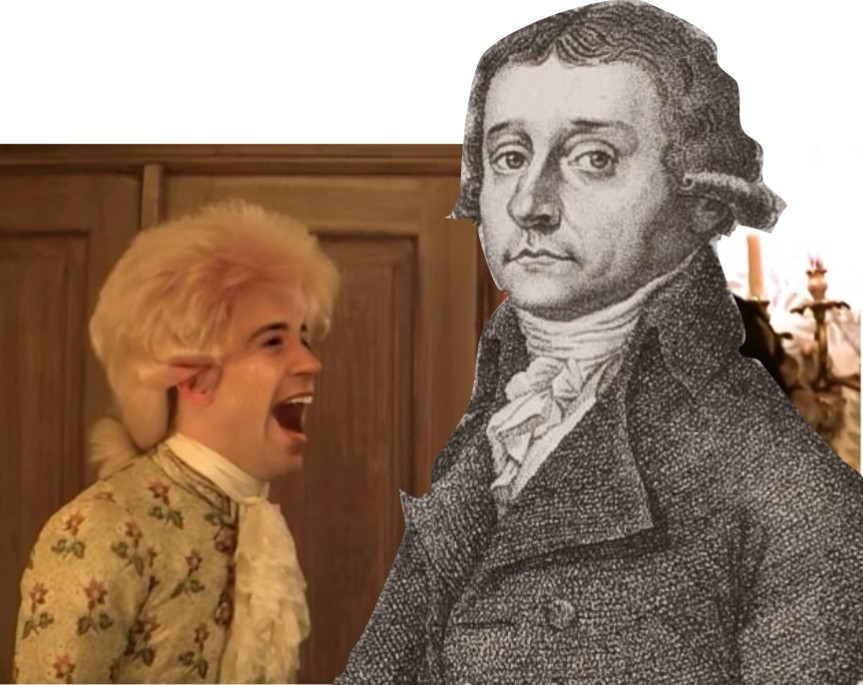
With the news that 149 lost works of Antonio Salieri have come to light, now seems like a good time to remind you about this year’s Bard Music Festival, “Mozart and His World” (to be held at Bard College in Annandale-on-Hudson, NY, August 7-16).
Is there Salieri on the program? Why, yes, yes there is. It falls under the category of “His World.” You see, even when the focus of the festival is on a well-known composer – and what composer is better-known than Mozart? – the planning committee goes into overdrive, racking their brains and spackling in around the edges with composers and works your average person-on-the-street may not have ever heard of, and certainly have never heard.
My preference, of course, is for the years Bard tackles figures such as Bohuslav Martinu or Carlos Chávez or Ralph Vaughan Williams or Erich Wolfgang Korngold; but under the Mozart umbrella, Christoph Willibald Gluck, Josef Mysliveček, Paul Wranitzky, Emanuel Schickaneder, Giovanni Paisiello, Muzio Clementi, Franz Xaver Süssmayr, Franz Xaver Mozart (Mozart’s composer son), and composer sons of the great Johann Sebastian Bach will have their moments to shine. Some of the works will be quite substantial, such as Michael Haydn’s Requiem in C minor.
And these are only the composers you might have heard of, through reading about Mozart in histories or program notes. How often, if ever, have you actually heard their music?
I don’t care about your level of expertise, or how jaded you may be, between the unusual repertoire, the imaginative juxtaposition of pieces, the pre-concert talks, and the Saturday morning panels with scholars and historians, you will ALWAYS learn something. Even if I personally may bristle at the idea of a Mozart festival – nothing wrong with it, it just doesn’t excite me – once you get me in the hall, I know it’s going to be fabulous.
The Bard Music Festival is part of the college’s larger celebration of the arts, Bard SummerScape (June 25-August 16), which encompasses opera, theater, dance, and cabaret at the campus’ Spiegeltent. If Mozart really doesn’t float your boat, there will be a fully-staged production of Richard Strauss’ opera “Die ägyptische Helena” (“The Egyptian Helen,” July 24-August 2). When’s the last time you heard that?
The Mozart festival will conclude with a semi-staged performance of “The Abduction from the Seraglio.”
Hang in there: 2027 will bring “Gershwin and His World.” That’s a subject that can shoot out tendrils in so many different, fascinating directions.
For tickets and information about Bard SummerScape, the Bard Music Festival, and “Mozart and His World,” visit https://fishercenter.bard.edu/.
——–
A blurb about the rediscovered Salieri works (which include canons, duets, and trios, in the composer’s hand), with a link to the original German source:
https://slippedisc.com/2026/06/found-149-autograph-works-by-salieri/
A selection from Salieri’s “Prima la musica e poi le parole” (“First the music and then the words”), first performed on the same occasion that introduced Mozart’s “Schauspieldirektor” (“The Impresario”), and his collaboration with Mozart, the cantata “Per la ricuperate salute di Ofelia” (“For the recovered health of Ophelia”), rediscovered in 2015, will be included on a Bard Music Festival concert on August 9.
@fishercenterbard
Tag: Mozart
-
Mozart and His World (Including Salieri) at the Bard Music Festival
-
Mozart at Bard; Botstein in the Bardo
I can’t believe it’s been two months already since the Fisher Center for the Performing Arts announced that the focus of this summer’s Bard Music Festival will be “Mozart and His World.” The festival, now in its 36th year, will we be held at Bard College in Annandale-on-Hudson, NY, August 7-16. The fact that I didn’t share the news immediately is attributable to several factors:
Firstly, I’m sorry, Mozart may have been one the greatest musical geniuses who ever lived – and he wrote some music I would never want to be without (e.g. “The Marriage of Figaro,” an opera I like to say basically saved my life, or least got me through a very rough time) – but the idea of two weekends of his music doesn’t exactly thrill me.
In the past, I wouldn’t have considered it an issue, since the “and His World” qualifier ensured there would be plenty of fascinating discoveries by the subject’s contemporaries, those who influenced him, and those he in turn influenced.
Also, historically, Bard has been exceptional in digging deep into composers’ basements and turning up neglected scores from cobwebbed corners of their attics. This year, alas, seems to be a little disappointing in these regards.
For one thing, I was hoping the programs would mix it up a bit more and cast some light into the future. After all, there are so many pieces influenced by or written in tribute to Mozart. One program will include Tchaikovsky’s “Mozartiana” – hardly a rarity, but at least it will be presented in a lesser-heard piano version – though I would expect the concerts to also weave in works such as Jean Françaix’s “Hommage à l’ami Papageno” for wind ensemble or, say, Francis Poulenc’s Concerto for Two Pianos, with its clearly Mozartian slow movement. If not those works specifically, perhaps a few like them.
Of course at Bard, you never know everything you’re going to get until the actual, physical program goes to print. This early in the process, what’s given on the website is frequently but a sketch. But I imagine the major works are in place.
Anyway, for all my grousing, I will be there for at least some of it, and once I am in the concert halls and into the music, I know I will have a good time, regardless, even if I can’t imagine buying a ticket based on being able to hear the “Prague Symphony” again.
Unquestionably, there will be rarities: a Michael Haydn mass, selections from a Salieri opera, a Clementi piano sonata that contains the germ for Mozart’s overture to “The Magic Flute.” But what about the Mozart-Salieri collaboration “Per la Ricuperata Salute di Ofelia,” rediscovered as recently as 2016? How about Rimsky-Korsakov’s one-act opera “Mozart and Salieri?” Or Reynaldo Hahn’s “Mozart?”
As always with these things, people will have their own ideas, and I know I should be thankful for anything this group organizes – and I am! But there’s no way I can pretend to be anywhere near as pumped for a Mozart festival as I was for those devoted to past subjects, such as Prokofiev, Sibelius, Rimsky-Korsakov, Berlioz, Vaughan Williams, Bohuslav Martinů, Carlos Chávez, and Erich Wolfgang Korngold.
Okay, I’ve been putting it off, but now at last I come to the elephant in the room. I so badly do not want to even address it, but there’s the unfortunate quagmire through which co-artistic director Leon Botstein – also president of Bard College since 1975 – is currently slogging. If you don’t already know it, Botstein is in the Epstein files. Not with anything like the same frequency as the President of the United States, mind you, or, from what we know so far, with anywhere near the same degree of skeeviness. Actually, it doesn’t appear there’s any skeeviness at all. But the timing couldn’t be worse. The excrement hit the fan just before this year’s festival would have to be announced.
The New York Times has covered Botstein’s interactions with Epstein extensively, but a lot of “journalists,” I’ve noticed, in particular those writing for the local papers of the Hudson Valley, seem to have their knives out, through suggestive phraseology and loaded words. The last thing Bard needs, in this sensitive situation, is for anyone to be striking sparks.
I hasten to add, although Botstein is kind of a hero to me, I am in no way discounting the real and lasting trauma experienced by any of Epstein’s victims or that of anyone else who has suffered sexual abuse in their personal lives or at the hands of anyone on the faculty of the college itself (which has been alleged; after all, it is a college, and there are often abuses of authority at such institutions). There have been no allegations of Botstein himself participating in any illegal behavior.
However, one of Epstein’s victims made an interesting point in an interview when she stated that the fact that Epstein was able to attract someone as estimable as Botstein to his sphere – and Botstein is FAR from the only one – it lent to an illusion of legitimacy, so that she and others like her struggled with the disconnect between what they were seeing, this kind of acceptance, and what they were actually experiencing.
But Botstein himself appears to be clean, and the man himself has done so much for not only music, but for education, for social causes, and for the school itself. It would be unfortunate if he were forced out for the sin of trying to elicit additional funds from a millionaire, who made an unsolicited $75,000 donation to the college.
But an independent investigation is ongoing. I will stand by the findings, as I hope the student activists will. There is a group on campus raising hell as only young people can.
Botstein, who is brilliant and brilliantly articulate, is conspicuously absent, or downplayed to the extent that I don’t see him mentioned anywhere in the Bard promotional material. I’m hoping he is not forced out of the festival altogether, as there is no one currently involved that could ever fill his shoes.
He’s still attached to this year’s opera production, which precedes the festival, as part of Bard SummerScape, a larger celebration of the arts that spans June 25-August 16. I already have my ticket to hear him conduct Richard Strauss’ “Die ägyptische Helena” (“The Egyptian Helen”). The opera runs July 24-August 2.
Furthermore, I will hear him at Carnegie Hall this Thursday, with vocal soloists and the American Symphony Orchestra, as he introduces and conducts Berlioz’s rarely-encountered edition of Carl Maria von Weber’s “Der Freischütz.”
One of the reasons I feel so disheartened by my own reaction to this year’s music festival – a reaction that I suspect will be shared by others attracted to Bard for its advocacy of unusual and neglected repertoire – is that I do not want the college to misconstrue my or anyone’s lack of enthusiasm and/or low attendance for distaste for, or protest against, Botstein.
Be that as it may, you’ll find the program, as it currently stands, at the links below. If you’re a Mozart nut, I hope you will consider attending.
Long live the Bard Music Festival. I’m hoping we’ll still have a few more years of Botstein, who will turn 80 in December, but appears to be as vital as ever, and in comparatively good health, at least on the evidence of what I’ve seen at Bard and at his concerts in New York City.
Next year, another neglected or underappreciated composer, please!
——-
Bard Music Festival
https://fishercenter.bard.edu/what-we-do/bard-music-festival/
Bard SummerScape, including Strauss’ “The Egyptian Helen”
https://fishercenter.bard.edu/what-we-do/summerscape/ -
Bergman’s Enchanting “The Magic Flute”
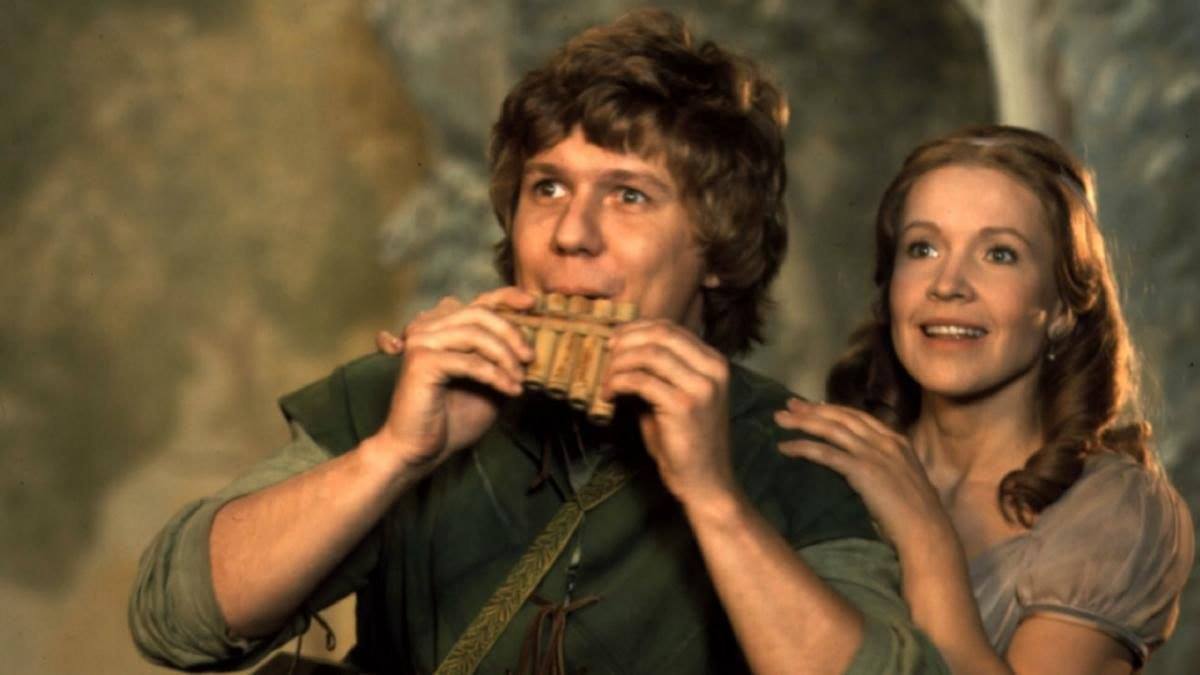
From time to time, I guess even Ingmar Bergman needed a break from existential dread. How else to explain his delightful adaptation of “The Magic Flute?” Originally intended for television, Bergman’s playful and inventive 1975 film of Mozart’s 1791 singspiel had a lot to do with setting me on the path to become an opera lover.
The conceit, to set the action as a live performance in the historic Drottningholm Palace Theater (a reproduction, since there were concerns about the actual theater safely accommodating a film crew), is disarming and inspired. All the stagecraft is laid bare. The scenery is evidently painted plywood, the animals are all people in suits, and the characters pause from time to time to hold up little signs with moralistic aphorisms on them as they sing their arias.
Bergman’s film begins outside the actual theater and then enters the hall during the overture to register the facial expressions of a audience members as they anticipate the curtain rising. Most especially the camera lingers on the eager face of an impressionable young girl. It’s evident that the director would like us to experience it all from her perspective, through a lens of innocence.
By contrast, we’re also taken backstage, to glimpse Papageno, fallen asleep and nearly missing a cue, Sarastro between acts studying the score to “Parsifal,” and one of Monostatos’ minions reading a Donald Duck comic book.
Sure, there are moments of despair even here, as a couple of the characters contemplate suicide (we also get a memorable vision of hellfire), but it’s all dispelled in a decisive victory of good over evil, an endorsement of universal brotherhood, and a resolution of unalloyed joy.
It was Mozart’s librettist, Emanuel Schikaneder, who suggested during rehearsals that Papageno stammer in excitement at the recognition of his desired Papagena, in their famous duet. Here’s what Bergman does with it.On Mozart’s birthday anniversary, I think it’s time to revisit this film.
Behold! Here it is on YouTube.
-
Mozart’s Musical Heist Vatican’s Secret Unlocked
When the 14 year-old Mozart perpetrated a daring theft from the most powerful institution in the world, there was no need to circumvent a laser grid by descending on cables from on high.
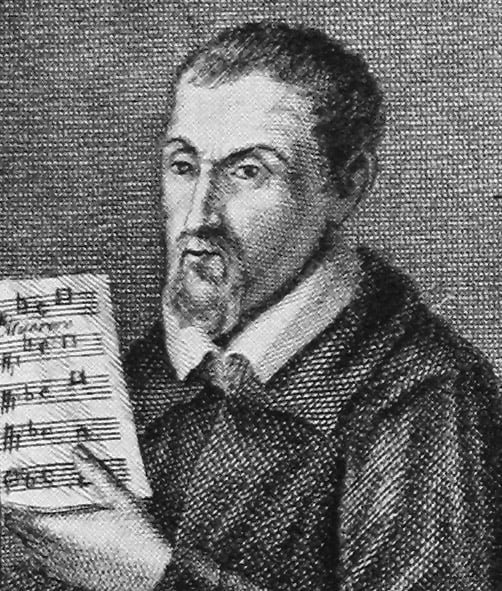
Mozart and his father attended a Holy Week service at the Vatican in 1770. There, they encountered for the first time Gregorio Allegri’s haunting “Miserere.”
Allegri composed his setting of Psalm 51 (50) in the 1630s. The piece was intended for exclusive performance in the Sistine Chapel, as part of the Tenebrae service of Holy Wednesday and Good Friday.
Its conception is a striking one, with two choirs: one intoning a simple chant, and the other, spatially separated, providing ornamentation. The effect of a stratospheric top C makes the “Miserere” one of the most enthralling works in the choral literature of the late Renaissance.
The Vatican, realizing it had a good thing, forbade performance of the piece or copies of the score to be circulated outside its walls, under pain of excommunication.
It was Mozart who blithely liberated the piece, copying it down from memory and handing it off to author and music historian Charles Burney, who published it without delay.
Mozart was summoned before the Pope, and rather than being excommunicated, he was showered with praise for his feat of musical genius. The ban on the “Miserere” was lifted.
Mission accomplished!
These portraits, of Allegri (left) and the teenage Mozart, will self-destruct in five seconds
-

Josef Mysliveček The Bohemian on Kanopy
I notice today is the anniversary of the birth of Bohemian composer Josef Mysliveček. Who, you say? Well, I suppose you have to have done a lot of classical radio to really know his stuff. An intimate friend of the Mozarts, Mysliveček in some ways laid the groundwork for Amadeus’ later masterworks. He was insanely popular in Italy and apparently quite a hit with the ladies.
So yeah, his life fairly screams “motion picture,” but I can’t believe someone was actually able to get backers interested in the project. The resulting film, “The Bohemian” (2022), popped up in my Kanopy recommendations this weekend. I don’t know how it is where you are, but here you can sign up for the service free with your library card.
It looks like total junk food, but you know I’ll be all over it. You might say, I’ll be Czeching it out soon.
Happy birthday, Josef Mysliveček!
“The Bohemian” on Kanopy
https://www.kanopy.com/en/product/15033207
The trailer
Wind Octet No. 2 in E-flat major
From the opera “L’Olimpiade”
Cello Concerto in C major
“Montezuma” (complete opera live)
Tag Cloud
Aaron Copland (94) Beethoven (95) Composer (114) Film Music (148) Film Score (143) Film Scores (255) Halloween (97) John Williams (196) KWAX (232) Leonard Bernstein (105) Marlboro Music Festival (125) Movie Music (163) Mozart (91) Opera (215) Philadelphia Orchestra (90) Picture Perfect (174) Princeton Symphony Orchestra (110) Radio (90) Ross Amico (244) Roy's Tie-Dye Sci-Fi Corner (290) The Classical Network (101) The Lost Chord (269) Vaughan Williams (107) WPRB (397) WWFM (881)