You don’t always have to make a racket to get noticed.
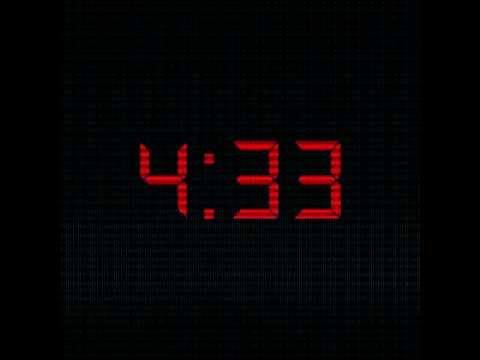
One of the most notorious pieces ever “composed,” John Cage’s “4:33,” was given its debut at Maverick Concert Hall in Woodstock, NY, on this date 70 years ago.
You probably know it, even if you think you don’t. Somebody walks out to a piano, closes the lid, produces a stop watch, and sits absolutely still for 4 minutes and 33 seconds. At the end of the allotted time, the musician stands up and takes a bow.
At the first performance, some snickered, others scoffed, but Cage’s piece is now world famous. It turns out “4:33” is more than just the wacky stunt it appeared to be. Any perceptive listen who joins the musician in his or her silence soon realizes the passing time is not silent at all, but full of sounds. People coughing, chairs creaking, the central air kicking on, extraneous noise from the street or lobby. It really does force you to be aware of your surroundings. In its way, 70 years later, in our crazy digitized, wireless world of constant distraction, “4:33” is more necessary than ever.
It’s interesting that this experimental work, which some would regard as not for every day, is in its truest sense “every day music.” Cage has taken a lot of guff over the years (I had a colleague at the radio who refused to acknowledge his centenary), but he was one of the most influential musical thinkers of the 20th century.
Ironically, it took a composer by the name of Cage to get us thinking outside the box. Me, I’ll have “4:33” on infinite repeat all day.
Original version for piano
Transcribed for orchestra – and performed by the Berlin Philharmonic