Tag: 9/11

  • 9/11 Reflection Music Solace & Memory

    9/11 Reflection Music Solace & Memory

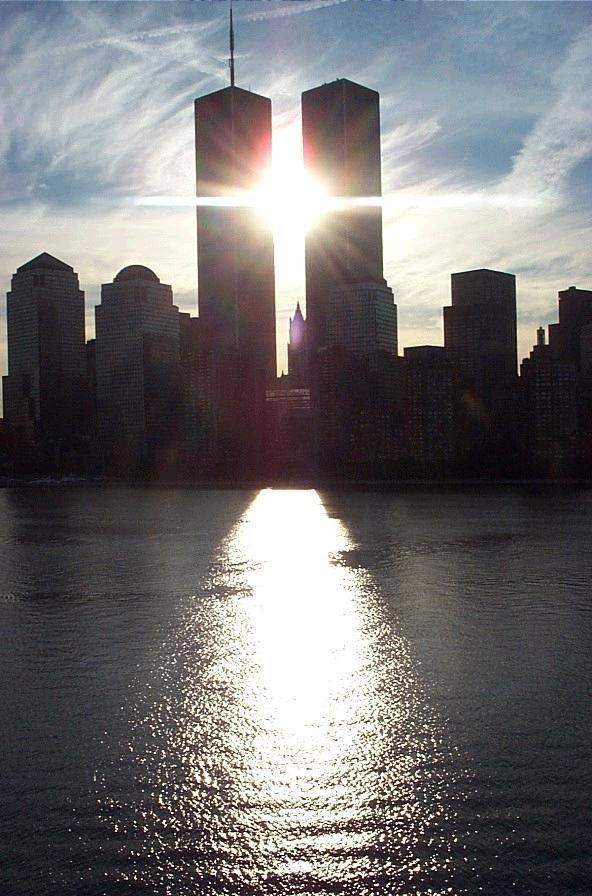
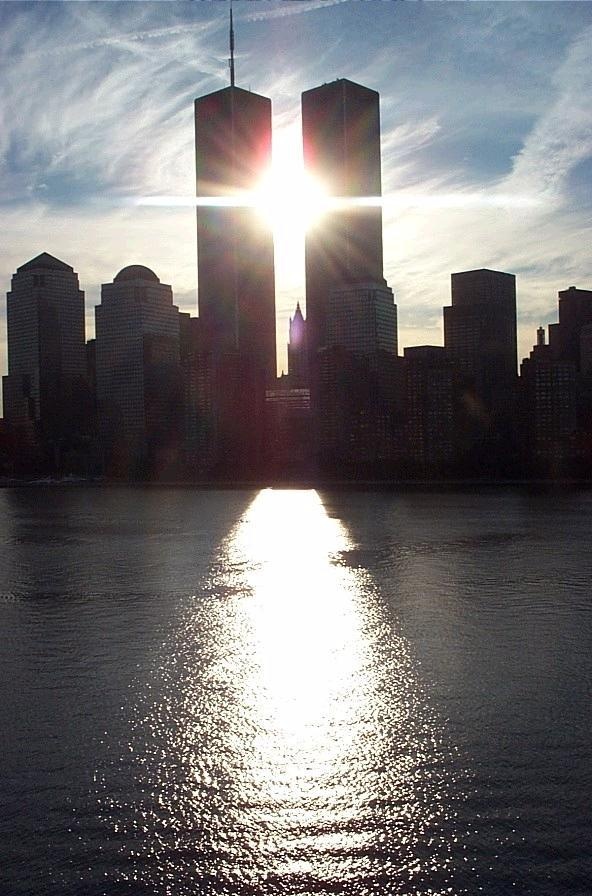
    9/11: A morning for reflection. The horror and surreality of that September morning, now 21 years ago, will never be forgotten. When my telephone (a land line!) rang around 9:00, I was already at work on my home computer (a Macintosh!), oblivious to the news. I picked up. A friend was on the line. She said a plane had crashed into the World Trade Center. I imagined the Empire State Building and the B-25 accident, back in the 1940s. I was thinking maybe a piper. Bad enough in itself, certainly, but accidents do happen. Then she said one of the towers “fell over.” That was what sent me to the TV.

    I had parents in the air that morning, on the way to China. The first leg of their journey took them west across Pennsylvania. Thankfully, they were not on United States Airlines Flight 93, that crashed near Shanksville, southeast of Pittsburgh, at 10:03.

    The phone lines were jammed. Nobody owned a cell phone. It was a long day until I learned that their flight had been grounded in Pittsburgh.

    My heart goes out to those who died senselessly, and for their survivors, for whom the day remains most vivid and painful, I’m sure.

    It was a dark turning point for America at the start of a new century, and a new millennium. I wonder if we ever fully appreciated how good we had it here in the halcyon days of the late 20th century?

    Not surprisingly, there has been a lot of music written in response to the horrific events of that morning, and the pain, heroism, and sacrifice. I’ve heard a lot of it, and for me, none of it as successful as Robert Moran’s “Trinity Requiem,” a masterpiece of solace and consolation.

    The work was composed in 2011 for Trinity Wall Street, the so-called “Ground Zero Church” in Lower Manhattan, to mark the tenth anniversary of the attacks.

    Here’s an interview I recorded with Bob shortly after the release of the CD (which I tweaked for rebroadcast last year), followed by a complete performance of the piece, a great balm for troubled times. If you’re not in the mood for the chit-chat, jump to the 16-minute mark for some truly lovely, reflective music.

    https://www.wwfm.org/webcasts/2021-09-02/the-lost-chord-september-5-the-persistence-of-memory
  • 9/11 Trinity Requiem Moran’s Consoling Masterpiece

    9/11 Trinity Requiem Moran’s Consoling Masterpiece

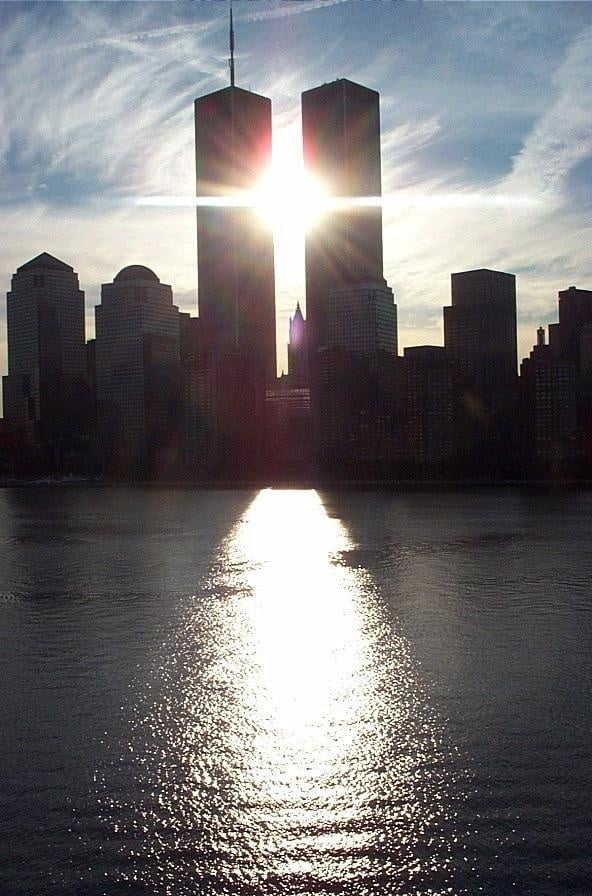
    For the tenth anniversary of the surreal, unforgettable events of September 11, 2001, Philadelphia composer Robert Moran wrote his “Trinity Requiem” for the youth chorus of Trinity Wall Street, the so-called “Ground Zero church” in Lower Manhattan. This Sunday night on “The Lost Chord,” we’ll revisit this beautiful, consoling work and reflect on that September morning of twenty years ago – a morning that still feels like yesterday.

    Moran may not be the first artist that would spring to mind for anyone seeking musical solace. The merry prankster ethos runs deep in this pupil of Hans Erich Apostel, Darius Milhaud, and Luciano Berio. Moran gained early notoriety for his compositions on a grand scale, incorporating entire cities (including San Francisco, Graz, Austria, and Bethlehem, Pennsylvania), their automobiles, airplanes, skyscrapers, radio and television stations, marching bands, dancers, theatrical groups, and tens of thousands of performers.

    He’s written works for harpsichord and electric frying pan, and any number of performance art pieces, including one, archived on YouTube, that involves musicians walking around a financial district with slide whistles inside giant paper bags.

    Flirting with respectability, he collaborated on an opera, “The Juniper Tree,” perhaps the grimmest of Grimm fairy tales, with Philip Glass, and he has composed a number of other works for the stage, including “Desert of Roses” (after Beauty and the Beast), for Houston Grand Opera, and “Alice” (after Lewis Carroll), for the Scottish Ballet. He’s currently at work on a monodrama about God.

    Given Moran’s freewheeling reputation, I thought it only appropriate to title this week’s show after one of Salvador Dali’s most famous paintings, “The Persistence of Memory” – both for its surreal associations (a dreamscape of melting watches) and for the deep psychological scars left by the deadliest attacks ever perpetrated on American civilians.

    Moran rises to the occasion to provide an ethereal masterpiece, a 30-minute journey to Paradisum, worthy to stand alongside the transcendent Requiem of Gabriel Fauré.

    “Trinity Requiem” received its first performance at Trinity Wall Street on September 7, 2011. The second performance took place in St. Paul, Minnesota, on the actual anniversary of the attacks. Locally, it was performed by Mendelssohn Club, at the Basilica of Saints Peter and Paul, on Logan Square in Philadelphia, in 2012.

    A compact disc was released on the innova Recordings label, with the Trinity Youth Chorus and members of the Trinity Choir, Trinity Wall Street, under the direction of Robert Ridgell.

    Among the handful of miracles that occurred on a day of unthinkable tragedy, a hundred-year-old sycamore tree preserved the church’s St. Paul Chapel, constructed in 1766, from destruction by debris from the World Trade Center, including what would have been a direct hit from a falling I-beam.

    On tonight’s broadcast, “Trinity Requiem” will be prefaced by a conversation with the composer. In the time remaining we’ll also hear Moran’s dreamlike “Notturno in Weiss” (“Nocturne in White”), on an aphoristic text by Christian Morgenstern.

    Find solace in the purity of music, as we continue to grapple with the legacy of 9/11, this Sunday night at 10:00 EDT, on WWFM – The Classical Network and wwfm.org.

  • 9/11 Reflection Music and Remembrance

    9/11 Reflection Music and Remembrance

    9-11: A morning for reflection. It may have been 19 years ago today, but everything about it is still so vivid.

    When my telephone rang around 9:00 that morning, I was already at work, at home, on my computer, oblivious to the news. I picked up. A friend was on the line. She said a plane had crashed into the World Trade Center. I imagined the Empire State Building and the B-25 accident, back in the 1940s. I’m thinking maybe a piper. Terrible in itself, but accidents do happen. Then she said one of the towers “fell over.” That was what propelled me to the TV.

    Nothing could have prepared us for the spectacle and terror of that morning. Nothing would ever be the same.

    I was one of the lucky ones. My parents happened to be in the air at that time, on the way to China. They were traveling west across Pennsylvania. At 10:03, United States Airlines Flight 93 crashed near Shanksville, southeast of Pittsburgh. The phone lines were jammed. Nobody owned a cell phone. It was a long day until I learned that my parents’ flight had been grounded in Pittsburgh.

    My heart goes out to those who died senselessly, and for their survivors, for whom the day remains vivid and painful, I’m sure.

    Here’s a work of solace and consolation: Robert Moran’s “Trinity Requiem” (2011), named for Trinity Wall Street, the so-called “Ground Zero church” in Lower Manhattan, composed to mark the attacks’ tenth anniversary:

    The horror and surreality of the day are perfectly reflected in Gloria Coates’ String Quartet No. 8 (2001-02), with its eerie approximations not only of plane engines but also a kind of emotional instability. I know it gives me a sinking feeling, and that’s pretty much how it was to experience 9/11. If you’re looking for solace, do not go here:

    Kevin Puts processes expectancy, uncertainty, and hope in his Symphony No. 2 (2002):

    Dona nobis pacem.

  • 9/11 Remembered A Personal Reflection

    9/11 Remembered A Personal Reflection

    Around 9 a.m. A ringing telephone. Me, at work on my computer, somehow oblivious to the news. My friend on the line, informing me that a plane has crashed into the World Trade Center. I’m thinking a piper. I recall the plane that struck the Empire State Building in the 1940s. Terrible, but these things happen. Then she tells me one of the towers “fell over.” That propels me to the TV.

    September 11, 2001. Every year, I marvel at the passage of time. 18 years ago this morning, but still so vivid. I can’t even imagine what it was like to be there. I never really want to know.

    My parents were actually in the air at the time of the attacks, en route to China. They were traveling west, across Pennsylvania. At 10:03 a.m., United Airlines Flight 93 crashed near Shanksville, southeast of Pittsburgh. The phone lines were jammed. Nobody owned a cell phone. I knew my folks had to be okay, right? It was an uneasy wait until I learned that they had been grounded in Pittsburgh.

    Everyone has a 9/11 story. Some are more tragic than others. But the day touched us all and changed us as a people. It changed the world. Welcome to the 21st century.

    This afternoon on The Classical Network, I’ll offer a musical memorial, which will include Pulitzer Prize winner Kevin Puts, composer’s moving response to the attacks, as he processes expectancy, uncertainty and hope in his Symphony No. 2.

    We’ll also find solace in Philadelphia composer Robert Moran’s sublimely beautiful “Trinity Requiem,” commissioned by Music at Trinity Wall Street, the so-called “Ground Zero Church,” whose St. Paul Chapel was shielded from a falling beam by a sycamore tree.

    I’ve been celebrating the contributions of female composers this month to tie in with the Clara Schumann bicentennial on Friday. Today, we’ll hear Composer Alla Pavlova’s “The Old New York Nostalgia,” which features a movement titled “Lullaby for the Twins” – an allusion to the Twin Towers. The recording, by the way, will be conducted by Rossen Milanov, music director of the Princeton Symphony Orchestra.

    The horror and surreality of the attacks and their aftermath are perfectly reflected in Gloria Coates’ String Quartet No. 8, with its eerie approximations not only of plane engines but also a kind of emotional instability. I know it gives me a sinking feeling, and that’s pretty much how it was to experience 9/11.

    At 6:00 EDT, we’ll have more chamber music – by Clara Schumann and also her husband Robert – on the next “Music from Marlboro.” But from 4 to 6, we’ll remember 9/11. Music keeps us centered when faced with the unfathomable, on WWFM – The Classical Network and wwfm.org.

  • 9/11 Music of Remembrance and Reflection

    9/11 Music of Remembrance and Reflection

    Where has the time gone? Has it really been been 17 years since the terrorist attacks of September 11, 2001? On the one hand, we should definitely be thankful that the catastrophe hasn’t been repeated. On the other, it sure does seem like yesterday.

    Not surprisingly, September 11 has inspired a lot of music, and this afternoon on The Classical Network, I thought we’d listen to just some of it.

    Wojciech Kilar is probably best known in this country for his film scores, including those for “Bram Stoker’s Dracula,” “Portrait of a Lady,” and “The Pianist.” He was more prolific in Polish cinema, but his concert output has been equally fruitful, if not more so. Kilar emerged from the Polish avant-garde movement of the 1960s. He is of the same generation as Henryk Gorecki and Krzysztof Penderecki. Like those composers, he eventually reconciled his experimental impulses with a more accessible language.

    Kilar emphasizes that his musical response to 9/11, his “September Symphony,” was not an act of opportunism, but a heartfelt response written for a country he has always loved. In the finale, he draws on familiar quotations from Gershwin and “America the Beautiful,” as well as gospel, blues, and American westerns.

    Closer to home, Philadelphia composer Robert Moran’s “Trinity Requiem” was named for Trinity Wall Street, the so-called “Ground Zero” church in Lower Manhattan. Moran’s approach to the Requiem Mass is akin to that of Gabriel Fauré, a work of solace and consolation. The substantial role sung by children’s chorus only lends to the work’s innocent and ethereal qualities.

    New York composer and Juilliard professor Eric Ewazen’s “A Hymn for the Lost and the Living” was originally composed for the United States Air Force Heritage of America Band, but has since widely circulated in a version for trumpet and piano. Ewazen writes, “It is intended to be a memorial for those lost souls, gone from this life, but who are forever cherished in our memories.” Even so, I think you’ll find a lot of resilience in this music.

    Along the way, we’ll also hear works by Fauré and Aaron Copland. David Osenberg will include further 9/11 reflections as part of his programming, later in the day.

    The afternoon will begin with a Noontime Concert, brought to us from indomitable New York by Gotham Early Music Scene, or GEMS. The duo Hollingshead & Bass (mezzo-soprano Barbara Hollingshead and lutenist Howard Bass) will present “Time, Cruell Time!” Selections by John Dowland and his contemporaries will be performed as sets organized into subcategories such as “Passing Time,” “Crabbed Age and Youth,” “ Earthly Folly,” and “Time and the Court.” The program took place on January 11 at St. Bartholomew’s Church, 50th Street and Park Avenue, in Midtown Manhattan.

    GEMS is a non-profit corporation that supports and promotes artists and organizations in New York City devoted to early music – music of the Middle Ages, Renaissance, Baroque, and early Classical periods. For more information about St. Bart’s free lunchtime concerts, presented on Thursdays at 1:15 p.m., and other GEMS’ events, look online at gemsny.org.

    Experience the music, remember the past, and give thanks for the present, this afternoon, from 12 to 4 p.m. EDT, on WWFM – The Classical Network and wwfm.org.

Tag Cloud

Aaron Copland (94) Beethoven (95) Composer (114) Film Music (149) Film Score (143) Film Scores (255) Halloween (97) John Williams (197) KWAX (232) Leonard Bernstein (105) Marlboro Music Festival (125) Movie Music (164) Mozart (91) Opera (215) Philadelphia Orchestra (90) Picture Perfect (174) Princeton Symphony Orchestra (110) Radio (90) Ross Amico (244) Roy's Tie-Dye Sci-Fi Corner (290) The Classical Network (101) The Lost Chord (269) Vaughan Williams (107) WPRB (397) WWFM (881)

DON’T MISS A BEAT

Receive a weekly digest every Sunday at noon by signing up here


RECENT POSTS