Tag: A Summer’s Tale

  • Josef Suk’s Summer’s Tale Healing Through Nature

    Josef Suk’s Summer’s Tale Healing Through Nature

    Josef Suk’s 30th year was a tragic one, marked by the deaths of both his young wife, Otilie, and her father, his former teacher, Antonín Dvořák. Not surprisingly, a sense of morbidity colors much of his mature output. The double-loss directly inspired Suk’s “Asrael Symphony,” named for the Angel of Death.

    This week on “The Lost Chord,” for this, his sesquicentennial year (he was born on January 4, 1874), we’ll take a look at “A Summer’s Tale,” the next step in Suk’s emotional rehabilitation. The work is a five-movement symphonic poem, the second of a four-part cycle that contemplates death and the meaning of life. More affirmative than the grim “Asrael,” which is full of pain, loss, and grief, “A Summer’s Tale” explores the healing powers of nature, in a score that at times reflects the epic romanticism of Gustav Mahler and at others the impressionism of Claude Debussy. It was composed over the course of just six weeks in the summer of 1907. Further tinkering took place over the next year-and-a-half. The work received its premiere in January of 1909.

    Suk later described the theme of the piece as “finding a soothing balm in nature.” I hope you’ll join me as we clear a path to “Healing by Nature” – Josef Suk’s “A Summer’s Tale” – on “The Lost Chord,” now in syndication on KWAX, the radio station of the University of Oregon!


    Clip and save the start times for all three of my recorded shows:

    PICTURE PERFECT, the movie music show – Friday at 8:00 PM EDT/5:00 PM PDT

    SWEETNESS AND LIGHT, the light music program – ALL NEW! – Saturday at 11:00 AM EDT/8:00 AM PDT

    THE LOST CHORD, unusual and neglected rep – Saturday at 7:00 PM EDT/4:00 PM PDT

    Stream them, wherever you are, at the link!

    https://kwax.uoregon.edu/

  • Suk’s Summer’s Tale Healing Through Nature

    Suk’s Summer’s Tale Healing Through Nature

    Josef Suk’s 30th year was a tragic one, marked by the deaths of both his young wife, Otilie, and her father, his former teacher, Antonín Dvořák. Not surprisingly, a sense of morbidity colors much of his mature output. The double-loss directly inspired Suk’s “Asrael Symphony,” named for the Angel of Death.

    This Sunday night on “The Lost Chord,” we’ll take a look at “A Summer’s Tale,” the next step in Suk’s emotional rehabilitation. The work is a five-movement symphonic poem, the second of a four-part cycle that contemplates death and the meaning of life. More affirmative than the grim “Asrael,” which is full of pain, loss, and grief, “A Summer’s Tale” explores the healing powers of nature, in a score that at times reflects the epic romanticism of Gustav Mahler and at others the impressionism of Claude Debussy. It was composed over the course of just six weeks in the summer of 1907. Further tinkering took place over the next year-and-a-half. The work received its premiere in January of 1909.

    Suk later described the theme of the piece as “finding a soothing balm in nature.” I hope you’ll join me as we clear a path to “Healing by Nature” – Josef Suk’s “A Summer’s Tale” – this Sunday night at 10:00 EDT, on WWFM – The Classical Network and wwfm.org.

  • Suk’s Summer’s Tale Healing After Tragedy

    Suk’s Summer’s Tale Healing After Tragedy

    Josef Suk’s 30th year was a tragic one, marked by the deaths of both his young wife, Otilie, and his former teacher, her father, Antonín Dvořák. Not surprisingly, a sense of morbidity colors much of his mature output. The double-loss directly inspired Suk’s “Asrael Symphony” (named for the Angel of Death).

    This Sunday night on “The Lost Chord,” we’ll take a look at “A Summer’s Tale,” the next step in Suk’s emotional rehabilitation. The work is a five-movement symphonic poem, the second of a four-part cycle, that contemplates death and the meaning of life. More affirmative than the grim “Asrael,” which is full of pain, loss and grief, “A Summer’s Tale” explores the healing powers of nature, in a score that at times reflects the epic romanticism of Gustav Mahler and at others the impressionism of Claude Debussy. It was composed over the course of just six weeks in the summer of 1907. Further tinkering took place over the next year-and-a-half. The work received its premiere in January of 1909.

    Suk later described the theme of the piece as “finding a soothing balm in nature.” I hope you’ll join me as I clear a path to “Healing by Nature” – Josef Suk’s “A Summer’s Tale” – this Sunday night at 10:00 EDT, on WWFM – The Classical Network and wwfm.org.

  • Suk’s Summer’s Tale Healing Power of Nature

    Suk’s Summer’s Tale Healing Power of Nature

    Josef Suk was the one-time pupil and eventual son-in-law of Antonin Dvořák. In fact, his early works very much reflect Dvořák’s influence, in sunny, romantic music full of nationalistic touches.

    However, a double tragedy occurred in Suk’s 30th year, in 1905, when he lost both his father-in-law and his beloved wife – Dvořák’s older daughter – Otilie. The events directly inspired Suk’s “Asrael Symphony,” named for the Angel of Death. Not surprisingly, morbidity colors much of his mature output.

    “A Summer’s Tale” is the next step in Suk’s emotional rehabilitation. The work is a five-movement symphonic poem, the second of a four-part cycle, which contemplates death and the meaning of life. More affirmative than the grim “Asrael,” which is full of pain, loss and grief, “A Summer’s Tale” explores the healing powers of nature, in a score that at times reflects the epic romanticism of Gustav Mahler and the impressionism of Claude Debussy. It was composed over the course of just six weeks in the summer of 1907. Further tinkering took place over the next year-and-a-half. The work received its premiere in January of 1909.

    Suk later described the theme of the piece as “finding a soothing balm in nature.” Tune in tonight and see if you agree.

    That’s “Healing by Nature” – Suk’s “A Summer’s Tale” – on “The Lost Chord,” this Sunday night at 10:00 EDT, on WWFM – The Classical Network and wwfm.org.


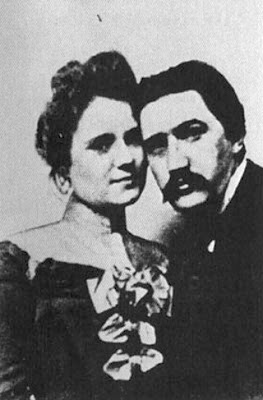
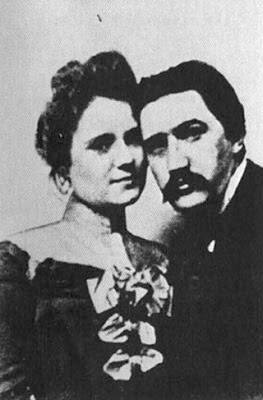
    PHOTOS: Otilie Dvořáková and Josef Suk, in happier days

  • Suk’s A Summer’s Tale: Healing Through Nature

    Suk’s A Summer’s Tale: Healing Through Nature

    While I appreciate supportive phone calls – and who doesn’t like compliments? – I’m often a tad self-absorbed while I’m on the air trying to figure out what exactly I’m supposed to be doing next. One enthusiastic listener who has been following me on all three (!) radio stations has been calling me up the past several weeks to talk about all sorts of unusual and neglected repertoire and how he’d love to hear certain pieces. In response to which I begin by giving my full attention, but then after several minutes my concentration becomes divided, as I try to organize pertinent background information for the next time I go on mic, and I start to reply to certain comments with a perfunctory “Hmm mmm” or “Ah!”

    However, after several such calls, one request managed to seep into my consciousness: Josef Suk’s “A Summer’s Tale.” For one, it’s seasonal; for another it’s nearly an hour long, which means I only have to write and record a single introduction! With these advantages in mind, I have decided to devote “The Lost Chord” this week to this single, sprawling symphonic poem.

    Suk was the one-time pupil and future son-in-law of Antonin Dvořák. In fact, his early works very much reflect Dvořák’s influence, in sunny, romantic music full of nationalistic touches.

    However, a double tragedy occurred in Suk’s 30th year, in 1905, when he lost both his father-in-law and his beloved wife, Otilie, Dvořák’s older daughter. The events directly inspired Suk’s “Asrael Symphony” – named for the Angel of Death. Not surprisingly, morbidity colors much of his mature output.

    “A Summer’s Tale” is the next step in Suk’s emotional rehabilitation. The work is a five-movement symphonic poem, the second of a four-part cycle, which contemplates death and the meaning of life. More affirmative than the grim “Asrael,” full of pain, loss and grief, “A Summer’s Tale” explores the healing powers of nature, in a score that at times reflects the epic romanticism of Gustav Mahler and the impressionism of Claude Debussy. It was composed over the course of just six weeks in the summer of 1907. Further tinkering took place over the next year, year-and-a-half. The work received its premiere in January of 1909.

    Suk later described the theme of the piece as “finding a soothing balm in nature.” Tune in tonight and see if you agree.

    That’s “Healing by Nature” – Suk’s “A Summer’s Tale” – on “The Lost Chord,” Sunday at 10 p.m. ET, with a repeat Wednesday evening at 6; or listen to it later as a webcast at wwfm.org.

    PHOTOS: Otilie Dvořáková and Josef Suk, in happier days

Tag Cloud

Aaron Copland (92) Beethoven (95) Composer (114) Film Music (120) Film Score (143) Film Scores (255) Halloween (94) John Williams (185) KWAX (229) Leonard Bernstein (100) Marlboro Music Festival (125) Movie Music (135) Opera (198) Philadelphia Orchestra (88) Picture Perfect (174) Princeton Symphony Orchestra (106) Radio (87) Ralph Vaughan Williams (85) Ross Amico (244) Roy's Tie-Dye Sci-Fi Corner (290) The Classical Network (101) The Lost Chord (268) Vaughan Williams (103) WPRB (396) WWFM (881)

DON’T MISS A BEAT

Receive a weekly digest every Sunday at noon by signing up here


RECENT POSTS