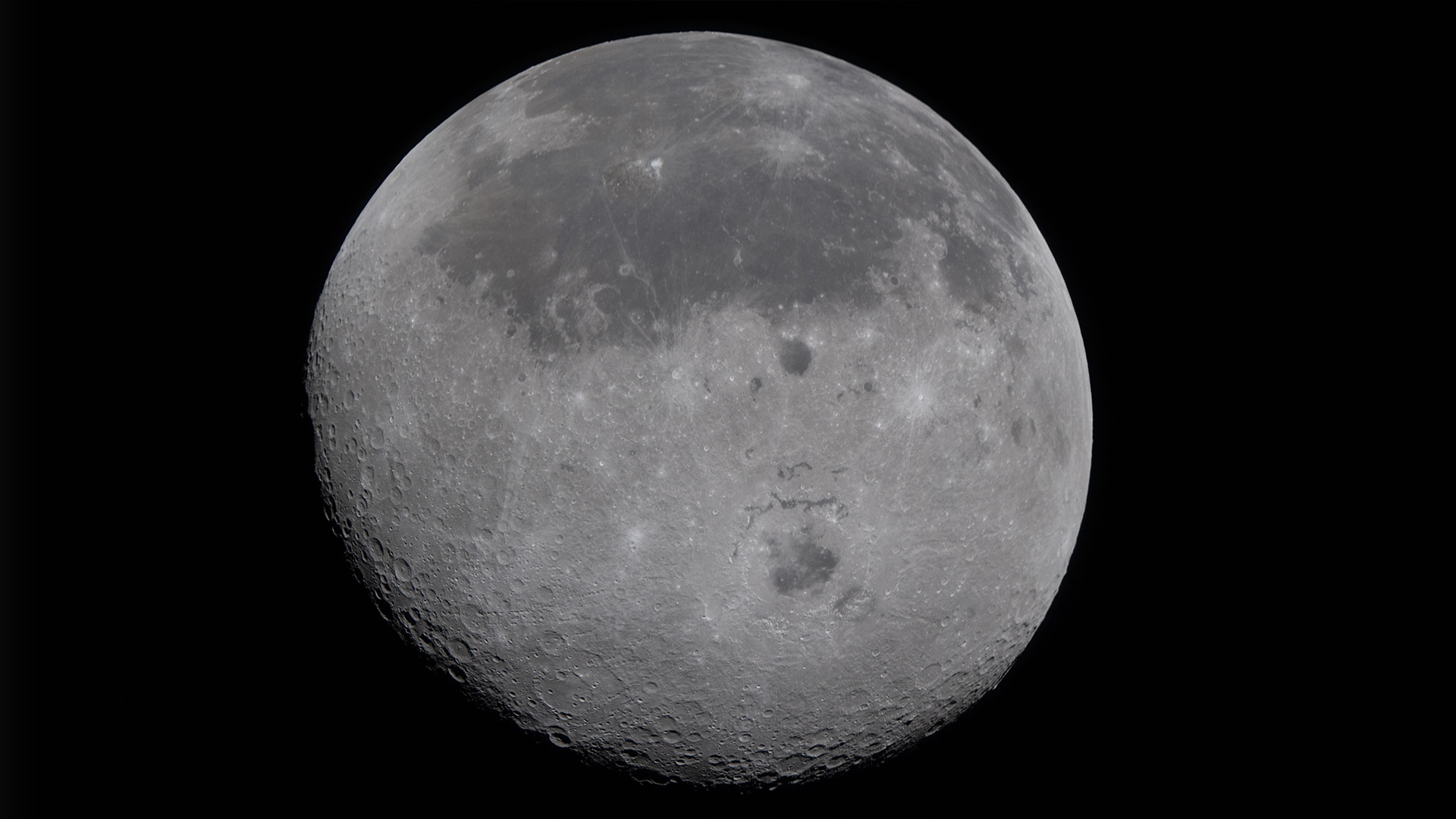
I received this private message from Pete Foltz this morning (which I am sharing with his permission):
“Ok – the best soundtrack for circling the moon? Entrance of the Gods into Valhalla? Or Pink Floyd?”
Anyone?
Astronauts have taken a lot of music to space over the years. Here’s a post I wrote about Rusty Schweickart, who took Vaughan Williams and Alan Hovhaness, before it was cool, on Apollo 9.
https://www.facebook.com/classicrossamico/posts/pfbid0zHUr5KgGEPdnJ5H7ABpitYA3wcTNiaG3qf7dBXRSjBieKmGb583kaVuzbAjt4HVPl
What composers or pieces of music would be on your mixtape? Rusty’s sounds pretty good to me.
Tag: Alan Hovhaness
-

Mount St Helens Blows Up The Lost Chord This Week
I suppose I should apologize on behalf of my former employer for all the smoke this week. You can’t burn a bridge that’s stood for 28 years without kicking up a little pollution.
That said, my unnatural dismissal from a certain local classical music station puts me in mind of some more natural disasters. With my broadcast base shifting for the time being to the Pacific Northwest and KWAX, the radio station of the University of Oregon, my thoughts drift back to 1980 and the fearsome eruption of Mount St. Helens. When Helens blew, she killed 57 people, reduced hundreds of square miles to wasteland, and caused over a billion dollars in damage. The most active volcano in the contiguous United States, Helens is situated only a three-hour drive north of Eugene (home of KWAX).
This week on “The Lost Chord” we’ll be dancing around the mouth of the volcano, as it were. Composer Alan Hovhaness was always acutely attuned to nature. For decades, he lived outside Seattle, where he enjoyed a fruitful relationship with the Seattle Symphony. Mountains, in particular, inspired a number of his more reverential works. Commenting on his best-known music, the Symphony No. 2, “Mysterious Mountain,” composed in 1955, he wrote, “Mountains are symbols, like pyramids, of man’s attempt to know God. Mountains are symbolic meeting places between the mundane and spiritual worlds.”
The friction of the natural and the transcendent certainly informs the progression of his Symphony No. 50, the “Mount St. Helens” Symphony, composed in 1983: from a sense of grandeur in the first movement, a prelude and fugue in praise of Helens; the placidity of Paradise Lake, the beauty of which disappeared forever; and the volcano itself, recalled in the third and final movement, most percussively rendered. The violence subsides, and the dawn hymn of the opening returns in triumph.
Hovhaness’ volcano symphony is like a walk in the park alongside the mad inspirations of Icelandic genius Jon Leifs. Leifs’ “Hekla,” from 1961, is probably the closest you’ll ever want to get to a volcanic eruption. Requiring 19 percussionists banging away on anvils, stones, sirens, plate bells, chains, shotguns, cannons, and a large wooden stump, it has been called the loudest piece of classical music ever written. For their own well-being, the performers were instructed to wear earplugs.
As a bonus, with what’s left of our hearing, we’ll also enjoy “Volcanic Eruption and Atonement” from Leifs’ ballet, “Baldr.”
In this graduation season, if there was a degree awarded for distinguished achievement in volcanology, these composers undoubtedly would have graduated “Magma Come Loudly.”
Prepare to be blown away, this Saturday on “The Lost Chord,” now in syndication on KWAX!
See below for streaming information.
Keep in mind, KWAX is on the West Coast, so there’s a three-hour difference for the Trenton-Princeton area. Here are the respective air-times of my shows (with East Coast conversions in parentheses):
PICTURE PERFECT, the movie music show – Friday on KWAX at 5:00 PACIFIC TIME (8:00 PM EDT)
THE LOST CHORD, unusual and neglected rep – Saturday on KWAX at 4:00 PACIFIC TIME (7:00 PM EDT)
Stream them here!
-
Hovhaness Mysterious Mountain in Space
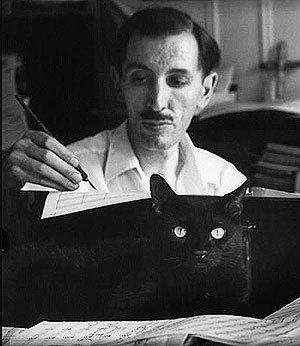
Alan Hovhaness’ music has frequently been described as transporting. But did you know that one of his symphonies actually went to space?
According to astronaut Rusty Schweickart, each of the crewmen who took part in NASA’s Apollo 9 mission were allowed to bring their own cassettes, which could be played in special players to keep the tapes from unraveling in zero gravity. Schweickart’s mix-tape included works by Ralph Vaughan Williams and Alan Hovhaness. One would assume from his choice of Hovhaness – the Symphony No. 2, “Mysterious Mountain” – that the Vaughan Williams must have been the “Fantasia on a Theme by Thomas Tallis,” with which there is a certain spiritual kinship. Great music with which to reflect on the majesty and mystery of space.
However, “mysteriously,” Schweikart was unable to locate his cassette until about the ninth day of the ten-day mission. He later noted, wryly, that his crewmates were not enthusiastic about his playlist.
Given the time frame of the Apollo 9 mission, which took place from March 3-13, 1969, Schweikart’s “Mysterious Mountain” would have been the classic recording made by Fritz Reiner and the Chicago Symphony Orchestra (at the time the only commercial recording of the work in existence). It’s interesting to contemplate that, in 1969, both composers, Hovhaness and Vaughan Williams, would have been considered contemporary. “Mysterious Mountain” was composed in 1955.
I don’t know for certain about the inclusion of the “Tallis Fantasia,” but a Google search has turned up a book, “Foothold in the Heavens” by Ben Evans. The content is paywalled, but from a blurb in the description it looks as if Schweikart’s cassette might actually have included Vaughan Williams’ Christmas cantata “Hodie,” composed in 1953-54. As a dyed-in-the-wool Vaughan Williams fanatic, I happen to love the piece, but if this is true, no wonder it drove his shipmates to “lose” the tape!
Listen for yourself:
Hovhaness, “Mysterious Mountain”
Vaughan Williams, “Fantasia on a Theme by Thomas Tallis”
Vaughan Williams, “Hodie”
Happy birthday, Alan Hovhaness. Your music was literally out of this world!
-
Hovhaness Rubaiyat Fairbanks & York
Here with a Loaf of Bread, beneath the Bough,
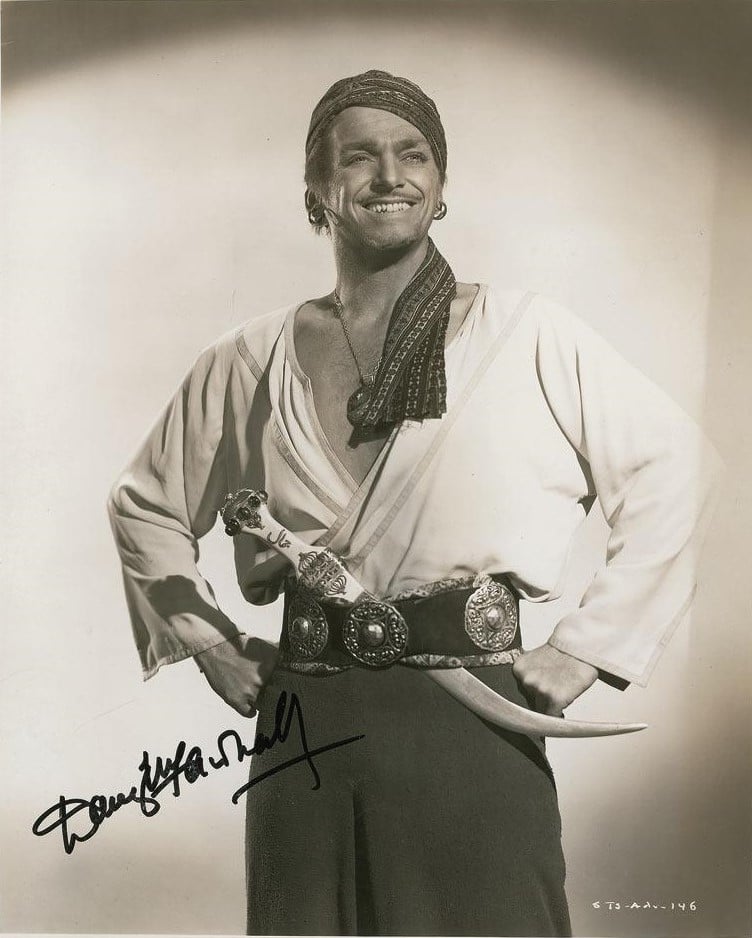
A Jug of Wine, an Accordion… and Douglas Fairbanks, Jr.Today is the 110th birthday of Armenian-American composer Alan Hovhaness.
In theory, Hovhaness, with his marked affection for the East, should have been the ideal composer to set “The Rubaiyat of Omar Khayyam.” What is striking is how unconventional his approach turned out to be. Is there a less likely instrument to bring to life the hedonistic fatalism of the medieval Persian master than the accordion?
A recording of the work was issued on a Columbia LP, with Fairbanks as the narrator. To me, Fairbanks’ theatricality is a huge asset, conjuring memories of his turn as Sinbad the Sailor.
Unfortunately, to date, the performance has not been reissued on CD. Presumably the masters languish in the Sony vaults. O that they could be licensed to another label, even to be pressed-on-demand at http://www.arkivmusic.com (which has already made available Kostelanetz’s recording of “Floating World – Ukiyo”). The Bird is on the Wing!
Lo! Someone has posted the audio on YouTube:
Fortunately, there is another fine recording with Michael York, the Seattle Symphony and accordionist Diane Schmidt.
An amusing anecdote: York appeared in Philadelphia a number of years back, in a touring revival of Lerner & Loewe’s “Camelot.” Following one of the performances, I walked around to the stage door, where there was a line of people waiting with memorabilia from “Cabaret” and “Logan’s Run.” Eventually, York emerged and politely signed everything, though you could tell he was a little fatigued after a long evening.
When he got to me, I handed him the CD booklet, and his eyes lit up. “Oh!” he exclaimed. “I would be DELIGHTED to sign this.”
That’s my Michael York story. Here’s a link to York’s mellifluous, though more subdued reading:
Come, fill the Cup, and in the Fire of Spring
The Winter Garment of Repentance fling:
The Bird of Time has but a little way
To fly – and Lo! the Bird is on the Wing.Happy birthday, Alan Hovhaness!
PHOTOS (clockwise from left): Doug Fairbanks; Omar Khayyam; the composer and Andre Kostelanetz; and Michael York
-

Volcano Music Blows Up The Lost Chord
Did you remember to “spring forward?” This Sunday night on “The Lost Chord,” now that we’ve all lost an hour, thanks to the time change, I figured everyone ought to be pretty drowsy by 10 p.m. So I had better be damn well sure to choose some very loud music. Also, it’s Alan Hovhaness’ birthday.
Hovhaness composed his Symphony No. 50 in the wake of Mount St. Helens’ cataclysmic eruption in 1980. When Helens blew, she killed 57 people, reduced hundreds of square miles to wasteland, and caused over a billion dollars in damage. This is music calculated to keep everyone awake.
Hovhaness viewed mountains as symbols of man’s attempt to know God – symbolic meeting places between the mundane and spiritual worlds. The friction of the natural and the transcendent informs the progression of the symphony, from a sense of grandeur in the first movement, a prelude and fugue in praise of Helens; the placidity of Paradise Lake, the beauty of which disappeared forever; and the volcano itself, recalled in the third and final movement, most percussively rendered. The violence subsides, and the dawn hymn of the opening returns in triumph.
Hovhaness’ volcano symphony is like a walk in the park alongside the mad inspirations of Icelandic genius Jon Leifs. Leifs’ “Hekla,” from 1961, is probably the closest you’ll ever want to get to a volcanic eruption. Requiring 19 percussionists banging away on anvils, stones, sirens, plate bells, chains, shotguns, cannons, and a large wooden stump, it has been called the loudest piece of classical music ever written. For their own well-being, the performers were instructed to wear earplugs.
As a bonus, with what’s left of our hearing, we’ll also enjoy “Volcanic Eruption and Atonement” from Leifs’ ballet, “Baldr.”
Down a six-pack of energy drinks and leap into a pool of ice. Then tune in for an hour of volcano music. If there was a degree awarded for distinguished achievement in volcanology, these composers would have graduated “Magma Come Loudly.”
Prepare to be blown away, this Sunday night at 10:00 EASTERN DAYLIGHT TIME, on WWFM – The Classical Network and wwfm.org.
Tag Cloud
Aaron Copland (93) Beethoven (95) Composer (114) Film Music (145) Film Score (143) Film Scores (255) Halloween (94) John Williams (195) KWAX (229) Leonard Bernstein (104) Marlboro Music Festival (125) Movie Music (160) Mozart (91) Opera (213) Philadelphia Orchestra (89) Picture Perfect (174) Princeton Symphony Orchestra (109) Radio (88) Ross Amico (244) Roy's Tie-Dye Sci-Fi Corner (290) The Classical Network (101) The Lost Chord (269) Vaughan Williams (105) WPRB (397) WWFM (881)