Tag: Alex North

  • Liz & Dick: Music from Their Movies

    Liz & Dick: Music from Their Movies

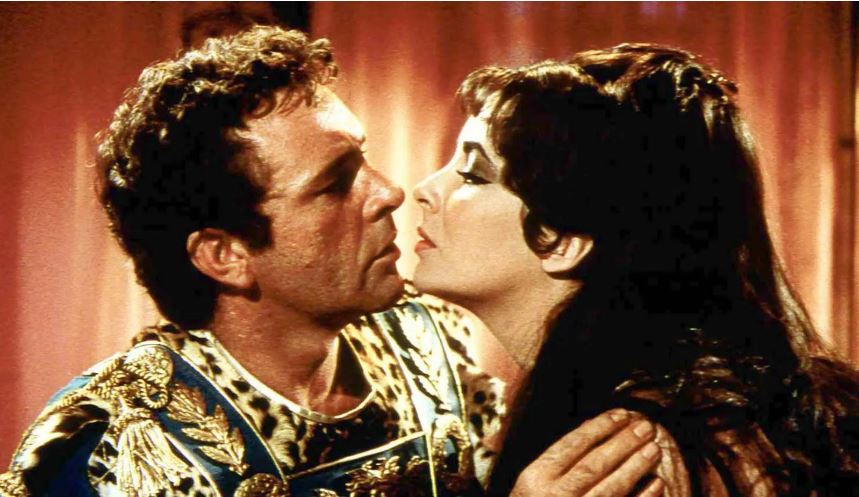
    Elizabeth Taylor and Richard Burton made no fewer than a dozen films together, but it was their tempestuous personal life that made them a source of ceaseless fascination. This week on “Picture Perfect,” enjoy a diverse assortment of musical selections from their movies.

    Regardless of their relative merits, the films of Liz and Dick could be counted on to feature scores by some very fine composers, not the least of whom was Alex North. North is probably most celebrated for his music for “Spartacus.” He would seem a natural fit, then, to write the music for “Cleopatra” (1963).

    “Cleopatra” is the film that first paired Burton and Taylor, on and off-screen. Contrary to popular belief, the epic teaming made a mint. It was the highest-grossing release of its year. However, it simply wasn’t enough to cover the costs of production, marketing, and distribution. “Cleopatra” nearly bankrupted 20th Century Fox. Despite its reputation, there’s still much to enjoy, perhaps most of all in its music.

    For a true sense of North’s versatility, we’ll also sample selections from “Who’s Afraid of Virginia Woolf” (1966), based on the play by Edward Albee. Both Burton and Taylor’s performances were nominated for Academy Awards. Taylor would win – her second Oscar – but despite seven nominations over the course of his career, Burton would never be so honored. It’s not any easy film to watch. There’s always a sneaking suspicion that Liz and Dick were merely playing versions of themselves. The comparatively understated music is full of Baroque touches and characterized by a chamber-like intimacy.

    The dysfunctionality continues, as allegedly “The V.I.P.s” (1963) was inspired by the real-life love triangle of Vivien Leigh, Laurence Olivier, and Peter Finch. The story is set at London Heathrow Airport, where flights are delayed because of a dense fog. The film was written by Terrence Rattigan, and co-starred Louis Jourdan, Maggie Smith, Rod Taylor and Orson Welles. Margaret Rutherford won an Academy Award for Best Supporting Actress.

    The composer was the Miklós Rózsa. Rózsa is perhaps most associated in people’s minds with his work on historical and biblical epics. Here it’s the film’s costars that are larger than life.

    We’ll conclude with music from the Shakespearean romp, “The Taming of the Shrew” (1967), Franco Zeffirelli’s fleet adaptation that also introduced the world to Michael York. The roles of Katherina and Petruchio suit Liz and Dick most satisfyingly.

    The composer was Nino Rota. Zeffirelli and Rota would score a bulls-eye with their Shakespearean follow-up, “Romeo and Juliet,” released the following year. That film became an international hit, and Rota’s love theme immortal.

    Ironically, Taylor and Burton’s final filmed collaboration was a 1973 television movie, “Divorce His, Divorce Hers.” The two, of course, would divorce in real life, only to remarry less than 16 months later, though their second union was short-lived. The exes would pair for one last time, ten years later, for a staged revival of Noel Coward’s “Private Lives,” which was witheringly received.

    It’s a bouquet of dysfunction, but a chocolate box of classic film scores for the films of Taylor and Burton, on “Picture Perfect,” music for the movies, this Saturday evening at 6:00 EDT, on WWFM – The Classical Network and wwfm.org.

  • Alex North Film Music Pioneer

    Alex North Film Music Pioneer

    This afternoon on The Classical Network, we are well and truly North-bound.

    Alex North was born in Chester, Pennsylvania (just outside of Philadelphia), on this date in 1910. His journey took him from a working class background to the Curtis Institute of Music, the Juilliard School, and the Moscow Conservatory. He also studied with Aaron Copland and Ernst Toch.

    He became involved with the Federal Theatre Project. He worked in ballet, especially with Martha Graham and Anna Sokolow. He accompanied the latter to Mexico, where he had an opportunity to study with Silvestre Revueltas. Perhaps not coincidentally, his three North American teachers, Copland, Toch, and Revueltas, had all worked in film.

    North wrote his first film score as far back as the 1930s, around the time he met up with director Elia Kazan. North was drafted during the war, and put his talent to use writing music for the Office of War Information documentaries.

    With the cessation of hostilities, he returned to the theater. He also composed some concert pieces. It was his theatre scores for plays like “A Streetcar Named Desire” that earned him an invitation to Hollywood, where he wrote the music for Kazan’s classic film adaptation. It was the first time jazz would be fully integrated into an onscreen drama, as opposed to being played in the background of a given scene. Its success opened the door to a new “film score” sensibility, paving the way for composers like Elmer Bernstein, Henry Mancini, and his beloved Duke Ellington.

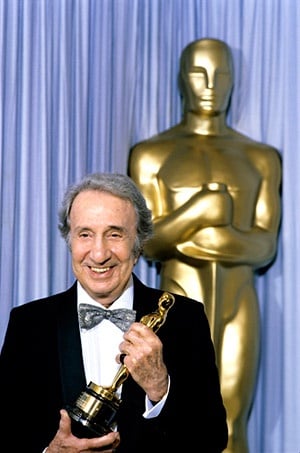
    In all, North wrote 50 film scores, racking up 15 Academy Award nominations, yet never taking home the prize. In 1986, he received lifetime achievement recognition from the Academy, the first composer to be so honored.

    There were times, during the course of his career, when his music took on an independent life, distinct from the films for which it was written. He scored major hits with “Unchained Melody” (originally written for the film “Unchained” and recorded some 500 times) and the love theme from “Spartacus.” The original soundtrack to “A Streetcar Named Desire” also sold extremely well.

    His acclaimed contribution to “Spartacus” didn’t keep the film’s director, Stanley Kubrick, from rejecting North’s score for “2001: A Space Odyssey” – without telling him. North found out only at the film’s premiere. But director John Huston was very happy to have him. Later in his career, North became Huston’s composer of choice, for films like “The Misfits,” “Under the Volcano,” “Prizzi’s Honor,” and “The Dead.”

    I hope you’ll me today for North’s rarely-heard Concerto for Piano and Orchestra with Trumpet Obbligato, and yes, selections from “Spartacus,” among my featured works. We’ll also observe the birthdays of André Campra, Michel Pignolet de Montéclair, and Sir Hamilton Harty.

    Then it’s off to the north countries for music by Carl Nielsen and Jean Sibelius on “Music from Marlboro” at 6:00.

    We’ll face true North, from 4 to 7 p.m. EST, on WWFM – The Classical Network and wwfm.org.


    BETTER LATE THAN NEVER: North with his honorary Oscar

  • Alex North Film Music Pioneer

    Alex North Film Music Pioneer

    This afternoon on The Classical Network, we are North-bound, as we celebrate the anniversary of the birth of composer Alex North.

    North was born in Chester, Pennsylvania (just outside of Philadelphia), on December 4th, 1910. His journey took him from a working class background to the Curtis Institute of Music, the Juilliard School, and the Moscow Conservatory. He also studied with Aaron Copland and Ernst Toch.

    He became involved with the Federal Theatre Project. He worked in the ballet, especially with Martha Graham and Anna Sokolow. He accompanied the latter to Mexico, where he had an opportunity to study with Silvestre Revueltas. Perhaps not coincidentally, his three North American teachers, Copland, Toch, and Revueltas, had all worked in film.

    North wrote his first film score as far back as the 1930s, around the time he met up with director Elia Kazan. North was drafted during the war, and put his talent to use writing music for the Office of War Information documentaries.

    With the cessation of hostilities, he returned to the theater. He also composed some concert pieces. It was his theatre scores for plays like “A Streetcar Named Desire” that earned him an invitation to Hollywood, where he wrote the music for Kazan’s classic film adaptation. It was the first time jazz would be fully integrated into an onscreen drama, as opposed to merely play in the background of a given scene. Its success opened the door to a new “film score” sensibility, paving the way for composers like Elmer Bernstein, Henry Mancini, and his beloved Duke Ellington.

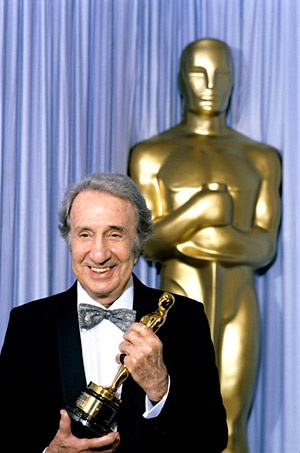
    In all, North wrote 50 film scores, racking up 15 Academy Award nominations, yet never taking home the prize. In 1986, he received lifetime achievement recognition from the Academy, the first composer to be so honored.

    There were times, during the course of his career, when his music took on an independent life, distinct from the films for which it was written. He scored major hits with “Unchained Melody” (originally written for the film “Unchained” and recorded some 500 times), and the love theme from “Spartacus.” The original soundtrack to “A Streetcar Named Desire” also sold extremely well.

    His acclaimed contribution to “Spartacus” didn’t keep the film’s director, Stanley Kubrick, from rejecting North’s score for “2001: A Space Odyssey” – without telling him. (North found out only at the film’s premiere.) But director John Huston was very happy to have him. Later in his career, North became Huston’s composer of choice, for films like “The Misfits,” “Under the Volcano,” “Prizzi’s Honor,” and “The Dead.”

    This afternoon, we’ll enjoy North’s rarely-heard Concerto for Piano and Orchestra with Trumpet Obbligato, and yes, selections from “Spartacus,” among our featured works, as we’ll also observe the birthdays of André Campra and Sir Hamilton Harty. We’ll face true North, between 4 and 7 p.m. EST, on WWFM – The Classical Network and wwfm.org.


    BETTER LATE THAN NEVER: North with his honorary Oscar

  • Alex North’s Fury Yul Brynner in Faulkner Film

    Alex North’s Fury Yul Brynner in Faulkner Film

    Yul Brynner as Jason Compson? Okay, so the 1959 film version of “The Sound and the Fury” is a mess. But the score by Alex North is wonderful. If you’re a North fan, you’ll want to be on hand this week for “Picture Perfect,” when we present an hour of literary pairings: “The Sound AND the Fury,” “War AND Peace,” “Crime AND Punishment,” and “Sense AND Sensibility.”

    You get the picture? Perfect!

    I hope you’ll join me for music by Alex North, Nino Rota, Arthur Honegger and Patrick Doyle, written for movies inspired by the writings of William Faulkner, Leo Tolstoy, Feodor Dostoyevsky and Jane Austen, this Friday evening at 6 ET, with a repeat Saturday morning at 6; or that you’ll listen to it later as a webcast at wwfm.org.


    PHOTO: [Feigning a Yoknapatawphan accent] “Et cetera, et cetera, et cetera…”

  • Vatican Movie Music Pope Visit Philadelphia

    Vatican Movie Music Pope Visit Philadelphia

    “POPE IN PHILADELPHIA THIS WEEKEND… PLAN AHEAD… EXPECT DELAYS,” warn the flashing signs all up and down I-95, 295, and Route 1.

    The Ben Franklin Bridge will be shut down until Monday. Access to I-676 will be no more. All Center City exits will be sealed. The Pope Fence is up, mailboxes have been removed, and the car carrier trailers are full of impounded vehicles, bound for who-knows-where. Are we having fun yet?

    This week on “Picture Perfect,” we tap into the zeitgeist and celebrate what’s become a Pope cultural phenomenon with music from movies set in the Vatican.

    It would appear that Alex North (born just south of Philadelphia, by the way, in Chester, Pa.) was Hollywood’s “go to” composer for Vatican movies, with scores for two major films about the Pope.

    In “The Shoes of the Fisherman” (1968), Anthony Quinn plays Kiril Pavlovich Lakota, an archbishop who serves 20 years in a Siberian labor camp. He is released and sent to Rome where is promoted to the cardinalate. When the Pope dies, suddenly, Lakota, a dark horse candidate, is elected as his replacement. The story balances Lokata’s internal struggles and personal torments with mounting global turmoil. North juxtaposes the melancholy lyricism of Russian folksong with the steely grandeur of his music for the Vatican.

    “The Agony and the Ecstasy” (1965), about the war of wills between Michelangelo (played by Charlton Heston) and the warrior-pope Julius II (played by Rex Harrison) over the painting of the ceiling of the Sistine Chapel, suggested a completely different approach. North’s other Vatican score is rich in allusions to authentic music of the era – and of the Church – which is most impressive when we think that the Early Music Movement was, at the time, in its very infancy, and the music of the pre-Baroque would not have been particularly well known.

    Otto Preminger’s “The Cardinal” (1963) follows a fictional Boston Irish Catholic priest from his ordination in 1917 to his appointment as cardinal on the eve of World War II. Tom Tryon played the lead. Tryon later became a best-selling author (as THOMAS Tryon), with books like “The Other” and “Harvest Home.” An interesting factoid: The Vatican’s liaison officer for the production was none other than Joseph Ratzinger, later Pope Benedict XVI.

    The composer was Jerome Moross. The producers of the recording we’ll be sampling incorporate the sound of the actual bell of St. Paul’s Cathedral into the opening of the suite.

    Christopher Reeve may have been trying just a bit too hard to shake his “Superman” image when he signed on to “Monsignor” (1982). Reeve stars as a Roman Catholic priest whose ascent through the ranks at the Vatican parallels his underhanded dealings with a mafia don and an affair with a woman in the postulant stage of becoming a nun.

    Likewise, composer John Williams received his only nomination from the Golden Raspberry Awards for Worst Original Score. Tune in for this rare opportunity to hear music from Williams’ first project after his Academy Award-winning contribution to “E.T.”

    I hope you’ll join me for music from movies set in the Vatican this week, on “Picture Perfect,” Friday evening at 6 ET, with a repeat tomorrow morning at 6; or that you’ll listen to it later as a webcast at wwfm.org.

Tag Cloud

Aaron Copland (92) Beethoven (95) Composer (114) Film Music (120) Film Score (143) Film Scores (255) Halloween (94) John Williams (185) KWAX (229) Leonard Bernstein (100) Marlboro Music Festival (125) Movie Music (135) Opera (198) Philadelphia Orchestra (88) Picture Perfect (174) Princeton Symphony Orchestra (106) Radio (87) Ralph Vaughan Williams (85) Ross Amico (244) Roy's Tie-Dye Sci-Fi Corner (290) The Classical Network (101) The Lost Chord (268) Vaughan Williams (103) WPRB (396) WWFM (881)

DON’T MISS A BEAT

Receive a weekly digest every Sunday at noon by signing up here


RECENT POSTS