Tag: Alfred Newman

  • Airport Movie Music on Picture Perfect

    Airport Movie Music on Picture Perfect

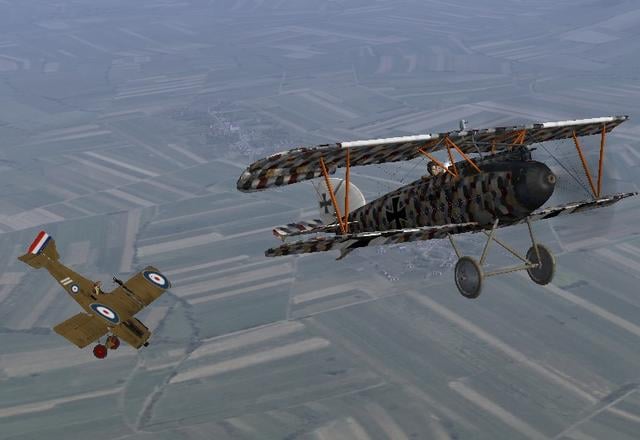
    This week on “Picture Perfect,” we’re ready to take flight, at our new time – Saturday at 7 pm – with music from movies about airports and airplanes.

    In the original “Airport” (1970), producer Irwin Allen established the prototype for disaster movies of all stripes by placing an all-star, aging cast in spectacular peril. Burt Lancaster! Dean Martin! George Kennedy! Jean Seberg! Jacqueline Bisset! Helen Hayes! The list goes on and on, longer than the longest runway. The bongo-laden theme is by veteran film composer Alfred Newman,” from the last of his over 200 scores.

    Another movie with something of the same feel is “The V.I.P.s” (1963), allegedly inspired by the real-life love-triangle of Vivien Leigh, Laurence Olivier, and Peter Finch. The story is set at London Heathrow Airport, where flights are delayed because of a dense fog. The film was written by Terrence Rattigan and the parts cast from another laundry list of stars, including Elizabeth Taylor, Richard Burton, Louis Jourdan, Maggie Smith, Rod Taylor, and Orson Welles, with Margaret Rutherford in an Academy Award-winning performance. The music is by Miklós Rózsa.

    By contrast, Steven Spielberg’s “The Terminal” (2004) is an (intentionally) comic take on the predicament of a hapless Eastern European who finds himself in a kind limbo, trapped in an international arrivals terminal in New York, after his country erupts into civil war, so that his passport and other documentation are no longer valid. His plight mirrors that of real-life Mehran Karimi Nasseri, an Iranian who lived for 17 years in a terminal at Charles de Gaulle Airport.

    Tom Hanks plays the unfortunate traveler, who makes the terminal his home, and Catherine Zeta-Jones the airline attendant with whom he strikes up a relationship. The music is by regular Spielberg collaborator John Williams, and I think you’ll find it quite different from the Williams known for his work on “Star Wars” and “Indiana Jones.”

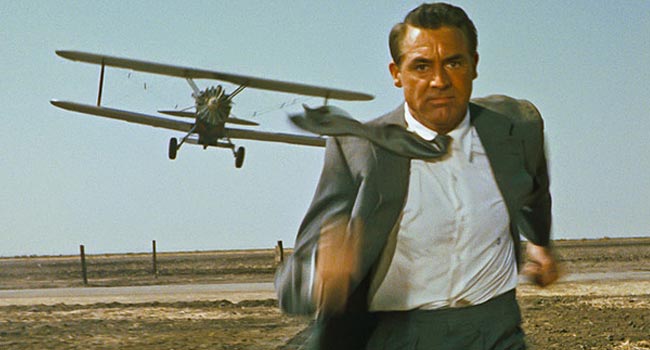
    Finally, we’ll turn to the Alfred Hitchcock thriller “North by Northwest” (1959), a film in which Cary Grant encounters love and danger in, on, and from a variety of planes, trains, and automobiles. Planes are particularly significant. During the course of the film, it’s revealed that the title is in reference to a Northwest Airlines flight; Eve Kendall (Eva Marie Saint) must do all she can to avoid getting on a plane with Phillip Vandamm (James Mason); and of course, Roger Thornhill (Grant) flees from a strafing crop duster. Bernard Herrmann’s opening fandango propels us into the adventure.

    Rush more to Rushmore. Departure time is this Saturday evening at 6:00 EDT, on “Picture Perfect” – music for the movies – on WWFM – The Classical Network and wwfm.org.
  • Christmas Movie Music from Classic Books

    Christmas Movie Music from Classic Books

    Remember when movies used to be inspired by books (as opposed to TV shows and Marvel comics)?

    This week on “Picture Perfect,” enjoy an hour of music from movies adapted from novels and short stories on Christmas themes, or with memorable Christmas moments.

    We’ll begin with Alfred Newman’s score for “O. Henry’s Full House,” a 1952 anthology based on five separate O. Henry stories, each presented by a different screenwriter and director. The film is doubly literary in that each of its segments is introduced by none other than John Steinbeck. We’ll hear music from the final portion, based on the classic Christmas tale “The Gift of the Magi.”

    Louisa May Alcott’s “Little Women” sports a memorable Christmas chapter, in which the March family helps out a neighbor-in-need by donating their Christmas breakfast – only to be rewarded later in the day with a feast of their own. “Little Women” has been adapted to film at least six times. With the latest version now in theaters, we’ll look back to its 1994 incarnation, with Winona Ryder and Susan Sarandon, and featuring an Academy Award-nominated score by Thomas Newman (son of Alfred).

    Miklós Rózsa won his third Academy Award his music for the 1959 version of “Ben-Hur” (now filmed three times). We’ll hear the prologue and Nativity scene. General Lew Wallace’s novel, published in 1880, became the bestselling work of American fiction for the next 50 years. Its streak was broken in 1936 with the appearance of Margaret Mitchell’s “Gone with the Wind.”

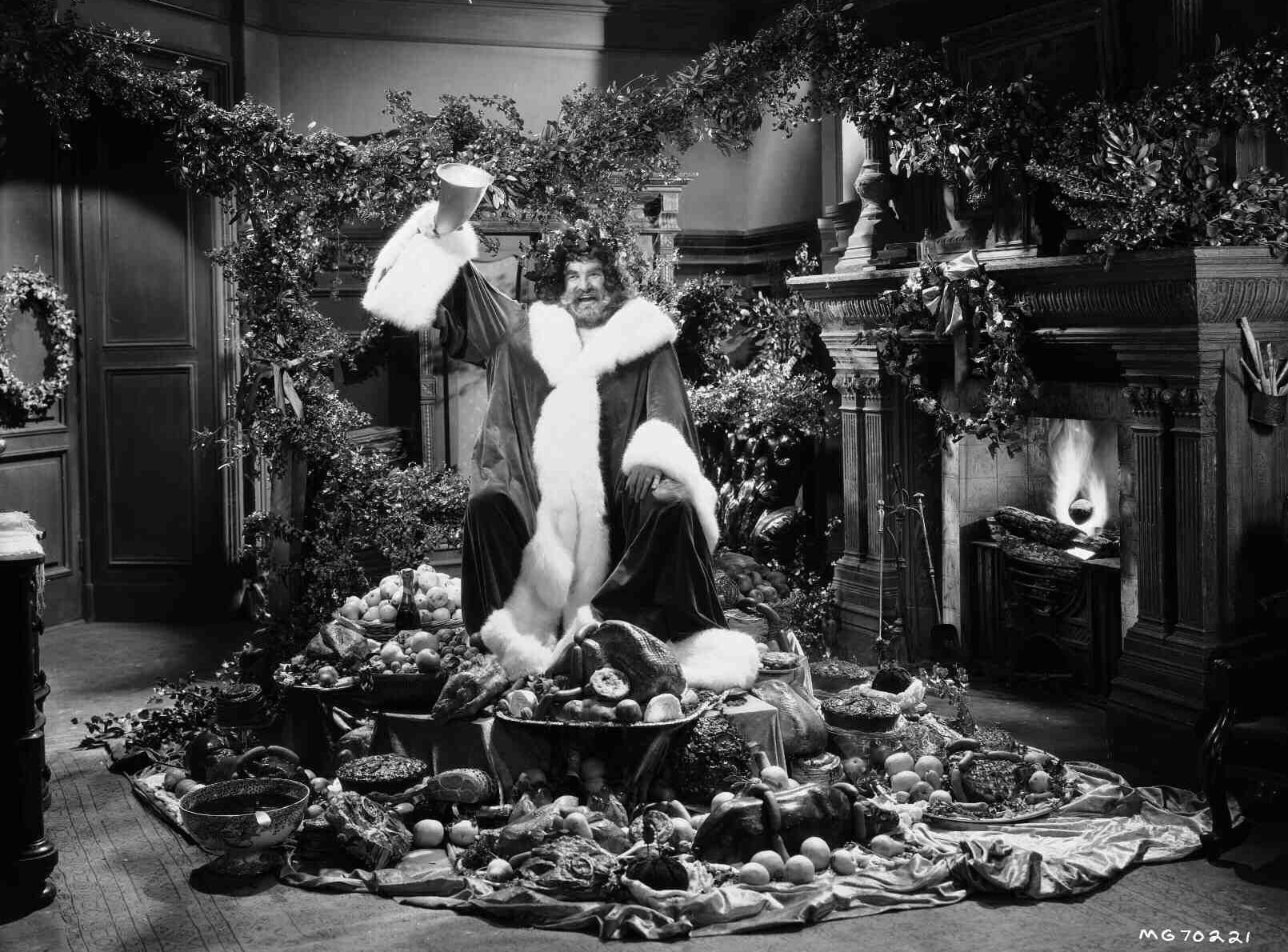
    Finally, we’ll turn to a suite from a 1951 adaptation of Charles Dickens’ “A Christmas Carol” (released in the UK as “Scrooge”). I can’t even count how many times that one’s been filmed. This particular version stars the great Alastair Sim. The music was composed by Richard Addinsell – he of the “Warsaw Concerto” fame – and the performance is conducted by Alfred Newman’s OTHER musical son, David.

    Take a break from the holiday hurly-burly, and cozy in for a library of Christmas classics, on “Picture Perfect,” this Friday evening at 6:00 EST, on WWFM – The Classical Network and wwfm.org.
  • Alfred Newman’s Tyrone Power Swashbucklers

    Alfred Newman’s Tyrone Power Swashbucklers

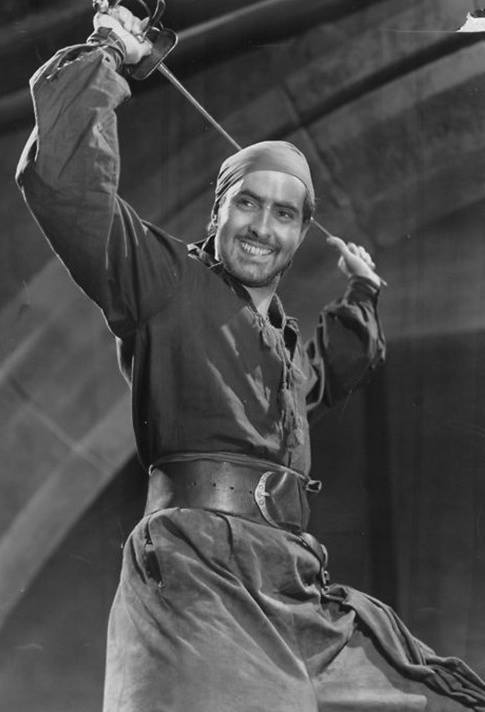
    This week on “Picture Perfect,” experience the Power of Alfred Newman – TYRONE Power, that is. It’s all music from Power swashbucklers made at 20th Century Fox, where Newman served as music director for 20 years.

    “Captain from Castile” (1947) was one of Power’s most opulent vehicles. Based on the novel by Samuel Shellabarger, the film relates Pedro de Vargas’ escape from persecution at the hands of the Inquisition and his accompaniment of Hernán Cortéz in the conquest of Mexico. Also starring Jean Peters and Cesar Romero (as Cortéz), the film capitalizes on the happenstance of a real-life erupting volcano. The climactic march, known as “Conquest,” went on to become one of Newman’s greatest hits. It’s entered the marching band repertoire and has been recorded many times.

    “The Black Swan” (1942) costars Maureen O’Hara and Laird Cregar (as Henry Morgan). Also, if you ever wanted to see George Sanders in a red beard, then this is the movie for you. This time the source material is a novel by Rafael Sabatini, who also created “Captain Blood,” “The Sea Hawk,” and “Scaramouche.”

    Of course, it was “The Mark of Zorro” (1940) that solidified Power’s reputation as 20th Century Fox’s resident swashbuckler. In its own way, the remake manages to match the delights of Douglas Fairbanks’ 1920 original, which was one of the silent era’s most thrilling adventures.

    Finally, it’s back to Shellabarger for “Prince of Foxes” (1949). This time, the setting is the Italian Renaissance. Orson Welles is Cesare Borgia, with an oddly cast Everett Sloane playing an assassin. Sloane was a veteran of Welles’ Mercury Theatre. You may remember him as Mr. Bernstein from “Citizen Kane,” or perhaps from the famous funhouse finale from “The Lady from Shanghai.”

    It’s interesting that all of the films represented this week were inspired by books. (Zorro was introduced in “The Curse of Capistrano” by Johnston McCully.) It was another day, as they say.

    I hope you’ll join me for music by Alfred Newman, written for the swashbucklers of Tyrone Power, on “Picture Perfect” – music for the movies – this Friday evening at 6:00 EST, on WWFM – The Classical Network and wwfm.org.

    A fun reminiscence of Newman (“the best conductor who ever picked up a baton in Hollywood”) by composer David Raksin:

    http://www.americancomposers.org/raksin_newman.htm

  • Early Music in Film Scores

    Early Music in Film Scores

    March is Early Music Month. While the concept may seem quite remote from the world of film music, this week on “Picture Perfect,” we’ll endeavor to tie in with four scores that employ melodies and modes of the Middle Ages.

    We’ll hear selections from “Becket” (1964), by Laurence Rosenthal. In the film, based on a play by Jean Anouilh, Richard Burton plays the Archbishop of Canterbury, and Peter O’Toole, King Henry II. The music is reliant on chant, with a quotation from the familiar Gregorian melody, “Dies Irae” (“Day of Wrath”), occurring fairly early in the action.

    Then we’ll hear music from “The Hunchback of Notre Dame” (1939), by Alfred Newman. This time based on a novel – “Notre Dame de Paris,” by Victor Hugo – the film features Maureen O’Hara as Esmeralda and Charles Laughton as Quasimodo, with Cedric Hardwicke, Thomas Mitchell, Edmond O’Brien, and Harry Davenport in the supporting cast. The project was one of nine scored by Newman that year, which many historians regard as Hollywood’s finest. Again, the composer evokes the era through sacred choral passages and secular dances.

    “The Warlord” (1965) starring Charlton Heston, Richard Boone and Rosemary Forsyth, is the tale a knight who falls in love with a peasant woman, and in order to keep her, claims his right of “droit du seigneur” – his prerogative to spend the first night with any new bride among his serfs. She falls in love with him, and all hell breaks loose.

    It was an unusual project for the composer, Jerome Moross, who is best-known for the kind of breezy Americana sound employed in his best-known score, that for “The Big Country.” Here, he evokes the 11th century with an underscore that, again, takes its inspiration from authentic music of the era.

    Finally, we’ll turn to “The Lion in Winter” (1965), adapted from a play by James Goldman, an historical drama set at the Christmas court of Henry II – again, as in “Becket,” played by Peter O’Toole. Henry spars with his estranged wife, the temporarily paroled Eleanor of Aquitaine (played by Katherine Hepburn), in a familial power struggle, which also involves their three sons, played by Anthony Hopkins, Timothy Dalton and Nigel Terry.

    The film was the winner of three Academy Awards, including one for Best Original Score. The composer was John Barry. Yet again the music is steeped in that of the Middle Ages, yet given a distinctly modern edge.

    I hope you’ll join me for these cinematic forays into Early Music, on “Picture Perfect,” this Friday evening at 6 EDT, on WWFM – The Classical Network and wwfm.org.

    Early Music America


    While you’re waiting, here’s the cast of SCTV in “The Man Who Would Be King of the Popes” – which employs music from “The Lion in Winter!”


    PHOTOS: Peter O’Toole as dueling Henrys, in “Becket” (top, with Richard Burton) and “The Lion in Winter” (with Katharine Hepburn)

  • Airport Airplane Movie Music Picture Perfect

    Airport Airplane Movie Music Picture Perfect

    This week on “Picture Perfect,” we take flight with music from movies about airports and airplanes.

    In the original “Airport” (1970), producer Irwin Allen established the pattern for disaster movies of all stripes by placing an aging all-star cast in spectacular peril. Burt Lancaster! Dean Martin! George Kennedy! Jean Seberg! Jacqueline Bisset! Helen Hayes! The list goes on and on, longer than the longest runway. The bongo-laden theme was by veteran composer Alfred Newman, from the last of his over 200 film scores.

    Another movie with something of the same feel is “The V.I.P.s” (1963), allegedly inspired by a real-life love triangle made up of Vivien Leigh, Laurence Olivier and Peter Finch. The story is set at London Heathrow Airport, where flights are delayed because of a dense fog. The film was written by Terrence Rattigan, and sports a laundry list of stars, including Elizabeth Taylor, Richard Burton, Louis Jourdan, Maggie Smith, Rod Taylor and Orson Welles, with Margaret Rutherford in an Academy Award-winning performance. The music was by Miklós Rózsa.

    By contrast, Steven Spielberg’s “The Terminal” (2004) is an (intentionally) comic take on the predicament of an Eastern European who finds himself in a kind limbo, trapped in an international arrivals airport terminal in New York after his country erupts into civil war and his passport and other documentation are no longer valid. His plight mirrors that of real-life Mehran Karimi Nasseri, an Iranian who lived 17 years in a terminal at Charles de Gaulle Airport.

    Tom Hanks plays the unfortunate traveler, who makes the terminal his home, and Catherine Zeta-Jones the airline attendant with whom he strikes up a relationship. The music was by regular Spielberg collaborator John Williams, and I think you’ll find it quite different from the Williams known for his work on “Star Wars” and “Indiana Jones.”

    Finally, we turn to the Alfred Hitchcock thriller, “North by Northwest” (1959), a film which had Cary Grant encountering love and danger in, on, and from a variety of planes, trains and automobiles. Planes are particularly significant. Over the course of the film, we find out the title is a play on a Northwest Airlines flight; Eva Marie Saint learns she must do all she can to avoid getting on another; and of course the film’s most iconic image is that of Grant fleeing a strafing crop duster. Bernard Herrmann’s opening fandango propels us into the adventure.

    I hope you’ll join me for an hour of music from films featuring airports and airplanes this week on “Picture Perfect,” this Friday evening at 6:00 EST, on WWFM – The Classical Network and wwfm.org.

Tag Cloud

Aaron Copland (92) Beethoven (95) Composer (114) Film Music (120) Film Score (143) Film Scores (255) Halloween (94) John Williams (185) KWAX (229) Leonard Bernstein (100) Marlboro Music Festival (125) Movie Music (135) Opera (198) Philadelphia Orchestra (88) Picture Perfect (174) Princeton Symphony Orchestra (106) Radio (87) Ralph Vaughan Williams (85) Ross Amico (244) Roy's Tie-Dye Sci-Fi Corner (290) The Classical Network (101) The Lost Chord (268) Vaughan Williams (103) WPRB (396) WWFM (881)

DON’T MISS A BEAT

Receive a weekly digest every Sunday at noon by signing up here


RECENT POSTS