It was on this date in 1770 that the Mozarts, father and son, attended a Holy Week service in Rome. Young Wolfgang, then only 14, was intrigued by what he heard.
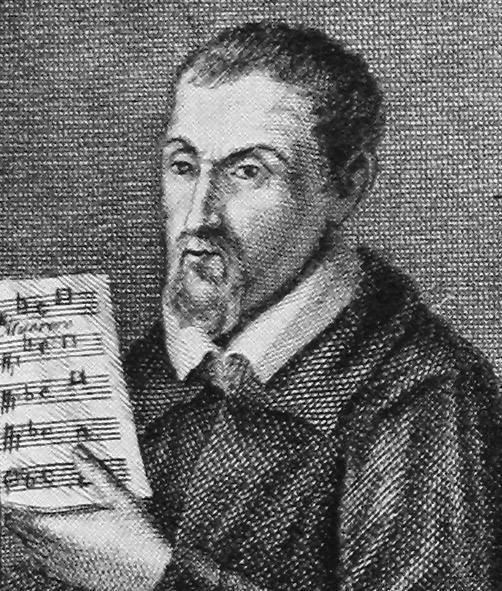
Gregorio Allegri composed his “Miserere mei, Deus” – or “Miserere,” for short, a setting of Psalm 51 – in the 1630s. The piece was designed for exclusive performance in the Sistine Chapel, as part of the Tenebrae service of Holy Wednesday and Good Friday.
Allegri’s conception was a striking one, for two choirs, one intoning a simple chant, and the other, spatially separated, providing ornamentation. The pièce de résistance was the inclusion of a stratospheric top C, which has the effect of making the “Miserere” one of the most haunting works in the choral literature of the late Renaissance.
The Vatican, realizing it had a good thing, forbade performance of the piece outside its walls or copies of the score to leave the premises, under threat of excommunication. But Mozart couldn’t help himself. A couple of hours later, he copied the work down from memory. Not long after, he handed it off to author and music historian Charles Burney, who published it without delay.
Mozart was summoned before the Pope, but rather than being excommunicated, he was showered with praise for his feat of musical genius, and the ban on the “Miserere” was lifted.
But did Mozart ever actually hear that famous “top C?”
In 1831, Mendelssohn made his own transcription of the “Miserere,” but, for whatever the reason, the performance he heard was sung a fourth higher than intended.
Leap ahead half a century to the first edition of “Grove’s Dictionary of Music and Musicians,” published in 1881. An editorial error resulted in a passage from Mendelssohn’s transcription being incorporated into a musical example used to illustrate one of the entries. The article was widely reproduced, until Grove’s error came to be established as the preferred version of the “Miserere.”
A good thing, too! I wouldn’t trade that top C for the world.
Here is Allegri’s “Miserere,” performed by the ensemble Tenebrae:
Franz Liszt also made an arrangement, which is most frequently encountered on the organ – sometimes the piano – but apparently he also orchestrated it. His version cleverly juxtaposes the “Miserere” with Mozart’s own “Ave verum corpus.”
For context, Mozart’s “Ave verum corpus:”
Liszt’s “À la Chapelle Sixtine” for piano:
https://www.youtube.com/watch?v=tkAMKzRSrjc
And for orchestra:
Clockwise from left: Allegri; happy Mozarts, father and son; Mendelssohn; and the Abbé Liszt