This week on “Picture Perfect,” it’s my birthday AND the Fourth of July, so I’ve selected four Americana film scores to enjoy with sparklers and cake.
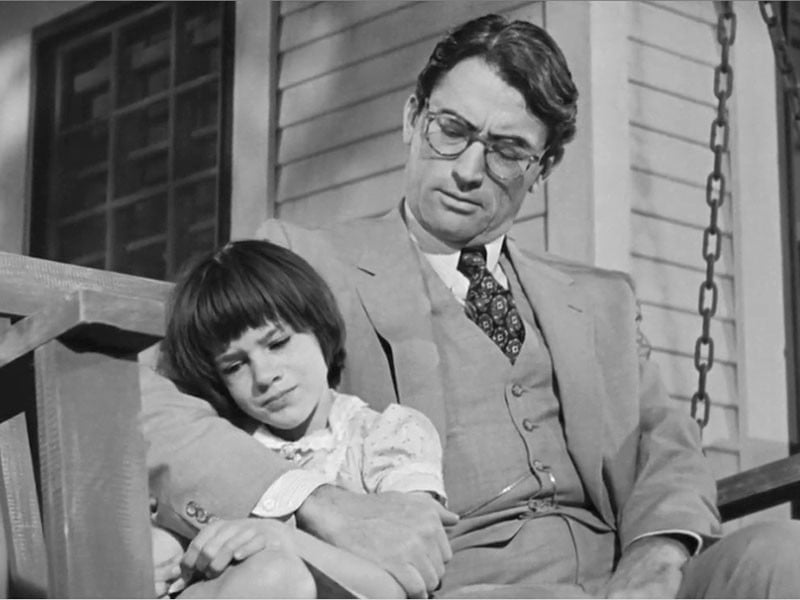
Okay, so “To Kill a Mockingbird” (1962) is not the most celebratory film, but I don’t care – it’s a beautiful movie, based on a beautiful book (by Pulitzer Prize winner Harper Lee), with beautiful music by Elmer Bernstein, full of nostalgia and yearning, and a playful sense of fun when the kids are rolling in tires. It’s steeped in Americana, so I’m going with it. Gregory Peck is unforgettable as the forthright attorney and model father, Atticus Finch. FUN FACT: John Williams played the piano part in the original recording heard in the film.
A rather more questionable role model is at the heart of “The Film-Flam Man” (1967), with George C. Scott as “Master of Back-Stabbing, Cork-Screwing and Dirty-Dealing” confidence man Mordecai C. Jones. Irvin Kershner directed, and Jerry Goldsmith’s music (harmonica, banjo, honky-tonk piano, etc.) lends to the film’s freewheeling spirit with a folksy, bluegrass-imbued score.
Jerome Moross is largely recognized for his classic score for “The Big Country.” However, that sense of quintessential Americana colors much of his output, including, most sensitively, his music for “Rachel, Rachel” (1968). Joanne Woodward plays the isolated schoolteacher of the title (the character lives above a funeral parlor with her mother), who belatedly experiences passion and asserts her independence. The director was none other than Woodward’s husband, Paul Newman.
Finally, we’ll turn to one of John Williams breakthrough scores, for “The Reivers” (1969), based on the semi-autobiographical novel of William Faulkner. The music, if possible, is even folksier and more frenetic than Goldsmith’s “The Flim-Flam Man” – though, typical of Williams, there is also an expansive sentiment and indefinable yearning to the more lyrical episodes.
It’s said that the composer’s work on “The Reivers” is what moved Steven Spielberg to hire him for “The Sugarland Express.” The Spielberg association brought Williams to “Jaws,” and the first of his truly iconic film scores. Williams collaborated with the director of THIS film, Mark Rydell, on a number of occasions, as well – on “The Cowboys,” “Cinderella Liberty,” and “The River.”
I hope you’ll join me for a Fourth of July tug of war between rowdiness and sensitivity, with Americana film scores on “Picture Perfect,” music for the movies, now in syndication on KWAX, the radio station of the University of Oregon!
Clip and save the start times for all three of my recorded shows:
PICTURE PERFECT, the movie music show – Friday at 8:00 PM EDT/5:00 PM PDT
SWEETNESS AND LIGHT, the light music program – Saturday at 11:00 AM EDT/8:00 AM PDT
THE LOST CHORD, unusual and neglected rep – Saturday at 7:00 PM EDT/4:00 PM PDT
Stream them, wherever you are, at the link!