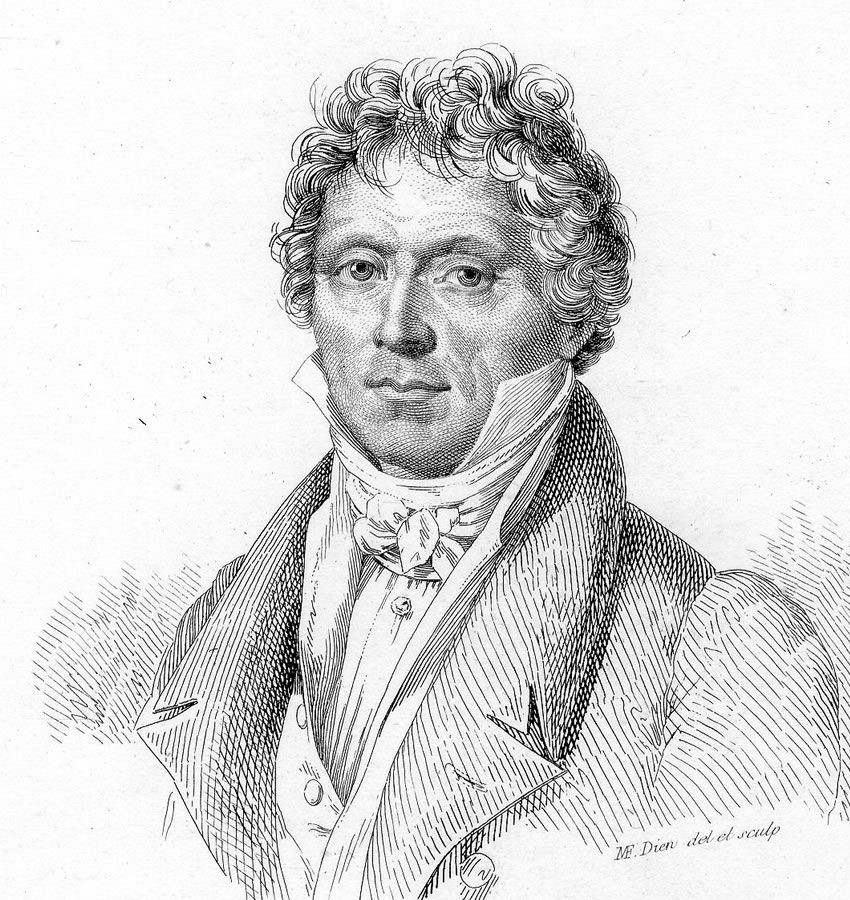
He was a lifelong friend of Beethoven. They shared the same teachers and exchanged musical ideas. He taught Liszt, Berlioz, Franck, and Gounod. But, unless you happen to be a wind player, how many people really know the music of Anton Reicha? Perhaps a shade more than realize that today is his 250th birthday.
Though he composed music in all genres – symphonies, concertos, operas, string quartets, choral music, vocal and instrumental works – Reicha is principally remembered, if at all, for his 25 wind quintets. Written in Paris between 1811 and 1820, the quintets came at a time when there was a dearth of good material for this particular configuration, so they were very successful. They also happen to comprise some of Reicha’s most traditional music.
Earlier, during his years in Vienna – a time when he was closest to Beethoven – he espoused some pretty radical ideas, including polyrthyms, polytonality, and even microtones. These were innovations that would not make serious inroads in the world of classical music for over a hundred years.
As the composer noted in his memoirs, “The number of works I finished in Vienna is astonishing. Once started, my verve and imagination were indefatigable. Ideas came to me so rapidly it was often difficult to set them down without losing some of them. I always had a great penchant for doing the unusual in composition. When writing in an original vein, my creative faculties and spirit seemed keener than when following the precepts of my predecessors.”
Reicha was a prolific composer, whose music is full of novel ideas. His forward-looking string quartets influenced Beethoven – with whom, naturally, he shared many musical discussions – and Franz Schubert.
Yet for some reason, he was often reluctant to publish. This led to the slapdash organization of his output, following his death, and lots of confusion, as pieces were lost, opus numbers were assigned willy-nilly, and some works were even counted more than once.
So here we are, today, on Reicha’s 250th birthday, and the world is Beethoven-mad. I think his music deserves at least an occasional hearing. But you know how it is. Beethoven sells more tickets.
It reminds me of the famous anecdote, related by Franz Liszt, in which he puckishly swapped trios by Beethoven and Johann Peter Pixis, presenting them opposite to the order in which they were advertised in the concert program. The audience reaction to the Pixis was stormy and enthusiastic, but when he came to perform the Beethoven, the response was tepid at best. It annoyed many in the hall when Liszt revealed the ruse.
Reicha’s music is closer to Beethoven’s than is Pixis’. Get people in the chairs, and they will enjoy it.
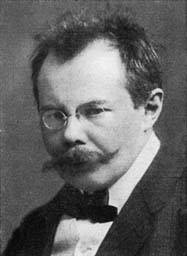
In the meantime, I’ll be sharing something by Reicha this afternoon, as I’ll also be observing the birthdays today of composers Richard Wetz and Frank Bridge, conductor Witold Rowicki, pianist Lazar Berman, and soprano Emma Kirkby.
It will be music by Mozart and Schubert on tonight’s “Music from Marlboro,” at 6. That ought to sell some tickets. I hope you’ll join me from 4 to 7 p.m. EST, on WWFM – The Classical Network and wwfm.org.