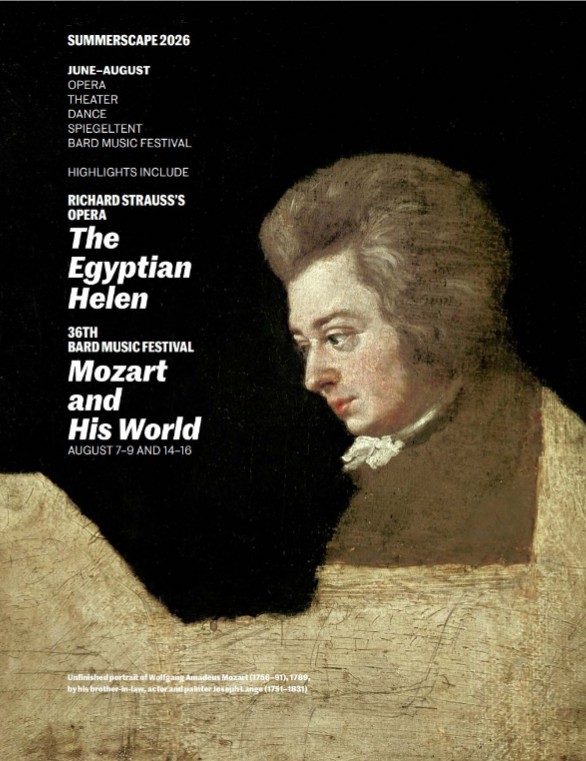
For Antonio Salieri’s birthday, an announcement of next year’s Bard Music Festival…
Tag: Antonio Salieri
-

Amadeus Turns 40 New Miniseries Arrives
I had been holding off until Antonio Salieri’s birthday (Salieri born on this date in 1750) to share two bits of news, which, because of my self-imposed delay, you may have already heard by now.
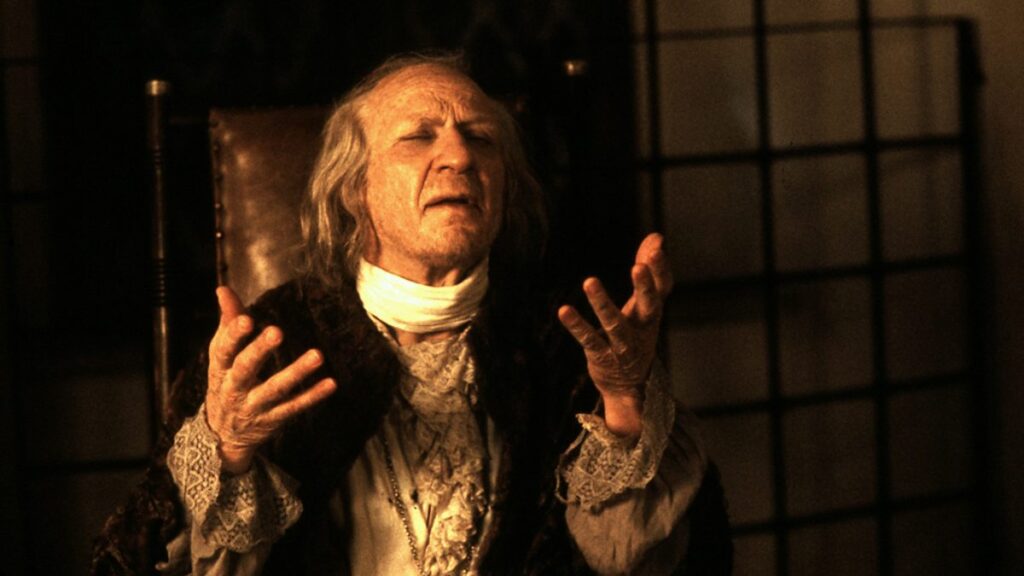
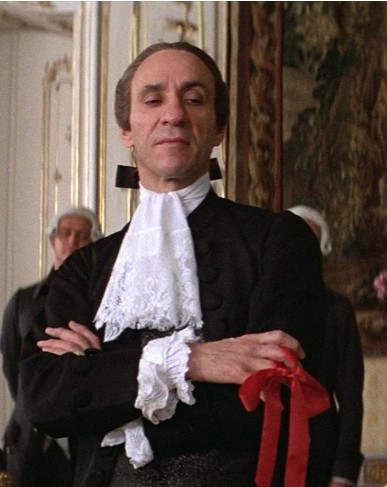
First, Milos Forman’s highly entertaining and Academy Award winning film of Peter Shaffer’s play is coming to 4K UHD Blu-ray for its 40th anniversary. (The film was released in September 1984.) This is the theatrical cut, as opposed to the more widely-circulated-in-recent-years director’s cut. (Stop with these directors’ cuts supplanting the versions we originally fell in love with, please!) Forman’s revision adds 20 minutes and hardens the original PG rating to an R. Interesting to see once, in my opinion, but it should be treated as a curiosity and consigned to the bonus features. I have no firm information as to whether or not it will be included in the new set, however. If you want to devote the time to doing a more intensive search, you may be able to find out more.
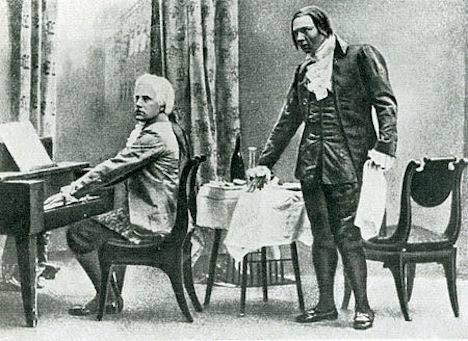
The other bit of news – again, perhaps old news at this point, but the first I am mentioning it – is that “Amadeus” has been adapted into a new miniseries, projected to stream later this year. For his source material, screenwriter Joe Barton is apparently sidestepping Shaffer (and perhaps his copyright?) by going back to the Alexander Pushkin play “Mozart and Salieri” of 1830, which cemented the legend of Salieri’s enmity for Mozart. The play was previously adapted as an opera of the same name by Nikolai Rimsky-Korsakov.
In the latest version, Will Sharp will play Wolfie and Paul Bettany will assume the role of Salieri. They’ll have some big buckled shoes to fill, as both Forman’s leads – Tom Hulce as Mozart and F. Murray Abraham as Salieri – were nominated for Best Actor, and Abraham took home the Academy Award – as, for that matter, did Forman’s film, which was honored as Best Picture, among its total eight-Oscar haul.
That said, any popular entertainment that takes classical music seriously can’t be a bad thing. If nothing else, it will remind audiences of, and perhaps attract new viewers to, the 1984 classic.
Happy birthday, Antonio Salieri!
-

Salieri Beyond Amadeus The Music of a “Mediocrity”
Happy birthday, Antonio Salieri! Patron saint of mediocrities everywhere. Or so “Amadeus” would have us believe.
I first encountered this article in The New Yorker back in 1985. The piece takes the form of a letter to Milos Forman, director of the Oscar-winning adaptation of Peter Shaffer’s stage play.
Is it the funniest thing ever? No, but, much like Salieri himself, it has its moments, and somehow I’ve never forgotten it. (For the record, Franz Schubert’s middle name is Peter.)
Salieri composed 37 operas, in addition to orchestral works, concertos, chamber music, and sacred pieces. And what do you know? A lot of his music is quite good! He was no Mozart, maybe – but who was?
Beethoven’s Variations on “La stessa, la stessissima,” cited in the article
The theme, from Salieri’s “Falstaff”
Overture to “Les Horaces”
Concerto for Flute, Oboe and Orchestra
“Das Lob der Musik” (“The Praise of Music”)
A Mozart and Salieri collaborative effort, the cantata “Per la ricuperata salute di Ofelia”
“De Profundis”
“I absolve you.”
-

Salieri Beyond Amadeus The Real Story
In the words of Wilde’s Lord Henry, there is only one thing in the world worse than being talked about, and that is not being talked about.
While it might be true there’s no such thing as bad publicity, it would be nice if Antonio Salieri could transcend his notoriety – as the alleged murderer of Mozart and a second-rate hack – to be recognized for some of his actual achievements. Especially since none of the charges leveled against him happen to be true!
I like “Amadeus” as much as the next guy, and while I am very happy it has served to keep Salieri’s name alive, and perhaps lent a greater degree of commercial viability to subsequent recordings of his music, it is worthwhile to examine the historical facts.
In reality, Salieri was a generous teacher, who fostered Beethoven, Schubert, Liszt, and even Franz Xaver Mozart, his rival’s son, who was born a little more than four months before his father’s death.
Salieri himself was a prolific and successful composer. He wrote 37 operas, in addition to orchestral works, concertos, chamber music, and sacred pieces. While he was no Mozart – who was? – his music is finely crafted and often quite enjoyable, certainly no worse than that of a majority of his contemporaries.
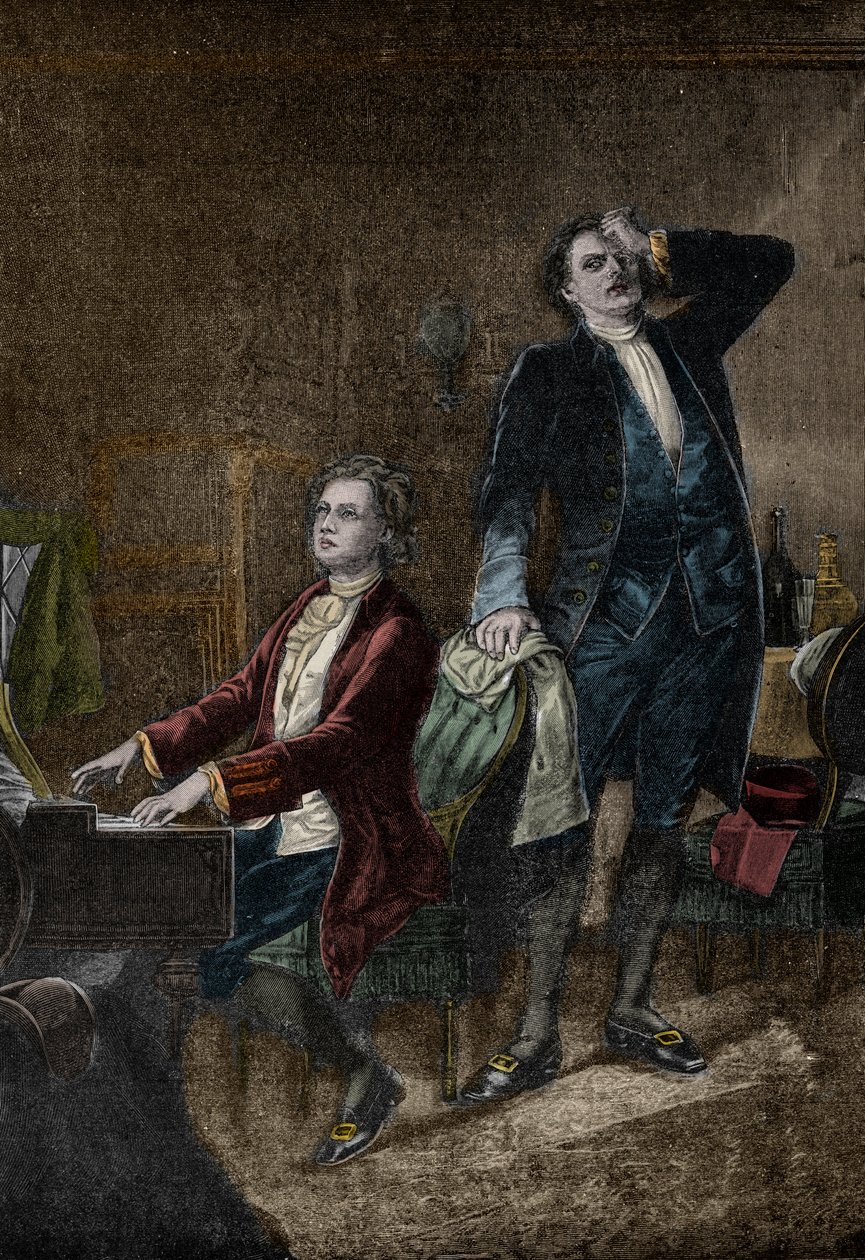
Yes, Mozart believed Salieri and the Italian faction ensconced at the Viennese court (including future Mozart librettist Lorenzo Da Ponte) were against him. And there may have been something to it at first. However, beyond a rivalry pertaining to certain specific jobs, Mozart and Salieri appear often to have been better than cordial acquaintances.
The two even collaborated on a cantata, “Per la ricuperata salute di Ofelia” (“For the recovered health of Ophelia”), rediscovered in 2016, a joint venture apparently entered into voluntarily (in contrast to an earlier contest, in which two one-act operas were juxtaposed, purely for the edification of the emperor). The cantata was written in 1785, to celebrate the recently-convalesced soprano Nancy Storace, who would soon create the role of Mozart’s Susanna in “The Marriage of Figaro.”
When Salieri was appointed Kapellmeister in 1788, his first act was to revive “Figaro.” He was also responsible for arranging first performances of Mozart’s Piano Concerto No. 22 (K. 482), the Clarinet Quintet, and the Symphony No. 40. He was full of praise for “The Magic Flute.” And as I said, he took it upon himself to educate Mozart’s son.
Sadly, Salieri’s enormous compositional output gradually faded from memory already during the latter years of his life. Ironically, it is the scandalmongers who kept his name alive.
Rumors of Salieri’s involvement in Mozart’s death were codified by Alexander Pushkin in 1831, a few years after Salieri himself had passed, in the poetic drama “Mozart and Salieri.” This was later set as an opera, in 1898, by Nikolai Rimsky-Korsakov.
Peter Schaffer picked up the thread in 1979, when he wrote the play “Amadeus,” which of course was adapted into the Academy Award-winning film in 1984.
As the compact disc era progressed, more and more of Salieri’s output became available for first-hand assessment – and guess what? A lot of it is quite good!
Happy birthday, Patron Saint of Mediocrity!
Russian film version of Rimsky’s “Mozart and Salieri” (without subtitles):
In English, if a bit fuzzy:
Salieri’s Concerto for Flute, Oboe and Orchestra:
Overture to “Les Horaces”
“Das Lob der Musik” (“The Praise of Music”)
A Mozart and Salieri collaborative effort, the cantata “Per la ricuperata salute di Ofelia”
“I absolve you.”
-

Celebrating Salieri: Beyond Mozart Rivalry
Happy birthday, Antonio Salieri! I hope you’ll join me in celebrating 270 years of “mediocrity.”
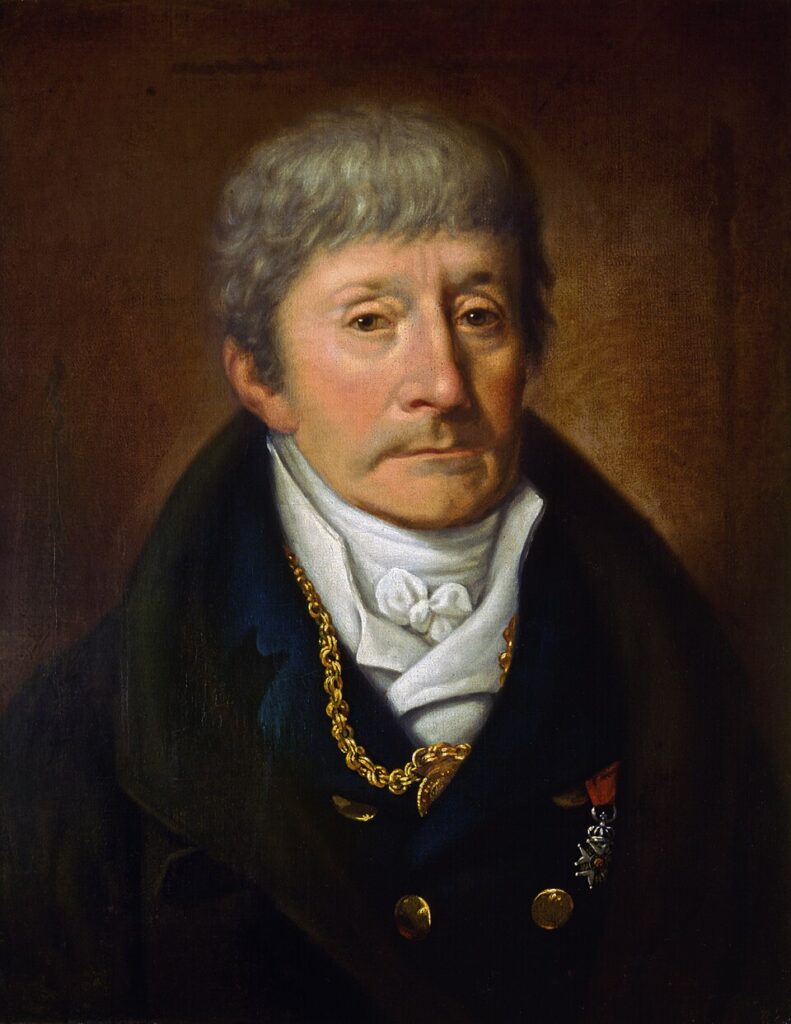
Salieri lives on in the popular imagination, of course, as the envious rival of Wolfgang Amadeus Mozart. But was he really?
Rumors of Salieri’s involvement in Mozart’s death were seized upon by Alexander Pushkin as early as 1831, when he came to write the tragedy “Mozart and Salieri,” which appeared only few years after Salieri himself had passed. This was later set as an opera, in 1898, by Nikolai Rimsky-Korsakov.
Of course, the slander has been kept alive and given even broader currency thanks to Peter Schaffer’s play, “Amadeus,” and the even more widely seen film, directed by Milos Forman. While I have no objection to dramatic license (Shakespeare would not be Shakespeare without it), it is too bad that such a generous figure – and a fine composer to boot – should live on, for the most part, in infamy.
Salieri was a generous teacher, who fostered Beethoven, Schubert, Liszt, and even the son of the genius he was rumored to have poisoned. Franz Xaver Mozart was born four months after his father’s alleged murder.
Salieri’s first act, when he was appointed Austrian Imperial Kapellmeister in 1788, was to revive Mozart’s “The Marriage of Figaro.” He was responsible for arranging first performances of his alleged nemesis’ Piano Concerto No. 22, the Clarinet Quintet, and the Symphony No. 40, and he had nothing but praise for “The Magic Flute.”
Sadly, he found no one to return the favor. Already during his later years, his own enormous compositional output (37 operas, in addition to orchestral works, concertos, chamber music, and sacred pieces) gradually faded from public memory. Ironically, it is the scandalmongers who kept his name alive.
But, as the saying goes, there is no such thing as bad publicity. In a way, “Amadeus” was the best thing to happen to Salieri in nearly 200 years. How many people remember Mozart’s string quartet partners (with Haydn), Carl Ditters von Dittersdorf and Jan Křtitel Vaňhal, both also talented and prolific composers? I’m sure they would agree – with apologies to Wilde – that the only thing worse than being talked about is not being talked about.
Happy birthday, Patron Saint of Mediocrity!
Russian film version of Rimsky’s “Mozart and Salieri” (without subtitles): https://www.youtube.com/watch?v=ilw7oIkrDj4
In English, if a bit fuzzy:
Salieri’s Concerto for Flute, Oboe and Orchestra:
A Mozart and Salieri collaborative effort, the cantata “Per la ricuperata salute di Ofelia,” only recently rediscovered:
“I absolve you.”
Tag Cloud
Aaron Copland (92) Beethoven (95) Composer (114) Film Music (119) Film Score (143) Film Scores (255) Halloween (94) John Williams (185) KWAX (229) Leonard Bernstein (99) Marlboro Music Festival (125) Movie Music (134) Opera (198) Philadelphia Orchestra (87) Picture Perfect (174) Princeton Symphony Orchestra (106) Radio (87) Ralph Vaughan Williams (85) Ross Amico (244) Roy's Tie-Dye Sci-Fi Corner (290) The Classical Network (101) The Lost Chord (268) Vaughan Williams (102) WPRB (396) WWFM (881)