Tag: Antony and Cleopatra

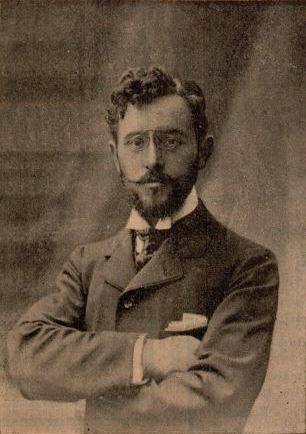
  • Florent Schmitt Rediscovered Composer

    Florent Schmitt Rediscovered Composer

    Florent Schmitt was one of the most successful French composers of the early 20th century. However, as fashions changed, his characteristically opulent music became marginalized, only to experience something of a revival, in recent years, mostly on recordings.

    This week on “The Lost Chord,” we’ll mark the anniversary of Schmitt’s birth (on September 28, 1870) by sharing selections from his incidental music for a production of Shakespeare’s “Antony and Cleopatra” and his grandiose setting of “Psalm XLVII.”

    Schmitt entered the Paris Conservatory in 1889, where he studied with Gabriel Fauré, Jules Massenet, and Théodore Dubois. He was a winner of the Prix de Rome in 1900. He also befriended Frederick Delius, while Delius was in Paris, and prepared the vocal scores for a number of his operas.

    In addition, Schmitt was a music critic, who attained a degree of notoriety for shouting out his assessments from the audience. He was described by one music publisher as an irresponsible lunatic.

    The later neglect of his music may have been due, in part, to his willingness to go along with the Vichy regime during the Nazi occupation of France. But Schmitt is too fascinating a figure to be dismissed out-of-hand. Stravinsky was an early admirer, remarking that the composer’s “The Tragedy of Salome” gave him greater joy than any other he had heard in a long time. Certain elements of the ballet anticipate analogous experiments in Stravinsky’s own “The Rite of Spring.”

    Indeed, Schmitt’s appetite for overheated decadence and lurid orientalism seems to have been insatiable. There will be nothing on our menu this week but overegged Florentine. I hope you’ll join me for “Schmitt Happens,” on “The Lost Chord,” now in syndication on KWAX, the radio station of the University of Oregon!


    Clip and save the start times for all three of my recorded shows:

    PICTURE PERFECT, the movie music show – Friday at 8:00 PM EDT/5:00 PM PDT

    SWEETNESS AND LIGHT, the light music program – ALL NEW! – Saturday at 11:00 AM EDT/8:00 AM PDT

    THE LOST CHORD, unusual and neglected rep – Saturday at 7:00 PM EDT/4:00 PM PDT

    Stream them, wherever you are, at the link!

    https://kwax.uoregon.edu/


    Exhaustive website devoted to all things Florent Schmitt: florentschmitt.com

  • John Adams at 75 A Composer’s Reflections

    John Adams at 75 A Composer’s Reflections

    To me, John Adams has always embodied the spirit of youth. How the heck, then, did he get to be 75???

    Adams is considered by some to be America’s preeminent living composer. Of the generation that emerged from the haze of Minimalism, he is perhaps the one representative least likely to repeat. Arguably the most versatile and substantial of the early proponents of the style, he was awarded the Pulitzer Prize for Music in 2003 for his 9/11 memorial “On the Transmigration of Souls.”

    Personally, I’ve never found all of his music convincing, and I would include among that his Pulitzer winner. Some of it I find fun (“Short Ride in a Fast Machine,” “Grand Pianola Music”), some of it I find to be quite good (“Shaker Loops,” “El Niño”), some of it I find to be boring, clumsy, or downright embarrassing (“Harmonium”). But undoubtedly everyone will have their own reactions (“Grand Pianola Music” was booed at its premiere), and all are free to assess for themselves.

    A new opera is imminent, Adams’ take on Shakespeare’s “Antony and Cleopatra” – a departure for a composer whose stage works have been rooted in modernity – scheduled for a Los Angeles debut. Samuel Barber notoriously went down in flames for tackling the same subject for the grand re-opening of the Metropolitan Opera House at its current location at Lincoln Center in 1966 (though some would argue, in Barber’s case, it was not for wholly musical reasons).

    In common with another illustrious predecessor, Aaron Copland, Adams in his maturity has expanded his activities as a conductor. While wondering what new I could possibly add to the 75th birthday encomiums, I stumbled across this substantial interview, in which he talks about, among other things, the challenges and rewards of conducting Sibelius. As a great admirer of Sibelius’ music myself, I found it to be of interest, even if I’m not sure I entirely agree with all of his assessments.

    From a new opera to old synthesizers – Interview with John Adams

    Regardless of my own mixed reaction to Adams’ body of work, there’s no arguing against his influence or his standing. Happy birthday on his 75th. Congratulations on his long-term success, and may he enjoy many more!

    “Short Ride in a Fast Machine”

    “Shaker Loops”

    “Nixon in China”

    John Adams on conducting

  • Florent Schmitt Rediscovered French Composer

    Florent Schmitt Rediscovered French Composer

    Florent Schmitt was one of the most successful French composers of the early 20th century. However, as fashions changed, his characteristically opulent music became marginalized, only to experience something of a revival, in recent years, mostly on recordings.

    This Sunday night on “The Lost Chord,” we’ll mark the sesquicentenary of Schmitt’s birth (on September 28, 1870) with selections from his incidental music for a production of Shakespeare’s “Antony and Cleopatra” and his grandiose setting of “Psalm XLVII.”

    Schmitt entered the Paris Conservatory in 1889, where he studied with Gabriel Fauré, Jules Massenet, and Théodore Dubois. He was a winner of the Prix de Rome in 1900. He also befriended Frederick Delius, while Delius was in Paris, and prepared the vocal scores for a number of his operas.

    In addition, Schmitt was a music critic, who attained a degree of notoriety for shouting out his assessments from the audience. He was described by one music publisher as an irresponsible lunatic.

    The later neglect of his music may have been due, in part, to his willingness to go along with the Vichy regime during the Nazi occupation of France. But Schmitt is too fascinating a figure to be dismissed out-of-hand. Stravinsky was an early admirer, remarking that the composer’s “The Tragedy of Salome” gave him greater joy than any other he had heard in a long time. Certain elements of the ballet anticipate analogous experiments in Stravinsky’s own “The Rite of Spring.”

    Indeed, Schmitt’s appetite for overheated decadence and lurid orientalism seems to have been insatiable. There’s nothing on the menu tonight but overegged Florentine. I hope you’ll join me for “Schmitt Happens,” this Sunday night at 10:00 EDT, on WWFM – The Classical Network and wwfm.org.


    Exhaustive website devoted to all things Florent Schmitt: florentschmitt.com
Tag Cloud

Aaron Copland (92) Beethoven (95) Composer (114) Film Music (120) Film Score (143) Film Scores (255) Halloween (94) John Williams (185) KWAX (229) Leonard Bernstein (100) Marlboro Music Festival (125) Movie Music (135) Opera (198) Philadelphia Orchestra (88) Picture Perfect (174) Princeton Symphony Orchestra (106) Radio (87) Ralph Vaughan Williams (85) Ross Amico (244) Roy's Tie-Dye Sci-Fi Corner (290) The Classical Network (101) The Lost Chord (268) Vaughan Williams (103) WPRB (396) WWFM (881)

DON’T MISS A BEAT

Receive a weekly digest every Sunday at noon by signing up here


RECENT POSTS