You don’t have to strong-arm anyone into liking Armstrong Gibbs. It’s impossible not to fall in love with the easy charm and seductive melody of his light music classic “Dusk.” Sure, he also wrote works on a grander scale, such as the “Odysseus Symphony,” for soloists, chorus and orchestra, clearly cut from the same cloth as that of “A Sea Symphony” by his teacher, Ralph Vaughan Williams. But it’s this atmospheric slow waltz, composed in 1935 and requested by Princess Elizabeth – later Queen Elizabeth II – for performance on her eighteenth birthday, that is his best-known music.
Enjoy this crepuscular classic this morning on “Sweetness and Light,” as part of a playlist organized around the observation that the days grow precipitously shorter.
Soon, it will be as if morning runs into evening. So it’s not by accident that we’ll also hear Alexander Alyabyev’s “Morning and Evening Overture.” I’ll even toss noon into the mix with Franz von Suppé’s “Morning, Noon and Night in Vienna.”
But twilight will be here before you know it. In addition to the Gibbs miniature, we’ll also delight in “At Dusk” by Second New England School luminary Arthur Foote.
Finally, seemingly out of left field, and because I say so, we’ll listen to Jean Sibelius’ Symphony No. 6. Sibelius was once asked by a journalist to provide a motto for his new symphony. The composer responded, “When shadows lengthen.” It could be argued it’s not a “light” piece, exactly, but it is ravishingly beautiful, and it’s not played all that often. So there!
The days grow short, but hopefully the music will be long on enjoyment, on “Sweetness and Light,” this Saturday morning at 11:00 EST/8:00 PST, exclusively on KWAX, the radio station of the University of Oregon!
Stream it wherever you are at the link:
https://kwax.uoregon.edu/
Tag: Armstrong Gibbs
-

The Days Grow Short on “Sweetness and Light”
-
Rediscovering Forgotten Classical Gems
One of the unfortunate things about not having a live air shift anymore is that I no longer get a chance to play a lot of those wonderful, shorter pieces I used to work into my shows. On the birthday of Ottorino Respighi, I’m reminded of the composer’s “Adagio con variazioni” (“Adagio with Variations”), a lovely work for cello and orchestra that’s worlds away from the rafter-rattling tone poems that comprise his famous “Roman Trilogy.” I haven’t heard this since the last time I played it on the radio, which would have been before the pandemic. How many equally lovely pieces have fallen through the cracks now that I’m no longer sitting at the control board? At home, I don’t often go to my personal collection to pull out short pieces I once played fairly regularly, pieces like Oskar Nedbal’s “Valse triste” or Armstong Gibbs’ “Dusk.” No one in management considers how much the landscape will change once someone is shown the door and takes his record collection with him. Which is why you will no longer hear John Foulds’ “Keltic Lament” or Alexander Glazunov’s “Idyll” for horn and strings. Be that as it may, I hope you will take a few minutes to enjoy some Respighi you won’t often encounter.
-

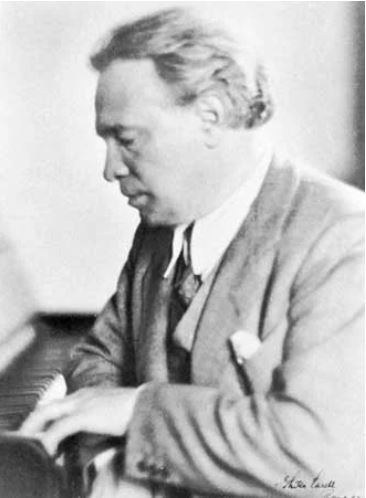
Armstrong Gibbs Underrated British Composer
I’m not going to strong-arm anyone into liking Armstrong. It’s easy enough to fall in love with the easy charm and seductive melodies of Armstrong Gibbs.
Cecil Armstrong Gibbs (1889-1960) is mostly known for his songs. He studied composition with Ralph Vaughan Williams at the Royal College of Music. Nevertheless, he is often dismissed for gravitating toward musical forms that could easily be described as “slight.”
He did contribute his share of British Light Music, to be sure, but he also wrote symphonies. The second of these, the “Odysseus Symphony,” for soloists, chorus, and orchestra, is clearly cut from the same cloth as Vaughan Williams’ “A Sea Symphony.”
It was Princess Elizabeth – the current Queen Elizabeth II – who requested of Armstrong a piece for her eighteenth birthday. The result was this gorgeous miniature, called “Dusk,” which became one of Gibb’s best-known works.
Happy birthday, Armstrong Gibbs!
-
Homer’s Homesick Sounds on WWFM
As one who seemingly can’t find his way home, I thought I would offer up an afternoon of music inspired by the ultimate wanderer.
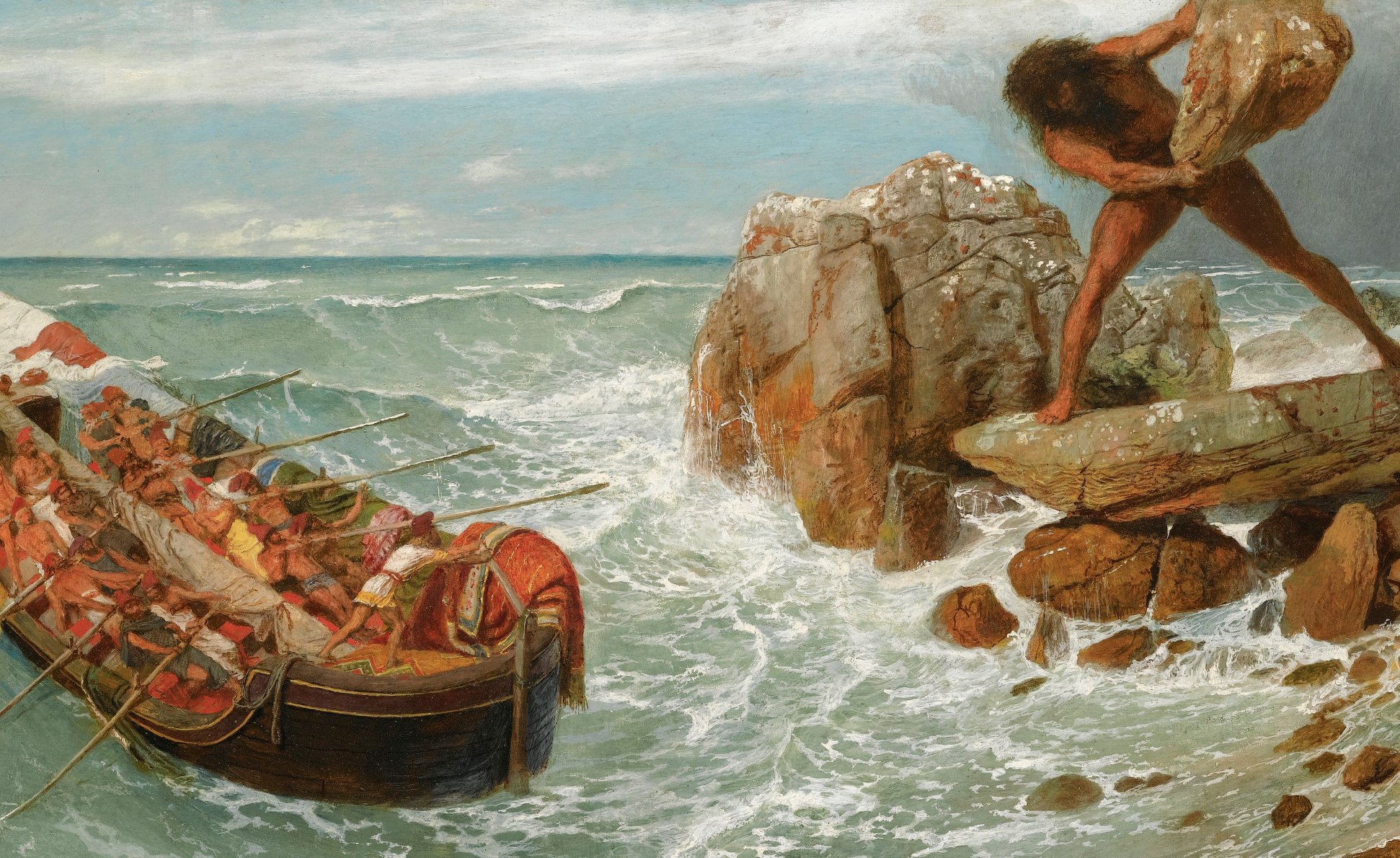
Our centerpiece will be a rarely-heard work, “Odysseus: Symphony in Four Movements,” by the English composer Armstrong Gibbs. Its four movements are meant to evoke the “Escape from Calypso,” “Circe,” “Cyclops,” and “The Return.” If you’re a fan of Vaughan Williams’ “A Sea Symphony,” you might also enjoy this.
“The Return,” of course, refers to Odysseus’ return to Ithaca, after 20 years’ absence, when he finally strings his bow and lays waste to his rivals in one of the most satisfying bloodbaths in all of literature. It also forms the climax of Benjamin Britten’s “The Rescue of Penelope,” a radio play for vocal soloists and orchestra. In the work’s only recording, we’ll hear none other than Dame Janet Baker as the speaker.
I’ll try to mix it up from there, with music suggested by “The Iliad” and “The Odyssey.”
We’re homesick for Homer, from 12 to 4 p.m. EDT, on WWFM – The Classical Network and wwfm.org.
Tag Cloud
Aaron Copland (94) Beethoven (95) Composer (114) Film Music (149) Film Score (143) Film Scores (255) Halloween (97) John Williams (197) KWAX (232) Leonard Bernstein (105) Marlboro Music Festival (125) Movie Music (164) Mozart (91) Opera (215) Philadelphia Orchestra (90) Picture Perfect (174) Princeton Symphony Orchestra (110) Radio (90) Ross Amico (244) Roy's Tie-Dye Sci-Fi Corner (290) The Classical Network (101) The Lost Chord (269) Vaughan Williams (107) WPRB (397) WWFM (881)