Tag: Asrael Symphony

  • Josef Suk Morbidity & Melodies

    Josef Suk Morbidity & Melodies

    Josef Suk (1874-1935) was the one-time pupil and eventual son-in-law of Antonin Dvořák. In fact, his early works very much reflect Dvořák’s influence, sunny, romantic music full of nationalistic touches.

    However, a double tragedy occurred in Suk’s 30th year. In 1905, he lost both his father-in-law and his beloved wife – Dvořák’s elder daughter – Otilie. The events directly inspired Suk’s “Asrael Symphony,” named for the Angel of Death. Not surprisingly, morbidity colors much of his mature output.

    Today marks the 150th anniversary of Suk’s birth. Here are some samples of Suk, pre- and post-happiness.

    Serenade for Strings (1892)

    “Asrael Symphony” (1905-06)

    And a personal favorite, “Pohádka,” or “Fairy Tale” (1897-98). Suk arranged the suite from incidental music he composed for a play called “Radúz and Mahulena,” in which true love conquers all. The work took on special significance for the composer, since it was the period in which he was secretly in love with his teacher’s daughter and feared the day of reckoning, when all would be revealed. He needn’t have worried, of course. Dvořák was delighted. Alas, Suk’s happiness was to be short-lived.

    Respect to Josef Suk on his sesquicentennial.

  • Suk’s Summer’s Tale Healing Through Nature

    Suk’s Summer’s Tale Healing Through Nature

    Josef Suk’s 30th year was a tragic one, marked by the deaths of both his young wife, Otilie, and her father, his former teacher, Antonín Dvořák. Not surprisingly, a sense of morbidity colors much of his mature output. The double-loss directly inspired Suk’s “Asrael Symphony,” named for the Angel of Death.

    This Sunday night on “The Lost Chord,” we’ll take a look at “A Summer’s Tale,” the next step in Suk’s emotional rehabilitation. The work is a five-movement symphonic poem, the second of a four-part cycle that contemplates death and the meaning of life. More affirmative than the grim “Asrael,” which is full of pain, loss, and grief, “A Summer’s Tale” explores the healing powers of nature, in a score that at times reflects the epic romanticism of Gustav Mahler and at others the impressionism of Claude Debussy. It was composed over the course of just six weeks in the summer of 1907. Further tinkering took place over the next year-and-a-half. The work received its premiere in January of 1909.

    Suk later described the theme of the piece as “finding a soothing balm in nature.” I hope you’ll join me as we clear a path to “Healing by Nature” – Josef Suk’s “A Summer’s Tale” – this Sunday night at 10:00 EDT, on WWFM – The Classical Network and wwfm.org.

  • Suk’s Summer’s Tale Healing After Tragedy

    Suk’s Summer’s Tale Healing After Tragedy

    Josef Suk’s 30th year was a tragic one, marked by the deaths of both his young wife, Otilie, and his former teacher, her father, Antonín Dvořák. Not surprisingly, a sense of morbidity colors much of his mature output. The double-loss directly inspired Suk’s “Asrael Symphony” (named for the Angel of Death).

    This Sunday night on “The Lost Chord,” we’ll take a look at “A Summer’s Tale,” the next step in Suk’s emotional rehabilitation. The work is a five-movement symphonic poem, the second of a four-part cycle, that contemplates death and the meaning of life. More affirmative than the grim “Asrael,” which is full of pain, loss and grief, “A Summer’s Tale” explores the healing powers of nature, in a score that at times reflects the epic romanticism of Gustav Mahler and at others the impressionism of Claude Debussy. It was composed over the course of just six weeks in the summer of 1907. Further tinkering took place over the next year-and-a-half. The work received its premiere in January of 1909.

    Suk later described the theme of the piece as “finding a soothing balm in nature.” I hope you’ll join me as I clear a path to “Healing by Nature” – Josef Suk’s “A Summer’s Tale” – this Sunday night at 10:00 EDT, on WWFM – The Classical Network and wwfm.org.

  • Suk’s Summer’s Tale Healing Power of Nature

    Suk’s Summer’s Tale Healing Power of Nature

    Josef Suk was the one-time pupil and eventual son-in-law of Antonin Dvořák. In fact, his early works very much reflect Dvořák’s influence, in sunny, romantic music full of nationalistic touches.

    However, a double tragedy occurred in Suk’s 30th year, in 1905, when he lost both his father-in-law and his beloved wife – Dvořák’s older daughter – Otilie. The events directly inspired Suk’s “Asrael Symphony,” named for the Angel of Death. Not surprisingly, morbidity colors much of his mature output.

    “A Summer’s Tale” is the next step in Suk’s emotional rehabilitation. The work is a five-movement symphonic poem, the second of a four-part cycle, which contemplates death and the meaning of life. More affirmative than the grim “Asrael,” which is full of pain, loss and grief, “A Summer’s Tale” explores the healing powers of nature, in a score that at times reflects the epic romanticism of Gustav Mahler and the impressionism of Claude Debussy. It was composed over the course of just six weeks in the summer of 1907. Further tinkering took place over the next year-and-a-half. The work received its premiere in January of 1909.

    Suk later described the theme of the piece as “finding a soothing balm in nature.” Tune in tonight and see if you agree.

    That’s “Healing by Nature” – Suk’s “A Summer’s Tale” – on “The Lost Chord,” this Sunday night at 10:00 EDT, on WWFM – The Classical Network and wwfm.org.


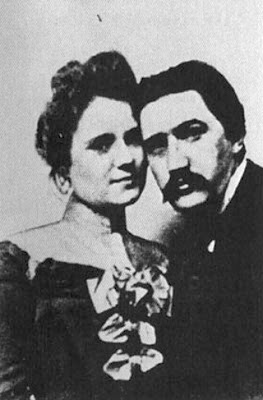
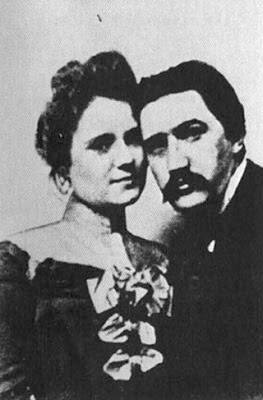
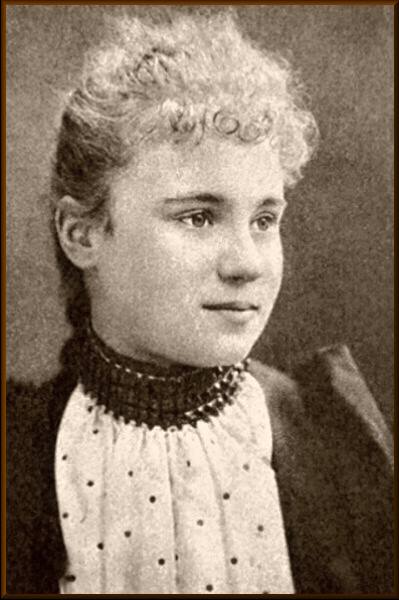
    PHOTOS: Otilie Dvořáková and Josef Suk, in happier days

  • Josef Suk: Tragedy and Triumph

    Josef Suk: Tragedy and Triumph

    If you think your life sucks, consider that of Josef Suk.

    Suk (1874-1935) was the pupil and eventual son-in-law of Antonin Dvořák. Though he experienced a degree of anxiety before breaking to his mentor the news of his love for Dvořák’s beautiful daughter Otilie – the struggle and romance of which he channeled into his fairy tale suite, “Pohádka” – Dvořák, who respected Suk mightily, joyfully consented to their union. So everyone lived happily ever after, right?

    Unfortunately, happily ever after didn’t last very long. Over a span of 14 months, when the composer was in his early 30s, he lost both his mentor and his wife. The double-blow led to a new intensity in Suk’s work, as exemplified by the dark exploration of his “Asrael Symphony” (Azrael is the Angel of Death). Suk’s idiom, which had been steeped in the Czech nationalism of his teacher, took on a new morbidity so that he came to be regarded as one of the leading composers of Czech modernism. Austrian composers Gustav Mahler and Alban Berg began to take notice of his work. We’ll content ourselves with some of his happier stuff.

    Suk was a founding member of the Czech Quartet. His grandson was the famous violinist who shared his name.

    I hope you’ll join me today, between 4 and 7 p.m. EST, as we celebrate the birthday anniversaries of Josef Suk and Giovanni Battista Pergolesi. We’ll try not to be too morbid about it, on WWFM – The Classical Network and at wwfm.org.


    PHOTOS: Life Suks (Otilie, left, and Josef Suk)

Tag Cloud

Aaron Copland (93) Beethoven (95) Composer (114) Film Music (127) Film Score (143) Film Scores (255) Halloween (94) John Williams (190) KWAX (229) Leonard Bernstein (102) Marlboro Music Festival (125) Movie Music (142) Mozart (87) Opera (205) Philadelphia Orchestra (89) Picture Perfect (174) Princeton Symphony Orchestra (107) Radio (88) Ross Amico (244) Roy's Tie-Dye Sci-Fi Corner (290) The Classical Network (101) The Lost Chord (268) Vaughan Williams (103) WPRB (396) WWFM (881)

DON’T MISS A BEAT

Receive a weekly digest every Sunday at noon by signing up here


RECENT POSTS