Tag: Avant-Garde Music

  • Pierre Boulez A Mad Genius at 100

    Pierre Boulez A Mad Genius at 100

    “Blow the opera houses up!”

    “All the art of the past should be destroyed!”

    “A musician who has not experienced… the necessity for the dodecaphonic language is USELESS!”

    “From Schoenberg’s pen flows a stream of infuriating clichés!”

    “The Paris opera is full of dust and crap! Operatic tourists make me want to vomit!”

    Pierre Boulez could be provocative and full of contradictions. Is it any wonder there’s been so much blowback against him and what he came to represent? This gadfly of the avant-garde was born 100 years ago today.

    As a composer and polemicist, he was ever the rebel angel, the archnemesis of tonality and tradition. He studied under Olivier Messiaen at the Paris Conservatory, but in his advocacy of the abstruse, Boulez froze his teacher out. (Boulez characterized Messiaen’s “Turangalîla-Symphonie” as “brothel music.”) He idolized the Igor Stravinsky of “The Rite of Spring;” but in 1945, when Stravinsky unveiled his “Four Norwegian Moods,” a neoclassical pastiche in the style of Edvard Grieg, of all people, Boulez and his classmates booed vigorously.

    As a conductor, he could be a persuasive interpreter of Mahler, Debussy, and Ravel. He enjoyed particular success with a landmark centenary production of Wagner’s “Ring Cycle,” directed by Patrice Chéreau – a triumph scored in one of those very opera houses he was so eager to have destroyed. In his later years, he found value even in the music of Strauss and Bruckner.

    But for the most part, the composers he championed were those who were perceived as revolutionary in their own time and who, as Liszt so memorably put it, had hurled their lances into the future.

    In contemporary music, Boulez was a master. You’re on pretty safe ground if Boulez is conducting Webern, Xenakis, or himself. He even came around to grasping the value of his old mentor, Messiaen.

    It’s as a composer that his reputation hangs in the balance. There’s been a lot of vituperation launched against Boulez’s aesthetic, but it’s hard to deny that he brought it on himself. Passionate acolytes remain, though they live like anchorites in the wilderness, in hovels and on barren cliff-faces, with no friends outside internet chat groups, or perhaps, depending on how closely they emulate the rhetoric of their idol, not even there.

    Myself, I tend to be a little more moderate in my views, at least in this regard. Depending on my mood, I can put on a Boulez record and just go with it. His chamber cantata “Le Marteau sans maître” (1955), which I’ve played on the radio a few times over the years, is a good example of that. I understand what he’s up to, because I’ve done my homework, but it’s not to say I can hear everything any more than I can in any other serial score. But it sure does make some fascinating sounds. Actually, I find it his most approachable piece.

    That’s about as good as it gets, folks. Later in life, when speaking of his “Structures, Book I” for two pianos (1951-52), Boulez described it as a work in which “the responsibility of the composer is practically absent. Had computers existed at that time I would have put the data through them and made the piece that way. But I did it by hand… It was a demonstration through the absurd.” Asked whether it should still be listened to as music, Boulez replied, “I am not terribly eager to listen to it. But for me it was an experiment that was absolutely necessary.”

    Sometimes you have to push hard in order to find equilibrium. Ironically, Boulez makes such a show of breaking with tradition, yet he’s still caught within the tradition.

    Boulez might not be to everyone’s taste, either as a composer or a conductor, but if he did one thing well it was to force everyone to think – about music, about progress, and about the reasons we value the things we hold sacred.

    Boulez once proclaimed, “A civilization that conserves is one that will decay!” Even so, I’m glad we have his records.

    Happy 100th, you mad prodigal.


    Maurizio Pollini plays Boulez’s Piano Sonata No. 2 (1948)

    Serial for breakfast: “Le Marteau sans maître” (1955)

    https://www.youtube.com/watch?v=ljcDXPcWRvI

    Boulez rehearsing “Structures” (Book I, 1952; Book II, 1961) with Messiaen’s second wife, Yvonne Loriod

    Conducting Debussy’s “Images for Orchestra”

    An early “The Rite of Spring”

    Conducting Bruckner’s Symphony No. 8 (live video)

    “Das Rheingold,” from the Chéreau “Ring”


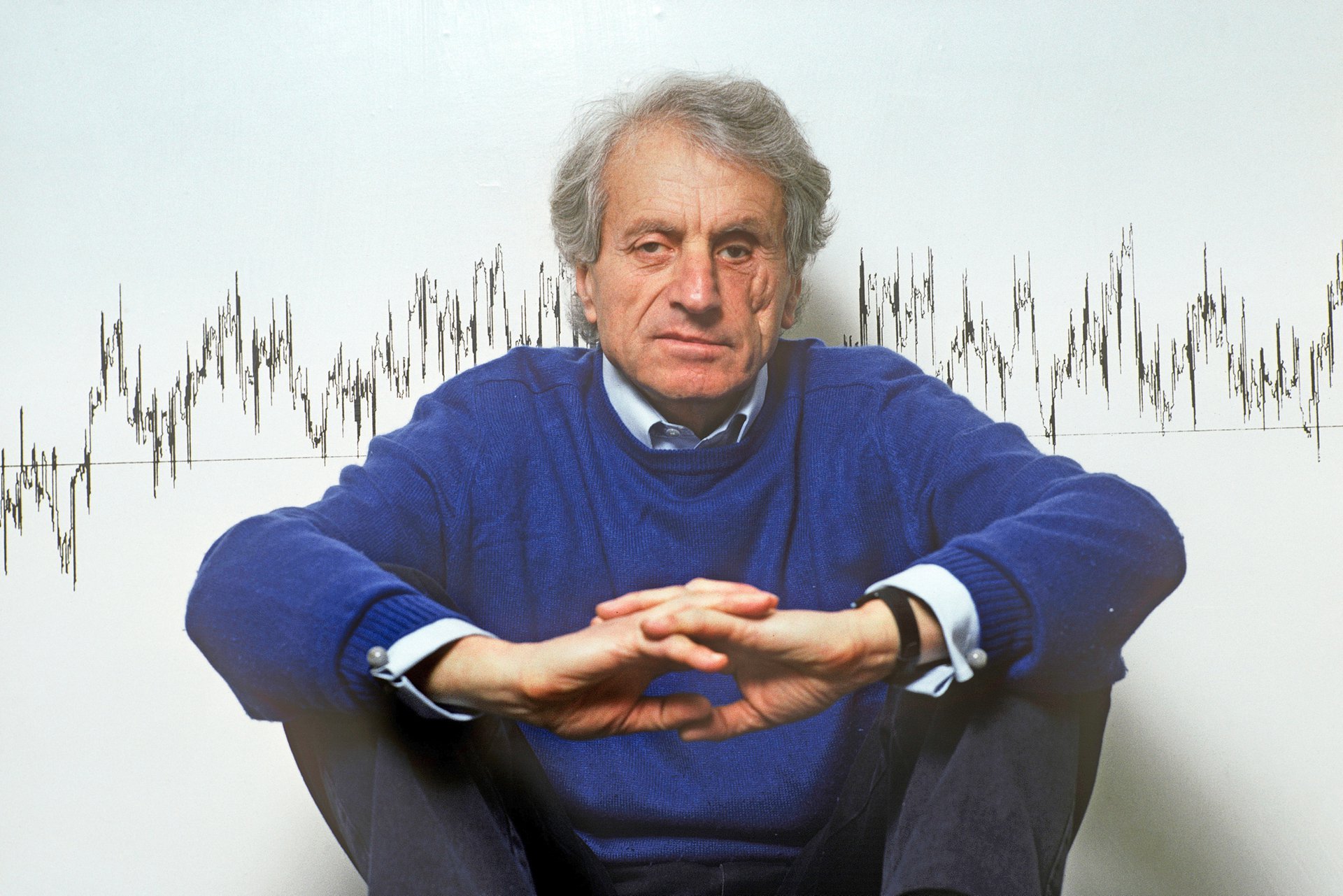
    PHOTO: Put your hands up for Pierre Boulez

  • Charles Ives Avant-Garde Nostalgia

    Charles Ives Avant-Garde Nostalgia

    Charles Ives was the most nostalgic of avant-gardists. For the most part laboring at his music in isolation – in the evenings and on weekends, while earning his bread as an insurance executive – he managed to prognosticate, or at any rate, arrive independently, at some of the major developments of the 20th century. Some may perceive his grinding harmonies and clashing meters as a kind of temple of Moloch, on the altar of which beauty is sacrificed for effect. As Ives himself once remarked, “Are my ears on wrong?” But consider, the straw for his bricks was harvested from the music of the world around him, especially that recollected from his boyhood in Connecticut.

    Ives could construct breathtaking musical edifices from the most diverse materials. Forget Moloch. Perhaps a better parallel would be the Tower of Babel. Only in Ives’ case, once the language becomes confused it actually seems to enliven his creative impulse. Consonance and dissonance are of no consequence to the composer. He listens past the cacophony to draw his energy from powerful associations. And he continued right on building, always grasping for the stars.

    I find it fascinating that Gustav Mahler took an interest in Ives’ Symphony No. 3. Mahler discovered a copy of the score on his final visit to Manhattan as music director of the New York Philharmonic in 1911, and presumably it was still in his possession at the time of his death later that year. In the 1950s, an aged percussionist recollected playing the bell-part in a read-through of the work under Mahler’s baton in Munich. Did it happen? Mahler’s score has never come to light. Ives claimed Mahler took it with the intention of giving the work its premiere. Unfortunately, Mahler died (at 50) before he was able to do anything about it. It’s mind-bending to contemplate the one-time music director of the Vienna State Opera (and by extension the Vienna Philharmonic) performing Ives in 1911. When worlds collide!

    But really, were the artists so very different? Mahler famously stated (to Sibelius), “The symphony must be like the world: it must embrace everything!” Mahler demonstrated this by filling his symphonies with fondly recollected folk material, rustic and courtly dances, children’s songs, hymns, and klezmer riffs. Ives leaned into hymns, patriotic marches, parlor songs, and quotations from the core classical repertoire he loved. Their music may have come out completely different, but both composers yearned to express, through these everyday human associations, universal truths that often reached beyond our terrestrial concerns.

    Ives heard Mahler conduct in New York, but as he became more deeply involved in composition, he largely stopped going to concerts of other composers’ music. He found that it interfered with his recall of ideas in development, when he was still carrying them around inside his head. He said he could listen to Beethoven or Brahms, any of the music he grew up with, and it wouldn’t be an issue. But taking in new music could muddy his thoughts. Whether or not he ever heard any of Mahler’s symphonies, I do not know.

    In the event, like most of Ives’ output, his Symphony No. 3 was not performed until years after it was written. Composed in 1908-10, it was finally given its premiere (in New York, under Lou Harrison) in 1946. The next year, it was awarded the Pulitzer Prize for Music. Ives passed along half the prize money to Harrison and commented gruffly, “Prizes are for boys, and I’m all grown up.”

    Ives may come across as something of a tinkerer, and he often portrayed himself as such, but like the greatest modernists, he had mastered the basics of his craft. His studies with Horatio Parker at Yale gave him a sound foundation in the rules of composition. Just as Picasso or Schoenberg demonstrated that they had mastered traditional forms before blazing their own trails, Ives was capable of writing within convention. But he was always irrepressibly Ives. He was always chafing and often pushing, and you just know Professor Parker had his hands full.

    Ives, the cranky Yankee, often got his back up against the musically complacent, whom he derided in his writings as “Rollo” – a named borrow from a popular children’s book character in the decades preceding the American Civil War.

    He also played baseball for Yale. Whether on the field or in his study, throughout his career, he kept right on swinging for the fences.

    Remembering Charles Ives, with admiration, on the 150th anniversary of his birth!


    The Symphony No. 3, subtitled “The Camp Meeting,” is actually one of Ives’ most immediately accessible scores. The three movements: “Old Folks Gatherin’,” “Children’s Day,” and “Communion.”

    For Ives at his cumulatively cacophonous best, try “The Fourth of July.” No composer understood as well the holiday from a boy’s perspective!

  • Iannis Xenakis Revolutionary Music Visionary

    Iannis Xenakis Revolutionary Music Visionary

    He was a literal revolutionary who altered our perception of music.

    Iannis Xenakis was a Communist who came from wealth, an intellectual who was half-blinded, disfigured, and broken-jawed by shrapnel from a tank blast while rioting in the streets of Athens. He helped to drive the Axis out of Greece, opposed the restoration of the monarchy by the British, and was sentenced to death in absentia by a conservative regime. He fled the country using forged papers. He settled in Paris, illegally, where was hired by the architect Le Corbusier.

    There, he applied himself seriously to composition. He was refused as a student by Nadia Boulanger and Arthur Honegger. His lessons with Darius Milhaud went nowhere. It was Olivier Messiaen who at last recognized and acknowledged his unique genius. But understanding his special gifts, even Messiaen refused to spoil him with the humdrummery of drills in harmony and counterpoint. Instead, he gave him his benediction.

    “I understood straight away that he was not someone like the others…. He is of superior intelligence…. [T]his was a man so much out of the ordinary that I said… ‘No, you are almost 30, you have the good fortune of being Greek, of being an architect and having studied special mathematics. Take advantage of these things. Do them in your music.’”

    Xenakis took that freedom and ran with it. He explored music from the perspective of architecture, mathematics, and physics, yet his creations could be searingly visceral. He experimented with spatial effects, pushed the boundaries of electroacoustics, and devised computer systems that could translate graphical images into sound.

    Xenakis may have been a towering intellectual, but he was also a force of nature. His death sentence, which had been commuted to a ten-year prison term, was finally lifted in 1974. Finally, he was able to return home, where he was received as the avant-garde Odysseus and intellectual Colossus he was.

    His music has been described as wild, terrifying, raw, primal, primordial, and elemental. He made the serialists of mid-century seem hidebound, which in a sense they were, and positively tame by comparison.

    Is Xenakis a man for all seasons? It depends on how you like your Sunday mornings. Any Xenakis worth playing is worth playing loudly.

    Happy birthday, Iannis Xenakis, on what would have been your 100th birthday.


    “Pléiades” (1979)

    “Metastasis” (1953-54), with graphical score

    “Pithoprakta” (1955-56), with graphical score

    “Serment-Orkos” (1981)

  • Avant-Garde Yardwork Sounds Penderecki Crumb Stockhausen Cage

    Avant-Garde Yardwork Sounds Penderecki Crumb Stockhausen Cage

    Saturday. Turn your yardwork into avant-garde work.

    Karlheinz Stockhausen, “Herbtsmusik” (“Autumn Music”):

    George Crumb, “Eleven Echoes of Autumn”:

    Krzysztof Penderecki, “ De natura sonoris No. 2” (“On the nature of things”):

    John Cage, from “The Seasons”:


    PHOTOS (counterclockwise from top): Penderecki, Crumb, Stockhausen and Cage

  • Dark Souls’ Ornstein The Composer Connection

    Dark Souls’ Ornstein The Composer Connection

    Don’t ask me how I know this, because I’m not a gamer. I think I stumbled across it while I was putting together my show on nonagenarian conductors. There’s a video game called “Dark Worlds,” which apparently has been acclaimed in some circles as one of the greatest video games ever made. In any case, it is popular enough that it has spawned two sequels. The premise has something to do with dragonslaying during the Age of Fire, an undead asylum, and the spread of the Abyss over the land of Oolacile. Or something like that.

    Anyway, central to the game is a character called Ornstein. Imagine my surprise when I learned that Ornstein was named for Leo Ornstein, the avant-garde composer and pianist, who died in 2002 at the age of 106! To give you an idea of how old that is, Ornstein studied with Alexander Glazunov at the Moscow Conservatory in 1904.

    To escape mounting antisemitic policies and pogroms, he emigrated with his family to the United States in 1906. His New York concert debut took place five years later, and he was hailed as an interpreter of sensitivity, prodigious technical ability, and artistic maturity. However, his reputation was about to take a startling turn.

    Ornstein emerged as an ardent “futurist,” or “ultra-modernist,” taken to the performance of cutting-edge works by contemporary composers, like Bartok, Debussy, Ravel, Schoenberg, Scriabin and Stravinsky. His own compositions instigated near-riots. He is credited as being the first composer to make extensive use of the tone cluster (the dissonant clash of at least three adjacent tones in a scale), a technique soon to be taken up by Henry Cowell. One of his most distinctive compositions to employ tone clusters is titled “Suicide in an Airplane.”

    By the 1920s, however, Ornstein was burnt out on the notoriety and walked away from his performance career. He accepted a teaching post at the Philadelphia Musical Academy, a precursor to the University of the Arts. During that time, he also composed a piano concerto for the Philadelphia Orchestra. In the 1930s, he founded a music school in Philadelphia, the Ornstein School of Music, with his wife, Pauline Cosio Mallet-Prevost. Among the students enrolled at the school were future jazz luminaries John Coltrane and Jimmy Smith.

    The Ornsteins retired in 1953. Thereafter, they essentially lived off the grid. In the mid-1970s, they were discovered to be living at least part of the year in a trailer park in Texas.

    In the video game, Ornstein’s armor resembles a lion. Also, he wears a ring called the “Leo Ring.” Both are clear references to the name of the composer.

    On a video game discussion board, I stumbled across a thread labeled, “Did you guys know that Leo Ornstein was a famous composer?” Hey, whatever works.


    Ornstein’s “Suicide in an Airplane:”

    An example of Ornstein’s later, saner music, from 1978:
    https://www.youtube.com/watch?v=MioWCeIndhI


    IMAGES: The Leos Ornstein

Tag Cloud

Aaron Copland (92) Beethoven (95) Composer (114) Film Music (120) Film Score (143) Film Scores (255) Halloween (94) John Williams (185) KWAX (229) Leonard Bernstein (100) Marlboro Music Festival (125) Movie Music (135) Opera (198) Philadelphia Orchestra (88) Picture Perfect (174) Princeton Symphony Orchestra (106) Radio (87) Ralph Vaughan Williams (85) Ross Amico (244) Roy's Tie-Dye Sci-Fi Corner (290) The Classical Network (101) The Lost Chord (268) Vaughan Williams (103) WPRB (396) WWFM (881)

DON’T MISS A BEAT

Receive a weekly digest every Sunday at noon by signing up here


RECENT POSTS