Tag: Bachianas Brasileiras

  • Bernstein Villa-Lobos TV’s Lost Art

    Bernstein Villa-Lobos TV’s Lost Art

    Like so much else in the United States, the standards of broadcast television have eroded beyond recognition since the days of Leonard Bernstein’s “Young People’s Concerts” first aired on CBS from 1958 to 1972. The most celebrated American conductor – communicative, charismatic, and cool – introduced classical music to receptive kids in living rooms across the nation. Such was the network’s belief in this Saturday morning program that for three years it was broadcast in prime time. Later, it was shown on Sunday afternoons. The shows were syndicated in more than 40 countries, and the series was honored with five Emmys.

    It’s sad to reflect that there was once a time when those who set the standards for network television actually saw it as part of the medium’s mission to educate and to elevate. How quaint of legislators and executives of our grandparents’ generation to want that.

    Of course, at the same time, the Flintstones were hawking cigarettes…

    Inevitably, the lure of lucre would trump public service, and the presence of educational and artistic programming would dwindle. I’m thankful that remnants of this sort of thing were still around in the ‘70s and ‘80s, though mostly thanks to PBS – now under fire by small minds and empty souls determined to undermine anything that truly does make this country great.

    Here, on the birthday of Brazilian master Heitor Villa-Lobos, Bernstein sums up the composer’s musical aims in four minutes in this “Young People’s Concerts” broadcast of 1963:

    Then he conducts Villa-Lobos’ biggest hit, “Bachianas Brasileiras No. 5.”

    On an earlier broadcast, in 1960, Bernstein conducted the composer’s second-biggest hit, “The Little Train of Caipira,” from “Bachianas Brasileiras No. 2”

    Happy birthday, Heitor Villa-Lobos, and requiescat in pace, American sanity.
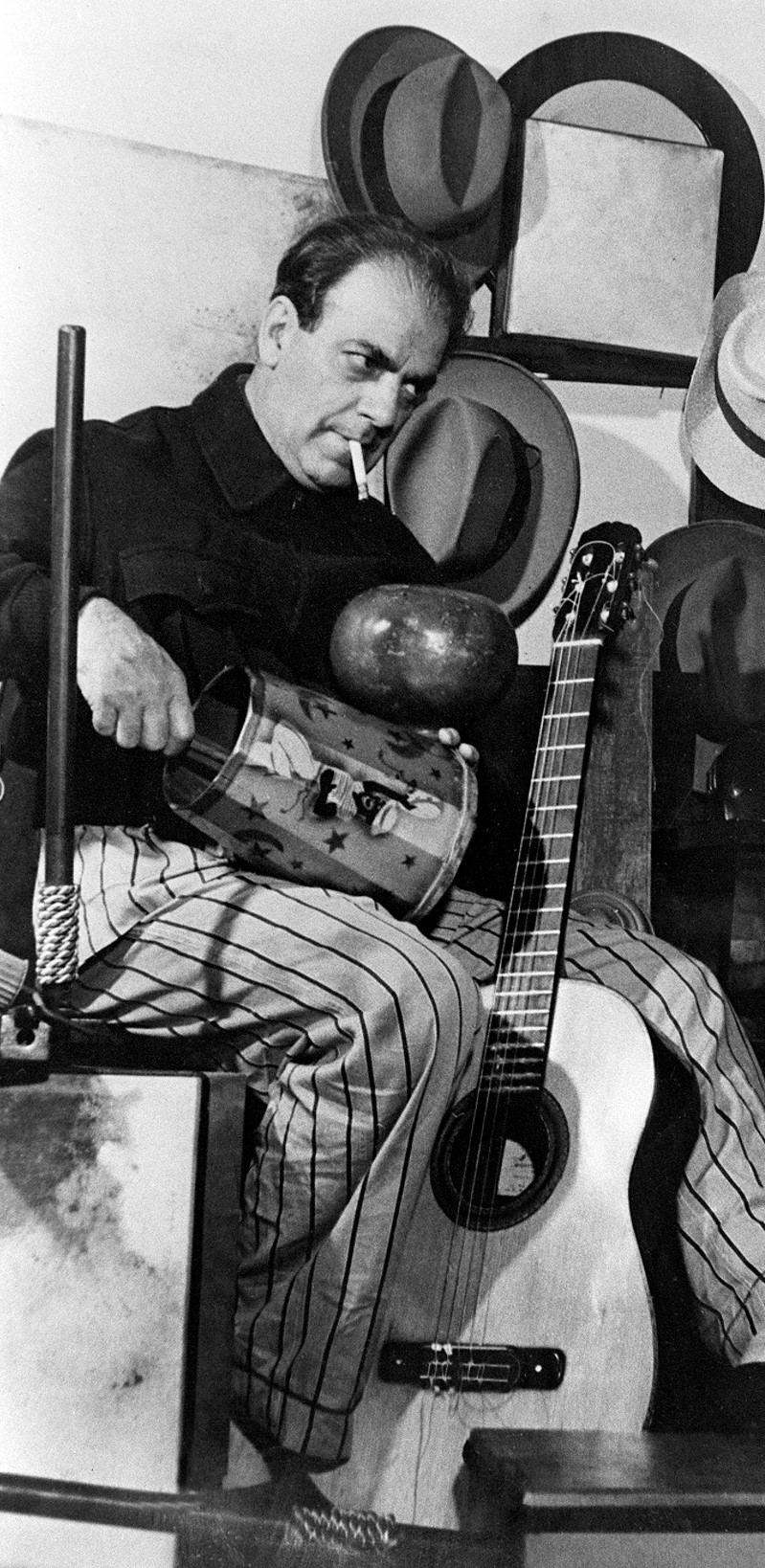
  • Heitor Villa-Lobos: Brazil’s Musical Genius

    Heitor Villa-Lobos: Brazil’s Musical Genius

    On the birthday of Heitor Villa-Lobos, here’s a documentary about Brazil’s most celebrated composer. Of course, most of it’s in Portuguese, but there are plenty of candid stills and footage and examples of his music, and Arthur Rubinstein speaks French.

    A few bonuses:

    Villa-Lobos plays Villa-Lobos

    Andrés Segovia (at 93)

    Julian Bream

    Arthur Rubinstein

    Nelson Freire

    Leonard Bernstein talks Villa-Lobos

    Conducting Villa-Lobos’ greatest hit, the Bachianas Brasileiras No. 5

    Joan Baez gives it a whirl

    The classic recording with Victoria de los Angeles and the composer conducting

    Bernstein conducts “The Little Train of Caipira,” from Bachianas Brasileiras No. 2

    The José Limón Dance Company performs “The Emperor Jones”

    Folkloric rainforest piece, “Uirapuru,” named for a Brazilian bird

    Feliz Aniversário, Heitor Villa-Lobos!

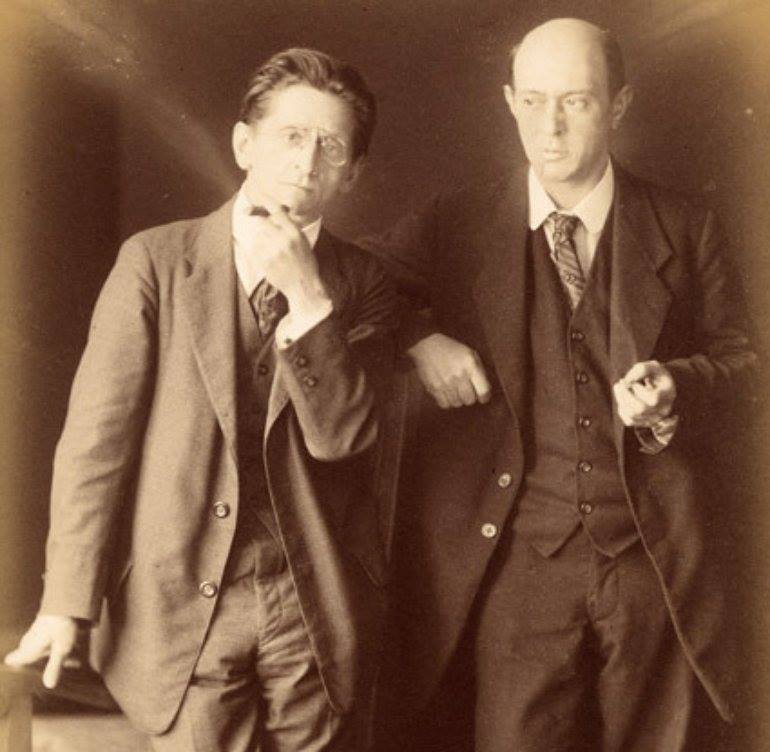
  • Villa-Lobos Zemlinsky Schoenberg on The Classical Network

    Villa-Lobos Zemlinsky Schoenberg on The Classical Network

    Heitor Villa-Lobos’ “Bachianas Brasileiras” suites are fascinating experiments, attempts to marry the composer’s native Brazilian folk music with the forms of Johann Sebastian Bach. Arguably one of the most evocative of these, the “Bachianas Brasileiras No. 4,” will act as a bridge from today’s Noontime Concert on The Classical Network, which has featured The Dryden Ensemble in music by Bach and his contemporaries. The Villa-Lobos work will begin around 1:40 p.m. EDT.

    Then, in the 2:00 hour, we’ll shift gears and enjoy the Symphony in B flat by Alexander Zemlinsky. The symphony was composed very much under the influence of Brahms and Dvořák. Some of Zemlinsky’s mature works undoubtedly achieved greater distinction, but there’s something to be said for great tunes and abundant charm. The composer also happened to be the teacher of Arnold Schoenberg and Vienna’s great musical prodigy of the day, Erich Wolfgang Korngold.

    Korngold, of course, went on to become one of the great film composers. He applied the same romantic opulence that made his operas so successful to his work for the silver screen. His Piano Trio in D major, Op. 1, written at the age of 13, reveals him to be already in command of the distinctive musical language that would later serve him so well.

    Schoenberg too wound up in Hollywood. He may have been the godfather of dodecaphonic music, but his neoclassical Suite for String Orchestra in G, his first piece composed in the New World, could almost be described as a charmer. This work “in the olden style” is wholly tonal and betrays the composer’s love of the music of Johann Sebastian Bach.

    Clearly, what goes around comes around, from roughly 1:40 to 4 p.m. EDT, on WWFM – The Classical Network and wwfm.org.


    Zemlinsky and Schoenberg: Let us entertain you.

Tag Cloud

Aaron Copland (92) Beethoven (95) Composer (114) Film Music (119) Film Score (143) Film Scores (255) Halloween (94) John Williams (185) KWAX (229) Leonard Bernstein (99) Marlboro Music Festival (125) Movie Music (134) Opera (198) Philadelphia Orchestra (86) Picture Perfect (174) Princeton Symphony Orchestra (106) Radio (87) Ralph Vaughan Williams (85) Ross Amico (244) Roy's Tie-Dye Sci-Fi Corner (290) The Classical Network (101) The Lost Chord (268) Vaughan Williams (102) WPRB (396) WWFM (881)

DON’T MISS A BEAT

Receive a weekly digest every Sunday at noon by signing up here


RECENT POSTS