I so often observe musical birthdays and anniversaries on this page, especially round ones, but from time to time one will slip past, either because I’d already done a post about one of my shows or there simply weren’t enough hours in the day.
During my interminable wait for jury consideration in a Zoom antechamber the past couple of mornings, I passed the time in part by running my eyes across my CD shelves, which not surprisingly, in a collection containing some 10,000 specimens, yielded a number of curiosities and a few discs I had never even listened to. One is a 2-CD set on the Dutton label of music by Arthur Butterworth, whose centenary, I noted, as I read the liner notes, commenced on August 4.
I was familiar with Butterworth (no relation to Vaughan Williams’ friend George Butterworth) only from a recording of his Symphony No. 1 of 1957, coupled on another album, on the Classico label, with the Symphony No. 2 of Ruth Gipps. The Dutton program also includes Butterworth’s 1st, conducted by Sir John Barbirolli, along with the 4th Symphony and the Viola Concerto, both conducted by the composer. Butterworth, a brass player, took up the instrument for a better understanding of how to write for strings.
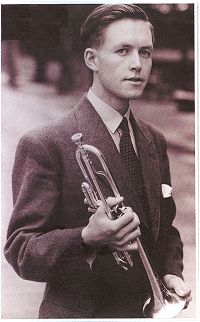
Prior to that, like the composer Malcolm Arnold, he acquired ample experience of the orchestra from the inside, as a trumpeter in the Scottish National Orchestra, from 1949-55, and in the Hallé Orchestra, from 1955-62. He was also closely associated with the brass band movement, working with Besses o’ th’ Barn (of which he was a member) and the Black Dyke Band and writing test pieces for various brass championships.
In common with so many other English composers, Butterworth clearly revered Sibelius. His musical language is conservative and broadly tonal; accessible, if not exactly tunefully ingratiating. It can be dark and at times rather desolate, but also blistering and exhilarating. In addition, the 4th Symphony recalls Carl Nielsen, the great Dane, whose distinctive sound also pervades the works of Butterworth’s compatriot, Robert Simpson.
Many composers can be somewhat bashful about admitting to extramusical influences on their work, insisting that their music should be regarded as just that – absolute music, rigorously argued by putting it through abstract forms. Above all, it should not be interpreted as evocative of anything else. But Butterworth was a nature poet, clearly prone to introspection, and he credits his slow movements, especially, to the impressions he received while on walks with his dog across the forests and beaches of Scotland.
Butterworth also had a Vaughan Williams connection, taking lessons with RVW, beginning in 1950, when his mentor was in his late 70s.
Interestingly, Butterworth is not the only composer from the vicinity of Manchester to have gravitated to Scotland and pick up on its Nordic vibe. Peter Maxwell Davies was born outside Manchester 11 years later. Max kept a home in the Orkney Islands for some 45 years. For me, the latter’s symphonies, for as much as I enjoy some of his other music, have been tough nuts to crack – and it’s not been for want of trying!
Also included in the Butterworth set is a 27-minute spoken lecture, in which the composer talks about his life, work, and influences.
He died as recently as 2014, like Sibelius, attaining the venerable age of 91.
If you’re interested in mid-century English music and you are fascinated by Sibelius at his most austere and strangely beguiling, this music might be for you. No doubt there is worth in this butter, but it doesn’t exactly melt in your mouth!
Happy belated 100th, Arthur Butterworth!
The individual movements of the Dutton album have been posted separately as a YouTube playlist at the link:
Dutton Vocalion Records