Tag: Bard Music Festival

  • Korngold’s Symphony on The Classical Network

    Korngold’s Symphony on The Classical Network

    The Tuesday noon concert is on hiatus for the remainder of the summer. So I’ll have a blank slate this afternoon, on The Classical Network.

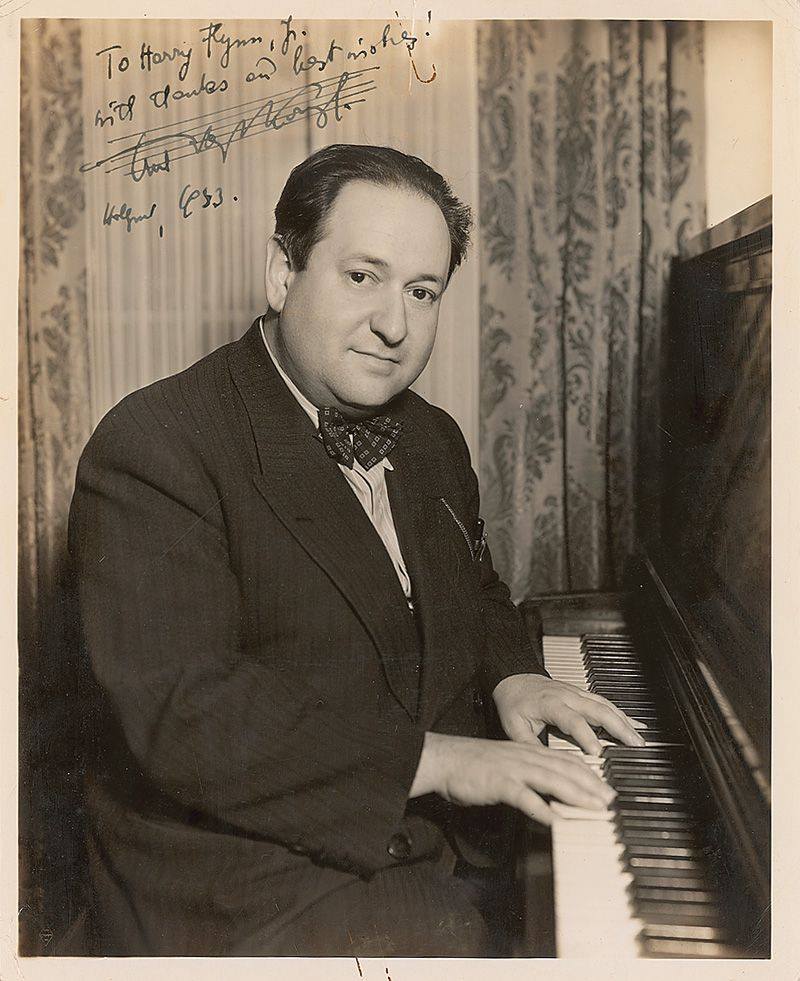
    With another stormpocalypse bearing down on the Trenton-Princeton area (maybe), I’ll present, among my featured highlights, Erich Wolfgang Korngold’s Symphony in F-sharp, the composer’s emotional and artistic reaction to war-torn Vienna.

    As a Jew, Korngold lived as an exile in Hollywood following the Anschluss, earning fame and fortune through his film scores for Errol Flynn. In fact, he once quipped that Robin Hood had saved his life. Korngold may have survived the war, but by 1945 the world he had known was gone forever. When he attempted to reestablish his career back home, he found himself regarded as an uncomfortable reminder of shame, guilt, and destruction, and the late Romantic syntax of his music had come to seem like the product of a bygone era. To lend perspective, John Cage unveiled his 4’33” in 1952, the same year that Korngold completed his symphony.

    The Symphony in F-sharp is not by any means “film music,” though it does allude to some of the scores he wrote for Warner Brothers – “Juarez,” “The Private Lives of Elizabeth and Essex,” “Captain Blood,” and “Kings Row.” The work includes an obligatory Korngoldian happy ending, but the overall mood is one of loss and ruination. It was performed only thrice during the composer’s lifetime. The first performance was so under-rehearsed that the composer tried (unsuccessfully) to put a halt to it.

    Over a decade after Korngold’s death, the score was rediscovered by conductor Rudolf Kempe in the library of the Munich Philharmonic. Kempe set down the world-premiere recording for RCA in 1972. Alongside RCA’s Classic Film Scores Series and a new recording of “Die Tote Stadt,” it set the ball rolling, slowly but inexorably, toward a reassessment of Korngold’s music, which gradually picked up pace in the 1990s, as musicians and record companies began to look further afield with the realization that everyone had already replaced their LPs of the standard repertoire on compact disc.

    The conductor Dmitri Mitropoulos once wrote of Korngold’s symphony, “All my life I have searched for the perfect modern work. In this symphony I have found it.” Unfortunately, Mitropoulos died before he could realize his plan to perform it.

    Korngold was a good man – he shared the wealth of his success in Hollywood to help family and displaced friends in need – but he was not a religious man. Nor was he very much tied up in his heritage. He commented that he and his family had always thought of themselves as Viennese; it was Hitler who made them Jewish. Korngold dedicated his symphony to the memory of Franklin Delano Roosevelt, president of the country that had become his second home. Korngold died in Los Angeles in 1957.

    Tune in this afternoon to hear Korngold’s Symphony in F-sharp, among my featured works, between 12 and 4 p.m. EDT, on WWFM – The Classical Network and wwfm.org.


    NOTE: The symphony will be performed on Saturday night at the Fisher Center at Bard, as part of the second weekend of this year’s Bard Music Festival, held at Bard College, “Korngold and His World.” More information is available at fishercenter.bard.edu.

  • Korngold & Birthday Celebrations on WWFM

    Korngold & Birthday Celebrations on WWFM

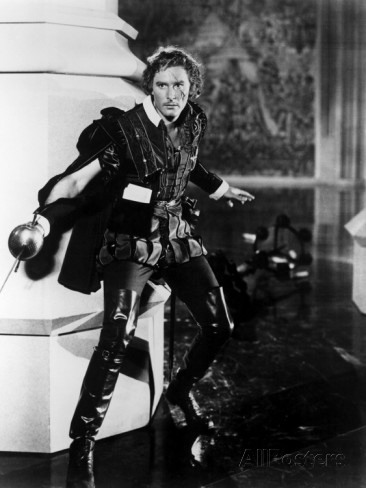
    May I obey all your commands with equal pleasure, sire!

    Join me an hour earlier than usual today, as we’re on target to celebrate a lot of birthdays, including those of John Field, father of the nocturne; Franz Xaver Mozart, son of Wolfgang Amadeus; Serge Koussevitzky, famed conductor of the Boston Symphony Orchestra; Donald Voorhees, founding music director of the Allentown Symphony Orchestra; pianist, composer, and conductor Ernest Schelling (one-time music director of the Baltimore Symphony Orchestra); composer Tadeusz Baird; and pianists Alexis Weissenberg and Angela Hewitt.

    There will also be a musical remembrance of cellist Anner Bylsma, who died yesterday at the age of 85.

    At 6:00, it’s “Picture Perfect,” music for the movies. This week, it’s an all-Korngold hour, including music from two of the great Errol Flynn swashbucklers. Leon Botstein will remark on the composer and this year’s Bard Music Festival, of which Korngold is the focus. Botstein will conduct the U.S. premiere of Korngold’s opera, “Das Wunder der Heliane” – “The Miracle of Heliane” – tonight at Bard College, as preamble to the festival. Performances will run through August 4.

    The festival proper will take place over two weekends, August 9 through 11, and August 16 through 18. For more information, visit fishercenter.bard.edu.

    I’ll be splitting arrows with the precision of my bullseyes, this Friday from 3 to 7 p.m. EDT, on WWFM – The Classical Network and wwfm.org.

    Richard B. Fisher Center for the Performing Arts

  • Korngold Film Music at Bard Music Festival

    Korngold Film Music at Bard Music Festival

    Is Erich Wolfgang Korngold my favorite film composer? Quite possibly, yes. In fact, he’s one of my favorite composers, period. Chalk it up to a childhood misspent in the company of Errol Flynn and Bette Davis.

    I’m especially excited, then, that Korngold will be the focus of this year’s Bard Music Festival. The festival, now in its 30th year, will be held over two weekends – from August 9 through August 11, and August 16 through August 18 – at Bard College, in upstate New York. Concert programs, talks, and panel discussions will examine every aspect of Korngold’s output, including an ample representation of his film music and that of some of his colleagues.

    This week on “Picture Perfect,” my guest will be conductor Leon Botstein, president of Bard College and co-director of the Bard Music Festival. Dr. Botstein will join me in previewing some of the festival’s highlights and providing commentary on this most fascinating composer, who, as one of classical music’s greatest prodigies, had one foot in Old Vienna and the other in New World Hollywood.

    As a kind of special preamble to the festival, Korngold’s opera, “Das Wunder der Heliane” – “The Miracle of Heliane” – will be presented in a fully staged production, in its U.S. premiere, starting tonight and running through August 4, again on the campus of Bard College. Korngold’s most famous opera, “Die tote Stadt,” will be performed semi-staged, as the festival’s finale, on August 18. For more information, visit fishercenter.bard.edu.

    Then strike for the shores of Dover! It’s an hour of Korngold’s film music on “Picture Perfect,” music for the movies, this Friday evening at 6:00 EDT, on WWFM – The Classical Network and wwfm.org.

    Richard B. Fisher Center for the Performing Arts

  • Korngold’s Birthday & Bard Music Festival

    Korngold’s Birthday & Bard Music Festival

    Happy birthday, Erich Wolfgang Korngold!

    I am so excited to have just gotten off the phone with Leon Botstein. Botstein, who is president of Bard College, is also co-artistic director of the Bard Music Festival, held each summer on the campus of Bard College in Annandale-on-Hudson, NY. This year, the festival’s focus will be on “Korngold and His World.”

    Tune in this afternoon for some of Dr. Botstein’s insights into Korngold the composer, as we talk just a bit about the festival, which will take place this year over two weekends: August 9-11 and August 16-18.

    Then watch this space for news of upcoming installments of “Picture Perfect” and “The Lost Chord,” which will include more of Botstein’s comments on Korngold’s significance as a composer for opera house, concert hall, and film.

    The Bard Music Festival will encompass a veritable cornucopia of Korngold, including the composer’s two greatest operas – a concert performance of “Die tote Stadt,” which will round out the festival, on August 18, and a fully-staged production of “Das Wunder der Heliane,” which will act as a kind of preamble to the festival proper, from July 26 to August 4. Leon Botstein will conduct. As has been the case with so much music performed at Bard, “Heliane” is an opera that has never before received a staging in the United States.

    The festival will shine light on all aspects of Korngold’s art, by way of his own work for different media (including a performance, with film, of selections from “The Adventures of Robin Hood”), and music by his contemporaries, those he influenced and those who were influenced by him.

    You can find at more about “Das Wunder der Heliane” and the Bard Music Festival by visiting fishercenter.bard.edu.

    Then tune in today, in the 4:00 hour EDT, to hear portions of my conversation with Dr. Botstein – with more to come on future episodes of “Picture Perfect” and “The Lost Chord” – on WWFM – The Classical Network and wwfm.org.

    The Richard B. Fisher Center for the Performing Arts at Bard College

  • Salieri: More Than Mozart’s Rival?

    Salieri: More Than Mozart’s Rival?

    He was a generous teacher, who fostered Beethoven, Schubert, Liszt, and even the son of the genius he was rumored to have poisoned.

    His first act, when he was appointed Austrian Imperial Kapellmeister in 1788, was to revive Mozart’s “The Marriage of Figaro.” He was responsible for arranging first performances of his alleged nemesis’ Piano Concerto No. 22, the Clarinet Quintet, and the Symphony No. 40, and he had nothing but praise for “The Magic Flute.” He even took it upon himself to educate Franz Xaver Mozart, the composer’s son, who was born four months after his father’s alleged murder.

    Already during the latter years of his life, Antonio Salieri’s enormous compositional output (37 operas, in addition to orchestral works, concertos, chamber music, and sacred pieces) gradually faded from public memory. Ironically, it is the scandalmongers who kept his name alive.

    Rumors of Salieri’s involvement in Mozart’s death were codified by Alexander Pushkin in 1831 in the tragedy “Mozart and Salieri,” which appeared a few years after Salieri himself had passed. This was later set as an opera in 1898 by Nikolai Rimsky-Korsakov.

    Was this any way to treat such a generous, hard-working composer? While he was certainly no Mozart – who was? – his music is finely crafted and often quite enjoyable, certainly no worse than that of a majority of his contemporaries.

    But, as the saying goes, there’s no such thing as bad publicity. In a way, Peter Schaffer’s “Amadeus” was the best thing to happen to Salieri in nearly 200 years. How many people remember Mozart’s quartet partners (with Haydn), Carl Ditters von Dittersdorf and Jan Křtitel Vaňhal, both also talented and prolific composers?

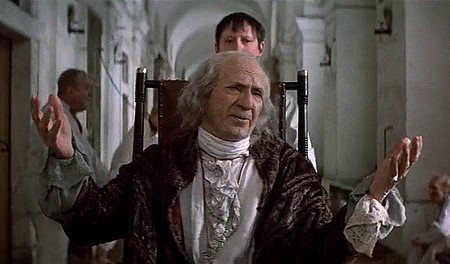
    By coincidence (?), Rimsky-Korsakov’s chamber opera is being performed today at Bard College, on the second half of a 1:30 p.m. program titled “Domestic Music Making in Russia,” as part of the 29th Annual Bard Music Festival: Rimsky-Korsakov and His World.

    In another context, it would be a peculiar way to mark a composer’s birthday – but as I’m sure Dittersdorf and Vaňhal would agree, the only thing worse than being talked about is not being talked about.

    Happy birthday, Antonio Salieri, Patron Saint of Mediocrity!


    Russian film version of Rimsky’s “Mozart and Salieri” (without subtitles): https://www.youtube.com/watch?v=ilw7oIkrDj4

    In English, if a bit fuzzy:

    Salieri’s Concerto for Flute, Oboe and Orchestra:

    “I absolve you.”

Tag Cloud

Aaron Copland (94) Beethoven (95) Composer (114) Film Music (148) Film Score (143) Film Scores (255) Halloween (97) John Williams (196) KWAX (232) Leonard Bernstein (105) Marlboro Music Festival (125) Movie Music (163) Mozart (91) Opera (215) Philadelphia Orchestra (90) Picture Perfect (174) Princeton Symphony Orchestra (110) Radio (90) Ross Amico (244) Roy's Tie-Dye Sci-Fi Corner (290) The Classical Network (101) The Lost Chord (269) Vaughan Williams (107) WPRB (397) WWFM (881)

DON’T MISS A BEAT

Receive a weekly digest every Sunday at noon by signing up here


RECENT POSTS