Tag: Beatrice Harrison

  • Post-Holiday Music & Book Finds

    Post-Holiday Music & Book Finds

    I know it’s not Epiphany yet, but with the more intense part of the holiday season now behind us, it looks as if I’ve managed to survive another year. I hope yours have been good ones.

    Unfortunately, as previously reported, my laptop was the last casualty of 2024. I’ll have a replacement under my fingers today, but retrieving the old files is an ongoing challenge. For the time being, I’d like to share with you a few of my Christmas gifts.

    Yes, I am still very much into physical media. If it doesn’t exist on compact disc or vinyl, it may as well be a live performance in a concert hall, because I’ll probably never listen to it again. Also, compact discs are extremely handy for the kind of work that I do. But enough with the apologies. I like what I like.

    For one thing, I happen to be a nut for Franz Liszt’s rarely-heard “Christmas Tree Suite.” Liszt dedicated the work to his granddaughter, Daniela von Bülow, the daughter of Cosima Liszt and conductor Hans von Bülow. Some of the early movements are reflections on familiar carols, but as the suite progresses, the movements become dreamier and more introspective. The work was first performed on Christmas Day in 1881, the day Daniela’s birthday was always observed, though she was actually born on Christmas Eve. I have many recordings of the piece, but this is probably the most recently available, issued on the Naxos label. I have to say, having listened to it only once, it’s not likely to become a personal favorite. I’ll certainly go back and give it another chance, but I feel like Wojciech Waleczek is a little too soporific in his interpretation, especially in the earlier movements, in which the more familiar carols mosey a little more than would be desirable. This is only a first impression, and I may revise my opinion with increased exposure. Certainly, there is plenty of space for interpretive subjectivity as the work becomes more ruminative in the later movements.

    The Charles Ives Anniversary Edition is one of the happy tie-ins with the 2024 Ives sesquicentennial celebrations. The five-CD box, released by Sony, and which I haven’t taken out of the shrink wrap yet, contains coveted reissues of plenty of Ives rarities and curios, including an album of the composer performing his own music at the keyboard.

    Stefan Jackiw and Jeremy Denk gave an unforgettable concert of the Ives Violin Sonatas here in Princeton, on Ives’ birthday, October 20, in 2020. I didn’t know they had recorded the pieces, but lo and behold, here they are, on a recent Nonesuch release that also includes both of Ives’ piano sonatas. I haven’t listened to it yet, but I am very much looking forward to it.

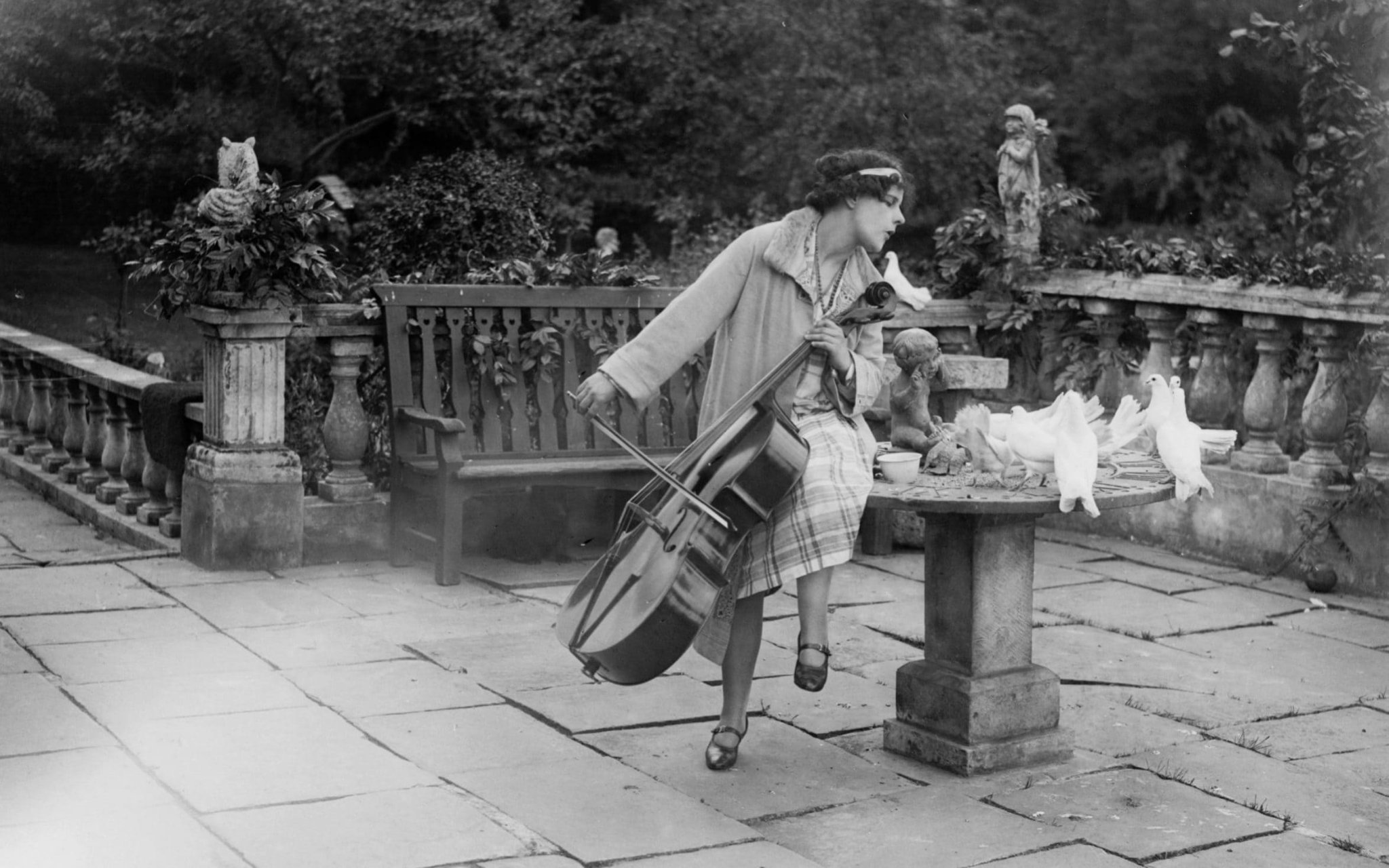
    The book is about the cellist Beatrice Harrison, long familiar to me from her classic recording of the Elgar Cello Concerto, but only recently did I learn of her worldwide fame in connection with a nightingale in her garden with whom she performed impromptu duets over the radio, captivating millions around the world. 2024 marked the centenary of the first of those broadcasts. I wrote a little more about it here before.

    https://www.facebook.com/photo/?fbid=1308616126724114&set=basw.AbpKcq6N8YFve4Jmc47IF0Cpw3fvpPfuJp99zZDC9GqTCc05UIZWWF40UPKTSpStP5FnKyywTPR_Apg0MTFHmuWa-bBfzobP9r2E34kkP0kBcJGADxiqoNs-cQkYkDwh-nq5TLthwzfrBryUuzNKRpsKH8bgFQ41BXVv5tqx28tuYg&opaqueCursor=Abqfx7PZKtgyYK1e-ycBYC3fwkUdUN1tVwtZhSWhhw21BEGeezUx3dp_oHUVvayqMrAGhllJKP5rOZy9rCRvxWW-J2GWQeARLnf2nRIgKsiIIDNwZ9A1n3vDjd1ctZwLp-3E5ntvGe0ZVCPKHDvsygeGqw-mJ3JjQMocERP5ngiYHfLjyleQoI_0mk3KtzGDaeETNMNzhTDhR2fE4_KUdmyq6tdm2Aqk5eh4KiiolC2NipODNhc4ewtZRXbHx1JoAHrOH9_s6PUIDxmObg5nhRJx7IKIq43Gb6qxhuq8zXCNCRHDm_ulO0A0E0XIrRAwI0T84pVfBuTT38neOhGKfrue8ACn6JmZLT_j9vR-72VIk4SbM-J4Z4_AWu885XyUKhiDYfM3TDYnBF6_ij5ukix68kRD0-ezyxHQUQs8qT63tU3wtfu4yBv4FXphxUtKkblmQrHhBkyNFobddVeiBLyV1GyYLVc5CO9iOUyaULNgdPFjt0-Jjz9MGU0Ee0EiNAXV79nZLDZW4ADljpO4rNk2ib2wHdYyUfcNvDUGSgjrSZ_pcUZ9SuB-mgZDLZqec4MHLQ0s7I9zVd8W4rcRiYcd4lRR7Zl3eYlRG6VJG05aZhRRbMn5HrdzB5vK0FCxjw2anELgtPVgpVBPamIvjfQdzKxQXP6q-ybbxhEPhgzN3MMr9aP4PqnkPI90gNcAtVZgLpDnY1MYBLQLjetRC5Y6BSCuM7x2qmwoNUxn6fkqJFHsD9Je_23ZskNflyBEIuM0xSiz2Nt3wZaLjHhuNG4euWb4MrybzkWfOrr_AMZ4pW9XeIZZ8RsOeJPeYtUfNWOVXC_7QCXk2VPICEmaSmG_xJZOn_xKyHfVuZffCAJz2aPR8e8gfpdtQ5bYFkLub28

    Not a bad haul, if I do say so myself. I must have been a good boy, after all. Now that the New Year’s festivities have passed, I am looking forward to being back in my burrow until spring.

  • Elgar Remastered Hear the Composer in Accidental Stereo

    Elgar Remastered Hear the Composer in Accidental Stereo

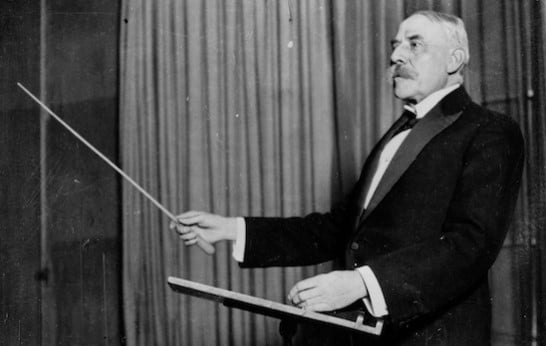
    This week on “The Lost Chord,” there may not be glorious Technicolor or breathtaking Cinemascope, but what would Cole Porter say, to hear Sir Edward Elgar in stereophonic sound?

    Elgar was one of the first of the great composers to endeavor to set down “definitive” interpretations of his own works on recordings. Or so it has been thought. But did Elgar really regard these performances as definitive? In fact, Elgar took great care to “grade” the various takes from his recording sessions. Some of these, he instructed, were to be destroyed outright; others were held, as the composer took the time to consider.

    What emerges, upon listening to a 4-CD set, “Elgar Remastered,” on the SOMM Recordings label, are the impressions that (1) Elgar was fairly meticulous when it came to preserving his legacy, and (2) he also understood that there’s more than one way to skin a cat. Rediscovered alternative takes make clear that the composer was amenable to looking at his own works from a variety of perspectives.

    For their parts, the conscientious engineers at EMI employed multiple machines to guard against technological failure. This was back in the late 1920s and early ‘30s. Now, for the first time, the elements have been brought together and skillfully combined to create a kind of “accidental” stereo.

    Engineer Lani Spahr has worked wonders with these recordings, from the private collection of Arthur Reynolds, chairman of the North American Branch of the Elgar Society. He also goes into considerable detail in his liner notes – in fact, to a degree that would be impractical to relate here.

    A good deal of the set is devoted to recordings and alternative takes of Elgar’s Cello Concerto. As on the composer’s authorized recording, issued on EMI, Beatrice Harrison is the soloist. These include the first complete electrical recording, from 1928 – the one which would ultimately be published, in mono – with previously unissued, alternative takes from the same sessions. There is also an earlier, truncated recording from 1920, set down using the acoustic process, and a performance of the concerto’s Adagio movement alone, with Harrison accompanied at the keyboard by Princess Victoria.

    The gem of the set is Harrison’s celebrated 1928 recording, heard here for the first time entirely in stereo, or what passes for stereo.

    Harrison was Elgar’s preferred soloist. He lavished praise on her performances, even as she took liberties with the score. At the session for this particular recording, he was overheard to say, “Give it ‘em, Beatrice, give it ‘em. Don’t mind about the notes or anything. Give ‘em the spirit.”

    Worlds away from the effusive, heart-on-the-sleeve approach of Jacqueline du Pré, Harrison’s interpretation is nonetheless riveting on its own terms. As with the other recordings in the collection, it is a kind of time capsule of period performance practice – with swooping portamenti (audible slides between notes) – and the musicians’ flexibility in regard to both tempo and phrasing.

    And Elgar can be such a volatile conductor! In addition, we’ll hear a cracking rendition of the “Cockaigne Overture” and a performance of the prelude to the oratorio “The Kingdom,” which really takes flight.

    Yes, this is the same Elgar who wrote that ubiquitous graduation march. Join me to hear him as you’ve never heard him before – in “accidental” stereo – on “Pomp and Happenstance,” on “The Lost Chord,” today, on the eve of the anniversary of his birth, now in syndication on KWAX, the radio station of the University of Oregon!


    Clip and save the start times for all three of my recorded shows:

    PICTURE PERFECT, the movie music show – Friday at 8:00 PM EDT/5:00 PM PDT

    SWEETNESS AND LIGHT, the light music program – ALL NEW! – Saturday at 11:00 AM EDT/8:00 AM PDT

    THE LOST CHORD, unusual and neglected rep – Saturday at 7:00 PM EDT/4:00 PM PDT

    Stream them, wherever you are, at the link!

    https://kwax.uoregon.edu/


    In case you missed it, I posted about Harrison for the centenary of her historic “nightingale” broadcasts on May 19:

    https://www.facebook.com/photo?fbid=1308616126724114&set=bc.AbpSdzDUcPqNdd3xRdA8m_7oyqKRGRzZ3f7fO8lXeBTGpttXnxTwFBWLM1pBSHxbrOeQ11N2n5T4jDEc-Q4WQvqWbijS_J7S13KP-lG5otyYNPr0bDHf1aGAv2yXmR9iaHRHu5lBMDXLXuHn-pdJSG_I&opaqueCursor=AbobH9lEV9TGc6leZQj34oZwd47IaBXh7U03vjUpxTXKbvxc5lf-OdqtpwCEPsLkt2QmCdFZzTCJ6UVTe62rVlVSZeuts5Un3DY7Leb_KZWv3GQSFL_xRksQ-B4JOixFUnAP0JnTSMahcEexu7efOEY83gXMoKRlWNUPylQLXLu3zIJTDXJ6G5uM9NVDw89dDMlS0bjXsW9DQ8b_iNAFXZbBaRYRBjK784cMBwH4DRgA_Q5J1GdfvIGa6frofFSg5M-4-qAATSalIqSNd95nU6tBu4sZTdH-EPS21u7Yu2MNiTHDh4TVsAjT4NNU_eDZX68U3MdJdA81ypywWiIeVUnMvcr7TB4tuCKw4MYRBvRDqL8RHaqRZOb0LZqZvnw-N41xgFpv2AGiG96Nx0BYRcojA6LDpTqoZNZaB9L37uY89YYDzMBt1vOX91yba6acVuPqegCsxhSAIGD4M6KWSHfu6vziI3ekQl8clfHAhRXXR_689JsQMUawTuKncMKD7q6_CGVPWUCvY5CUGjrybm-2Nq9vl3AEyHIUZiz0UR9fnF5bMbwhm-z8aAIDs3TPc6Y

  • Beatrice Harrison Nightingale Centenary

    Beatrice Harrison Nightingale Centenary

    Today marks the centenary of the first of Beatrice Harrison’s historic “nightingale” broadcasts. As a record collector and musical anglophile, I was familiar with Harrison, of course, from her recording of the Elgar Cello Concerto and her work with Frederick Delius and the composers of “the Frankfurt Gang.”

    But I confess I learned of the nightingale broadcasts for the first time only last year, when watching a film on Netflix, called “The Dig” (2021), with Carey Mulligan and Ralph Fiennes. The film is based on a novel of the same name by John Preston, inspired by true events surrounding an archaeological excavation at Sutton Hoo, Suffolk, in 1939, that uncovered an Anglo-Saxon ship burial.

    At a point, one of the characters (a fictionalized version of real-life archaeologist Peggy Piggot, played by Lily James) relates an anecdote about Harrison, who used to rehearse in her garden, to the delight of the resident nightingales, who would allegedly join in. A live radio broadcast of Harrison playing “Londonderry Air” (a.k.a. “Danny Boy”) in a kind of avian duet is said to have entranced over a million listeners. That would have been on May 19, 1924.

    I did a search on YouTube, and lo and behold! Recordings of these unusual collaborations exist! Apparently the original 10-inch shellac gramophone discs, issued by HMV in 1927, proved extremely popular.

    Nightingales alone

    “Londonderry” duet

    “Songs My Mother Taught Me”

    But was it all, in fact, faked?

    https://www.theguardian.com/media/2022/apr/08/the-cello-and-the-nightingale-1924-duet-was-faked-bbc-admits?fbclid=IwZXh0bgNhZW0CMTAAAR2EKqEUpa1qfdS6xbshPF0od34hgF0sjkZEyXqlTmW2ILK_5fznZB7CxC8_aem_AUzmL6G42iakhTmLzBuCC5RCc1J8C6JCo7cbsbgF4_d-pvfthogLFZFuGHRKpMqGODgN-v6rHGPhZdoGMMnc8TYE

    Or not?

    https://www.thestrad.com/playing-hub/defending-the-duet-the-cello-and-the-nightingale/14876.article

    According to Kate Kennedy, in an article published today by the BBC, “beyond a shadow of a doubt,” the duets were real.

    https://www.bbc.com/news/articles/cpvvdq6z7r4o

    Whether or not it was real or manufactured, it’s a lovely illusion. I for one wish to hang on to it. The broadcast inspired millions, a living dream of beauty, magic, and hope for a society still living with so much loss and sadness following the Great War. It proved so popular, in fact, that it was broadcast annually for the next 12 years.

    Harrison is best-known to collectors for having made the first recording of the Elgar Cello Concerto, with the composer conducting. She also gave first performances of a number of works by Delius, including his Double Concerto (with her sister, May Harrison, as the violin soloist).

    Harrison plays Elgar’s Cello Concerto

    Delius without nightingales, but a nice picture of Harrison with a terrier (she was also a great dog lover)

    There are broadcasts, recordings, and books coming out of the U.K. to mark the anniversary. I am happy to report that Harrison’s autobiography, “The Cello and the Nightingales,” was reissued in the U.K. earlier this month. It will be available in the U.S. on July 16. Rather than link you to Amazon, which doesn’t need your money, for more information I’m sending you directly to the editor’s website. (Follow the link and scroll down.) You can decide from there from whom you might like to make your purchase.

    About me

  • The Dig, Nightingales & a Faked Duet?

    The Dig, Nightingales & a Faked Duet?

    I was watching a film on Netflix the other night called “The Dig” (2021), starring Carey Mulligan and Ralph Fiennes, about the archaeological excavation at Sutton Hoo, Suffolk, in 1939 that uncovered an Anglo-Saxon ship burial. The film is based on a novel of the same name by John Preston, inspired by true events.

    Interestingly, at a point one of the characters (a fictionalized version of real-life archaeologist Peggy Piggot, played by Lily James) relates an anecdote about the cellist Beatrice Harrison, who used to rehearse in her garden, to the delight of the resident nightingales, who would allegedly join in. A live radio broadcast of Harrison playing “Londonderry Air” (a.k.a. “Danny Boy”) in a kind of avian duet is said to have entranced over a million listeners.

    I did a search on YouTube, and lo and behold! Recordings of these unusual collaborations exist! Apparently the original 10-inch shellac gramophone discs, issued by HMV in 1927, proved extremely popular.

    Nightingales alone

    “Londonderry” duet

    “Songs My Mother Taught Me”

    But was it all, in fact, faked?

    https://www.theguardian.com/media/2022/apr/08/the-cello-and-the-nightingale-1924-duet-was-faked-bbc-admits

    Whether it was faked or not, it’s a lovely illusion. I for one wish to hang on to it.

    Harrison is best-known to collectors for having made the first recording of the Elgar Cello Concerto, with the composer conducting. She also gave first performances of a number of works by Frederick Delius, including his Double Concerto (with her sister, May Harrison, as the violin soloist).

    In addition, she wrote an autobiography, “The Cello and the Nightingales.”

    Harrison plays Elgar’s Cello Concerto

    Delius without nightingales, but a nice picture of Harrison with a terrier (she was also a great dog lover)

  • Elgar Remastered Accidental Stereo

    Elgar Remastered Accidental Stereo

    This Sunday night on “The Lost Chord,” there may not be glorious Technicolor or breathtaking Cinemascope, but what would Cole Porter say, to hear Sir Edward Elgar in stereophonic sound?

    Elgar was one of the first of the great composers to endeavor to set down “definitive” interpretations of his own works on recordings. Or so it has been thought. But did Elgar really regard these performances as definitive? In fact, Elgar took great care to “grade” the various takes from his recording sessions. Some of these, he instructed, were to be destroyed outright; others were held, as the composer took the time to consider.

    What emerges, upon listening to a 4-CD set, “Elgar Remastered,” on the SOMM Recordings label, are the impressions that (1) Elgar was fairly meticulous when it came to preserving his legacy, and (2) he also understood that there’s more than one way to skin a cat. Rediscovered alternative takes make clear that the composer was amenable to looking at his own works from a variety of perspectives.

    For their parts, the conscientious engineers at EMI employed multiple machines to guard against technological failure. This was back in the late 1920s and early ‘30s. Now, for the first time, the elements have been brought together and skillfully combined to create a kind of “accidental” stereo.

    Engineer Lani Spahr has worked wonders with these recordings, from the private collection of Arthur Reynolds, chairman of the North American Branch of the Elgar Society. He also goes into considerable detail in his liner notes – in fact, to a degree that would be impractical to relate here.

    A good deal of the set is devoted to recordings and alternative takes of Elgar’s Cello Concerto. As on the composer’s authorized recording, issued on EMI, Beatrice Harrison is the soloist. These include the first complete electrical recording, from 1928 – the one which would ultimately be published, in mono – with previously unissued, alternative takes from the same sessions. There is also an earlier, truncated recording from 1920, set down using the acoustic process, and a performance of the concerto’s Adagio movement alone, with Harrison accompanied at the keyboard by Princess Victoria.

    The gem of the set is Harrison’s celebrated 1928 recording, heard here for the first time entirely in stereo, or what passes for stereo.

    Harrison was Elgar’s preferred soloist. He lavished praise on her performances, even as she took liberties with the score. At the session for this particular recording, he was overheard to say, “Give it ‘em, Beatrice, give it ‘em. Don’t mind about the notes or anything. Give ‘em the spirit.”

    Worlds away from the effusive, heart-on-the-sleeve approach of Jacqueline du Pré, Harrison’s interpretation is nonetheless riveting on its own terms. As with the other recordings in the collection, it is a kind of time capsule of period performance practice – with swooping portamenti (audible slides between notes) – and the musicians’ flexibility in regard to both tempo and phrasing.

    And Elgar can be such a volatile conductor! In addition, we’ll hear a cracking rendition of the “Cockaigne Overture” and a performance of the prelude to the oratorio “The Kingdom,” which really takes flight.

    Hear Elgar as you’ve never heard him before – in “accidental” stereo – on “Pomp and Happenstance,” this Sunday night at 10:00 EDT, on WWFM – The Classical Network and wwfm.org.

Tag Cloud

Aaron Copland (92) Beethoven (95) Composer (114) Film Music (120) Film Score (143) Film Scores (255) Halloween (94) John Williams (185) KWAX (229) Leonard Bernstein (100) Marlboro Music Festival (125) Movie Music (135) Opera (198) Philadelphia Orchestra (88) Picture Perfect (174) Princeton Symphony Orchestra (106) Radio (87) Ralph Vaughan Williams (85) Ross Amico (244) Roy's Tie-Dye Sci-Fi Corner (290) The Classical Network (101) The Lost Chord (268) Vaughan Williams (103) WPRB (396) WWFM (881)

DON’T MISS A BEAT

Receive a weekly digest every Sunday at noon by signing up here


RECENT POSTS