Tag: Beethoven

  • Beethoven’s Lost Theatrical Music

    Beethoven’s Lost Theatrical Music

    Only the other day, I was reading about Eleonore Prochaska, a German soldier who fought in the Prussian army against Napoleon during the War of the Sixth Coalition. Prochaska was able to enlist in 1813 by disguising herself as a man, serving first as drummer, but soon entering the infantry. Her true identity was discovered only after she was severely injured at the Battle of Göhrde. She would succumb to her wounds three weeks later.

    Prochaska was actually one of a number of women who served in actual battle during the Napoleonic Wars. Rather puts our Molly Pitcher in the shade.

    Prochaska’s memory would be celebrated in music in literature. Somehow I never knew that Johann Friedrich Duncker’s drama, “Leonore Prohaska,” for which Ludwig van Beethoven composed incidental music in 1815, was inspired by a real person. I’ve always seen her described as something of an idealized warrior-maiden, a kind of Joan of Arc, who disguises herself as a man in order to fight in an unspecified war of liberation. The fact that Leonore is the also the name of the heroine of Beethoven’s only opera, “Fidelio,” and that in the opera the character also disguises herself as a man – to fight for liberation – probably had a lot to do with it.

    “Fidelio” was given its premiere, in its original version, in 1805, but the final revision was performed only in 1814, the year after Prochaska’s death. Certainly, Beethoven’s conception of Leonore predated the actions of the historical Eleonore. In fact, from the start, the composer’s preferred title had been “Leonore, or The Triumph of Married Love” – the title of Jean-Nicolas Bouilly’s play, on which the libretto was based. This was changed only at the insistence of the theater to avoid confusion with at least two rival operas that had drawn from the same source material. Though Beethoven’s work had nothing at all to do with Prochaska, I think it’s an interesting coincidence.

    In the end, Duncker’s play was cancelled, and Beethoven’s incidental music was never performed in the context for which it was intended. It wasn’t even published until 1888, 62 years after the composer’s death. Beethoven’s efforts were not for nothing, however, as Duncker, who served as cabinet secretary to Friedrich Wilhelm III, King of Prussia, was able to persuade his Royal Highness to underwrite the “Missa solemnis.”

    This is a roundabout preamble to my announcement that this week on “The Lost Chord,” we’ll honor Beethoven, on his presumed birthday, with an hour of his incidental music for the theater, including a funeral march from “Leonore Prohaska,” which he arranged from the slow movement of his Piano Sonata No. 12 in A-flat Major.

    In 1811, Beethoven was approached to write music for two Hungarian-themed plays by August von Kotzebue. “The Ruins of Athens” and “King Stephen” were scheduled to celebrate the opening of a magnificent new theater in the city of Pest (now the eastern part of unified Budapest). Of the two, “King Stephen” is the less well-known. Stephen I, the 11th century sainted national hero of Hungary, was instrumental in converting the Hungarian people and neighboring tribes to Christianity. We’ll hear Beethoven’s music for the latter play, shorn of its frequently-performed overture.

    Eleven years later, the composer was enlisted to provide music for the reopening of Vienna’s Theater in der Josefstadt. For the occasion, the theater’s director, Carl Friedrich Hensler, recalling the success of the Pest double-bill, requested a revival of “The Ruins of Athens.” Beethoven offered to revise the existing numbers and compose new ones to Hensler’s specifications. The result was “The Consecration of the House.”

    A new text was provided by Carl Meisl, about whose talents Beethoven was less than enthusiastic. Meisl’s occasional poem describes an exchange between the actor Thespis and the god Apollo and contrasts Greece under the Ottoman Turks to the freedom of Vienna. A chorus celebrates dance, altars are decorated for the entry of the Muses, and the work ends with the obligatory chorus, “Heil unserm Kaiser.” Beethoven wrote a new overture for the piece, which is performed fairly frequently, but for our purposes it will be omitted to allow time for some of the lesser-heard numbers.

    Can anything about Beethoven truly be described as incidental? We’ll set aside the symphonies and concertos, for a revelatory evening at the theater with the Master from Bonn. Beethoven treads the boards on “Beethoven, Incidentally,” this week on “The Lost Chord,” now in syndication on KWAX, the radio station of the University of Oregon!


    Remember, KWAX is on the West Coast, so there’s a three-hour difference for the Trenton-Princeton area. Here are the respective air-times of my recorded shows (with East Coast conversions in parentheses):

    PICTURE PERFECT, the movie music show – Friday on KWAX at 5:00 PACIFIC TIME (8:00 PM EST)

    THE LOST CHORD, unusual and neglected rep – Saturday on KWAX at 4:00 PACIFIC TIME (7:00 PM EST)

    Stream them here!

    https://kwax.uoregon.edu/


    Eleonore Prochaska (left) and the birthday boy from Bonn
  • Last Rose of Summer: 13 Musical Inspirations

    Last Rose of Summer: 13 Musical Inspirations

    It’s the last day of summer. Take some time to smell the roses. Autumn begins in the Northern Hemisphere tomorrow at 2:50 a.m. EDT.

    Thomas Moore’s poem, “The Last Rose of Summer,” was written in 1805. It was set to a traditional Irish tune, “Aisling an Óigfhear,” or “The Young Man’s Dream,” with words and music published together in 1813. The song proved to be a heady inspiration for dozens of composers. It’s interesting to reflect that for Beethoven and his brethren in the early 19th century, this would have been considered a contemporary hit.

    According to my internet searches, a gift of 13 roses signifies that we’ll be friends forever. How could I pass that up? In the interest of securing you all as BFFs, here are 13 treatments of “The Last Rose of Summer.”

    Sung by Amelita Galli-Curci in 1921

    Beethoven, “6 National Airs with Variations,” Op. 105, No. 4 “The Last Rose of Summer”

    Ferdinand Ries, Sextet “The Last Rose of Summer” (the tune appears at 11:45)

    Carl Czerny, “Variations on ‘The Last Rose of Summer’”

    Felix Mendelssohn, “Fantasy on ‘The Last Rose of Summer’”

    Sigismond Thalberg, “The Last Rose of Summer”

    Heinrich Wilhelm Ernst, “Variations on ‘The Last Rose of Summer’”

    Félix Godefroid

    Joachim Raff

    Max Reger

    Paul Hindemith, “On Hearing ‘The Last Rose of Summer’”

    Benjamin Britten

    Friedrich von Flotow, from his opera “Martha”


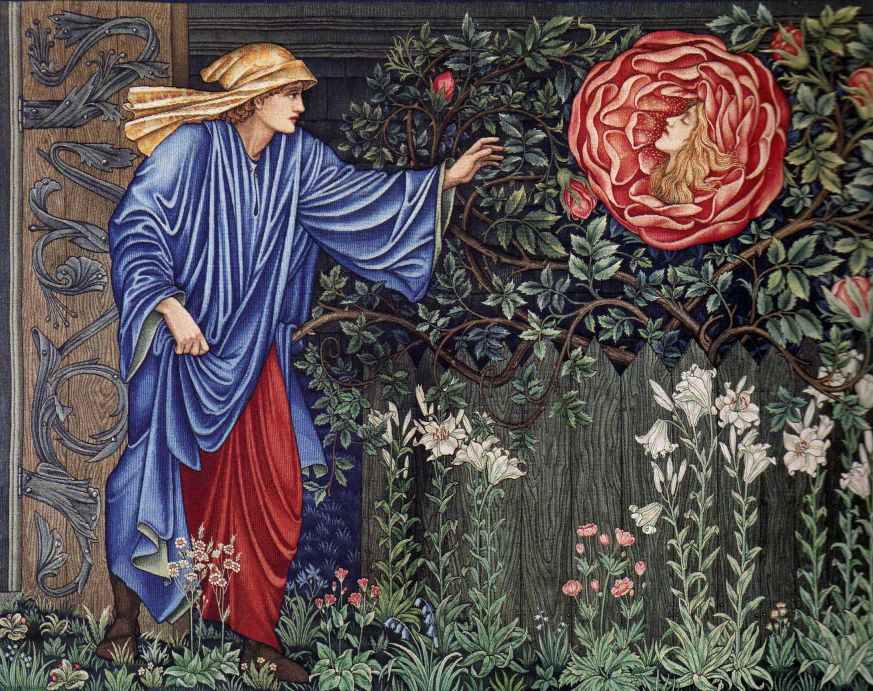
    IMAGE: Edward Burne-Jones: “The Pilgrim in the Garden” or “The Heart of the Rose” (tapestry, c. 1890)

  • Jenő Jandó Naxos Piano Legend Dies

    Jenő Jandó Naxos Piano Legend Dies

    Jenő Jandó, the pianist who rose to international fame for his prolific efforts on behalf of the Naxos label, has died. Jandó leaves behind many sound-to-excellent recordings of works by Bach, Haydn, Beethoven, Schubert, Schumann, Brahms, Liszt, Chopin, Bartók, and others. When you saw Jandó’s name, you knew you could buy with confidence.

    At its inception described as a super-budget label, Naxos was able to attract plenty of buyers looking to build or fill-out their classical music libraries at a fraction of the cost it would take to assemble a shelf full of identical repertoire from the majors. Many of the performers at the beginning were unknown musicians and ensembles from East-Central Europe.

    The model met with some condescension at the start, as surely they couldn’t compete with costlier alternatives on the majors? Jandó was among those who rose to the challenge and helped sell the idea that just because an album was inexpensive didn’t necessarily mean it wasn’t good. And they only got better.

    Jandó was a professor at the Franz Liszt Academy of Music in Budapest. Like Glenn Gould, apparently, he had a habit of singing when he played. He was able to get around this by putting an unlit cigarette in his mouth.

    He recorded over 60 albums for Naxos, as solo instrumentalist, concerto soloist, and collaborative chamber musician. Among these was a complete set of the Beethoven piano sonatas. He also recorded for the Hungaroton label.

    Jenő Jandó was 71-years-old. Köszönöm, maestro, and R.I.P.


    Jandó plays Beethoven

    Jandó and traditional performers illuminate Bartók

    Jandó rehearses Brahms’ Piano Concerto No. 2

    https://www.youtube.com/watch?v=37CXGOOef4g

  • Beethoven Liszt Kiss A Musical Blessing

    Beethoven Liszt Kiss A Musical Blessing

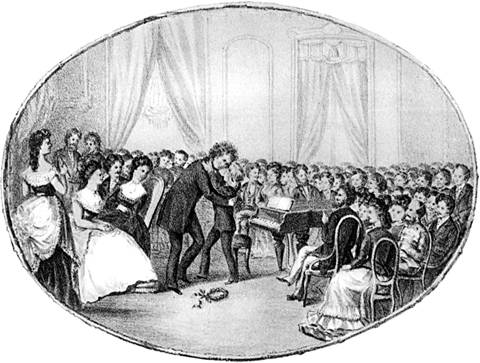
    Legend has it that, on this date 200 years ago, at the end of a concert at the Kleiner Redoutensaal of the Hofburg palace in Vienna, Beethoven spontaneously rose from the audience to plant a kiss on the brow of an 11-year-old Franz Liszt. The young pianist had just fulfilled an impromptu request from the composer for an improvisation on one of his themes.

    Unfortunately, according to Liszt, it never happened. Or rather it did, in a sense, just not on this occasion.

    It was actually a few days earlier, at Beethoven’s home, that Liszt received the “Weihekuss” – the “kiss of consecration” – after playing a movement from one of Beethoven’s concertos. Liszt would always remember it as a sort of artistic christening.

    He recalled it 52 years later, in 1875, when he was in his sixties, to one of his pupils, Ilka Horowitz-Barnay. The following translation is from Paul Nettl’s “Beethoven Encyclopedia.”

    “I was about eleven years of age when my venerated teacher Czerny took me to Beethoven. He had told the latter about me a long time before, and had begged him to listen to me play some time. Yet Beethoven had such a repugnance to infant prodigies that he had always violently objected to receiving me. Finally, however, he allowed himself to be persuaded by the indefatigable Czerny, and in the end cried impatiently, ‘In God’s name, then, bring me the young Turk!’ It was ten o’clock in the morning when we entered the two small rooms in the Schwarzspanierhaus which Beethoven occupied; I somewhat shyly, Czerny amiably encouraging me. Beethoven was working at a long, narrow table by the window. He looked gloomily at us for a time, said a few brief words to Czerny and remained silent when my kind teacher beckoned me to the piano. I first played a short piece by Ries. When I had finished Beethoven asked me whether I could play a Bach fugue. I chose the C minor Fugue from the Well-Tempered Clavier. ‘And could you also transpose the Fugue at once into another key?’ Beethoven asked me.

    “Fortunately I was able to do so. After my closing chord I glanced up. The great Master’s darkly glowing gaze lay piercingly upon me. Yet suddenly a gentle smile passed over the gloomy features, and Beethoven came quite close to me, stooped down, put his hand on my head, and stroked my hair several times. ‘A devil of a fellow,’ he whispered, ‘a regular young Turk!’ Suddenly I felt quite brave. ‘May I play something of yours now?’ I boldly asked. Beethoven smiled and nodded. I played the first movement of the C major Concerto. When I had concluded Beethoven caught hold of me with both hands, kissed me on the forehead and said gently. ‘Go! You are one of the fortunate ones! For you will give joy and happiness to many other people! There is nothing better or finer!’”

    Liszt told the preceding in a tone of deepest emotion, with tears in his eyes, and a warm note of happiness sounded in the simple tale. For a brief space he was silent and then said, “This event in my life has remained my greatest pride – the palladium of my whole career as an artist. I tell it but very seldom and – only to good friends!”

    Beethoven’s conversation book verifies the encounter. What the recollection doesn’t take into account is that by then the composer would have been completely deaf. But he could still feel the vibrations of the piano.

    One way or another, I venture to guess, Liszt didn’t wash that smacker off his forehead for quite some time.


    IMAGE: 1873 lithograph to mark the 50th anniversary of Beethoven’s Weihekuss

  • Beethoven’s Goat Hair DNA Mystery

    Lest there be any doubt that Beethoven was the GOAT, check out this article in today’s Washington Post.

    “The year before Beethoven died, the wife of a colleague earnestly wanted a lock of his hair, but she became the victim of a prank. Beethoven and his secretary instead sent a coarse snip of a goat’s beard…”

    Makes it kind of awkward when scientists try to sequence your DNA.

    https://www.washingtonpost.com/science/2023/03/22/beethoven-genome-hair/?fbclid=IwAR2p4FXLOMxPc8avXJcVDdbWj8w_dOhiLEWwSpWQlYH-taNcBRe81o3Yrbs

    Incidentally, Ferdinand Hiller, whom the article cites, was more than just a teenager who collected hair, a notable pianist and composer in his own right. I’ve posted about him once or twice myself.

Tag Cloud

Aaron Copland (92) Beethoven (94) Composer (114) Conductor (84) Film Music (106) Film Score (143) Film Scores (255) Halloween (94) John Williams (179) KWAX (227) Leonard Bernstein (98) Marlboro Music Festival (125) Movie Music (121) Mozart (84) Opera (194) Picture Perfect (174) Princeton Symphony Orchestra (102) Radio (86) Ross Amico (244) Roy's Tie-Dye Sci-Fi Corner (290) The Classical Network (101) The Lost Chord (268) Vaughan Williams (97) WPRB (396) WWFM (881)

DON’T MISS A BEAT

Receive a weekly digest every Sunday at noon by signing up here


RECENT POSTS