Tag: Bela Lugosi

  • Chernobog St Johns Eve and Disney’s Fantasia

    Chernobog St Johns Eve and Disney’s Fantasia

    When the sun sets this evening, June 23, you had better be prepared to deal with Chernobog! That’s right, it’s St. John’s Eve – the eve of the Feast Day of St. John the Baptist.

    On the eve of St. John’s nativity (observed), St. John’s wort, prized for its miraculous healing powers, is sought, as is the fern flower, believed by some to bring good fortune, wealth, and the ability to understand animal speech.

    It’s a time for the lighting of bonfires against evil spirits, and even dragons, which roam the earth as the sun again pursues a southerly course. And it’s a time when witches are believed to rendezvous with powerful forces, such as the Slavic demon that emerges from the Bald Mountain at the climax of Disney’s “Fantasia.”

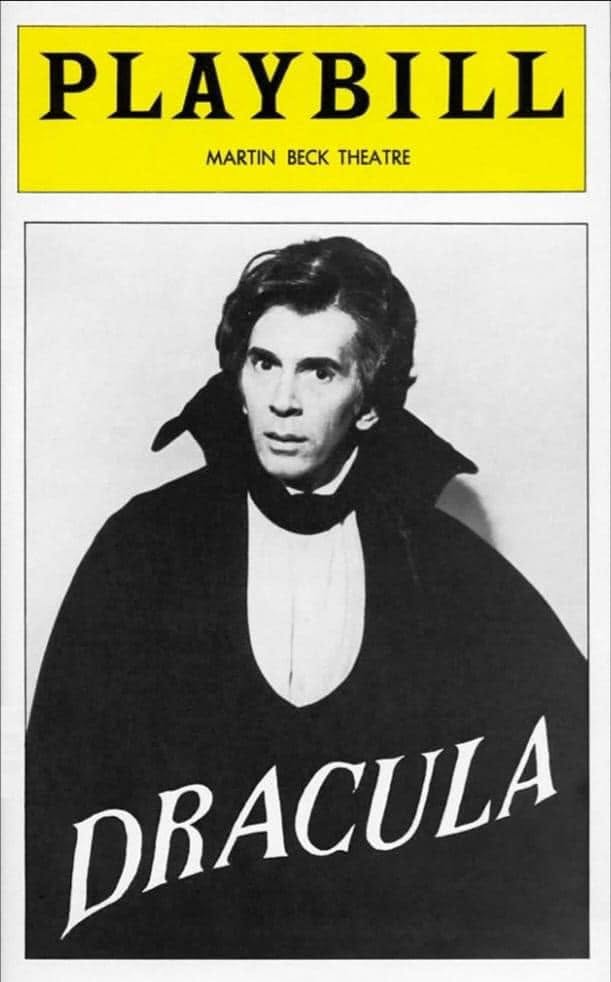
    “Dracula” fans might be interested to know that none other than Bela Lugosi struck demonic poses for Disney animators for several days as a model for the film’s climactic sequence. Ultimately, he would be replaced by Wilfred Jackson. Still, how cool is that?

    Leopold Stokowski conducts the Philadelphia Orchestra in his own arrangement of Modest Mussorgsky’s music on the soundtrack. Also, I would be remiss if I didn’t mention that that’s Princeton’s Westminster Choir, as “A Night on Bald Mountain” segues into Schubert’s “Ave Maria.”

    The master of ceremonies, Deems Taylor, states that the setting is Walpurgis Night (April 30). Deems Taylor is wrong! I’m not afraid to say so, since I’ve pretty much given up on ever receiving a Deems Taylor-Virgil Thomson Award for Radio Broadcast at this point, for as richly deserved as it might be.

    Chernobog could care less about Walpurgis Night. He’s kickin’ it up for St. John!

    Relive your childhood anxiety here. Click on “watch video clip” at the link.

    http://www.cornel1801.com/disney/Fantasia-1940/film8.html

  • Hungarian Night Music & Bela Lugosi

    Hungarian Night Music & Bela Lugosi

    “Children of the night – what beautiful music they make!” So says Hungarian superstar Bela Lugosi in his signature role of Dracula. The observation (spoken in response to the howling of wolves) might equally be applied, under less chilling circumstances, to three of Lugosi’s composer-compatriots, whose nocturnal meditations we’ll enjoy this Sunday night on “The Lost Chord.”

    Miklós Rózsa, himself a figure with cinematic associations, wrote nearly 100 film scores and won three Academy Awards – for “Spellbound” (1945), “A Double Life” (1947), and “Ben-Hur” (1959). He was also an active concert composer, writing concertos for Jascha Heifetz, Leonard Pennario, Gregor Piatigorsky, and Pinchas Zukerman.

    In the summer of 1962, Rózsa composed “Hungarian Nocturne” on a commission from Edward B. Benjamin, a New Orleans millionaire with a fondness for quiet music. However, in order to maintain interest, the composer realized, there was no way he could remain quiet for the entire span of the piece. So the nocturne eventually builds to a climax before returning to the serene mood of its opening. His patron wasn’t entirely pleased, though he did draw enjoyment from the quieter parts. The piece was an attempt by the composer to recapture the rare beauty of nights on his estate in rural Hungary.

    Though Antal Doráti would ultimately become world famous as a conductor, he studied composition at the Franz Liszt Academy under Zoltán Kodály and Leó Weiner. He also studied piano with Béla Bartók. A fine Bartok interpreter, Doráti would later conduct the world premiere of his teacher’s Viola Concerto.

    Doráti’s own music has always been regarded as something of a sidelight. His “Night Music,” from 1970, is a collection of evocative miniatures for flute and orchestra. We’ll hear it performed by Alison Young, now a host for Minnesota Public Radio.

    Unlike Rózsa and Doráti, who were both natives of Budapest, Zoltán Kodály was born in a small town in Southern Hungary. He claimed that his first exposure to folk music was through the singing of servant girls in his own home. He went on to become one of the most important figures in Hungarian musical life, as composer, ethnomusicologist, and educator.

    Kodály will be represented by his orchestral idyll, “Summer Evening,” music originally composed in 1906, then revised in 1929, to fulfill a commission from Arturo Toscanini. Kodály himself will conduct, on a gorgeous recording with the Budapest Philharmonic.

    That’s “Children of the Night” – Hungarian composers take wing – this Sunday night at 10:00 EDT, on WWFM – The Classical Network and wwfm.org.


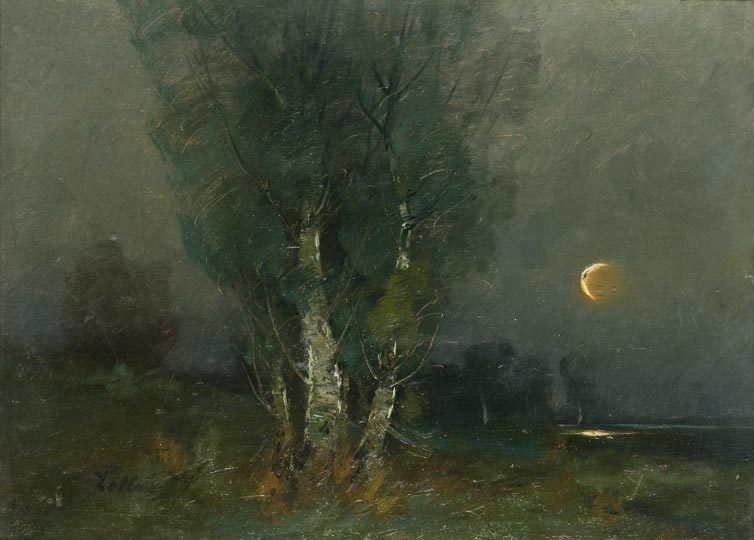
    IMAGE: “New Moon,” by Mihály Zeller

  • Bela Lugosi Halloween Tribute & Classic Trailers

    Bela Lugosi Halloween Tribute & Classic Trailers

    31 DAYS OF HALLOWEEN (DAY 20)

    For Bela Lugosi’s birthday, a tribute with music by Bernard Herrmann:

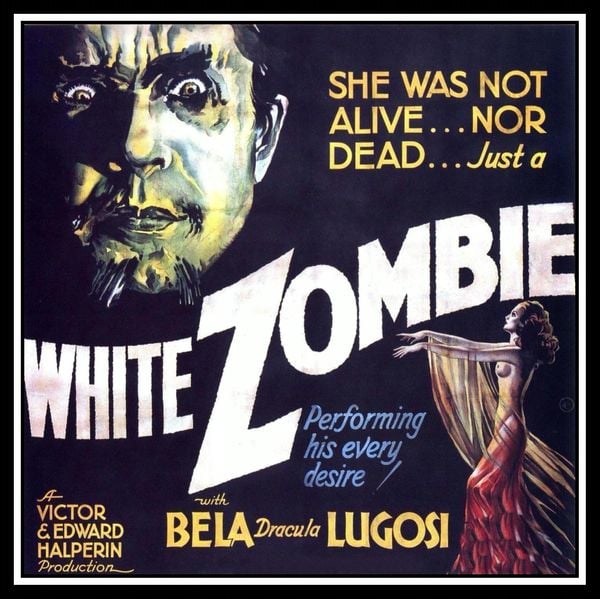
    The trailer for “White Zombie” – narrated by Criswell???

    The amazingly eccentric Criswell:

    https://en.wikipedia.org/wiki/The_Amazing_Criswell

    Trailer for “Mark of the Vampire”

  • Hungarian Night Music Bela Lugosi’s Requiem

    Hungarian Night Music Bela Lugosi’s Requiem

    “Children of the night – what beautiful music they make!” So says Hungarian superstar Bela Lugosi in his signature role of Dracula. The observation (spoken in response to the howling of wolves) might equally be applied, under less chilling circumstances, to three of Lugosi’s composer-compatriots, whose nocturnal meditations we’ll enjoy this Sunday night on “The Lost Chord.”

    Miklós Rózsa, himself a figure with cinematic associations, wrote nearly 100 film scores and won three Academy Awards – for “Spellbound” (1945), “A Double Life” (1947), and “Ben-Hur” (1959). He was also an active concert composer, writing concertos for Jascha Heifetz, Leonard Pennario, Gregor Piatigorsky, and Pinchas Zukerman.

    In the summer of 1962, Rózsa composed “Hungarian Nocturne” on a commission from Edward B. Benjamin, a New Orleans millionaire with a fondness for quiet music. However, in order to maintain interest, the composer realized, there was no way he could remain quiet for the entire span of the piece. So the nocturne eventually builds to a climax before returning to the serene mood of its opening. His patron wasn’t entirely pleased, though he did draw enjoyment from the quieter parts. The piece was an attempt by the composer to recapture the rare beauty of nights on his estate in rural Hungary.

    Though Antal Doráti would ultimately become world famous as a conductor, he studied composition at the Franz Liszt Academy under Zoltán Kodály and Leó Weiner. He also studied piano with Béla Bartók. A fine Bartok interpreter, Doráti would later conduct the world premiere of his teacher’s Viola Concerto.

    Doráti’s own music has always been regarded as something of a sidelight. His “Night Music,” from 1970, is a collection of evocative miniatures for flute and orchestra. We’ll hear it performed by Alison Young, now the host of American Public Media’s “SymphonyCast.”

    Unlike Rózsa and Doráti, who were both natives of Budapest, Zoltán Kodály was born in a small town in Southern Hungary. He claimed that his first exposure to folk music was through the singing of servant girls in his own home. He went on to become one of the most important figures in Hungarian musical life, as composer, ethnomusicologist, and educator.

    Kodály will be represented by his orchestral idyll, “Summer Evening,” music originally composed in 1906, then revised in 1929, to fulfill a commission from Arturo Toscanini. Kodály himself will conduct, on a gorgeous recording with the Budapest Philharmonic.

    That’s “Children of the Night” – Hungarian composers take wing – this Sunday night at 10:00 EDT, on WWFM – The Classical Network and wwfm.org.


    IMAGE: “New Moon,” by Mihály Zeller

  • Chernobog St John’s Eve Disney’s Fantasia

    Chernobog St John’s Eve Disney’s Fantasia

    When the sun sets this evening, June 23, you had better be prepared to deal with Chernobog! That’s right, it’s St. John’s Eve – the eve of the Feast Day of St. John the Baptist.

    “Dracula” fans might be interested to know that none other than Bela Lugosi struck demonic poses for Disney animators for several days as a model for the climactic sequence of “Fantasia.” He would ultimately be replaced by Wilfred Jackson. Still, how cool is that?

    Of course, Leopold Stokowski conducted the Philadelphia Orchestra on the film’s soundtrack. The master of ceremonies, Deems Taylor, sets the scene incorrectly, stating that it occurs on Walpurgis Night (April 30). Chernobog could care less about Walpurgis Night. He’s kickin’ it up for St. John!

    Watch the clip here, and relive your childhood anxiety:

    http://www.cornel1801.com/disney/Fantasia-1940/film8.html

Tag Cloud

Aaron Copland (92) Beethoven (95) Composer (114) Film Music (120) Film Score (143) Film Scores (255) Halloween (94) John Williams (185) KWAX (229) Leonard Bernstein (100) Marlboro Music Festival (125) Movie Music (135) Opera (198) Philadelphia Orchestra (88) Picture Perfect (174) Princeton Symphony Orchestra (106) Radio (87) Ralph Vaughan Williams (85) Ross Amico (244) Roy's Tie-Dye Sci-Fi Corner (290) The Classical Network (101) The Lost Chord (268) Vaughan Williams (103) WPRB (396) WWFM (881)

DON’T MISS A BEAT

Receive a weekly digest every Sunday at noon by signing up here


RECENT POSTS