Tag: Ben-Hur

  • Miklós Rózsa: Late Career Gems

    Miklós Rózsa: Late Career Gems

    Three-time Academy Award winner Miklós Rózsa left his stamp on dozens of classic films, including “The Thief of Bagdad” (1940), “The Jungle Book” (1942), “Double Indemnity” (1944), “The Lost Weekend” (1945), “Spellbound” (1945), “Quo Vadis?” (1951), “Lust for Life” (1956), “Ben-Hur” (1959), “King of Kings” (1961), and “El Cid” (1961).

    Less well-known is his later work. This week on “Picture Perfect,” we’ll sample selections from five of the composer’s last seven projects, including “Providence” (1977), “Fedora” (1978), “Last Embrace” (1979), “Eye of the Needle” (1981), and “Dead Men Don’t Wear Plaid” (1982).

    Born in Budapest in 1907, Rózsa studied in Leipzig. He cut his teeth in Paris, where one his friends and associates was Arthur Honegger. Following a concert that had featured works by both composers, Rózsa asked Honegger how it was that he was able to make ends meet. Honegger confided that he supplemented his income by writing for film. Rózsa went to see “Les Misérables,” which Honegger had scored, and became enthralled by the possibilities.

    It was following his move to London that he became associated with the Korda brothers and had his first opportunity to write for motion pictures. Rózsa immediately demonstrated what he could do in films like “Knight Without Armor” (1937) and “The Four Feathers” (1939). It was his involvement in the Kordas’ “The Thief of Bagdad” that brought him to Hollywood, since the project had to be moved mid-production as a result of the war. From there, the composer went on to work with many of the great directors, including Billy Wilder, Alfred Hitchcock, and William Wyler.

    In a career that encompassed nearly 100 scores, Rózsa was recognized with Academy Awards for his contributions to Hitchcock’s “Spellbound,” the George Cukor thriller “A Double Life” (1947, starring Ronald Colman as an unhinged Shakespearean actor), and of course “Ben-Hur” – all the while keeping one foot in the world of concert music. He wrote important works for Jascha Heiftez, Gregor Piatigorsky, János Starker, Leonard Pennario and Pinchas Zukerman. His “Theme, Variations and Finale” featured in Leonard Bernstein’s legendary debut with the New York Philharmonic.

    Rózsa was a towering figure of Hollywood’s golden age, but he lived through some pretty lean times, as emphasis in the industry began to shift away from a classic orchestral sound to what was perceived as a more lucrative, youth-oriented approach, reliant on popular trends. Fortunately, with the extraordinary success of John Williams, in films like “Jaws,” “Star Wars,” and “Close Encounters of the Third Kind,” old school composers like Rózsa were given a new lease on life, and he was able to round out his career with a series of beautiful, wholly characteristic scores.

    I hope you’ll join me in examining “Late-Career Rózsa,” on “Picture Perfect,” music for the movies, this Saturday evening at 6:00 EST, on WWFM – The Classical Network and wwfm.org.


    Rózsa talks film music (and Bernard Herrmann) with André Previn and John Williams

    From the same broadcast (“Previn and the Pittsburgh: The Music That Made the Movies,” PBS, 1978), Rózsa conducts “Ben-Hur”


    PHOTO: Rózsa (right), with whippersnappers Williams and Previn
  • WWFM Christmas Schedule Ben-Hur Music

    WWFM Christmas Schedule Ben-Hur Music

    “Picture Perfect” will be preempted this evening as WWFM – The Classical Network continues with its roster of special Christmas-oriented programs. To my knowledge, PP will return next Saturday with more film music at its regular slot of 6 p.m. EST.

    “The Lost Chord” will be heard tomorrow night, as always. However, it will be broadcast ONE HOUR LATER THAN USUAL, Christmas Day at 11 p.m. EST.

    For a complete schedule of this weekend’s programs, visit http://www.wwfm.org.

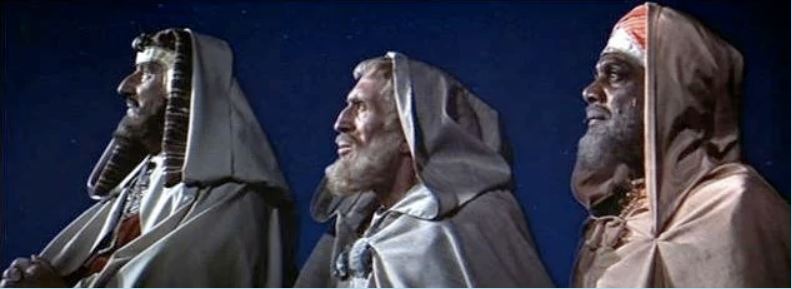
    In the meantime, here’s a film music tidbit to tide you over, in the form of a piano transcription of the Christmas segment that serves as a prologue to “Ben-Hur” (1959), still one of my favorite movies, with a knockout score by Miklós Rózsa.

    Hats off to Brett Mitchell, and Merry Christmas!

  • Biblical Epics Adapted from Novels on Picture Perfect

    Biblical Epics Adapted from Novels on Picture Perfect

    This week on “Picture Perfect” it’s the second installment in a mini-festival of very big films, as we present another hour of Biblical epics, though this time with a twist. Rather than go directly to the Gospels, these are all films adapted from bestselling historical novels.

    Lloyd C. Douglas’ “The Robe” was given the Hollywood treatment in 1953. Richard Burton plays Marcellus, the Roman tribune who oversees the crucifixion and wins Christ’s robe in a game of dice. Victor Mature (last week’s Samson) is his well-oiled slave, Demetrius, and Jean Simmons, his childhood sweetheart, now betrothed to Caligula (a scene-stealing Jay Robinson).

    “The Robe” holds the distinction of being the first film released in CinemaScope. Allegedly, it is also the only Biblical epic ever to yield a sequel (“Demetrius and the Gladiators”). The score, by Alfred Newman, has always been popular.

    Thomas B. Costain’s “The Silver Chalice” was brought to the big screen in 1954. The film introduced Paul Newman in the lead, as a lowborn artisan commissioned to fashion a decorative casing for the cup from which Christ drank at the Last Supper (i.e. the Holy Grail).

    The film is interesting in that it features quasi-abstract sets by stage designer Rolfe Gerard and a stunning score by Franz Waxman, which incorporates the “Dresden Amen,” also used in Wagner’s “Parsifal.” However, Newman was mortified by his performance and famously took out an ad in Variety, essentially to apologize.

    “Barabbas” is worlds away from the usual Hollywood epic. Based on the Nobel Prize-winning novel of Pär Lagerkvist, the film is a ruminative slog through the guilt-ridden psyche of the title character, played by Anthony Quinn. Barabbas is the thief who is pardoned to make way for the crucifixion of Christ. He spends the rest of his life searching for meaning in a meaningless world.

    In a quixotic attempt at verisimilitude, director Richard Fleischer shot the crucifixion scene during an actual solar eclipse. Mario Nascimbene (who composed the music for last week’s “Solomon and Sheba”) wrote the score.

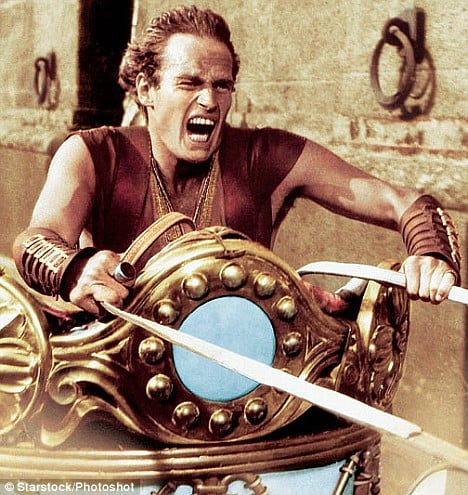
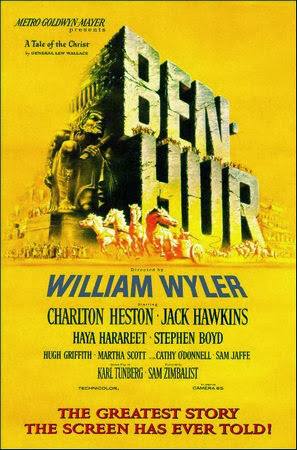
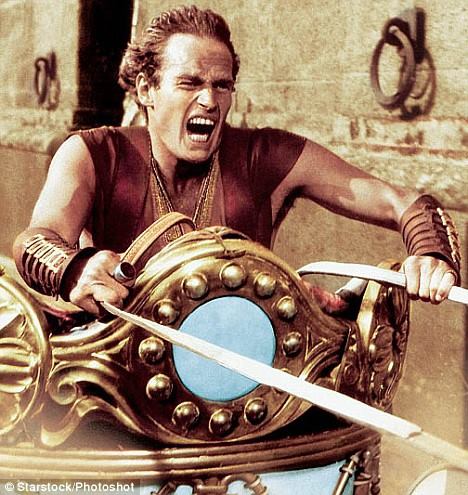
    Finally, we’ll wrap things up with music from one of the all-time Oscar champs, “Ben-Hur,” from 1959. Based on the 1880 novel of General Lew Wallace, “Ben-Hur” was honored with 11 Academy Awards, including those for Best Picture, Best Director (William Wyler) and Best Actor (Charlton Heston).

    The highlight of the film, of course, is the jaw-dropping chariot race, but there is a grandeur to the whole that makes it difficult to look away. Miklós Rózsa wrote the magnificent score, arguably the best of any film of its kind.

    The “Ben-Hur” Oscar record has been tied twice – in 1998, by “Titanic,” and in 2004, by “The Lord of the Rings: The Return of the King” – but this is before computer generated imagery, folks. They just don’t make ‘em like this anymore.

    The New Testament is all-new, by way of adaptations of historical novels, on “Picture Perfect,” music for the movies, this Saturday evening at 6:00 EDT, on WWFM – The Classical Network and wwfm.org.

  • Miklós Rózsa A Golden Age Film Score Genius

    Miklós Rózsa A Golden Age Film Score Genius

    Happy birthday, Miklós Rózsa (1907-1995)!

    Can you spare ten minutes to soak up some Golden Age greatness? Check out this wonderful medley of some of his classic film scores.

    I had a blast picking out the films without looking at the images. I own recordings of all of them, of course. (What? No “Lust for Life???”)

    Rózsa conducts the Pittsburgh Symphony in a suite from “Ben-Hur”:

    Jascha Heifetz plays the Violin Concerto (subsequently adapted for use in “The Private Life of Sherlock Holmes”):

    They don’t make ‘em like Miklós anymore.

  • Biblical Epics Adapted from Novels on Picture Perfect

    Biblical Epics Adapted from Novels on Picture Perfect

    This week on “Picture Perfect” it’s the second installment in a mini-festival of very big films, as we present another hour of Biblical epics, though this time with a twist. Rather than go directly to the Gospels, these are all films adapted from bestselling historical novels.

    Lloyd C. Douglas’ “The Robe” was given the Hollywood treatment in 1953. Richard Burton plays Marcellus, the Roman tribune who oversees the crucifixion and wins Christ’s robe in a game of dice. Victor Mature (last week’s Samson) is his well-oiled slave, Demetrius, and Jean Simmons, his childhood sweetheart, now betrothed to Caligula (a scene-stealing Jay Robinson).

    “The Robe” holds the distinction of being the first film released in CinemaScope. Allegedly, it is also the only Biblical epic ever to yield a sequel (“Demetrius and the Gladiators”). The score, by Alfred Newman, has always been popular.

    Thomas B. Costain’s “The Silver Chalice” was brought to the big screen in 1954. The film introduced Paul Newman in the lead, as a lowborn artisan commissioned to fashion a decorative casing for the cup from which Christ drank at the Last Supper (i.e. the Holy Grail).

    The film is interesting in that it features quasi-abstract sets by stage designer Rolfe Gerard and a stunning score by Franz Waxman, which incorporates the “Dresden Amen,” also used in Wagner’s “Parsifal.” However, Newman was mortified by his performance and famously took out an ad in Variety, essentially to apologize.

    “Barabbas” is worlds away from the usual Hollywood epic. Based on the Nobel Prize-winning novel of Pär Lagerkvist, the film is a ruminative slog through the guilt-ridden psyche of the title character, played by Anthony Quinn. Barabbas is the thief who is pardoned to make way for the crucifixion of Christ. He spends the rest of his life searching for meaning in a meaningless world.

    In a quixotic attempt at verisimilitude, director Richard Fleischer shot the crucifixion scene during an actual solar eclipse. Mario Nascimbene (who composed the music for last week’s “Solomon and Sheba”) wrote the score.

    Finally, we’ll wrap things up with music from one of the all-time Oscar champs, “Ben-Hur,” from 1959. Based on the 1880 novel of General Lew Wallace, “Ben-Hur” was honored with 11 Academy Awards, including those for Best Picture, Best Director (William Wyler) and Best Actor (Charlton Heston).

    The highlight of the film, of course, is the amazing chariot race, but there is a grandeur to the whole which makes it difficult to look away. Miklós Rózsa wrote the magnificent score, arguably the best of any film of its kind.

    The “Ben-Hur” Oscar record has been tied twice – in 1998, by “Titanic,” and in 2004, by “The Lord of the Rings: The Return of the King” – but this is before computer generated imagery, folks. They just don’t make ‘em like this anymore.

    The New Testament is all-new, by way of adaptations from historical novels, this Friday evening at 6:00 EDT, on WWFM – The Classical Network and wwfm.org.

Tag Cloud

Aaron Copland (92) Beethoven (95) Composer (114) Film Music (120) Film Score (143) Film Scores (255) Halloween (94) John Williams (185) KWAX (229) Leonard Bernstein (100) Marlboro Music Festival (125) Movie Music (135) Opera (198) Philadelphia Orchestra (88) Picture Perfect (174) Princeton Symphony Orchestra (106) Radio (87) Ralph Vaughan Williams (85) Ross Amico (244) Roy's Tie-Dye Sci-Fi Corner (290) The Classical Network (101) The Lost Chord (268) Vaughan Williams (103) WPRB (396) WWFM (881)

DON’T MISS A BEAT

Receive a weekly digest every Sunday at noon by signing up here


RECENT POSTS