Tag: Brazilian Music

  • Marlos Nobre Dies Brazilian Music Mourns

    Marlos Nobre Dies Brazilian Music Mourns

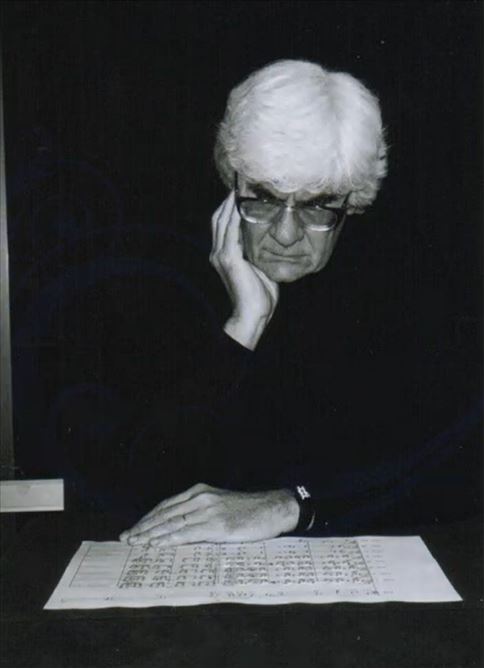
    The Brazilian composer Marlos Nobre died yesterday at the age of 85. This Cello Concerto was given its world premiere in 2019. The soloist is Antonio Meneses, who died of a brain tumor in August, two months after sharing his diagnosis and announcing his retirement. It’s been a hard year for Brazilian music.

    Meneses performs another work written for him, Nobre’s “Cantoria”

    Without Meneses, Nobre’s Percussion Concerto

    Nobre plays an improvisation on Antonio Carlos Jobim’s “Dindi”

  • Heitor Villa-Lobos: Brazil’s Musical Genius

    Heitor Villa-Lobos: Brazil’s Musical Genius

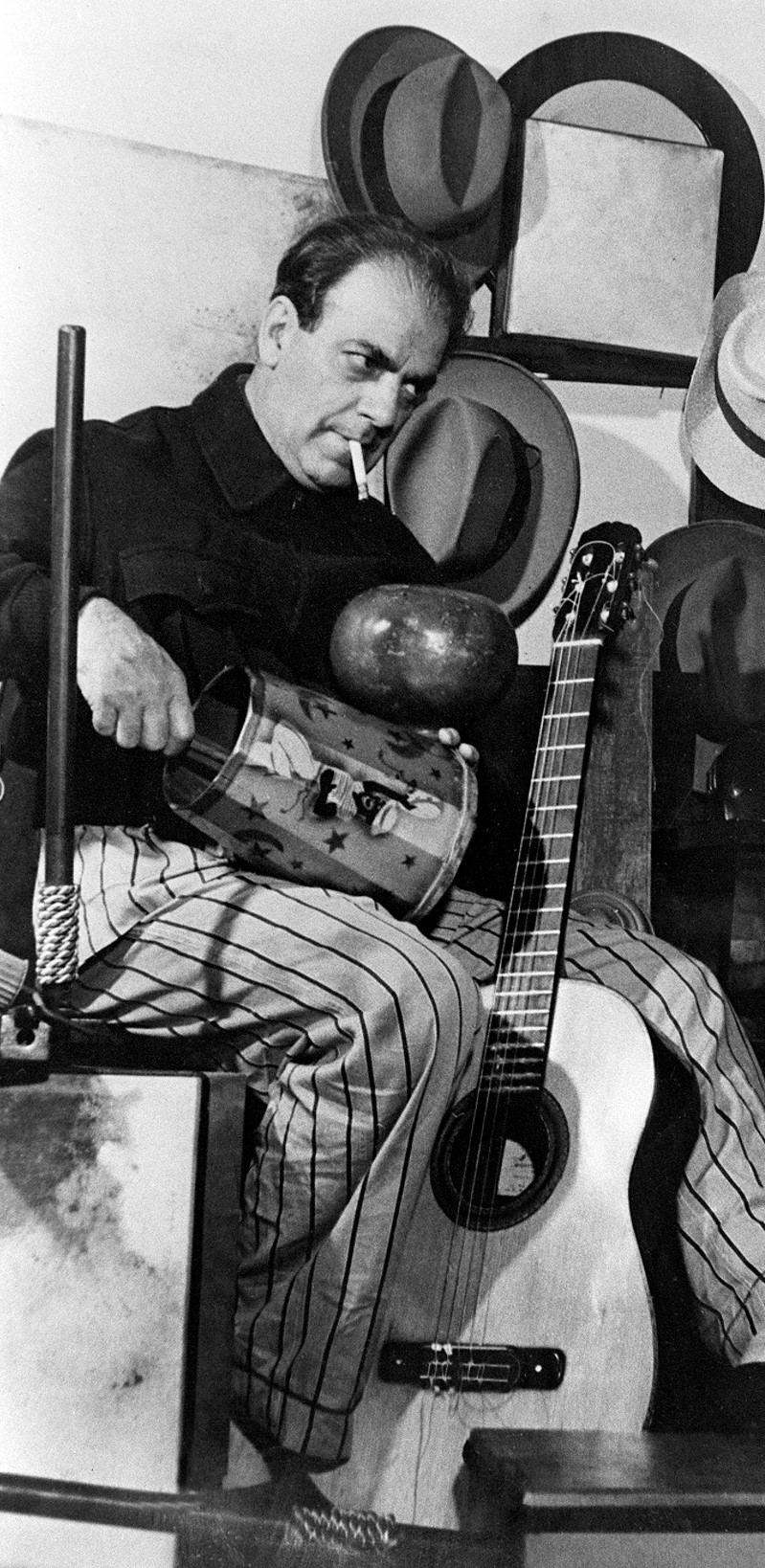
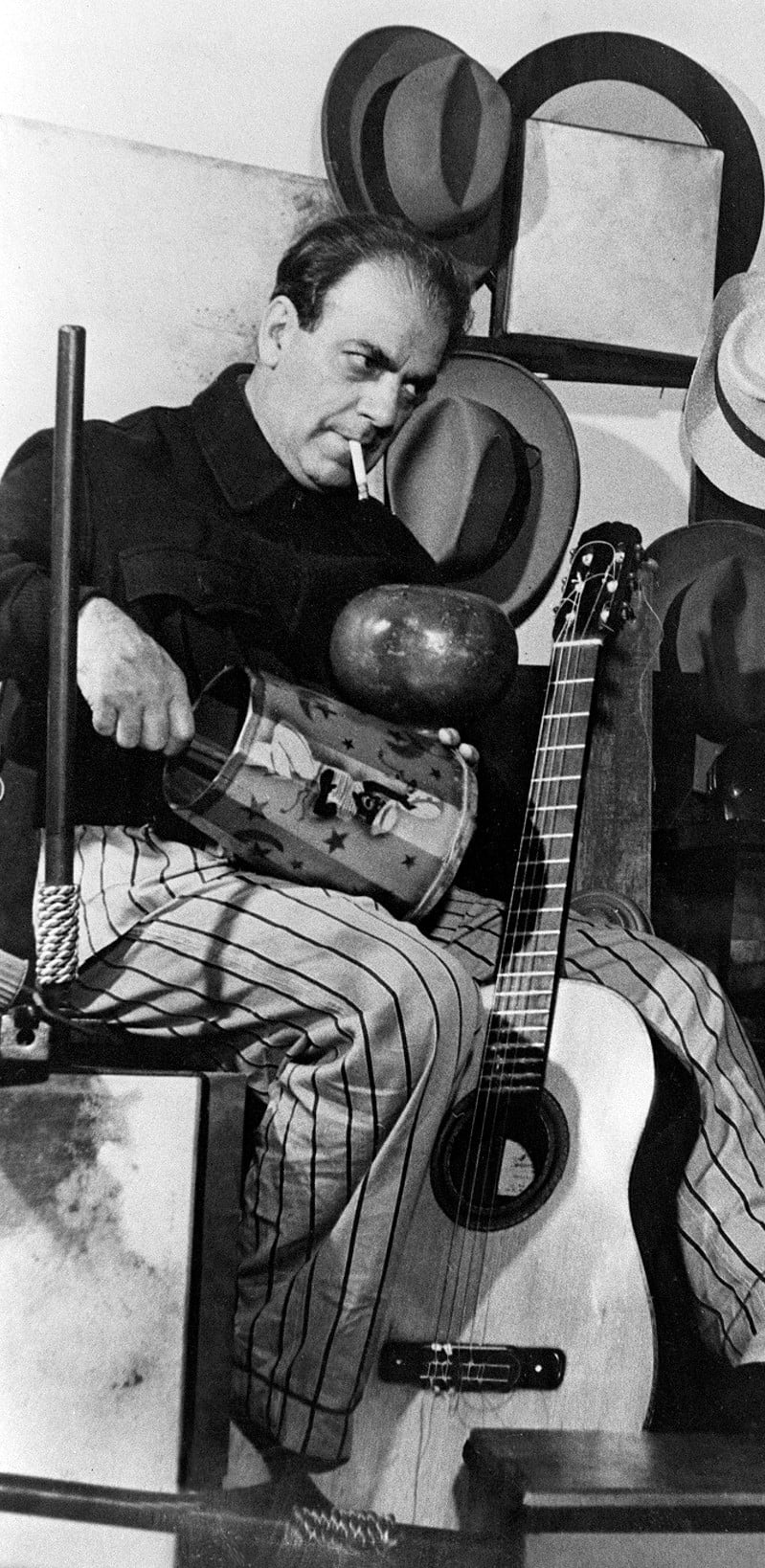
    On the birthday of Heitor Villa-Lobos, here’s a documentary about Brazil’s most celebrated composer. Of course, most of it’s in Portuguese, but there are plenty of candid stills and footage and examples of his music, and Arthur Rubinstein speaks French.

    A few bonuses:

    Villa-Lobos plays Villa-Lobos

    Andrés Segovia (at 93)

    Julian Bream

    Arthur Rubinstein

    Nelson Freire

    Leonard Bernstein talks Villa-Lobos

    Conducting Villa-Lobos’ greatest hit, the Bachianas Brasileiras No. 5

    Joan Baez gives it a whirl

    The classic recording with Victoria de los Angeles and the composer conducting

    Bernstein conducts “The Little Train of Caipira,” from Bachianas Brasileiras No. 2

    The José Limón Dance Company performs “The Emperor Jones”

    Folkloric rainforest piece, “Uirapuru,” named for a Brazilian bird

    Feliz Aniversário, Heitor Villa-Lobos!

  • Villa-Lobos’ Rainforest Sound on KWAX

    Villa-Lobos’ Rainforest Sound on KWAX

    We’re having a heat waaaave… a tropical heat wave…

    What better conditions than these in which to enjoy some of the rainforest inspirations of Heitor Villa-Lobos?

    Happily, there will be no vaccinations or machetes required for this particular expedition, when you join me for “The Lost Chord” on KWAX.

    Heitor Villa-Lobos held a unique position in Brazilian music, blazing many trails, both figuratively and literally, to create a distinctive national sound, materials for which he found in the streets and jungles of his native land.

    He turned his back on European models, learning much of his craft through osmosis. Through experiment and exploration, he arrived at his own unique harmonic language.

    Around 1905, he began physically to explore the Brazilian rainforest, where he came into contact with and absorbed the traditions of its indigenous cultures. The expeditions continued for the better part of a decade. He was fond of relating a story about how he once escaped from a pack of hungry cannibals.

    He used this field work to form the basis of two works he wrote in 1916, which draw from Brazilian legends and so-called primitive folk material. Both have been variously described as ballets and symphonic poems: “Amazonas,” about an Indian maiden’s encounter with a metaphorical monster, and its companion piece of sorts, “Uirapuru,” about a legendary bird that sings its song in an enchanted forest. We’ll have a chance to hear both.

    In between, we’ll also listen to the “Danses Africaines” (or “Characteristic African Dances,” so-called), based on tribal music of the Caripunas Indians, in its original version for piano, from 1914-16, AND in its later orchestration, from 1953. The piano set was condemned by uptight critics as “degenerate” at its first performance in 1922.

    These formative “jungle pieces” all date from the same era of the composer’s development. Though their first performances took place over many years, collectively their exotic allure brought Villa-Lobos to international celebrity.

    Villas-Lobos once commented, “I don’t use folklore, I am folklore.” He remains Brazil’s most famous composer. For that matter, all of Latin America’s.

    It’s not much of a stretch to imagine ourselves in the forests of the Amazon this week, as we travel off the beaten path with Heitor Villa-Lobos. Join me for “A Night in the Tropics” on “The Lost Chord,” now in syndication on KWAX, the radio station of the University of Oregon!


    Keep in mind, KWAX is on the West Coast, so there’s a three-hour difference for the Trenton-Princeton area. Here are the respective air-times of my recorded shows (with East Coast conversions in parentheses):

    PICTURE PERFECT, the movie music show – Friday on KWAX at 5:00 PACIFIC TIME (8:00 PM EDT)

    THE LOST CHORD, unusual and neglected rep – Saturday on KWAX at 4:00 PACIFIC TIME (7:00 PM EDT)

    Stream them here!

    https://kwax.uoregon.edu/
  • Villa-Lobos Stravinsky Feud Brazilian Music

    Villa-Lobos Stravinsky Feud Brazilian Music

    A day after sharing Igor Stravinsky’s observation that Vivaldi composed the same concerto 500 times comes this barb about his great Brazilian contemporary, Heitor Villa-Lobos: “Why is it whenever I hear a piece of music I don’t like, it’s always by Villa-Lobos?”

    MEE-OW!

    To further agitate the catty Stravinsky, here’s the symphonic poem “Uirapuru,” named for a Brazilian bird. In short, it’s another one of Villa-Lobos’ folkloric rainforest pieces.

    Happy birthday, HVL!


    Villa-Lobos and friend

  • Brazilian Music & Shostakovich Leningrad Symphony

    Brazilian Music & Shostakovich Leningrad Symphony

    Boa tarde!

    As we have for the past several weekdays, we’ll be interspersing into our playlist a few works by Brazilian composers and on Brazilian themes, the better to satisfy your musical curiosity, since television coverage of the Olympic Games in Rio cleaves pretty closely to the arenas.

    We’ll also observe the birthday anniversary of Reynaldo Hahn, a figure whose origins were in Venezuela, though he spent much of his creative life in Paris, where he became an exquisite composer of art songs (and the longtime companion of Marcel Proust). Sure, his songs turn up in recitals from time to time, and once in a while you’ll hear his delightful work for winds, harp and piano, “The Ball of Beatrice d’Este,” but we’ll actually get to enjoy his Piano Concerto.

    It’s also the anniversary of the first performance in Leningrad, in 1942, of Shostakovich’s Symphony No. 7, the so-called “Leningrad Symphony,” a work that so embodied the plight of a city under foreign siege that its citizens were both moved to tears and inspired to battle on. The Soviets blared the performance over loud speakers pointed away from the city and toward the German lines, knocking out the Nazi artillery beforehand to ensure the enemy could absorb the defiant work in all its bombastic glory.

    I hope you’ll join me this afternoon on WWFM – The Classical Network and at wwfm.org. I’ll be here in all my bombastic glory until 4:00 EDT.

Tag Cloud

Aaron Copland (92) Beethoven (95) Composer (114) Film Music (119) Film Score (143) Film Scores (255) Halloween (94) John Williams (185) KWAX (229) Leonard Bernstein (99) Marlboro Music Festival (125) Movie Music (134) Opera (198) Philadelphia Orchestra (86) Picture Perfect (174) Princeton Symphony Orchestra (106) Radio (87) Ralph Vaughan Williams (85) Ross Amico (244) Roy's Tie-Dye Sci-Fi Corner (290) The Classical Network (101) The Lost Chord (268) Vaughan Williams (102) WPRB (396) WWFM (881)

DON’T MISS A BEAT

Receive a weekly digest every Sunday at noon by signing up here


RECENT POSTS