VALENTINE’S DAY READING
2022: Charlotte Brontë, “Jane Eyre”
2023: Emily Brontë, “Wuthering Heights”
2024: Anne Brontë, “The Tenant of Wildfell Hall”
2025…
VALENTINE’S DAY READING
2022: Charlotte Brontë, “Jane Eyre”
2023: Emily Brontë, “Wuthering Heights”
2024: Anne Brontë, “The Tenant of Wildfell Hall”
2025…

On Sunday, I finally completed Anne Brontë’s ‘’The Tenant of Wildfell Hall” – all blessed 489 pages of it – successfully wrapping up my third consecutive, tormented year with the Brontës for Valentine’s Day.
First of all, let me say there doesn’t seem to have been a weak link between the Brontë sisters, in regard to their respective talents as writers. Indeed, since the sisters published under pseudonyms (Currer Bell for Charlotte, Ellis Bell for Emily, and Acton Bell for Anne), it was often speculated, early on, that the three were the same person. So perhaps there’s a powerful argument to be made for growing up in comparative isolation and having to make your own entertainment, with only your siblings, the moors, a good library, and a single, working father with progressive ideas about freedom and a sound education to sustain you. Being the offspring of a minister also ensured a fluency in recalled bible passages, which are alluded to frequently throughout the Brontës’ writings, not least in “Wildfell Hall.”
For me, the great weakness of Anne’s novel (her second, after “Agnes Grey”) is in its structure. So compelling is the book’s miserable second act, that it makes the framing device, especially the ending, seem almost precious by comparison. Loosely epistolary in nature (employing a narrative device of telling the story through letters and journal entries), the novel conveys its information to the reader through two of its central characters. And one of them, the panting George Markham, is as problematic in his way as the rakish Arthur Huntingdon. Is he really any more a fulfilling match for Helen than her husband (abusive S.O.B. that he is)?
To be fair, in the passages narrated by Markham, the character’s obsessive, frequently cloying, quasi-adolescent protestations of love for Helen are understandably central to his thoughts; but how often does he actually think about HER? Whereas Helen, with all her suffering, comes across as someone of much greater substance. She certainly displays more resilience in a society where the rules are stacked against women, whose fortunes, in all senses, are basically tied up with their husbands or fathers. If a woman winds up in a bad marriage, she’s stuck, and Helen marries a monster.
But face it, that’s why we love the Brontës, for the tempest-tossed heroines who can’t seem to resist the storm. Unfortunately, Arthur possesses neither the wounded nobility of Rochester nor the demonic fury of Heathcliff. Nor, sadly, does George. What compels is Helen’s degradation in an isolated, loveless, often empty mansion. I suppose it’s a metaphor to some extent for her unrequited love for a scoundrel who is in no way worthy of it.
The first act reads almost like a Jane Austen novel, with all the gossip and social maneuverings of a rural community of farmers, clergymen, and gentlefolk. The third is a pat, precious denouement. But it is in the long central portion, which doesn’t begin until about 150 pages in, in which Helen Huntingdon tells the tale of her harrowing marriage to the scapegrace Arthur (via her journal), that “Wildfell Hall” becomes so horribly compelling, as the narrator details the mounting degradation and hopelessness of her union.
This is my fourth Bronte novel, actually, having read Charlotte’s “Shirley” a little over 30 years ago, when taking a graduate course on the Victorian novel. In her way, Helen has been received as a cutting-edge feminist, within the strictures of the Victorian social order, as would be Charlotte’s heroine. (Formerly the name Shirley had had masculine associations; that changed largely with the success of Charlotte’s novel, which was published in 1849, the year after “Wildfell Hall.”) But Helen’s options are sadly few. The extent of her power is that she can close a door against her husband and harbor plans, with few resources, to escape in the night. Talk about you’ve come a long way, baby!
She’s more resourceful than that, actually, as she also figures out a way to earn her own meager living – for as unlikely a means of financial sustenance as it is.
Helen’s got courage and resolve to burn, but the depths of her strength are truly revealed in a decision she makes in the second half of the book that illustrates her extraordinary selflessness, forgiveness, and grace, especially after having been treated so poorly, and under conditions in which she essentially risks everything.
I hate to use such a trendy label as “toxic masculinity,” but all the “gentlemen” seem to do in this book is hunt, gamble, carouse, and intimidate. At one point, even Markham, the “nice” alternative to Arthur, jealously brains a rival (who later turns out to be more than he seems).
Am I glad I read it? Sure! I’d probably rank it below Emily’s “Wuthering Heights,” if only because of the insane twistedness of the latter’s characters and narrative. Anne certainly wants for nothing, in terms of writing ability and insight, but the character of Arthur never achieves the magnetic Byronism of Heathcliff – not that that was necessarily her aim. That said, for me, Charlotte’s “Jane Eyre” is still the champ, wholly satisfying as the quintessential gothic romance.
Of the three, “Wildfell Hall” is the most unflinching in its realism. The sisters had plenty of first-hand experience with the trials and tribulations of debauchery, through the dissipation of their brother, Branwell. What’s remarkable is that Anne so well understood the wider social and romantic intricacies of the world beyond the parsonage. If the Brontës are anything to go by, finding employment as a governess must be very good training for a writer.
Interestingly, Charlotte was not a big fan of “Wildfell Hall.” The siblings all died early: Emily in 1848 at 30, Anne in 1849 at 29, and Charlotte in 1855 at 38. Charlotte survived the longest, and she was not timid in her criticism of “Wildfell Hall.” She even went so far as to suppress its republication. When the book did appear again, the text was abridged and mutilated, and like the character of Helen herself, was subjected to even further indignities over the years. So do be cautious, if you’re shopping for a copy, even if it’s advertised as “complete and unabridged!”
According to an afternote in my edition, a clothbound hardcover from Penguin Classics, the author’s personal copy of the first edition, with her handwritten notes and annotations, is housed at Princeton University Library (although there is some question as to whether or not the marginalia is in fact hers).
Classic Ross Amico, reading the world’s classics, so you don’t have to!
Now it’s well past time for me to sit down with a pad of paper and a biography of one of the key, though largely unsung, American instrumentalists of the 20th century, for an upcoming project I’m supposed to participate in, in earnest, beginning next week…
I read Charlotte Brontë’s “Shirley” as part of a Victorian novel class in college, but it was only last year that I finally got around to picking up “Jane Eyre,” around Valentine’s Day. And I loved it! So I determined that this year I would do the same with her sister Emily’s “Wuthering Heights.”
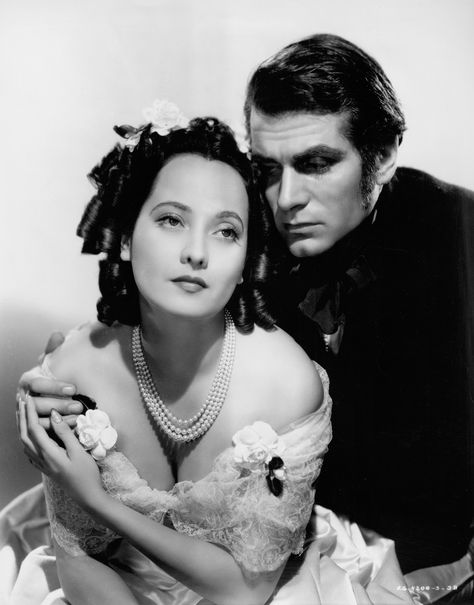
Unfortunately, the classic William Wyler film, with Merle Oberon and Laurence Olivier, is too deeply embedded in my brain. I’m about a third of the way through, and I find I’m not transported, as I was by Charlotte’s “Jane,” even having also seen multiple film versions of the latter. I understand that the Wyler adaptation only covers the first part of the novel, so perhaps I’ll find it more absorbing once I enter unfamiliar territory.
In any case, there’s no love like star-crossed love. February will be rather overheated this week on “Picture Perfect,” as we revisit music from movies inspired by the Brontës. As may be gleaned from my comments above, the Brontë sisters were responsible for some of the most tortured romances in English literature.
We’ll begin with one of the all-time classics, Wyler’s beloved adaptation of Emily Brontë’s “Wuthering Heights.” The 1939 film stars Oberon as Cathy, Olivier as Heathcliff, and David Niven as Edgar, “that milksop with buckles on his shoes.” Alfred Newman’s score is one of the most moving of his storied career.
Then we’ll turn to Charlotte Brontë’s “Jane Eyre.” The 1943 adaptation features Joan Fontaine as Jane and Orson Welles as Rochester. The music is by Bernard Herrmann, who had written scores for Welles as a director, both for “Citizen Kane” and “The Magnificent Andersons,” as well as for his Mercury Theatre radio shows. Welles involvement in “Jane Eyre,” however, was strictly as an actor.
A 1971 television movie of “Jane Eyre” stars Susannah York as Jane and George C. Scott as Rochester. The music, in this instance, is by an up-and-coming John Williams, still a few years away from becoming a household name, for his work on “Jaws,” “Star Wars,” “Raiders of the Lost Ark,” and “E.T. The Extra-Terrestrial.” Williams has said that his score for “Jane Eyre” is one of his personal favorites.
We’ll conclude with a piece of biographical fiction about the Brontë siblings, a 1943 Warner Brothers production called “Devotion.” The film stars Ida Lupino as Emily, Olivia de Havilland as Charlotte, Nancy Coleman as Anne, and Arthur Kennedy as their dissolute brother Branwell. It also features Sidney Greenstreet as William Makepeace Thackeray, Paul Henreid as an Irish priest, and – well, you get the idea. The casting, at times, strains credulity.
De Havilland had originally been slated to play Emily, and her real-life sister, Joan Fontaine, was to play Charlotte. When an offer came through for Fontaine to play Charlotte’s most famous creation, Jane Eyre – opposite Orson Welles’ Rochester, over at 20th Century Fox – De Havilland pivoted into the role vacated by her sister. In the end, “Jane Eyre” wound up being the better film.
By far the most attractive element of “Devotion” is the rich score provided by Erich Wolfgang Korngold. Korngold himself became so enamored with one of its themes that he resurrected it for use in the first movement of his Violin Concerto.
I hope you’ll join me for a Yorkshire pudding of passion, torment, and cruelty. Sigh along to tortured romances of the Brontës for Valentine’s Day, on “Picture Perfect,” music for the movies, this Saturday evening at 6:00 EST, on WWFM – The Classical Network and wwfm.org.
Words on the printed page captivate us so completely that it’s natural to assume that the lives of writers must be rich, full of incident, and very dramatic indeed. Surely that is sometimes the case. Who among us could keep up with a Byron or a Pushkin or a Poe?
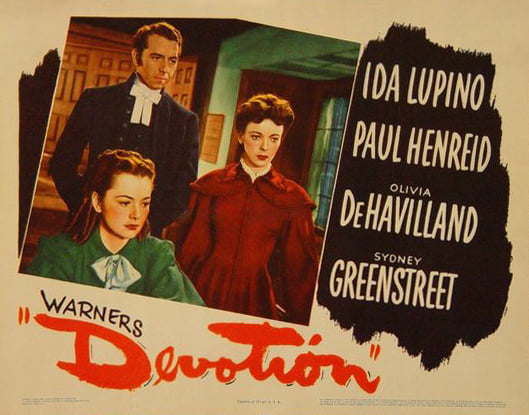
Yet, with even the most outlandish writers, Hollywood for some reason often feels the need to fabricate. How else to explain “Devotion” (1943), Warner Brothers’ salute to the Brontës? Then again, the temptation must be strong to characterize the sisters who penned “Jane Eyre” and “Wuthering Heights” as tortured Romantics.
Ida Lupino plays Emily, the creator of Cathy and Heathcliff, and Olivia de Havilland, Charlotte, who conceived Jane and Rochester. Nancy Coleman is their sister Anne, who wrote “The Tenant of Wildfell Hall,” and Arthur Kennedy, their dissolute brother Branwell. The film also features Sidney Greenstreet as William Makepeace Thackeray, Paul Henreid as an Irish priest, and – well, you get the idea. The casting, at times, strains credulity.
However, the music by Erich Wolfgang Korngold is up to the composer’s usual high standard. Korngold himself became so enamored of one of its themes that he recycled it for use in the first movement of his Violin Concerto. This week on “Picture Perfect,” we’ll have chance to sample some of it.
We’ll also hear selections from movies about Iris Murdoch (“Iris,” with music by James Horner), the Bard of Avon (“Shakespeare in Love,” with an Academy Award-winning score by Stephen Warbeck), and Samuel Clemens (“The Adventures of Mark Twain,” by Max Steiner).
Writers are such characters, especially when they’re depicted on the big screen. Everything’s writ large, on “Picture Perfect,” music for the movies, this Saturday evening at 6:00 EDT, on WWFM – The Classical Network and wwfm.org.
There’s no love like star-crossed love.
This week on “Picture Perfect,” February gets overheated with music from movies inspired by the Brontës. Collectively, the Brontë sisters were responsible for some of the most tortured romances in English literature.
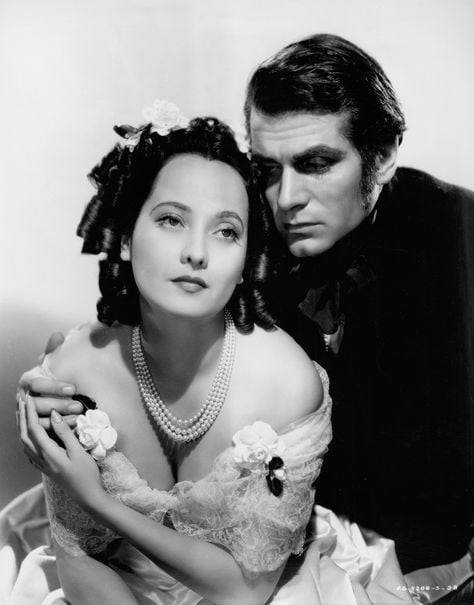
We’ll begin with one of the all-time classics, a beloved adaptation of Emily Brontë’s “Wuthering Heights.” The 1939 film features Merle Oberon as Cathy, Laurence Olivier as Heathcliff, and David Niven as Edgar, “that milksop with buckles on his shoes.” Alfred Newman’s score is one of the most moving of his storied career.
Then we’ll turn to Charlotte Brontë’s “Jane Eyre.” The 1943 adaptation stars Joan Fontaine as Jane and Orson Welles as Rochester. The music is by Bernard Herrmann, who had written scores for Welles as a director, both for “Citizen Kane” and “The Magnificent Andersons,” as well as for his Mercury Theatre radio shows. Welles involvement in “Jane Eyre,” however, was strictly as an actor.
A 1971 television movie of “Jane Eyre” stars Susannah York as Jane and George C. Scott as Rochester. The music, in this case, is by an up-and-coming John Williams, who was still a few years away from becoming a household name, for his work on “Jaws,” “Star Wars,” “Raiders of the Lost Ark,” and “E.T. The Extra-Terrestrial.” Williams has said that his score for “Jane Eyre” is one of his personal favorites.
We’ll conclude with a piece of biographical fiction about the Brontës, a 1943 Warner Brothers production called “Devotion.” The film stars Ida Lupino as Emily, Olivia de Havilland as Charlotte, Nancy Coleman as Anne, and Arthur Kennedy as their dissolute brother Branwell. It also features Sidney Greenstreet as William Makepeace Thackeray, Paul Henreid as an Irish priest, and – well, you get the idea. The casting, at times, strains credibility.
De Havilland had originally been slated to play Emily, and her real-life sister, Joan Fontaine, was to play Charlotte. When an offer came through for Fontaine to play Charlotte’s most famous creation, Jane Eyre – opposite Orson Welles’ Rochester, over at 20th Century Fox – De Havilland pivoted into the role vacated by her sister. In the end, “Jane Eyre” wound up being the better film.
By far the most attractive element of “Devotion” is the rich score provided by Erich Wolfgang Korngold. Korngold himself became so enamored with one of its themes that he resurrected it for use in the first movement of his Violin Concerto.
I hope you’ll join me for a Yorkshire pudding of passion, torment, and cruelty. Sigh along to tortured romances of the Brontës, for Valentine’s Day, on “Picture Perfect,” music for the movies, this Saturday evening at 6:00 EST, on WWFM – The Classical Network and wwfm.org.
Aaron Copland (93) Beethoven (95) Composer (114) Film Music (144) Film Score (143) Film Scores (255) Halloween (94) John Williams (195) KWAX (229) Leonard Bernstein (104) Marlboro Music Festival (125) Movie Music (159) Mozart (90) Opera (212) Philadelphia Orchestra (89) Picture Perfect (174) Princeton Symphony Orchestra (109) Radio (88) Ross Amico (244) Roy's Tie-Dye Sci-Fi Corner (290) The Classical Network (101) The Lost Chord (269) Vaughan Williams (105) WPRB (397) WWFM (881)