On a bad day, Ernst Toch’s music can be a bit like trying to chew through a dry brisket. But he wrote in a wide variety of styles, employing a broad range of musical expression, so if you search long enough, chances are that you’ll find the Toch for you.
Clearly he was “on” for the “Cantata of the Bitter Herbs,” a deeply personal piece, written in an accessible, even engaging idiom. While the primary inspiration is the Haggadah, the core of which is a telling of the Exodus story, read during the Seder on the first night of Passover, Toch strove for a more universal significance, no doubt influenced by the millions suffering from injustice and oppression under fascism in Europe.
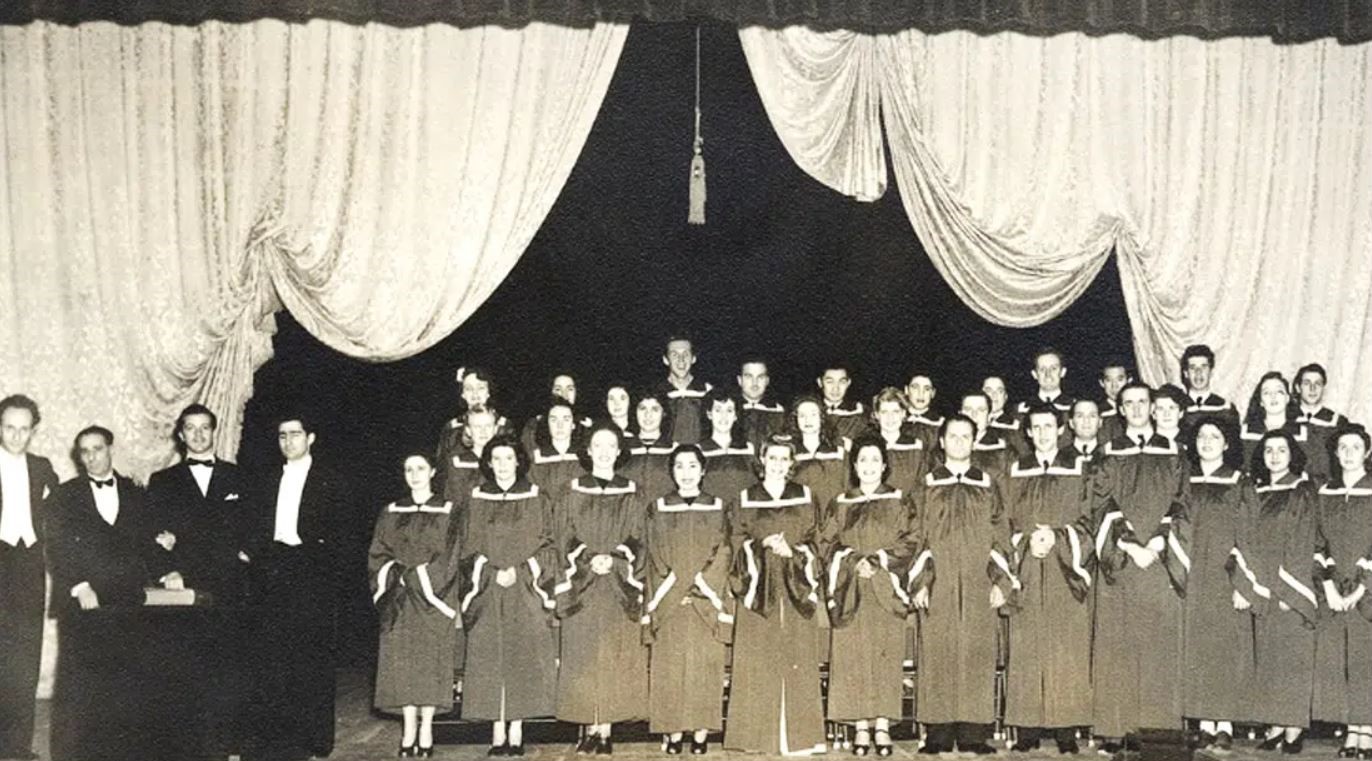
The genesis of the work was in a chance meeting in 1937 between the composer and Rabbi Jacob Sonderling of Fairfax Temple, a Reform congregation in Los Angeles, who did much to enrich Jewish music by providing commissions for European exiles like Arnold Schoenberg, Erich Wolfgang Korngold, and Erich Zeisl. Sonderling contributed to the text of Toch’s cantata, which was first performed as part of a service at Fairfax Temple in 1941. The official concert premiere took place at Los Angeles City College.
Interesting that Dana Andrews was the speaker. In this recording, from the Milken Archive of American Jewish Music, the narration is spoken by Theodore Bikel. It’s a multi-movement work, so be sure to let it play through (skipping ads as necessary).
You can learn more about the piece here:
https://www.milkenarchive.org/music/volumes/view/odes-and-epics/work/cantata-of-the-bitter-herbs/
A three-minute documentary about the recording:
A great deal more about Toch:
His Pulitzer Prize winning Symphony No. 3, which I always thought could use a little more horseradish:
But Toch could have fun, too. He composed a “Pinocchio” overture, a fantasy on “Peter Pan,” and this – perhaps his most frequently encountered work – a “Geographical Fugue,” which prefigures minimalism.
Passover begins at sunset. Chag Sameach!
PHOTO: At the Los Angeles City College premiere of “Cantata of the Bitter Herbs,” with the composer and Dana Andrews, center left