Tag: Castelnuovo-Tedesco

  • Castelnuovo-Tedesco From Exile to Hollywood

    Castelnuovo-Tedesco From Exile to Hollywood

    I always felt a mix of compassion and wonder when reading about all those artists and intellectuals in the 1930s and ‘40s, who were driven away from everything they ever knew, becoming refugees well into their adult years, and forced to reinvent themselves in strange lands. Of course, their loss was our gain, as, in particular, they made the United States a better place, bringing all their expertise to bear in their respective fields, ensuring the country was alive with fresh ideas and influences, making us a leader in medical, technological, academic, artistic, and other fields. But it was a hell of price for them to pay.

    Now I wonder if history is repeating itself, and many will be forced to flee in the opposite direction, if they can.

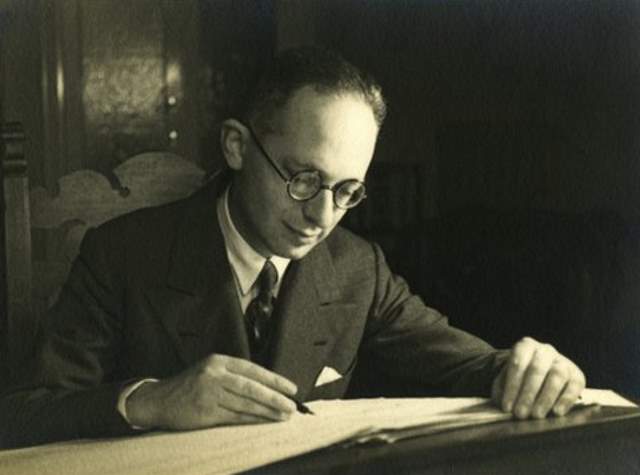
    Mario Castelnuovo-Tedesco was 44 when he came to the U.S., fleeing persecution, as a Jew, under Mussolini’s antisemitic policies. He was sponsored by none other than Arturo Toscanini, who loathed fascism. Castelnuovo-Tedesco had many empathetic, well-placed musical friends, including Jascha Heifetz, Andrés Segovia, and Gregor Piatigorsky, who understood his true worth.

    In addition to being a prolific concert composer, Castelnuovo-Tedesco wound up making a nice chunk of change in Hollywood. He wrote music for some 200 movies, including “And Then There Were None,” starring Barry Fitzgerald, and “The Loves of Carmen,” with Rita Hayworth. As a teacher, his students included André Previn, Nelson Riddle, Herman Stein, Henry Mancini, Jerry Goldsmith, and John Williams.

    I first to got to know Castelnuovo-Tedesco’s music through his guitar concertos, which live in the sweet spot between Italian lyricism and cinematic splendor. Just about everything I’ve ever heard by him goes straight to the heart. The slow movements make you sigh, and later, when you’re doing the dishes, they make you want to sing.

    Today marks the 130th anniversary of Castelnuovo-Tedesco’s birth, and more and more his music is being recorded all the time. Good for him. The man brought a hell of a lot of beauty to the world.

    Happy birthday, Mario C-T!


    Guitar Concerto No. 1

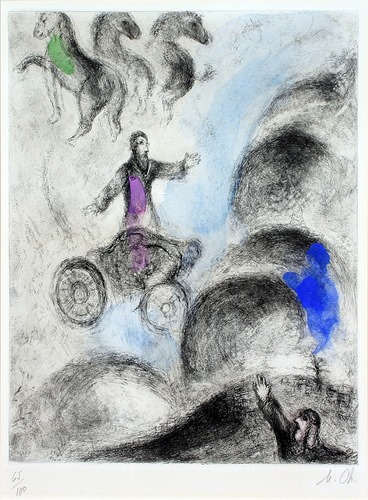
    With Passover right around the corner, this one’s always been a favorite of mine this time of year: the Violin Concerto No. 2 “The Prophets” (its three movements: “Isaiah,” “Jeremiah,” “Elijah”)

    A new discovery for me: “Ballata dall’Esilio”

    Shakespeare overtures. Pick any one of them.
  • Castelnuovo-Tedesco A Composer for All Seasons

    Castelnuovo-Tedesco A Composer for All Seasons

    If ABC can blow-out its annual broadcast of “The Ten Commandments” 25 days before Passover, I can reflect on Mario Castelnuovo-Tedesco’s “The Prophets,” which was always a staple of my Passover playlist over the decades I enjoyed doing a live radio air shift. The second of Castelnuovo-Tedesco’s violin concertos was given its first performance at Carnegie Hall in 1933, with Jascha Heifetz the soloist and Arturo Toscanini on the podium. Its three movements are named for the Biblical figures Isaiah, Jeremiah, and Elijah.

    But nevermind the Passover association. Castelnuovo-Tedesco is a composer for all seasons. His music is well-crafted, ingratiatingly tuneful, and a joy to listen to.

    Furthermore, anyone who loves film music owes an incalculable debt to him. He wrote scores for some 200 movies (including “And Then There Were None,” with Barry Fitzgerald, and “The Loves of Carmen,” with Rita Hayworth), and as a teacher, his students included André Previn, Nelson Riddle, Herman Stein, Henry Mancini, Jerry Goldsmith, and John Williams.

    Castelnuovo-Tedesco was yet another refugee displaced by fascism in Europe who enriched the American cultural landscape. We can thank Toscanini for sponsoring his passage to the United States in 1939. He got out just in the nick of time. Already Italian Jewish citizens had been stripped of many basic human rights. Well before the imposition of Italian racial laws in 1938, Castelnuovo-Tedesco’s music had been banned from radio and public performances of his works had been cancelled.

    Internationally, his works were embraced by top-flight musicians such as Heifetz, Andrés Segovia, and Gregor Piatigorsky.

    The first piece of his I ever heard was the Guitar Concerto No. 1. I remember listening to it on the radio on my first drive to WWFM, the day before my job interview, in 1995, undertaken on a Sunday afternoon to be sure I knew the route from Philadelphia. There’s a lot for me wrapped up in this composer.

    Thank you, and happy birthday, Mario Castelnuovo-Tedesco!


    Violin Concerto No. 2 “The Prophets”

    Segovia masterclass on the Guitar Concerto No. 1

    Radio interview with Segovia and the composer

    Toscanini conducts an adventurous program, including Castelnuovo-Tedesco’s “Overture to a Fairy Tale” (later known as the “Midsummer Night’s Dream Overture”)

  • Castelnuovo-Tedesco Passover Music

    Castelnuovo-Tedesco Passover Music

    Under normal circumstances, I surely would have worked Mario Castelnuovo-Tedesco into my playlist this afternoon. To my mind, Castelnuovo-Tedesco’s Violin Concerto No. 2, subtitled “The Prophets,” is perfect for Passover. Written for Jascha Heifetz in 1931, its three movements are named for the Old Testament prophets Isaiah, Jeremiah, and Elijah. It is for Elijah that an extra cup of wine is poured at the Passover Seder. I’m doing my part to set a place for the “The Prophets.” You can enjoy it here by following the ink. Chag Sameach!

  • Castelnuovo-Tedesco Rediscovered After Decades

    Castelnuovo-Tedesco Rediscovered After Decades

    Earlier this week, I posted about the birthday of Mario Castelnuovo-Tedesco, the Jewish Italian composer who was fortunate to make it to America before he could be packed off to a concentration camp.

    Things had already been heating up at home for some time, with Castelnuovo-Tedesco being banned from radio and performances of his works being cancelled, well before the passage of Italian racial laws in 1938. He didn’t leave until 1939, when Arturo Toscanini (who was not Jewish, but had had enough of Mussolini by 1933) agreed to sponsor his immigration to the United States.

    I always wind up playing Castelnuovo-Tedesco’s Violin Concerto No. 2, subtitled “The Prophets,” during Passover. Written for Heifetz in 1931, its three movements are named for the Old Testament prophets Isaiah, Jeremiah, and Elijah. Of course, we hear his guitar pieces – many of them written for Segovia – all the time. But I always wondered what happened to his Cello Concerto.

    The Cello Concerto, written for Gregor Piatigorsky, was given its premiere under Toscanini’s direction in 1935. I have read about it, but I have never actually heard it. Now I learn that the reason is because Piatigorsky had exclusive performance rights to the piece during his lifetime, much as Paul Wittgenstein held exclusive performance rights to the works he commissioned (which is why, for instance, a major work by Paul Hindemith, “Klaviermusik mit Orchester,” went unheard until its revival in 2004 – Wittgenstein didn’t like the piece and locked it up in a trunk).

    Fascinatingly, the Castelnuovo-Tedesco concerto has reemerged in Texas, to be performed by the Houston Symphony over Easter weekend. Allegedly it will be the first time the work will have been heard since the 1930s. Hear excerpts, with lots of fascinating background, at the Houston Symphony’s website:

    http://www.houstonsymphony.org/tickets/production/detail?id=7346&utm_source=Facebook&utm_medium=social+media&utm_campaign=17CLS14&utm_content=17CLS14+FB+Ad+Brinton+Music+Clip+5

    How many more of these musical treasures await rediscovery, I wonder, having been jealously guarded by performers who opted not to promote them, or who were given better offers for yet another whirl through that well-worn crowd-pleaser by Dvořák?

  • Itzhak Perlman Celebrates 70 Years

    Itzhak Perlman Celebrates 70 Years

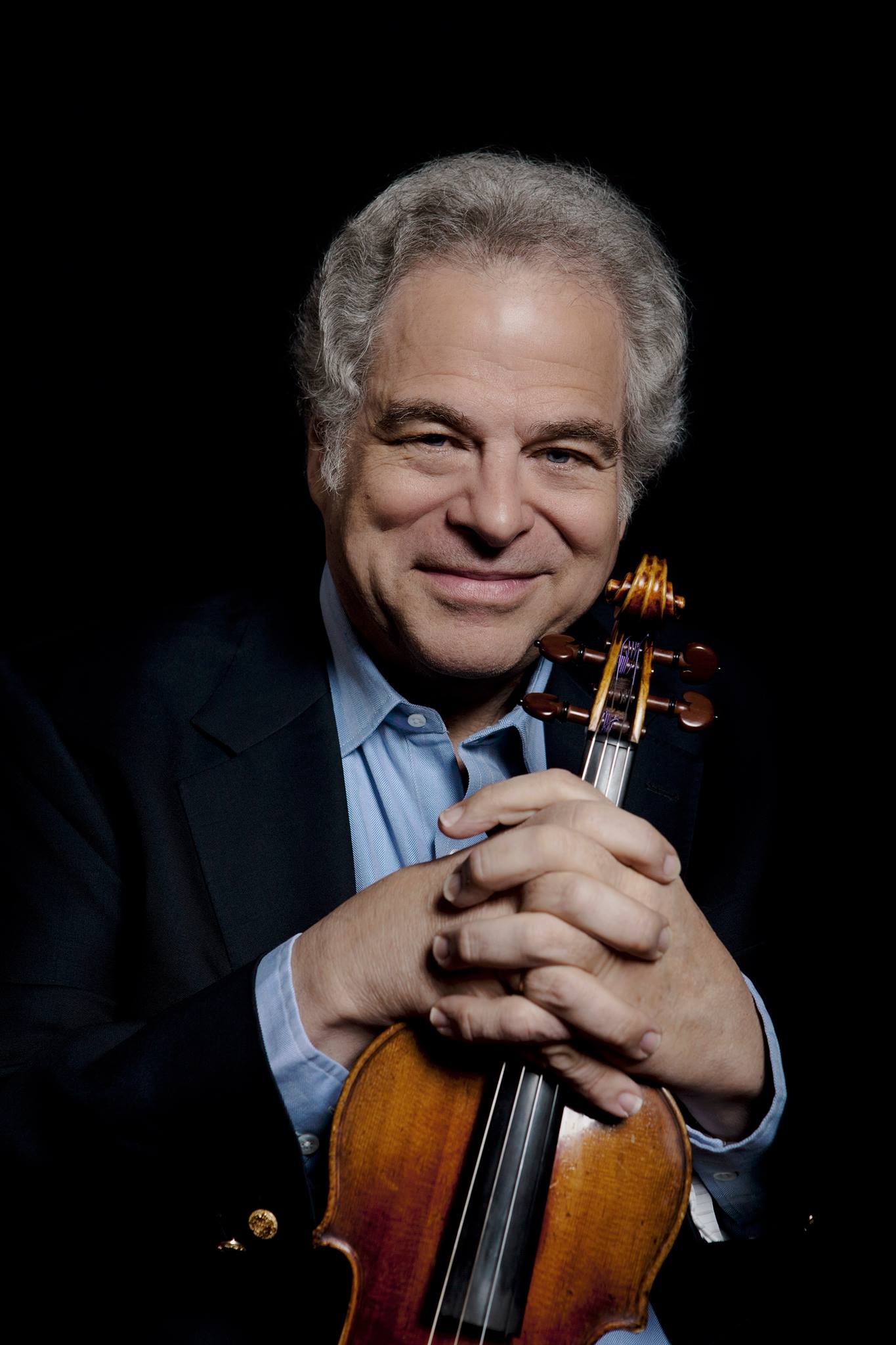
    Holy cow! Itzhak Perlman is 70 today.

    Here’s a write up by NPR, with a selection of video clips, including one of Perlman’s appearances on “The Ed Sullivan Show” (ah, the days when you could hear Wieniawski on network television) and one on “Sesame Street.”

    http://www.npr.org/sections/deceptivecadence/2015/08/31/435224636/itzhak-perlman-charting-a-charismatic-career

    Some of my personal favorites from Perlman’s discography:

    The Korngold Violin Concerto in D
    https://www.youtube.com/watch?v=eP4KlctwXHs
    https://www.youtube.com/watch?v=PpoikVVrJxA

    The Castelnuovo-Tedesco Violin Concerto No. 2 “The Prophets”

    Okay, so I have a sweet tooth.

    Here’s a lovely recording of the Brahms sonatas. Unfortunately, it being YouTube, you will have to suffer through a commercial between each of the movements.

    Happy birthday, Itzhak Perlman. Thanks for all the beauty.

Tag Cloud

Aaron Copland (92) Beethoven (95) Composer (114) Film Music (120) Film Score (143) Film Scores (255) Halloween (94) John Williams (185) KWAX (229) Leonard Bernstein (100) Marlboro Music Festival (125) Movie Music (135) Opera (198) Philadelphia Orchestra (88) Picture Perfect (174) Princeton Symphony Orchestra (106) Radio (87) Ralph Vaughan Williams (85) Ross Amico (244) Roy's Tie-Dye Sci-Fi Corner (290) The Classical Network (101) The Lost Chord (268) Vaughan Williams (103) WPRB (396) WWFM (881)

DON’T MISS A BEAT

Receive a weekly digest every Sunday at noon by signing up here


RECENT POSTS