Tag: Chopin

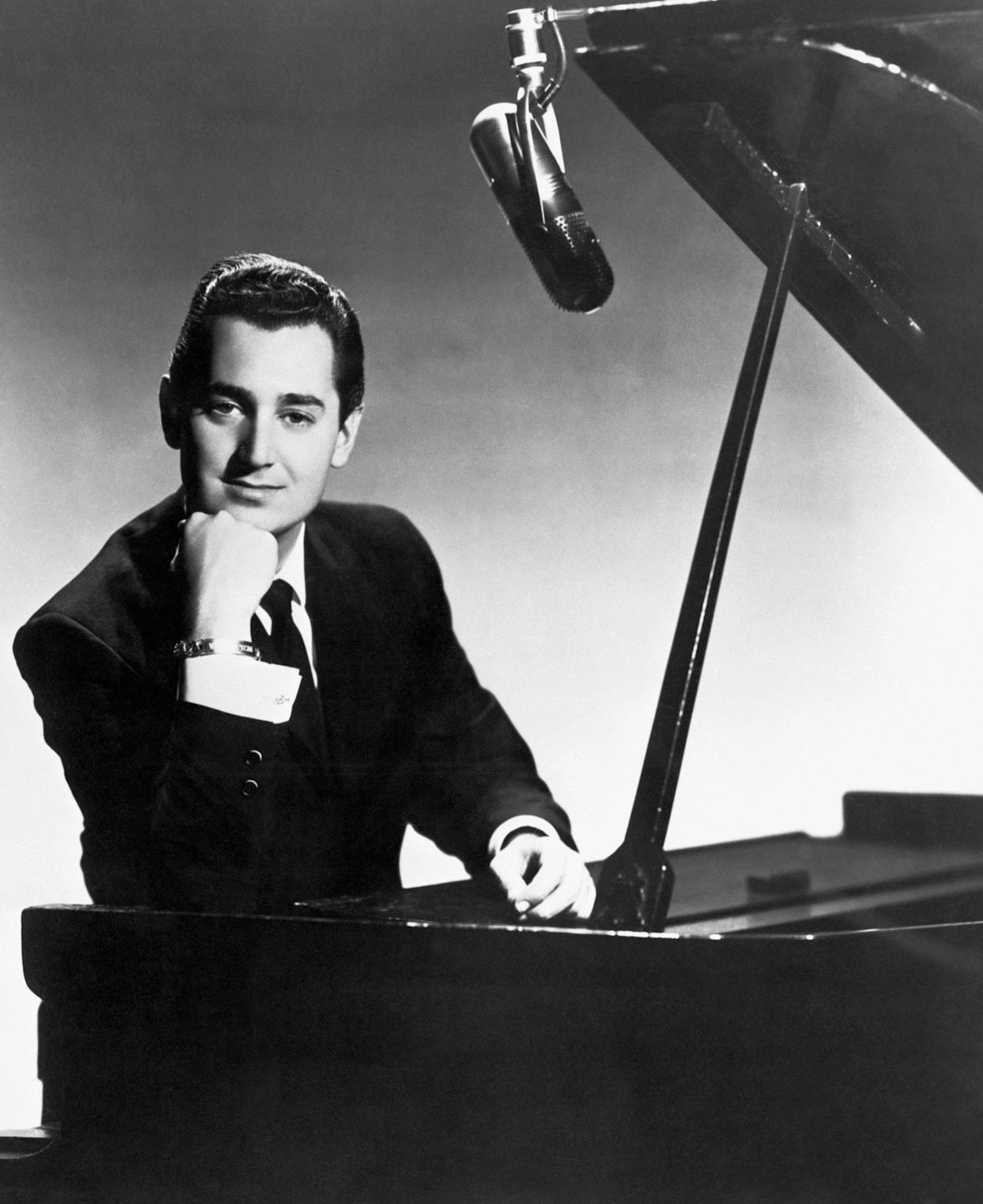
  • Neil Sedaka, Prodigal Son of the Piano

    Neil Sedaka, Prodigal Son of the Piano

    When Neil Sedaka died on Friday, I think everyone of a certain age, regardless of their musical proclivities, must have felt it. “Breaking Up Is Hard to Do,” “Laughter in the Rain,” and “Love Will Keep Us Together” have been a part of our lives since it was still okay to feel good about the world – in no small part thanks to Sedaka’s contributions to it.

    The man was pure music. I knew something of his classical music background from a piano concerto he composed, called “Manhattan Intermezzo,” a recording of which I’ve played on the air a few times, but I never realized the extent of his training and ambition until reading up on him after his death.

    Both Sedaka’s parents – his father a taxi driver of Lebanese Jewish descent and his mother an Ashkenazi Jew of Polish and Russian descent – played piano. When Neil revealed his own musical aptitude at school, his mother took a part-time job to raise money for a second-hand upright. Sedaka took to it like laughter in the rain. He successfully obtained a scholarship to the Juilliard School of Music prep division.

    However, he took an unexpected turn (secretly, so as not to break his mother’s heart) when he teamed with a neighbor, Howard Greenfield, three years his senior, a poet and an aspiring lyricist. Sedaka claims that the two churned out a song a day for the next three years. They pounded the pavement and knocked on doors until Connie Francis recorded “Stupid Cupid.” That was followed by “Where the Boys Are.” When Sedaka received a five-figure royalty check for “Calendar Girl,” he must have thought, hey, maybe this is the way to go, after all – for now anyway. At least it made his mother feel better.

    But after a few years, he was starting to get the itch to get back to the long-hair stuff and began to practice seriously, three and four hours a day, with the intent to compete in the Tchaikovsky Piano Competition in Moscow. You’ll remember Van Cliburn won the inaugural competition in 1958, earning himself a ticker-tape parade on Fifth Avenue.

    Sedaka, however, would be rejected by the Soviet authorities for his association with “American popular capitalistic music.”

    He retained a lifelong love of the classics. Later in his career, he put out a kitschy album of classical music melodies outfitted with his own lyrics.

    For Frédéric Chopin’s birthday, I wondered if there might be any videos or recordings of Sedaka playing Chopin. Lo and behold, here he is talking with Steve Allen and then doing just that on “I’ve Got a Secret.”


    “Classically Sedaka”

    https://archive.org/details/neil-sedaka-classically-sedaka

    “Manhattan Intermezzo”


    It seemed like Sedaka was around forever, but at the time of his death, he was only 86 years-old.

    R.I.P.

  • Farewell to Tamás Vásáry

    Farewell to Tamás Vásáry

    When the Hungarian pianist Tamás Vásáry died last week, I had too many other obligations to honor him properly.

    Vásáry was a child prodigy who entered the Debrecen Conservatory at the age of 6. At 10, he became a student of Ernő Dohnányi. He was personally supervised by Zoltán Kodály at the Franz Liszt Academy. He graduated in 1953. In 1956, the year of the Hungarian Uprising, Vásáry fled to Switzerland. Later, he made his home in London.

    In the U.K., he diversified. With Iván Fischer, he shared the title of joint principal conductor of the Northern Sinfonia from 1972 to 1982. He was principal conductor of the Bournemouth Sinfonietta from 1989 to 1997. Beginning in 1993, he also served as principal conductor of the Hungarian Radio Symphony Orchestra.

    As a pianist, he toured widely. His international fame was bolstered by a recording contract with Deutsche Grammophon.

    I remember in the 1970s and ’80s, Vásáry’s early recordings were already being reissued at budget price, making them very affordable. It was the heyday of soft-focus, Elvira Madigan-type cover art. His performances were further disseminated on grab-and-go cassettes.

    Chopin and Liszt were always central to his repertoire.


    Performing Debussy, Chopin, and Liszt on the French television series “Les grands interprètes”


    At the age of 80, playing the last movement of Chopin’s Piano Sonata No. 3


    An interview from 2021

    https://press.agency/our-existence-in-this-world-is-only-a-small-part-of-our-lives/

    Vásáry died on February 5 at the age of 93. R.I.P.

  • New Chopin Waltz Found Hear Lang Lang Play

    What appears to be an authentic waltz by Frédéric Chopin has come to light. You can read more about it and hear it performed by Lang Lang, in this article in the New York Times.

    “[Chopin] preferred the intimacy of salons, performing his works before audiences of royalty, bankers, artists and musicians – the ‘church of Chopin,’ as the composer Franz Liszt called the gatherings. In these settings, fans sometimes asked for small compositions, like waltzes, as gifts.

    “Chopin obliged, occasionally presenting the same waltz to several people. He gave away manuscripts of the Waltz in F Minor on at least five occasions, each time to women. ‘Please keep it for yourself,’ he wrote to a recipient. ‘I should not like it to be made public.’”

    PLAYAH!

    Also, I want to know more about this amateur composer, A. Sherrill Whiton, a Boulanger pupil who composed three operas, finishing the last on the day he died!

    The music is enchanting, of course, but what I really like is Chopin’s doodle. You can see it at the link, to what hopefully is a gift article (so don’t say I never gave you anything).

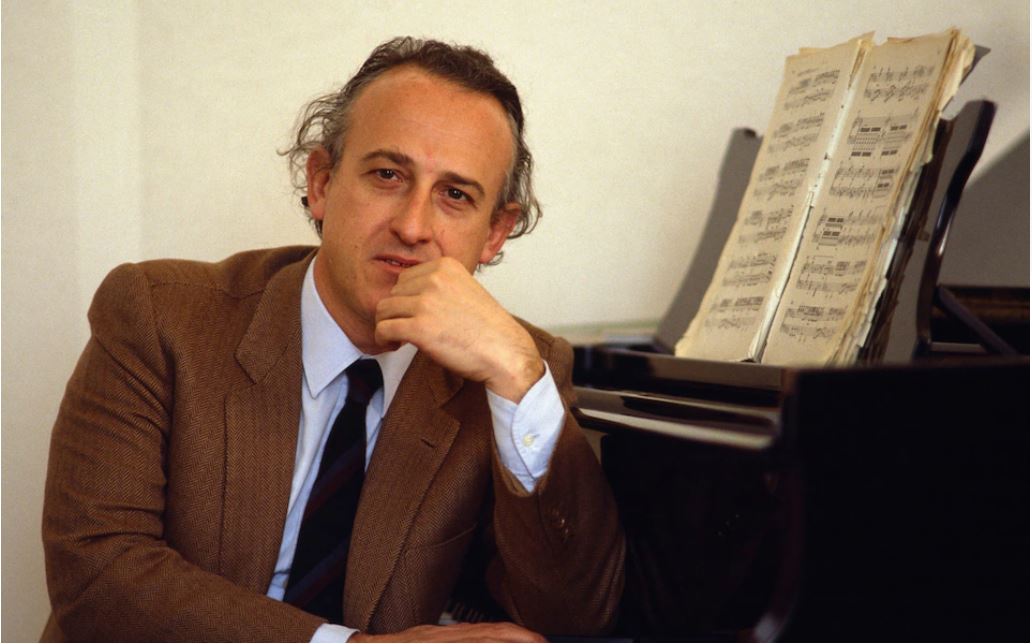
  • Maurizio Pollini A Titan Passes

    Maurizio Pollini A Titan Passes

    In the aftershock of the death of any prominent musician, my thoughts inevitably wend their way to the question of who’s left? It’s been the case for me at least since the ‘90s, when the classical music world lost so many – all old friends, familiar from decades of recordings – and always the evidence seems to be of little cheer. Now, a little over a week after the death of the great pianist Byron Janis, I receive news of the loss of Maurizio Pollini.

    Pollini was renowned for his interpretations of Beethoven and Chopin, certainly, but for me he was more riveting when tackling modernist works. His albums of Webern’s Variations and Boulez’s Piano Sonata No. 2 and Stravinsky’s Three Movements from “Petrushka” and Prokofiev’s Piano Sonata No. 7, all combined when released on CD, are high points of his discography. He was also a champion of the music of Karlheinz Stockhausen and Luigi Nono.

    At his best, he had a way of making even standard repertoire seem experimental. He recorded a magnificent Liszt program, including the monumental Piano Sonata in B minor (surely the most radical sonata of its day), with a truly revelatory selection of the composer’s later, prophetic works that seldom, as under Pollini’s touch, pointed the way so assuredly to the 20th century.

    There was an aura about the man and the artist that exuded integrity, idealism, intelligence, and mystery, between his unwavering embrace of left-wing politics (he was an avowed communist), his notorious perfectionism (he refused to authorize recordings in which he perceived defects that no one else could hear), and last-minute cancellations (including one at Princeton’s McCarter Theatre in 2011).

    Again, the question: who’s left? Of the giants of Pollini’s generation, I mean – certainly of the stable of great pianists who kept the major labels (in Pollini’s case, Deutsche Grammophon) relevant?

    Maurizio Pollini was 82 years-old. An irreplaceable musician. I can’t say I was equally impressed with all of his Beethoven and Chopin, which could come across as a little clinical – I am more of the Janis camp than the Pollini – but when he connected, the rewards were cherishable. I, for one, am very thankful to be able to choose from his recordings. R.I.P.


    Chopin, Nocturne No. 8, Op. 27, No. 2 (live in concert)

    Liszt, “Unstern! Sinistre, Disastro”

    Boulez, Piano Sonata No. 2

    Young Pollini plays Beethoven’s “Emperor” Concerto (live)

  • Chopin Yundi Li and Premature Applause

    How do you get to Carnegie Hall? Practice, practice, practice.

    How best to experience a superlative performance? Sit on your hands. Because it ain’t over ‘til it’s over.

    On the anniversary of Frédéric Chopin’s birth (March 1, 1810), Yundi Li plays the Ballade No. 4 in F minor. Too bad about the premature applause. The performance is dramatic, elegant, and altogether something special. If people would only listen…

Tag Cloud

Aaron Copland (92) Beethoven (95) Composer (114) Film Music (120) Film Score (143) Film Scores (255) Halloween (94) John Williams (185) KWAX (229) Leonard Bernstein (100) Marlboro Music Festival (125) Movie Music (135) Opera (198) Philadelphia Orchestra (88) Picture Perfect (174) Princeton Symphony Orchestra (106) Radio (87) Ralph Vaughan Williams (85) Ross Amico (244) Roy's Tie-Dye Sci-Fi Corner (290) The Classical Network (101) The Lost Chord (268) Vaughan Williams (103) WPRB (396) WWFM (881)

DON’T MISS A BEAT

Receive a weekly digest every Sunday at noon by signing up here


RECENT POSTS