Tag: Close Encounters of the Third Kind

  • Close Encounters Returns Spielberg’s Sci-Fi Classic

    Close Encounters Returns Spielberg’s Sci-Fi Classic

    “Close Encounters of the Third Kind” will return to theaters for showings on July 7 & 10, as part of a broader, ongoing celebration of Columbia Pictures for the studio’s 100th anniversary. (It’s a Fathom Event; google the complete schedule.)

    Watching “Close Encounters” for the first time as an 11 year-old was a watershed moment in my movie-going experience. If you’ve only ever seen it at home, you haven’t really seen it. This is a film that definitely deserves to be experienced in a theater. Say what you will about Richard Dreyfuss’ sideburns, for me this will always be one of Steven Spielberg’s best films, with a transcendent score by John Williams. I would go so far as to say, “Close Encounters” is the most musical non-“musical” blockbuster ever made. I write much more about it here:

    https://www.facebook.com/photo/?fbid=1608836975950253&set=a.279006378933326

    Do yourself a favor, and check your local listings.

    Alas, the “friendly extraterrestrial” movie seems to have been out of fashion now for quite some time. We seem to be mired in some neo-‘50s zeitgeist, as far as paranoia and invasion are concerned. But that certainly wasn’t the case back in 1982, when Steven Spielberg’s “E.T. The Extra-Terrestrial” almost singlehandedly turned everything on its head.

    No more invaders from Mars. Spielberg would get to that a couple of decades later, when he remade H.G. Wells’ “The War of the Worlds.” No, during the Reagan Era, with the Cold War winding down and terrorism not yet so much in the news, cinematic E.T.’s were benevolent at best, or at worst, just trying to do their thing. They were there to be misunderstood and even imperiled by man until a warm, fuzzy, often poignant finale.

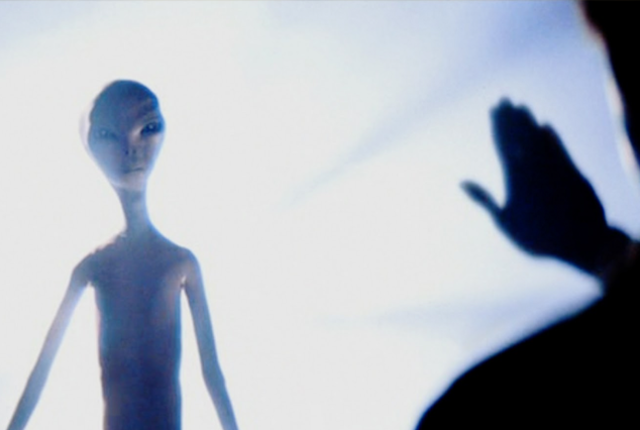
    Spielberg had already explored the concept of the benevolent visitor from space, of course, with 1977’s “Close Encounters of the Third Kind.” But there was an ambiguity for much of the film as to what exactly the aliens’ intentions were. In fact, there is at least one sequence that would have given a child nightmares. Whatever tension is generated dissolves in the euphoric finale, centered on the communicative power of music. Like so many films back then and so few now, “Close Encounters” doesn’t so much exhaust the viewer as leave him or her with feelings of uplift and hope.

    John Williams wrote the music for both “Close Encounters” and “E.T.,” and the two scores couldn’t be more different. For “CE3K,” the avant-garde syntax of the early, eerier sequences dissolves into unabashed romanticism for the transcendent finale. “E.T” takes a much more intimate approach. The moving story of a friendship between a boy and a stranded botanist for another world is rendered in music that is by turns tender, buoyant, and touching. The score earned Williams a much-deserved fourth Academy Award. “E.T.” may very well be Williams’ masterpiece, and Spielberg’s too.

    The “friendly” alien of “The Day the Earth Stood Still” (1951), Klaatu, may come in peace, but it is a message delivered with tough love. If mankind refuses to abide, his giant robot, Gort, will destroy the planet. At a time when Martians invariably meant trouble, this was actually progressive. Bernard Herrmann’s score is one of his best, and certainly one of his most interesting. Always an eccentric orchestrator, Herrmann’s concept of extra-terrestrial music incorporates violin, cello, electric bass, two theremins, two Hammond organs, a large studio electric organ, three vibraphones, two glockenspiels, two pianos, two harps, three trumpets, three trombones and four tubas. Overdubbing and tape-reversal techniques were also employed.

    Finally, Ron Howard’s “Cocoon” (1985) is one of the more worthwhile of the seemingly endless procession of extraterrestrial films to be released in the wake of “E.T.” At least this one took a different approach by bringing alien forces into contact with a Florida retirement community, with the unexpected result of rejuvenating its inhabitants. A modern take on the fabled Fountain of Youth, the film is a showcase for veteran actors Hume Cronyn, Jessica Tandy, Jack Gilford, and Don Ameche (who won an Academy Award). James Horner’s score is much sought after by collectors.

    Klaatu barada nikto! I hope you’ll join me for the touchdown of benevolent extraterrestrial films on “Picture Perfect,” music for the movies, now in syndication on KWAX, the radio station of the University of Oregon!


    Clip and save the start times for all three of my recorded shows:

    PICTURE PERFECT, the movie music show – Friday at 8:00 PM EDT/5:00 PM PDT

    SWEETNESS AND LIGHT, the light music program – ALL NEW! – Saturday at 11:00 AM EDT/8:00 AM PDT

    THE LOST CHORD, unusual and neglected rep – Saturday at 7:00 PM EDT/4:00 PM PDT

    Stream them, wherever you are, at the link!

    https://kwax.uoregon.edu/

  • E.T. & Benevolent Movie Aliens

    E.T. & Benevolent Movie Aliens

    I’m one of those people who will dissolve into tears at the movies for no good reason. So when “E.T. The Extra-Terrestrial” opened on this date 40 years ago, I was a total mess. This simple story about the friendship between a boy and a stranded botanist from another world is elevated by John Williams’ most moving score. By turns tender, buoyant, and touching, Williams’ music provides the emotional underpinning of what may very well be Steven Spielberg’s best film. It earned its composer a much-deserved fourth Academy Award.

    In terms of box office, “E.T” was the first film to surpass “Star Wars” to become the highest grossing of all time. The entire moviegoing world, and certainly the entire country, was unified by this emotionally honest bedtime story that tapped into eternal truths about childhood, love, and parting. Remarkably uncynical, full of hope, and just downright beautiful on every level, “E.T.” lit up the screens in 1982 like no other. It was a blockbuster with heart. I don’t know that, in the 21st century, a movie quite like it will ever land again.

    This week on “Picture Perfect,” we recollect kinder, gentler times, with selections from films about benevolent visitors from other worlds. Friendly extraterrestrials have been out of fashion for quite a while now, as we seem to be mired in paranoia, conspiracy theories, and apocalyptic visions. But back in 1982, “E.T.” took the 1950s clichés of invaders from Mars and body snatchers from outer space and almost singlehandedly turned everything on its head.

    Spielberg himself would take a crack at old school alien invasion, for sure, when he remade H.G. Wells’ “The War of the Worlds” in 2005. But during the Reagan Era, with the Cold War winding down, terrorism not yet so much in the news, and Americans not so openly contemptuous of their neighbors, cinematic E.T.’s were benevolent at best, or at worst, just trying to do their thing. They were there to be misunderstood and even imperiled by man until a warm, fuzzy, often poignant finale.

    In Spielberg’s prior exploration of the concept of kindly visitors from another world, “Close Encounters of the Third Kind” (1977), there is an ambiguity for much of the film as to what exactly the aliens’ intentions are. In fact, there is at least one sequence that could very well give a child nightmares, and maybe parents too. Whatever tension is generated dissolves in the euphoric finale, centered around the communicative power of music. Like so many movies back then and so few now, “Close Encounters” doesn’t so much exhaust the viewer as leave him or her with a feeling of hope.

    John Williams’ approach couldn’t be more different than that for “E.T.” For “Close Encounters,” the avant garde syntax of the early, eerier sequences dissolves into unabashed lyricism for the film’s transcendent finale.

    Looking back a quarter century, Klaatu, the “friendly” alien of “The Day the Earth Stood Still” (1951), may come in peace, but it is a message delivered with tough love. If mankind refuses to abide, his giant robot, Gort, will destroy the planet. At a time when Martians invariably meant trouble, this was actually progressive.

    Bernard Herrmann’s score is one of his best, and certainly one of his most interesting. Always an eccentric orchestrator, Herrmann’s concept of extraterrestrial music incorporates violin, cello, electric bass, two theremins, two Hammond organs, a large studio electric organ, three vibraphones, two glockenspiels, two pianos, two harps, three trumpets, three trombones and four tubas. Overdubbing and tape-reversal techniques were also employed.

    Finally, Ron Howard’s “Cocoon” (1985) is one of the more worthwhile of the seemingly endless procession of extraterrestrial films to be released in the wake of “E.T.” At least this one took a different approach by bringing aliens into contact with a Florida retirement community, with the unexpected result of rejuvenating its inhabitants. A modern take on the fabled Fountain of Youth, the film is a showcase for veteran actors Hume Cronyn, Jessica Tandy, Jack Gilford, and Don Ameche (who won an Academy Award). James Horner’s score is much sought after by collectors.

    Klaatu barada nikto! Join me for the touchdown of benevolent extraterrestrials! We come in peace, so forget the tanks and bring a box of tissues, on “Picture Perfect,” music for the movies, this Saturday evening at 6:00 EDT, on WWFM – The Classical Network and wwfm.org.

  • Classic Film & UFOs On Air Friday

    Classic Film & UFOs On Air Friday

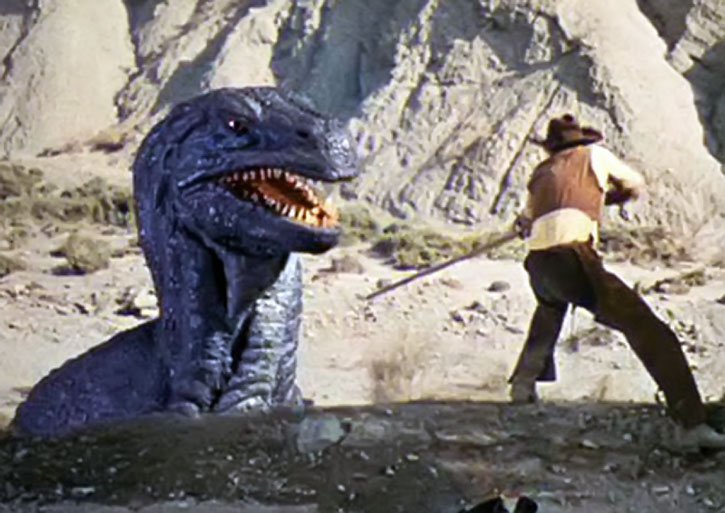
    You’re right. The idea of cowboys lassoing an Allosaurus so that they can show it off in their Wild West show is totally preposterous. But not to worry, we’ll rinse the taste out of our mouths with a three-way bull session devoted to a movie about extraterrestrials who fly around in ice cream cones.

    That’s right, it’s another Classic Ross Amico double feature!

    Join me this Friday evening at 6:00 EDT, for an hour of music from the western scores of Jerome Moross on “Picture Perfect” – including selections from “The Big Country,” “The Proud Rebel,” “The Jayhawkers,” and “The Valley of Gwangi” – on WWFM – The Classical Network and wwfm.org.

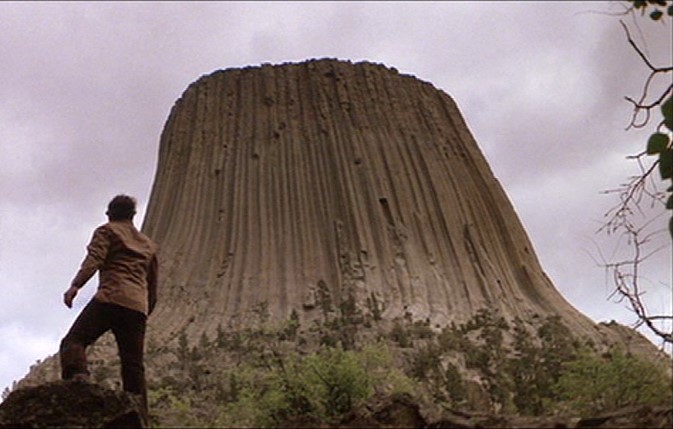
    Then at 7:00 EDT, Roy Bjellquist and I will be joined by Joe Metz (my cousin, whom I have not seen in about 35 years) for an in-depth discussion about a movie that influenced us all, Steven Spielberg’s UFO blockbuster “Close Encounters of the Third Kind.”

    You can bet your mashed potatoes that the hour will not pass without some discussion of music, which permeates the film on multiple levels.

    Catch the Facebook live-stream, and by all means, participate in the running commentary. We look forward to reading your thoughts and reactions.

    Roy’s Tie-Dye Sci-Fi Corner

    Watch us. Watch the skies. When we see you there, we’ll know, truly… we are not alone!

  • Close Encounters’ Hidden Musical Genius

    Close Encounters’ Hidden Musical Genius

    Is “Close Encounters of the Third Kind” the most musical non-musical blockbuster ever made?

    I don’t know at what point I recognized Zoltán Kodály’s contribution to “CE3K.” It was certainly not as an 11-year-old boy, which is how old I was at the time I was first spooked and awed by Steven Spielberg’s UFO masterpiece. But somewhere along the way, Kodály took on more significance than simply an exotic-looking name on a chart.

    In addition to being one of Hungary’s most respected composers – with his friend, Béla Bartók, at the forefront of the whole Hungarian nationalist movement – Kodály was extremely influential in the field of music education. The hand signals employed by François Truffaut’s Claude Lacombe, when he addresses a conference of UFO scientists and researchers, correspond to specific musical tones. The signals are an integral part of the Kodály method, and they contribute to the film’s memorable climax. Millions who have never heard of Kodály outside the context of “CE3K” will be familiar with the five-signal sequence.

    Of course, music imbues just about every aspect of Spielberg’s storytelling. Composer John Williams went through over 300 permutations of the five-notes-to-a-theme before arriving at the now-iconic motive that ties the whole film together. There was no “aha! moment.” It was only after Spielberg learned there were over 130,000 possibilities that they just settled on a sequence they thought would be effective. A significant portion of the score for the last half hour of “CE3K” would be recorded in advance of the actual filming. It’s a rare luxury for composers to have a film cut to their music, as opposed to the other way around, but this is what was done, necessarily, for the film’s climactic encounter.

    At the time, Williams’ “CE3K” theme was widely parodied and likely as well recognized as his theme for “Jaws.” His score would be nominated for an Academy Award in 1978. He actually wound up losing to himself, for “Star Wars.” A banner year for John Williams!

    Interestingly, the composer tailored a cello solo specifically for Eleanor Aller Slatkin, formerly of the legendary Hollywood String Quartet. Aller was the widow of violinist Felix Slatkin and the mother of conductor Leonard Slatkin. She had been active in Hollywood since the 1940s, introducing Erich Wolfgang Korngold’s Cello Concerto in the film “Deception,” with Bette Davis and Claude Rains. Paul Henreid “played” the concerto onscreen.

    French pianist and educator Odette Gartenlaub, a Messiaen pupil and solfège authority who taught at the Paris Conservatory, has a cameo during the climactic extraterrestrial communication scene.

    And of course, “When You Wish Upon a Star” is heard on a music box early in the narrative, only to be picked up in Williams’ underscore during the film’s apotheosis. Spielberg said that he relied on the spirit of the song as a kind of guide for the overall feeling he wanted “CE3K” to convey.

    “Close Encounters” is a work of great humanity, wonder and hope. Is it any wonder that music would play such an important role? In a story in which so many of the human characters experience frustration in their spoken interactions, running up against all kinds of barriers to effective communication, the key to universal understanding turns out to be music. It is one of the most satisfying and uplifting movies about music ever made. Unusually, it also seems to get everything right.

    There were many experienced hands involved in the writing of the film, but in the end it was Spielberg who received the sole screen credit. Somebody really knew their music. I wonder who directed Spielberg to Kodály?

    For further reflections on “CE3K,” join Roy Bjellquist and me – with a special appearance by my brilliant cousin, Joseph R. Metz – on the next “Roy’s Tie-Dye Sci-Fi Corner,” to be live-streamed on Facebook this Friday evening at 7:00 EDT.

    https://www.facebook.com/roystiedyescificorner


    More about the Kodály Method here (with hand signals):

    And an interview with Kodály, in English!

  • Friendly Aliens in Film Scores Close Encounters ET

    Friendly Aliens in Film Scores Close Encounters ET

    People of Earth! We come in peace!

    This week on “Picture Perfect,” in honor of the 40th anniversary of the release of “Close Encounters of the Third Kind” (November 16, 1977) and the 35th anniversary of “E.T. The Extra-Terrestrial” (June 11, 1982), we listen to music from films about benevolent visitors from other worlds.

    Friendly E.T.’s have been out of fashion now for quite some time. We seem to be mired in some neo-‘50s zeitgeist, as far as paranoia and invaders are concerned. But that certainly wasn’t the case back in 1982, when Steven Spielberg’s “E.T. The Extra-Terrestrial” almost singlehandedly turned everything on its head.

    No more invaders from Mars. Spielberg would get to that a couple of decades later, when he remade H.G. Wells’ “The War of the Worlds.” No, during the Reagan Era, with the Cold War winding down and terrorism not yet so much in the news, cinematic E.T.’s were benevolent at best, or at worst, just trying to do their thing. They were there to be misunderstood and even imperiled by man until the warm, fuzzy, often poignant finale.

    Spielberg had already explored the concept of the benevolent visitor from space, of course, with 1977’s “Close Encounters of the Third Kind.” But there was an ambiguity for much of the film as to what exactly the aliens’ intentions were. In fact, there is at least one sequence that would have given a child nightmares. Whatever tension is generated dissolves in the euphoric finale, centered on the communicative power of music. Like so many films back then and so few now, “Close Encounters” doesn’t so much exhaust the viewer as leave him or her with a feeling of hope.

    John Williams wrote the music for both “Close Encounters” and “E.T.,” and the two scores couldn’t be more different. For “CE3K,” the avant garde syntax of the early, eerier sequences dissolves into unabashed lyricism for the transcendent finale. “E.T” takes a much more intimate approach. The moving story of a friendship between a boy and a stranded space botanist is rendered in music that is by turns tender, buoyant, and touching. The score earned Williams a much-deserved fourth Academy Award. “E.T.” may very well be Williams’ masterpiece, and Spielberg’s too.

    The “friendly” alien of “The Day the Earth Stood Still” (1951), Klaatu, may come in peace, but it is a message delivered with tough love. If mankind refuses to abide, his giant robot, Gort, will destroy the planet. At a time when Martians invariably meant trouble, this was actually progressive. Bernard Herrmann’s score is one of his best, and certainly one of his most interesting. Always an eccentric orchestrator, Herrmann’s concept of extra-terrestrial music incorporates violin, cello, electric bass, two theremins, two Hammond organs, a large studio electric organ, three vibraphones, two glockenspiels, two pianos, two harps, three trumpets, three trombones and four tubas. Overdubbing and tape-reversal techniques were also employed.

    Finally, Ron Howard’s “Cocoon” (1985) is one of the more worthwhile of the seemingly endless procession of extra-terrestrial films to be released in the wake of “E.T.” At least this one took a different approach by bringing alien forces into contact with a Florida retirement community with the unexpected result of rejuvenating its inhabitants. A modern take on the fabled Fountain of Youth, the film is a showcase for veteran actors Hume Cronyn, Jessica Tandy, Jack Gilford and Don Ameche (who won an Academy Award). James Horner’s score is much sought after by collectors.

    Klaatu barada nikto! Join me for the touchdown of friendly alien films, on “Picture Perfect” – music for the movies – this Friday evening at 6:00 EDT, on WWFM – The Classical Network and wwfm.org.

Tag Cloud

Aaron Copland (92) Beethoven (95) Composer (114) Film Music (120) Film Score (143) Film Scores (255) Halloween (94) John Williams (185) KWAX (229) Leonard Bernstein (100) Marlboro Music Festival (125) Movie Music (135) Opera (198) Philadelphia Orchestra (88) Picture Perfect (174) Princeton Symphony Orchestra (106) Radio (87) Ralph Vaughan Williams (85) Ross Amico (244) Roy's Tie-Dye Sci-Fi Corner (290) The Classical Network (101) The Lost Chord (268) Vaughan Williams (103) WPRB (396) WWFM (881)

DON’T MISS A BEAT

Receive a weekly digest every Sunday at noon by signing up here


RECENT POSTS