Tag: Danny Elfman

  • Comedy Scores Picture Perfect Mancini Elfman

    Comedy Scores Picture Perfect Mancini Elfman

    April fools! No, not the holiday (such that it is); I’m talking about the performers.

    This week on “Picture Perfect,” we’ll have musical selections from big screen comedies. For whatever reason, it’s seldom that we get a chance to sample from comedy scores. The emphasis is usually on drama or action. The more I think about it, it seems very few scores for comedies tend to achieve classic status – proportionately speaking, of course.

    Henry Mancini never seemed to have a problem with that, thanks in no small part to his long association with director Blake Edwards. We’ll hear music from my three favorite installments in “The Pink Panther” series – the original (1963), “A Shot in the Dark” (1964), and “The Pink Panther Strikes Again” (1976). That’s right, the one where Chief Inspector Dreyfus goes stark raving mad and determines to destroy the world with a doomsday ray, as the franchise hilariously jumps the shark.

    Imagine how difficult it must be to write music for comedy, without it coming across as sounding like cartoon music. Which isn’t always necessarily a bad thing. With Pee-Wee Herman back on Netflix, we’ll hear some of Danny Elfman’s music for “Pee-Wee’s Big Adventure” (1985). The film marked the feature debut of director Tim Burton. It was Burton’s first teaming with composer Danny Elfman, who would become a regular collaborator. Elfman is obviously a big fan of Nino Rota.

    If you ever wanted to see Alastair Sim in drag, then I’ve got the film for you. Sim, you’ll recall, played Ebenezer Scrooge in the classic 1951 film version of “A Christmas Carol.” A few years later, he appeared in “The Belles of St. Trinian’s” (1954) in two roles – as the headmistress of a girl’s school and her criminal brother. None other than Malcolm Arnold provided the music hall-style score.

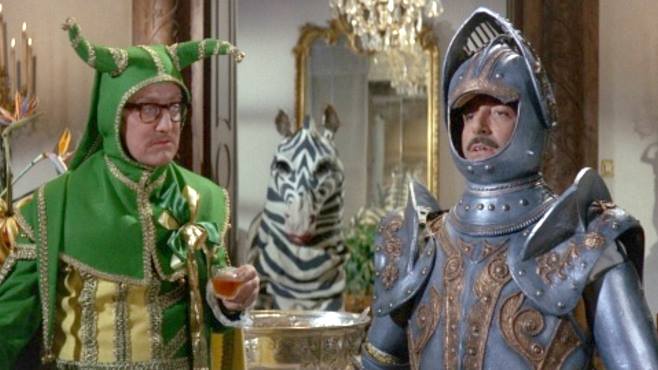
    “It’s a Mad Mad Mad Mad World” (1963) is a relic from the “more is more” school of comedy, with Milton Berle, Sid Caesar, Ethel Merman, Mickey Rooney, Phil Silvers, Terry-Thomas, Jonathan Winters, Jimmy Durante, and a tired Spencer Tracy. Ernest Gold’s approach to the music is defined by a manic waltz.

    Before John Williams became a household name, with music for blockbusters like “Jaws” and “Star Wars,” he was known as Johnny Williams, when writing for television shows like “Lost and Space” and “Gilligan’s Island,” and for a string of mostly forgettable movie comedies.

    “A Guide for the Married Man” (1967) starred Walter Matthau and Robert Morse. Interestingly, the film was directed by Gene Kelly, and a number of cast members from “It’s a Mad Mad Mad Mad World” have cameos. (It seems you couldn’t make a film of this kind without Terry-Thomas.) Looking back on the score is fascinating, in that there are already hints of the Williams we know in the thick of very period-specific music.

    Elmer Bernstein, who wrote music for such classics as “The Ten Commandments,” “The Magnificent Seven” and “To Kill a Mockingbird,” received a second wind in the late ‘70s, when he was offered the chance to score “National Lampoon’s Animal House,” produced by Ivan Reitman and directed by John Landis. This led to opportunities to work on “The Blues Brothers” and “Ghostbusters,” among others. We’ll wrap things up with some of Bernstein’s music for the Reitman service comedy, “Stripes,” which teamed Bill Murray and Harold Ramis. The key to Bernstein’s big success as a comedy composer during the era is that, musically, he mostly played it straight.

    I hope you’ll join me tonight at 6 EDT, with a repeat tomorrow morning at 6, as we unscrew the tops on the salt shakers and swap out the hard-boiled eggs, on “Picture Perfect: Music for the Movies.” Or that you’ll listen to it later, from a safe distance, as a webcast, at wwfm.org.


    Does your dog bite?
  • Real Horror Behind the Screen Movie Soundtracks

    Real Horror Behind the Screen Movie Soundtracks

    I’ve been so busy the past two days that I haven’t even been able to type up a description of this week’s “Picture Perfect,” which is slated to air in just a few minutes. Nothing too in-depth, then. Suffice it to say, I’ll be featuring music from movies inspired by real-life horror and science fiction icons.

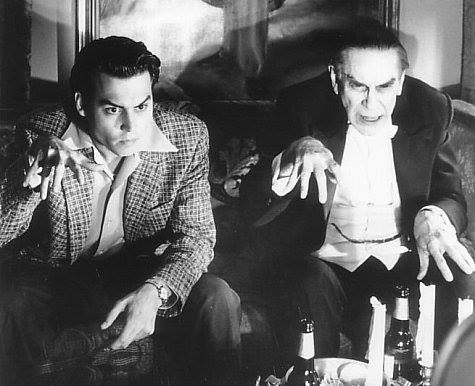
    We’ll be listening to selections from “Hitchcock” (2012), a behind-the-scenes look at the making of “Psycho,” with music by Danny Elfman; “Matinee” (1993), with John Goodman as a William Castle-type filmmaker, promoting his latest B-masterpiece against the backdrop of the Cuban Missile Crisis, with music by Jerry Goldsmith; “Gods and Monsters” (1998), set during the final days of James Whale, the director of “Frankenstein” and “The Invisible Man,” with music by Carter Burwell; and “Ed Wood” (1994), Tim Burton’s love-letter to the director notorious for having helmed some of the worst films ever made, including “Plan 9 from Outer Space,” with bongo- and theremin-laden music by Howard Shore.

    I hope you’ll join me for an hour of behind-the-scenes horrors this week, on “Picture Perfect,” tonight at 6 ET, with a repeat tomorrow morning at 6; or that you’ll listen to it later as a webcast at wwfm.org.

  • Superhero Movie Music Batman Avengers Superman

    Superhero Movie Music Batman Avengers Superman

    Look! Up in the sky! This week on “Picture Perfect,” the focus is on superheroes.

    We’ll begin with music from Tim Burton’s “Batman” (1989). It’s true, I wasn’t crazy about the film. In fact, I’m still waiting for someone to make the Batman movie I’ve got in my head, but that probably isn’t going to happen. We’re too far down the computer generated road at this point.

    At least Danny Elfman actually made the effort to write a decent score, a fact of which I was unappreciative at the time. (To me, he was still “that guy from Oingo Boingo.”) It only sounds better in light of all that has followed. Elfman’s love for Bernard Herrmann is evident. And don’t worry, I will spare you the Prince songs.

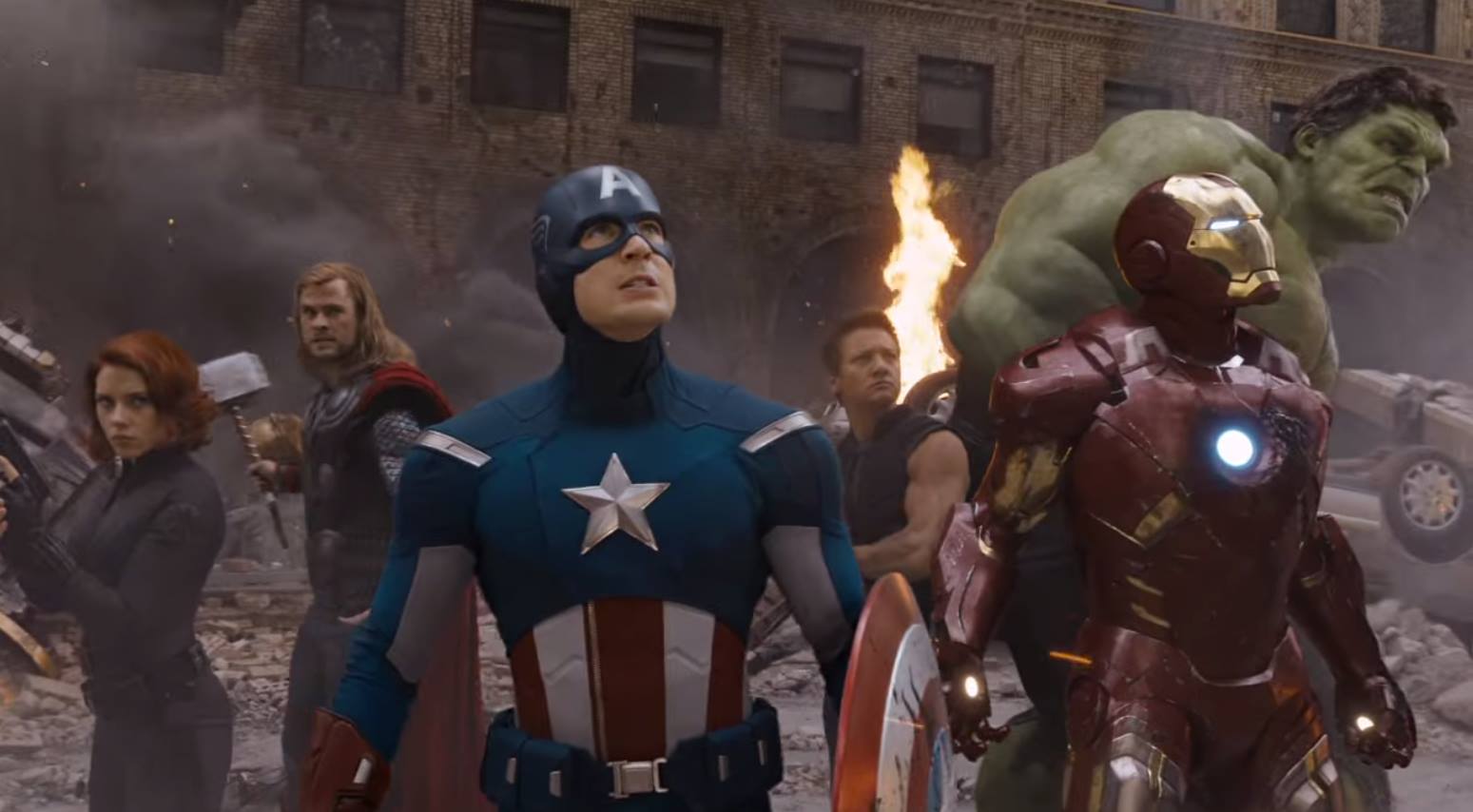
    “The Avengers” may have provided the satisfaction of seeing Iron Man, Captain America, Thor and the Hulk on the screen all at the same time, but arguably “The Incredibles” (2004) was more fun. Pixar’s clever satire/adventure featured the vocal talents of Craig T. Nelson, Holly Hunter, and Samuel L. Jackson.

    The score is a smart throwback to the swinging espionage films of the 1960s. Originally the producers had approached John Barry to write the music, very much in the style of his work on the James Bond films. But Barry declined, not wanting to return to his earlier style. In the event, composer Michael Giacchino was only too happy to step into Barry’s well-polished shoes.

    “The Avengers” (2012), of course, is the 800-pound gorilla of superhero films, but in these days when each hyper spectacle seems to surpass the last, not only in terms of din and seizure-inducing effects, but in the epic scope of its box office, that could very well change at any time. With the sequel, “The Avengers: The Age of Ultron,” now in theaters, I thought now would be as good a time as any to play music from the first film, by Alan Silvestri.

    To truly understand what is missing from superhero music these days, one need only refer to the gold standard of the genre, “Superman” (1978). John Williams’ score was from smack-dab in the middle of his heroic period, falling as it did, between “Star Wars” and “Raiders of the Lost Ark.” Its star-spangled fanfare and march beautifully conjure memories of Superman music past – for the George Reeves TV series and, before that, the Fleischer Brothers cartoons – yet effortlessly surpass them like leaping a tall building in a single bound.

    I know, I know, not every film can be the same, and Williams’ primary colors wouldn’t sit as well, perhaps, with the dark streets of Gotham. But why does everything have to be so grim these days (see “Man of Steel”)? I read comic books when I was a kid, and I don’t remember everything being so hopeless.

    I don’t want to hear how gritty the real world is right now. “Superman” was made in the wake of Watergate and Vietnam. Entertainment molds the world, every bit as much as the world influences entertainment. Is it too much to ask for a little fun and inspiration from our superhero movies? Can we leave the theatres feeling exhilarated, for a change, as opposed to simply exhausted?

    I hope you’ll join me for “Everything’s Super,” this Friday evening at 6, with a repeat Saturday morning at 6; or that you’ll listen to it later as a webcast, at http://www.wwfm.org.

  • Comic Book Movie Music on Picture Perfect

    Comic Book Movie Music on Picture Perfect

    Get out your Silly Putty! We’ll have plenty of vibrant colors for you to enjoy this week on “Picture Perfect,” when the focus will be on comic adventurers – as in heroes from the funnies.

    We’ll hear music from “Prince Valiant” (1954), based on Hal Foster’s enduring Sunday strip about the exploits of a Viking prince at the court of King Arthur. The film stars Robert Wagner (in a page-boy haircut), Janet Leigh, James Mason, Sterling Haydn, and Victor McLaglen (as Val’s Viking pal Boltar). It also happens to feature one of Franz Waxman’s most rousing scores, clearly a prototype for the kind of music that later made John Williams a household name.

    Then Billy Zane is “The Ghost Who Walks,” in a big screen version of Lee Falk’s “The Phantom” (1996). Like Batman, The Phantom harnesses personal tragedy – in this case, the murder of his father – to a thirst for justice. He is now part of an ancient lineage of Phantoms, who don the purple suit and fight crime from a cave in a remote African country, in part through the power of a magic ring. The memorable (though somewhat monothematic) score is by David Newman, one of the sons of legendary Hollywood composer Alfred Newman.

    Warren Beatty helmed an amusing adaptation of Chester Gould’s “Dick Tracy” (1990), replete with primary color production design and meticulously applied make-up that transformed some of the most respected actors of the day (including Al Pacino, Dustin Hoffman and James Caan) into a live-action Rogue’s Gallery. Design and make-up were recognized with Academy Awards, as was Stephen Sondheim, for the original song “Sooner or Later (I Always Get My Man),” sung in the film by Madonna. We won’t hear Sondheim’s song, but we will hear some of Danny Elfman’s underscore, which harkens back to Hollywood’s Golden Age.

    Finally, we turn from the American newspaper to the comic volumes of Belgian cartoonist Hergé, and his most famous creation, Tintin, a young journalist whose stories seem always to embroil him in globetrotting adventures. Developed for the screen by Steven Spielberg and Peter Jackson, “The Adventures of Tintin” (2011) was shot as 3-D motion capture animation.

    After 50 years in the business, during which he wrote music for all manner of films, from across virtually every genre, John Williams finally got a crack at scoring an animated feature. The result was a double Academy Award nomination, as Williams had also written the music that year for Spielberg’s “War Horse.” Not bad for a 79 year-old composer.

    Unfortunately, “Tintin” never gained the kind of traction with the public that the filmmakers had hoped for, otherwise the score would certainly be much better known, as it is cut from the same cloth – and is of the same high quality – as those for the “Star Wars,” Indiana Jones, and Harry Potter series.

    I’ll see you in the funny pages this week, on “Picture Perfect” – music for the movies – this Friday evening at 6, with a repeat Saturday morning at 6; or listen to it later as a webcast, at http://www.wwfm.org.

Tag Cloud

Aaron Copland (92) Beethoven (95) Composer (114) Film Music (120) Film Score (143) Film Scores (255) Halloween (94) John Williams (185) KWAX (229) Leonard Bernstein (100) Marlboro Music Festival (125) Movie Music (135) Opera (198) Philadelphia Orchestra (88) Picture Perfect (174) Princeton Symphony Orchestra (106) Radio (87) Ralph Vaughan Williams (85) Ross Amico (244) Roy's Tie-Dye Sci-Fi Corner (290) The Classical Network (101) The Lost Chord (268) Vaughan Williams (103) WPRB (396) WWFM (881)

DON’T MISS A BEAT

Receive a weekly digest every Sunday at noon by signing up here


RECENT POSTS