Tag: David McVicar

  • Radical Opera or Handel’s Genius?

    Radical Opera or Handel’s Genius?

    So many modern opera productions of the classics are radically, even provocatively, reimagined, ill-considered, half-baked, and just plain tiresome. I don’t want to pay big bucks to go to an opera house to have my eyes assaulted by a bunch of grotesque imagery calculated to undermine the glorious music. If I want to feel grim and depressed, it’s much less expensive to go to the movies. It’s the composers’ genius that has kept opera alive all these years, not the desperate antics of flash-in-the-pan directors.

    That said, every once in a while, a bold swing for the fences thrillingly connects. Fresh approaches to Baroque opera, in particular, seem to have yielded their share of unexpected delights, perhaps because the old ways often pretty much reflected what Peter Schaffer’s Mozart complained about, in his earthy fashion, when he characterized the kind of opera peopled with classical and historical heroes as being moribund, the characters so lofty that they sound as if they defecate marble.

    In some respects, I suppose, I am a product of my time, so I don’t mind a little flash now and again, to keep things lively, even if it is a concession to the eye more than to the ear. I was delighted by David McVicar’s take on George Frideric Handel’s “Agrippina,” for instance, with, in one manic aria, mad Nero cutting cocaine with a credit card.

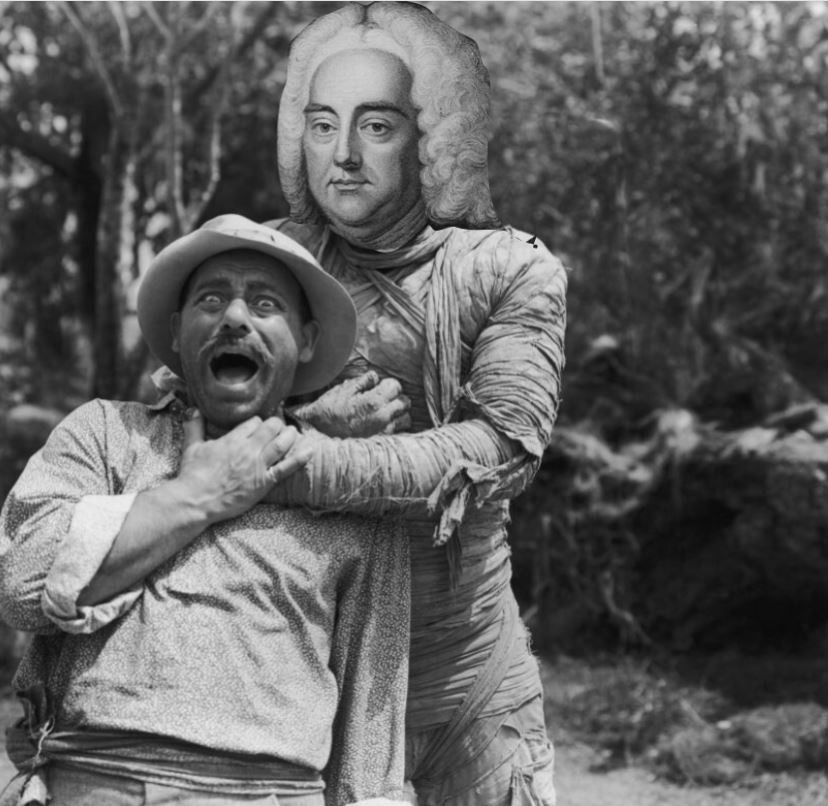
    Now, for Handel’s birthday, here’s one to set aside for the weekend. A traditional production of “Giulio Cesare in Egitto” (“Julius Caesar in Egypt”) opens in 48 B.C. This one, however, is built on the premise of a Howard Carter-like figure uncovering an Egyptian tomb in the 1920s – only to have the contents spring to life. The approach was conceived by George Petrou, artistic director of the International Handel Festival Göttingen.

    The production opens with a quote from Carl Jung, rendered in the style of a silent movie intertitle: “Where love reigns, there is no will to power, and where power takes precedence, love is absent. One is the shadow of the other.” Cleopatra emerges from a sarcophagus, the priests are all dressed like Anubis, canine-headed Egyptian lord of the underworld, and there are mummies all over the place. Nireno’s aria that opens Act II is given ‘20s-style jazz inflections. Furthermore, on this occasion, it is sung from the wings while lip-synched and pantomimed by the production’s assistant director, because the scheduled singer was under the weather!

    Handel was 39 when he wrote the music. Is the production in line with what the composer imagined? Well, not exactly, but it looks like it could be inventive and fun, in an escapist kind of way. I look forward to sitting down and watching the whole thing. Nothing screams Handel like hot sand, jodhpurs, and pith helmets.

    Happy birthday, Handel!
  • Handel’s Enduring Appeal: A Modern Renaissance

    Handel’s Enduring Appeal: A Modern Renaissance

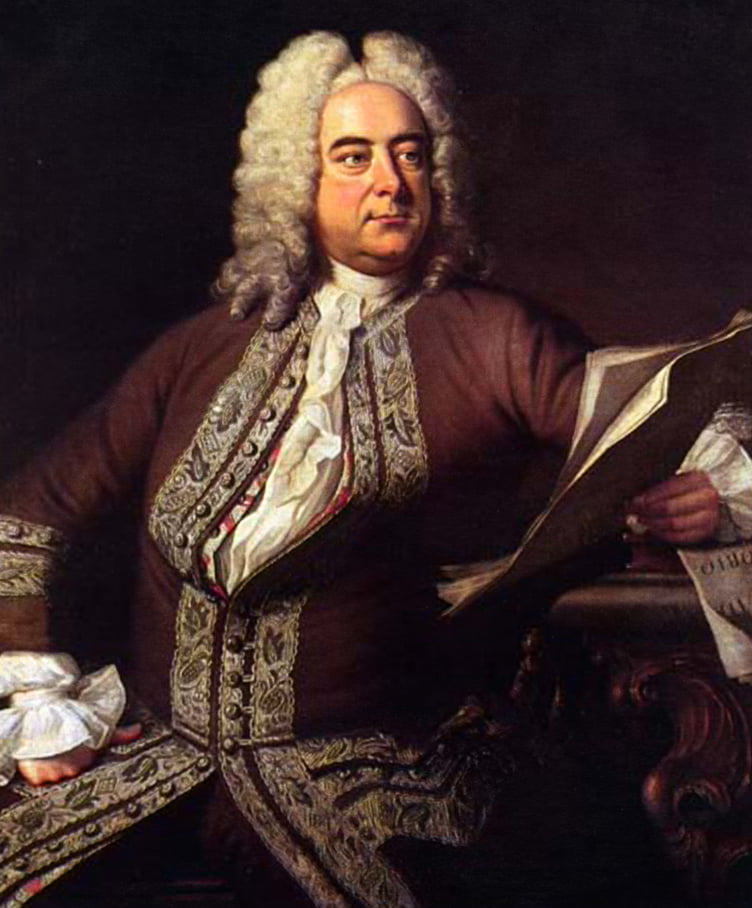
    Is it just me, or has the standard of Handel performance gotten so much better in recent decades? I guess you really don’t hit your stride as a composer until after the first 300 years.

    For as much as I hold a nostalgic affection for Hamilton Harty’s ponderous take on the “Water Music” – a concert staple for over half a century – a modern orchestra gives little indication of just how thrilling Handel can be. At its best, his vocal stuff, in particular, can be sublime.

    I didn’t always feel this way. When I attended a performance of “Ariodante” in Philadelphia, back in the 1989, even with the dream pairing of Benita Valente and Tatiana Troyanos, I was afraid I was going to give up the ghost. When it really doesn’t connect, three or four hours of Baroque opera can easily start to feel like too much of a good thing. My girlfriend at the time wanted to leave after the second act, but I insisted we stick it out. I was eager to witness the climactic swordfight, described in the synopsis – which, in the end, amounted to a single, slow-motion riposte. The weak pay-off earned me an evil glare.

    The experience had the effect of putting me off Handel opera in much the same way that downing a bottle of Inver House whiskey in my teens put me off Scotch. Just as I later discovered, to my surprise and delight, how much I truly appreciate a fine single malt, when I had occasion to reacquaint myself with “Ariodante” at the Princeton Festival in 2010, I was astonished to find that I actually liked Handel opera after all.

    A few years ago, when I wandered into a library book sale, I discovered that someone had dumped their entire collection of Handel operas and oratorios. I don’t know how many there were to begin with, but I walked out with everything that was left. Who knows if I’ll ever get through all of them before I die, but I am very happy to have them.

    That said, I do find Handel’s operas work best when encountered live, in performance – whether seen in person or on screen – which is the opposite of what I would say about most of the operas I prefer. The images that are formed in my mind by the music far surpass anything that can be realized on a stage. When attending opera, it is the experience of the orchestra, the voices, and the sense of “theater” I enjoy. But the visuals are too mundane for my grandiose vision.

    I also tend to get annoyed at modern stagings, with concepts that too often seem forced and undercut the vitality of the music. Again, Handel is different. David McVicar’s production of “Agrippina” must be one of the best things in the Met’s current repertoire.

    Of course, there is always the possibility that it is not so much Handel who has changed – despite a pronounced shift toward “authentic” performance practice over the past 40 years or so. It could be that even a paragon such as myself, sprung fully-formed from the head of Zeus, might have evolved. I’m reminded of the famous Twain observation that, when he was 14, his father was so ignorant he could hardly stand it; but when he was 21, he was astonished by how much the old man had learned.

    I’ve come a long way since my friends and I spent an ouzo-soaked 24 hours celebrating Handel’s tercentenary back in 1985. Everything old is new again. Handel grows wiser with the years, but also more thrilling.

    Happy birthday, G.F.H.


    Amanda Forsythe and Apollo’s Fire, with an aria from “Giulio Cesare”

    Danielle de Niese with the same aria, staged:

    Of course, there’s always Thomas Beecham to prove me wrong:

Tag Cloud

Aaron Copland (92) Beethoven (95) Composer (114) Film Music (119) Film Score (143) Film Scores (255) Halloween (94) John Williams (185) KWAX (229) Leonard Bernstein (99) Marlboro Music Festival (125) Movie Music (134) Opera (198) Philadelphia Orchestra (87) Picture Perfect (174) Princeton Symphony Orchestra (106) Radio (87) Ralph Vaughan Williams (85) Ross Amico (244) Roy's Tie-Dye Sci-Fi Corner (290) The Classical Network (101) The Lost Chord (268) Vaughan Williams (102) WPRB (396) WWFM (881)

DON’T MISS A BEAT

Receive a weekly digest every Sunday at noon by signing up here


RECENT POSTS