
It’s seldom that you see the words “bassoon” and “superstar” in the same sentence, but there you have it. Klaus Thunemann was internationally famous and a familiar presence to classical music radio listeners of the ‘80s, ‘90s, and beyond. Thunemann was principal bassoonist of the North German Radio Symphony Orchestra of Hamburg from 1962 to 1978, but it was a recording contract with Philips Records that gave him a world platform as he was partnered with Neville Marriner, Alfred Brendel, Heinz Holliger, and the chamber orchestra I Musici. His recordings for Philips and Deutsche Grammophon were guaranteed crowd-pleasers, and I played them fairly frequently on my morning radio shows. Against the monotony of endless new releases of “The Four Seasons,” Thunemann’s recordings of Vivaldi’s bassoon concertos were bracing, hypnotic, and amusing. Klaus Thunemann died on Friday at the age of 88. R.I.P.
Tag: Deutsche Grammophon
-
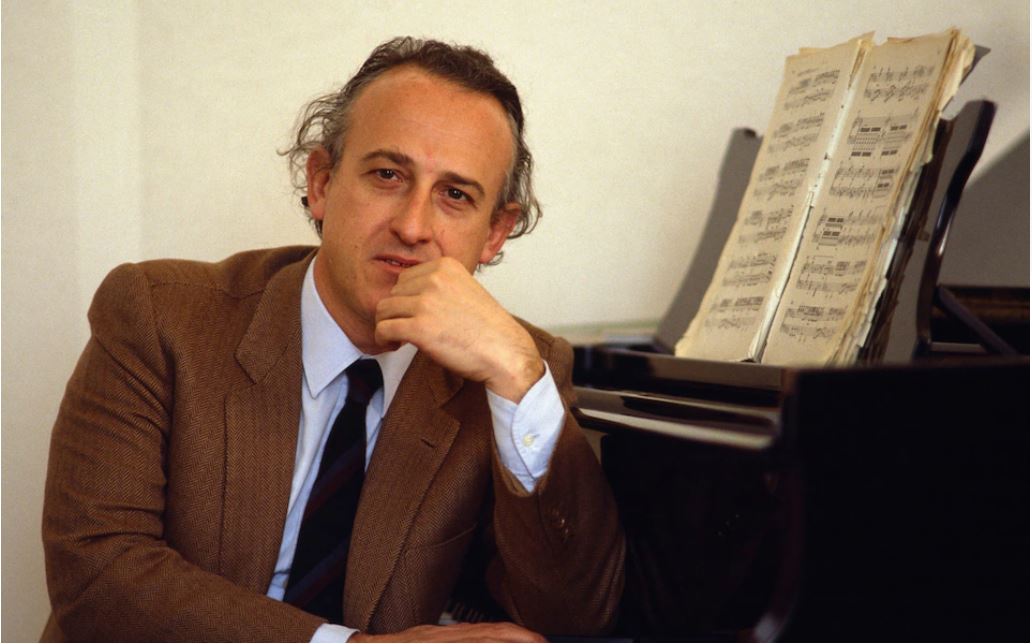
Maurizio Pollini A Titan Passes
In the aftershock of the death of any prominent musician, my thoughts inevitably wend their way to the question of who’s left? It’s been the case for me at least since the ‘90s, when the classical music world lost so many – all old friends, familiar from decades of recordings – and always the evidence seems to be of little cheer. Now, a little over a week after the death of the great pianist Byron Janis, I receive news of the loss of Maurizio Pollini.
Pollini was renowned for his interpretations of Beethoven and Chopin, certainly, but for me he was more riveting when tackling modernist works. His albums of Webern’s Variations and Boulez’s Piano Sonata No. 2 and Stravinsky’s Three Movements from “Petrushka” and Prokofiev’s Piano Sonata No. 7, all combined when released on CD, are high points of his discography. He was also a champion of the music of Karlheinz Stockhausen and Luigi Nono.
At his best, he had a way of making even standard repertoire seem experimental. He recorded a magnificent Liszt program, including the monumental Piano Sonata in B minor (surely the most radical sonata of its day), with a truly revelatory selection of the composer’s later, prophetic works that seldom, as under Pollini’s touch, pointed the way so assuredly to the 20th century.
There was an aura about the man and the artist that exuded integrity, idealism, intelligence, and mystery, between his unwavering embrace of left-wing politics (he was an avowed communist), his notorious perfectionism (he refused to authorize recordings in which he perceived defects that no one else could hear), and last-minute cancellations (including one at Princeton’s McCarter Theatre in 2011).
Again, the question: who’s left? Of the giants of Pollini’s generation, I mean – certainly of the stable of great pianists who kept the major labels (in Pollini’s case, Deutsche Grammophon) relevant?
Maurizio Pollini was 82 years-old. An irreplaceable musician. I can’t say I was equally impressed with all of his Beethoven and Chopin, which could come across as a little clinical – I am more of the Janis camp than the Pollini – but when he connected, the rewards were cherishable. I, for one, am very thankful to be able to choose from his recordings. R.I.P.
Chopin, Nocturne No. 8, Op. 27, No. 2 (live in concert)
Liszt, “Unstern! Sinistre, Disastro”
Boulez, Piano Sonata No. 2
Young Pollini plays Beethoven’s “Emperor” Concerto (live)
-

Remembering Lenny Bernstein Classical Music’s Lost Stars
Wow, Lenny, what happened? Almost 25 years in the grave. I remember receiving the news of your death, on October 14, 1990, only 12 days after the passing of Aaron Copland. It was a horrible one-two for American music.
The classical music scene still seemed robust when you were alive, and it was actually exciting to walk into Tower Records, pre-internet, and find one of your new releases, with the gold Deutsche Grammophon cartouche – back when Deutsche Grammophon was still Deutsche Grammophon – displayed in one of those ludicrous blister packs.
Those were the days before much of the more interesting material you recorded for Columbia had been reissued by Sony. Your earlier, fantastic Schumann cycle hadn’t even made it to CD. My adrenaline would skyrocket for a new recording of American music. Copland? Bought! A re-recording of the Roy Harris and William Schuman Symphonies No. 3? Ka-ching!
While there are so many talented performers out there today, few of them have your larger than life personality, and none of them have your media presence. Where are the Bernsteins? The Horowitzes? The Pavarottis?
Of course, a lot of the change has to do with a break of the stranglehold on the market by major record labels with major marketing budgets. Also, in a sense, the mystique of the classical superstar has been swapped for the grass roots efforts of musicians eager to reach out to the public by way of performances at bars and in pop-up concerts. Not a bad thing for the performers or the music, but the landscape is certainly different.
There was a time when opera singers and violinists would be featured on late night talk shows, or pianists and guitarists would turn up on television commercials. They were artists, but they were also celebrities. In a sense, it was what was really needed to keep classical music in the public eye, if not the public ear, so that people understood that the music was out there, and it could be big, a viable alternative to pop.
Even when you were doing something purely educational, they would put you on TV. You were that rare combination of first rate music-making and Hollywood pizzazz. Happy birthday, Lenny. You sure are missed.
Rudolf Firkušný sells sneakers for Nike:
https://www.youtube.com/watch?v=vVKWBrVqCzsPavarotti on “The Tonight Show”:
https://www.youtube.com/watch?v=oDMrLuK24r4
https://www.youtube.com/watch?v=dC1vaeU1UQk
https://www.youtube.com/watch?v=hWNJRou4lKsLeonard Bernstein “Young People’s Concerts”: What is Melody?
https://www.youtube.com/watch?v=2AFovpvDRCI
https://www.youtube.com/watch?v=O09V4NQkOKI
https://www.youtube.com/watch?v=R_pPeBg3Tb8
https://www.youtube.com/watch?v=bTmrGbwmX7w
Tag Cloud
Aaron Copland (94) Beethoven (95) Composer (114) Film Music (150) Film Score (143) Film Scores (255) Halloween (102) John Williams (198) KWAX (233) Leonard Bernstein (105) Marlboro Music Festival (125) Movie Music (165) Mozart (91) Opera (215) Philadelphia Orchestra (90) Picture Perfect (174) Princeton Symphony Orchestra (110) Radio (90) Ross Amico (244) Roy's Tie-Dye Sci-Fi Corner (290) The Classical Network (101) The Lost Chord (269) Vaughan Williams (107) WPRB (397) WWFM (881)