Tag: Disney

  • A Dream to Some… A Nightmare to Others!

    A Dream to Some… A Nightmare to Others!

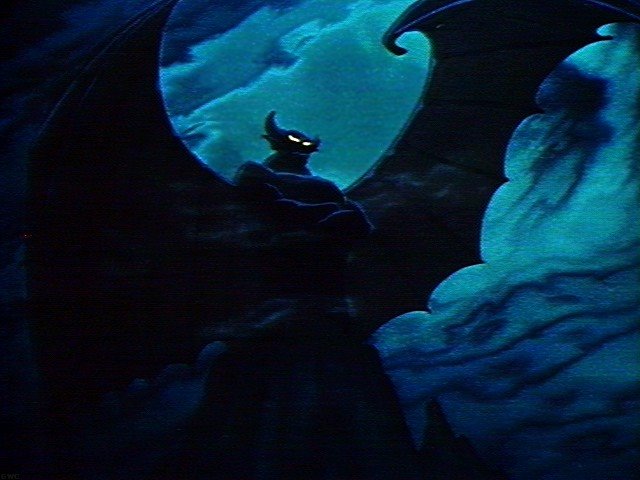
    Even though the solstice was on Sunday, the longest day, a lot of Europeans celebrate the height of the season tonight, St. John’s Eve. For the record, that’s when the demon Chernobog is supposed to emerge from Bald Mountain – regardless of what Disney may think. (The narrator of “Fantasia,” Deems Taylor, says it’s supposed to be Walpurgis Night, April 30, the eve of May Day.)

    In England, June 23 is Midsummer’s Eve, the setting of Shakespeare’s most famous comedy. I have a soft spot for the 1935 film version of “A Midsummer Night’s Dream,” overseen by Viennese impresario Max Reinhardt and featuring a real hodgepodge of actors from the Warner Bros. stable, including crooner (and later tough guy) Dick Powell as Lysander, Olivia de Havilland as Hermia, James Cagney as Bottom, and yes, 14-year-old Mickey Rooney as Puck.

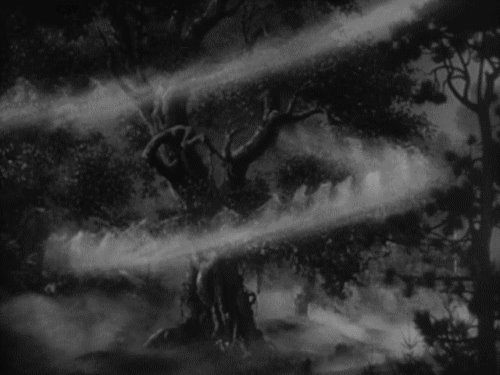
    But it’s the technical achievement that really puts it over. The opulent film (spun off from an extravagant Hollywood Bowl production) sports an effervescent score by Erich Wolfgang Korngold, woven together with dewy gossamer from the compositions of Felix Mendelssohn, enthralling production design and art direction by Anton Grot, with an especially delightful sequence of fairies ascending a woodland mist encircling a tree, and poetic choreography by Branislava Nijinska. There’s so much poetry in this movie it even sustains the ridiculous antlered crown worn by magnificent Victor Jury (soon to play John Wilkerson, the unsavory overseer in “Gone with the Wind”), putting his superior elocution to impressive use as Oberon.

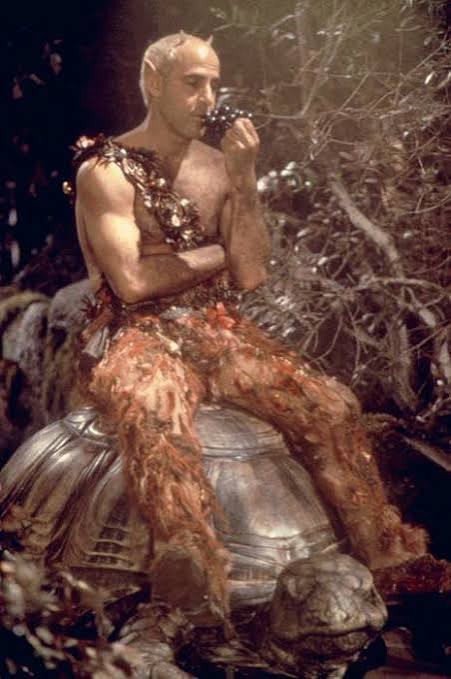
    “A Midsummer Night’s Dream” has been filmed many times, of course. (I’m still trying to forget a middle-aged Stanley Tucci as Puck, riding a turtle, from the frustrating 1999 version, also starring Michelle Pfeiffer and Kevin Kline.)

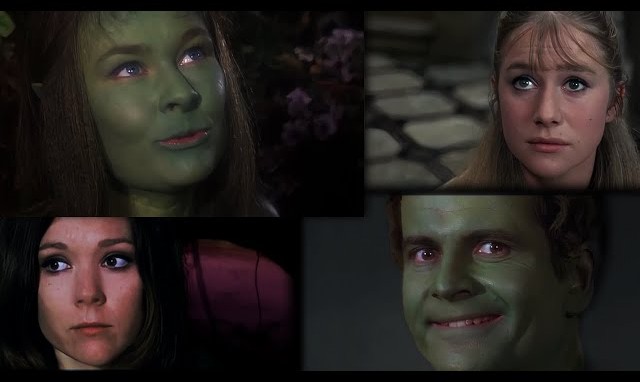
    One I find especially unpleasant sports perhaps the most impressive pedigree of them all – a 1968 version that stars, among others, Judy Dench, Helen Mirren, Diana Rigg, David Warner, and Ian Holm, in green body paint, as perhaps the creepiest Puck in history. Also, for “Star Wars” aficionados, one-time Annakin Skywalker (before George Lucas scrubbed him out) Sebastian Shaw as Peter Quince. To think, the film is directed by theatrical deity Peter Hall! With such an assemblage of talent, how could it miss?

    Well, it *was* 1968, and there were certainly more attractive, more lucid eras. As I recall, the film is uningratiating – ugly and claustrophobic, with hand-held cameras and “Kung Fu Theater” style editing, little concern for the beauty of the language, and perhaps Holm’s only bad performance (with that damn tongue).*
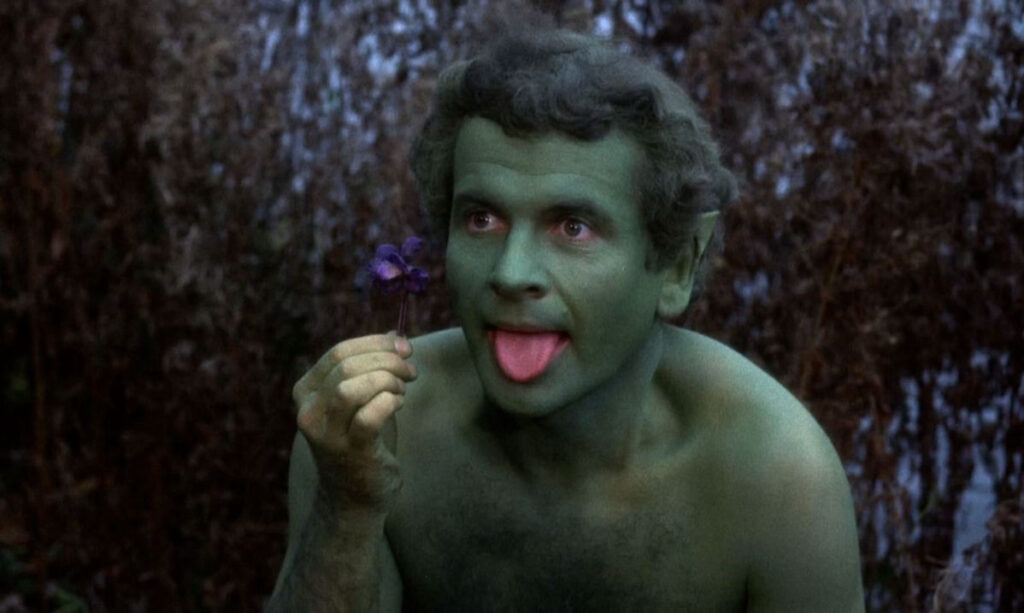

    I disliked it so intensely, in fact, that it’s one of those instances in which I feel surely it couldn’t be as bad as I remember. This is the most dangerous kind of bad, because there’s a good chance I will wander back to it, lured beyond my will by curiosity and fey enchantment.

    I must say, at least the print at the link is in the best resolution I have ever seen. I’m used to encountering it in transfers from grainy VHS. Here it is. Don’t say I didn’t warn you!


    Then check out the 1935 version, for the production, especially. It really is like a dream. Perhaps it won’t hit you the same way it does me, but I find it to be pure enchantment. Here’s a taste.


    It’s unfortunate I couldn’t find a crisper transfer.

    Americans might question why Midsummer would fall at the beginning of the season. Traditionally, in much of Europe, summer began on May Day. Under the Julian calendar, the calendar employed the Roman Empire that traveled to Anglo-Saxon England, summer began on May 9. So Midsummer is June 24.

    Yeah, they got it wrong, but when in Rome…

    Happy Midsummer Night!

    ———-

    *EDIT: Okay, maybe I went too far in my savaging of the 1968 version with “little concern for the beauty of the language.” This is one cleanly-articulated text. I’ve been noticing of late how nobody these days enunciates. So the readings were actually quite refreshing. The problems (the rapid-fire delivery and disruptive editing) don’t really kick in until the fairies show up. Holm must have had a thermos of coffee and a kilo of cocaine every morning on the way to the shoot. It’s still an ugly movie, but if you just listen to the words, it’s actually quite good. And of course, you can’t dismiss it out hand with that cast!
  • The Rocketeer A Retro Superhero Dive

    The Rocketeer A Retro Superhero Dive

    In a lot of ways, “The Rocketeer” (1991) is an old-fashioned whiz bang adventure. There are the consciously-fabricated elements of a fabled lost America, with its sepia tones and well-dressed citizenry, an upright, uncomplicated hero (and seat-of-the-pants test pilot, played by Billy Campbell), his truehearted sweetheart (an aspiring starlet, played by Jennifer Connelly), and comic book Nazis. You know the kind of movie. Toss the Chuck Yeager scenes from “The Right Stuff” into a blender with “Raiders of the Lost Ark.”

    But looking back, “The Rocketeer” genuinely is from a more innocent time, before penny-pinching computer animation squeezed out analogue ingenuity, when superhero movies were still comparatively rare, and no studio release, not even one directed by Steven Spielberg, was expected to gross billions of dollars. Interesting to muse on the transformation of Disney from the studio that produced this squeaky-clean popcorn entertainment to the current Dark Lord of assembly line Marvel movies.

    “The Rocketeer” rode the same aftershock of ‘80s blockbusters that yielded “The Shadow,” “The Phantom,” and later in the decade, “The Mask of Zorro,” before movies took a decisive turn down a darker, more violent, and decidedly dystopian trail.

    Alan Arkin plays the Doc Brown character, a resourceful mechanic who can work miracles with spit and chewing gum. Paul Sorvino plays a mafia boss, who, when the chips are down, hates the Nazis every bit as much as Meyer Lansky did. Philadelphia’s Jon Polito, a Coen Brothers’ favorite, plays – what else? – the sleazy airfield boss.

    For classic film buffs, there’s added enjoyment in the recreations of old Hollywood (from back in the days when the iconic sign still read Hollywoodland), with Timothy Dalton relishing his role as an Errol Flynn-like swashbuckler (one of the sets from “The Adventures of Robin Hood” is lovingly recreated), unsubstantiated rumors that Flynn was a Nazi spy (as asserted in a controversial 1980 biography by Charles Higham) here taken at face value. Remember this is fiction, folks, based on a comic book, in fact, by Dave Stevens.

    There are also set pieces that are staged in a nightclub and a dirigible, Terry O’Quinn appears as Howard Hughes, other actors impersonate Clark Gable and W.C. Fields, and there’s even an uncanny resurrection of acromegalic actor Rondo Hatton (Tiny Ron quite convincing as the Creeper).

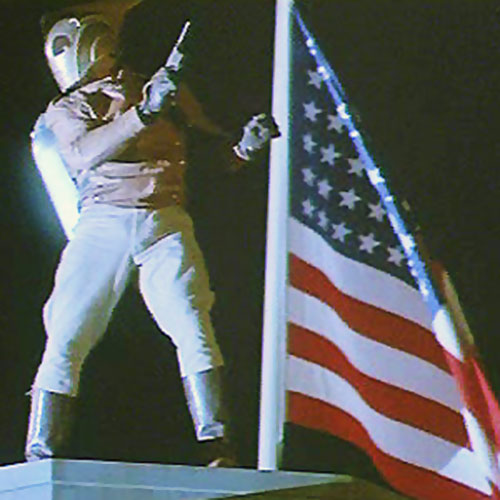
    Most important is the jet-pack propelled Rocketeer himself, with serial icon Commando Cody given a seriously art deco makeover.

    You can see the kind of movie they wanted “The Rocketeer” to be. It was directed by Joe Johnston, who co-designed Boba Fett and was an Academy Award winning effects artist on both “Star Wars” and “Raiders of the Lost Ark.” Among his more recent films as a director is “Captain America: The First Avenger.”

    Unfortunately, “The Rocketeer” lacks uplift and euphoria. The film needed a Richard Donner (who directed “Superman”) or a Spielberg at the helm. Then it might have had that elusive spark, so that when an onlooking cries out, “It’s the Rocketeer!” we really want to laugh and cheer.

    James Horner’s score captures the optimism of limitless possibility and wide-open adventure (how I miss Horner!), but he doesn’t offer a rousing secondary “super” theme that would have helped to sell the premise. In the action scenes, the music gets busy, but it fails to excite.

    “The Rocketeer” never quite soars or attains the giddy heights it aspires to.

    Not to talk it out…

    “The Rockeeter” will be the topic of our weekly conversation on the next Roy’s Tie-Dye Sci-Fi Corner. Get fueled up! Your presence in the comments section will give us a lift, when we livestream on Facebook, YouTube, etc., this Friday evening at 7:00 EDT!

    https://www.facebook.com/roystiedyescificorner

  • Alan Menken Disney Legend Turns 75

    Alan Menken Disney Legend Turns 75

    His music was often beauty to Disney’s beast.

    Eight-time Academy Award winning composer Alan Menken turns 75 today.

    Menken is best-recognized as the unmistakable sound of the Disney animation renaissance that began with “The Little Mermaid” in 1989. The film earned him two Academy Awards (for Best Original Score and Best Original Song, “Under the Sea”). He went on to repeat the success with his song-driven scores for “Beauty and the Beast” (1991), “Aladdin” (1992), and “Pocahontas” (1995).

    More than anybody else, Menken was responsible for introducing the Broadway idiom that’s become so indelibly linked in moviegoers’ minds with animated features. His frequent collaborator was Howard Ashman, who, following him from the musical theater, provided lyrics for the first three mentioned films, as well as for Menken’s stage-and-screen musical “Little Shop of Horrors,” among others. With Ashman’s untimely death at the age of 40, Tim Rice stepped up to complete “Aladdin.” Stephen Schwartz was Menken’s lyricist for “Pocahontas.”

    For Disney, Menken also provided music for “Newsies” (1992), “The Hunchback of Notre Dame” (1996), “Hercules” (1997), “Home on the Range” (2004), “Enchanted” (2007), “Tangled” (2010), and “Disenchanted” (2022).

    He is the second most-prolific Oscar winner in the history of film scoring, after Alfred Newman (who won nine). John Williams, of course, is the most nominated (with 54!).

    Menken’s success has extended well beyond the big screen. He’s garnered a Tony, eleven Grammy Awards, seven Golden Globe Awards, and a Daytime Emmy (making him an EGOT: an Emmy-Grammy-Oscar-Tony winner). Richard Rodgers and Marvin Hamlisch also won the Pulitzer (making them PEGOTs).

    However, Menken has the further distinction of having won a Razzie for Worst Original Song for “High Times, Hard Times,” from “Newsies” (making him a REGOT?). He was a good sport to collect the award in person. I’m sure he cried all the way to the bank.

    Incidentally, it was for the stage adaptation of “Newsies” that Menken won the Tony in 2012.

    Happy birthday, Alan Menken!


    This is from a fun little project in which a number of notable Disney tunes were arranged in the styles of the great classical composers. Here’s Menken’s “Beauty and the Beast,” rendered in the style of Rachmaninoff.

  • Chernobog St Johns Eve and Disney’s Fantasia

    Chernobog St Johns Eve and Disney’s Fantasia

    When the sun sets this evening, June 23, you had better be prepared to deal with Chernobog! That’s right, it’s St. John’s Eve – the eve of the Feast Day of St. John the Baptist.

    On the eve of St. John’s nativity (observed), St. John’s wort, prized for its miraculous healing powers, is sought, as is the fern flower, believed by some to bring good fortune, wealth, and the ability to understand animal speech.

    It’s a time for the lighting of bonfires against evil spirits, and even dragons, which roam the earth as the sun again pursues a southerly course. And it’s a time when witches are believed to rendezvous with powerful forces, such as the Slavic demon that emerges from the Bald Mountain at the climax of Disney’s “Fantasia.”

    “Dracula” fans might be interested to know that none other than Bela Lugosi struck demonic poses for Disney animators for several days as a model for the film’s climactic sequence. Ultimately, he would be replaced by Wilfred Jackson. Still, how cool is that?

    Leopold Stokowski conducts the Philadelphia Orchestra in his own arrangement of Modest Mussorgsky’s music on the soundtrack. Also, I would be remiss if I didn’t mention that that’s Princeton’s Westminster Choir, as “A Night on Bald Mountain” segues into Schubert’s “Ave Maria.”

    The master of ceremonies, Deems Taylor, states that the setting is Walpurgis Night (April 30). Deems Taylor is wrong! I’m not afraid to say so, since I’ve pretty much given up on ever receiving a Deems Taylor-Virgil Thomson Award for Radio Broadcast at this point, for as richly deserved as it might be.

    Chernobog could care less about Walpurgis Night. He’s kickin’ it up for St. John!

    Relive your childhood anxiety here. Click on “watch video clip” at the link.

    http://www.cornel1801.com/disney/Fantasia-1940/film8.html

  • Animated Music Shostakovich Disney Picture Perfect

    Animated Music Shostakovich Disney Picture Perfect

    This week on “Picture Perfect,” we’ll begin the mercurial month of March with an hour of animated music. Tune in for a sampling of the artistry of cartoon luminaries Carl Stalling (Merrie Melodies, Looney Tunes, Silly Symphonies) and Scott Bradley (Tom and Jerry, Droopy Dog, Barney Bear), alongside contributions from perhaps an unexpected source – Dmitri Shostakovich.

    Shostakovich was about 27 years-old in 1933, when he was hired by experimental animator Mikhail Tsekhanovsky to supply the manic underscore for “The Priest and His Hired Worker Balda.” Visionary though he was, Tsekhanovsky probably didn’t count on just how manic Shostakovich could be. The composer’s inspiration flowed like water down the Neva, and Tsekhanovsky struggled to keep up, all the while pushing himself to create images worthy of his collaborator.

    Then, in 1936, following the debut of the opera “Lady Macbeth of Mtsensk,” Shostakovich was condemned by the Soviet authorities in an infamous “Muddle Instead of Music” denunciation in Pravda, and the composer decided he had better cool his jets. The potentially inflammatory Symphony No. 4 went into a drawer, and he halted work on the film, which he had already been involved with, on and off, for nearly three years. When the denunciation came, he was in the process of wholly reorchestrating the existing music, at the studio’s request, for smaller forces.

    While the feature would remain unfinished, Tsekhanovsky compiled what he had – some 40 minutes in all – and the work was put into storage at the Lenfilm archives. Unfortunately, nearly all of it would be destroyed by fire during the Nazi siege of Leningrad in 1941.

    Only the bizarre bazaar scene survives. I’m willing to bet this clip will haunt the rest of your day.

    We’ll hear selections from Shostakovich’s score, shorn of the nightmare carnival imagery. We’ll also hear music he composed for the 1940 short “The Tale of the Silly Little Mouse.”

    https://www.youtube.com/watch?v=ETGWHc2-ziI

    The hour will conclude with excerpts from Disney’s groundbreaking “Snow White and the Seven Dwarfs,” featuring songs by Frank Churchill & Larry Morley and underscore by Paul J. Smith and Leigh Harline.

    Aaa-OOOGAH!! That’s an hour of music from the golden age of animation on “Picture Perfect,” music for the movies, now in syndication on KWAX, the radio station of the University of Oregon!


    Remember, KWAX is on the West Coast, so there’s a three-hour difference for those of you listening in the East. Here are the respective air-times for all three of my recorded shows (with East Coast conversions in parentheses):

    PICTURE PERFECT, the movie music show – Friday on KWAX at 5:00 PM PACIFIC TIME (8:00 PM EST)

    SWEETNESS AND LIGHT, the light music program – ALL NEW! – Saturday on KWAX at 8:00 AM PACIFIC TIME (11:00 AM EST)

    THE LOST CHORD, unusual and neglected rep – Saturday on KWAX at 4:00 PM PACIFIC TIME (7:00 PM EST)

    Stream all three, at the times indicated, by following the link!

    https://kwax.uoregon.edu/

Tag Cloud

Aaron Copland (93) Beethoven (95) Composer (114) Film Music (136) Film Score (143) Film Scores (255) Halloween (94) John Williams (195) KWAX (229) Leonard Bernstein (103) Marlboro Music Festival (125) Movie Music (151) Mozart (88) Opera (207) Philadelphia Orchestra (89) Picture Perfect (174) Princeton Symphony Orchestra (108) Radio (88) Ross Amico (244) Roy's Tie-Dye Sci-Fi Corner (290) The Classical Network (101) The Lost Chord (268) Vaughan Williams (103) WPRB (396) WWFM (881)

DON’T MISS A BEAT

Receive a weekly digest every Sunday at noon by signing up here


RECENT POSTS