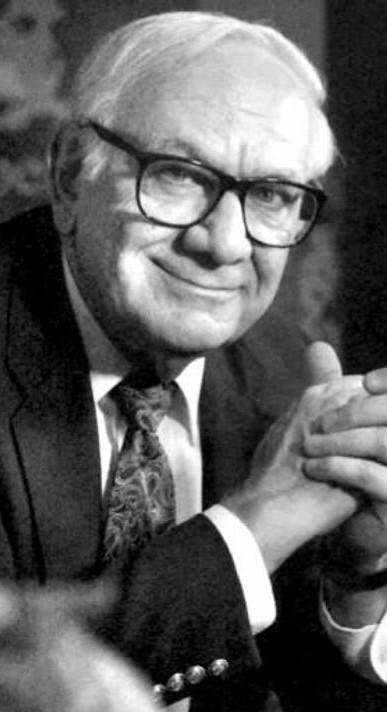
Tag: Dominick Argento

  • American Gothic Halloween Music on KWAX

    American Gothic Halloween Music on KWAX

    Ask for me tomorrow, and you shall find me a grave man!

    This week on “The Lost Chord,” with Hallowe’en lurking like a mad clown astride a vampiric spider around a Caligari corner, we’ll seek our thrills in the comparative safety of three American experiments in controlled terror.

    Wander the creepy cornfields of the overactive imagination with music by George Crumb (“A Haunted Landscape”), Morton Gould (“Jekyll and Hyde Variations”), and Dominick Argento (“Le Tombeau d’Edgar Poe”).

    All three composers have fairly local connections. Crumb, born in Charleston, West Virginia, on October 24, 1929, made his home outside Philadelphia for some 57 years. He died in Media, PA, in 2022. Argento, born in York, PA, on October 27, 1927, died in Minneapolis in 2019. Gould, born in Queens on December 10, 1913, died in Orlando in 1996.

    These tricksters were treated to the Pulitzer Prize for Music – Crumb in 1968, Argento in 1975, and Gould in 1995.

    Walk softly around three spine-tingling exercises in American Gothic. Join me, if you dare, for “Grave Endeavors,” on “The Lost Chord,” now in syndication on KWAX, the radio station of the University of Oregon!


    Clip and save the start times for all three of my recorded shows:

    PICTURE PERFECT, the movie music show – Friday at 8:00 PM EDT/5:00 PM PDT

    SWEETNESS AND LIGHT, the light music program – ALL NEW! – Saturday at 11:00 AM EDT/8:00 AM PDT

    THE LOST CHORD, unusual and neglected rep – Saturday at 7:00 PM EDT/4:00 PM PDT

    Stream them, wherever you are, at the link!

    https://kwax.uoregon.edu/

  • American Gothic Music for Hallowe’en

    American Gothic Music for Hallowe’en

    Ask for me tomorrow, and you shall find me a grave man!

    This Sunday night on “The Lost Chord,” with Hallowe’en lurking like a mad clown astride a vampiric spider around a Caligari corner, we’ll seek our thrills in the comparative safety of three American experiments in controlled terror.

    Wander the creepy cornfields of the overactive imagination with music by George Crumb (“A Haunted Landscape”), Morton Gould (“Jekyll and Hyde Variations”), and Dominick Argento (“Le Tombeau d’Edgar Poe”).

    All three composers have fairly local connections. Crumb, born in Charleston, West Virginia, on October 24, 1929, makes his home outside Philadelphia. Argento, born in York, PA, on October 27, 1927, died in Minneapolis in 2019. Gould, born in Queens on December 10, 1913, died in Orlando in 1996.

    These tricksters were treated to the Pulitzer Prize for Music – Crumb in 1968, Argento in 1975, and Gould in 1995.

    Walk softly around three spine-tingling exercises in American Gothic. Join me, if you dare, for “Grave Endeavors,” this Sunday night at 10:00 EDT, on WWFM – The Classical Network and wwfm.org.

  • Jack Beeson American Opera Remembered

    Jack Beeson American Opera Remembered

    Does anybody remember Jack Beeson (1921-2010)? I mean, do his works get performed anymore? Maybe in opera departments in music conservatories. He was part of that whole movement by mid-century American composers to write tonal, accessible opera, frequently on American themes. Carlisle Floyd and Dominick Argento were among the most successful. And Beeson was no slouch.

    By disposition, Beeson was an easygoing Midwesterner, a transplant from Muncie, Indiana, to New York City, where he taught at Columbia University for 20 years. Somehow he managed not to be squeezed between the warring artistic factions of uptown academics and downtown avant-gardists. Throughout the contentious ‘60s, Beeson kept right on composing well-crafted music that spoke directly to his audiences. He also gave free rein to his pupils to pursue their own voices, offering guidance only when he deemed it necessary. Strictly speaking, he thought it was impossible to teach composition. One could only teach technique.

    He himself had been inspired to write opera because of early exposure to radio broadcasts of the Metropolitan Opera. He claimed to be the only American composition student of Béla Bartók, whose reservations he overcame with the observation that it might be possible to learn something from someone who thought he couldn’t teach. Bartók spent his last years in New York, where he was supported by a research fellowship from Columbia.

    Among Beeson’s operas are “Hello Out There!” (1953), “The Sweet Bye and Bye” (1956, revised 1958), and “Lizzie Borden” (1965).

    Borden, of course, entered American folklore after she was acquitted of the axe murders of her father and stepmother in Fall River, Massachusetts, in August 1892. The lurid details and the fact that no one else was ever charged with the crimes have only cemented the story in the American consciousness. The story also became the subject of Morton Gould’s ballet, “Fall River Legend.”

    Here’s “Lizzie Borden” from the New York City Opera (introduced by Martin Bookspan and Beverly Sills):

    Beeson’s Symphony No. 1

    Peter G. Davis remembers Beeson in the New York Times:

    https://www.nytimes.com/2010/07/11/arts/music/11beeson.html

    In an engrossing interview with Bruce Duffie. Beeson has something to say about birthday programming at the end!

    http://www.bruceduffie.com/beeson.html

    Beeson would have been 100 years-old today. Forgive me, Jack, but happy birthday!

  • Dominick Argento Remembered This Sunday

    Dominick Argento Remembered This Sunday

    This Sunday night on “The Lost Chord,” I’ll be honoring the late American composer Dominick Argento. Argento died on February 20 at the age of 91. Join me for his “Valentino Dances,” “Six Elizabethan Songs,” and “A Ring of Time.” It’s an hour of “Argento Mementos,” this Sunday night at 10:00 EST, on WWFM – The Classical Network and wwfm.org.

  • Dominick Argento A Remembrance

    Dominick Argento A Remembrance

    American composer Dominick Argento died on February 20 at the age of 91. Acclaimed particularly for his vocal works, Argento was awarded the Pulitzer Prize for Music for his song cycle, “From the Diary of Virginia Woolf,” in 1975. This Sunday night on “The Lost Chord,” I’ll offer a remembrance of the man and his achievements.

    Argento was born in York, PA, to Sicilian immigrant parents, who were inn-keepers and restaurateurs. However, it was in the Twin Cities that he would flourish. He became a professor of music at the University of Minnesota and one of the founders of what is now Minnesota Opera.

    He was recognized as a master of modern opera, the most significant American operatic composer between Gian Carlo Menotti in the 1950s and Philip Glass in the 1970s. His success is all the more remarkable, considering Argento spent virtually his entire career very far away from the artistic centers on either coast.

    Largely self-taught as a child, he was accepted into the Peabody Conservatory, after service in WWII. There, among his teachers, were Nicolas Nabokov and Hugo Weisgall. Later, he continued his studies with Luigi Dallapiccola in Florence. Howard Hanson, Bernard Rogers, and Alan Hovhaness were also important mentors. Argento received his doctorate from the Eastman School in 1958. He then moved to Minneapolis, where he lived for the next six decades, summering in Florence with his wife, the soprano Carolyn Bailey.

    In Minneapolis, he worked closely with the newly-formed Guthrie Theatre. His local successes attracted national nation and led to commissions from major opera houses from all over the country. His song cycles were championed by some of the great singers, including Frederica von Stade, Janet Baker, and Håkon Hågegard. “Casa Guidi,” a song cycle on texts of Elizabeth Barrett Browning, was recorded by Von Stade and received a Grammy Award in 2004 for Best Contemporary Classical Composition.

    Beginning in the early ‘70s, Argento also devoted himself to choral music, in large part because of his association with Philip Brunelle and the Plymouth Music Series of Minneapolis’ Plymouth Congregational Church.

    In common with Benjamin Britten, Argento’s musical language could be, on occasion, a little quirky, yet always he strove for accessibility. Among his own students were Libby Larsen and Stephen Paulus.

    We’ll hear music from one of his 14 operas, “The Dream of Valentino,” from 1993. Accordionist William Schimmel will strut and slither in “Valentino Dances.”

    That will be followed by “Six Elizabethan Songs” from 1958. Originally scored for voice and piano, it was subsequently arranged by the composer in 1962 for voice and Baroque ensemble. The added colors of flute, oboe, violin, cello, and harpsichord lend the work a kind of refracted authenticity, conjuring a loosely apposite sound world to the individual texts by Thomas Nash, Samuel Daniel, William Shakespeare, Henry Constable, and Ben Johnson. The performance will be by Patrice Michaels and the Rembrandt Chamber Players.

    Finally, Argento was composer laureate of the Minnesota Orchestra, having been commissioned to write no less than seven works for the ensemble. We’ll hear “A Ring of Time,” conceived for the 1972-73 season, the orchestra’s 70th anniversary. Argento considers different measurements of the passage of time – the seasons of the year and the times of the day – in the work’s four movements: “Spring,” “Summer,” “Fall,” and “Winter.” The Minnesota Orchestra will be conducted by Eiji Oue.

    Time has passed for Domenick Argento. I hope you’ll join me for an hour of musical remembrances on “Argento Mementos,” this Sunday night at 10:00 EST, on WWFM – The Classical Network and wwfm.org.

Tag Cloud

Aaron Copland (92) Beethoven (95) Composer (114) Film Music (119) Film Score (143) Film Scores (255) Halloween (94) John Williams (185) KWAX (229) Leonard Bernstein (99) Marlboro Music Festival (125) Movie Music (134) Opera (198) Philadelphia Orchestra (87) Picture Perfect (174) Princeton Symphony Orchestra (106) Radio (87) Ralph Vaughan Williams (85) Ross Amico (244) Roy's Tie-Dye Sci-Fi Corner (290) The Classical Network (101) The Lost Chord (268) Vaughan Williams (102) WPRB (396) WWFM (881)

DON’T MISS A BEAT

Receive a weekly digest every Sunday at noon by signing up here


RECENT POSTS