Tag: Doomed Love

  • Doomed Love Anthems to Avoid Valentine’s Day

    Doomed Love Anthems to Avoid Valentine’s Day

    Nearly as much as New Year’s Eve, Valentine’s Day rankles me. I resent the Hallmark cards and the convenience store chocolates and the commerce-driven peer pressure. I feel much more at home with Mieczyslaw Karlowicz.

    Karlowicz was born in 1876. By all accounts one of the gloomiest of composers, his outlook and philosophy might well be described as pessimism leavened with pantheism. In Karlowicz’s melancholy world, all love is unfulfilled or doomed; all existence leads to tragedy and destruction. In high romantic fashion, he contemplated suicide. The only place he seemed to find solace was in his beloved Tatras. He once noted, “Atop a high mountain, I become one with the surrounding space. I cease to feel individual. I can feel the mighty, everlasting breath of eternal being.”

    It is perhaps a kind of poetic justice that a life spent cultivating suicidal despair, and raising it to a level of high art, would be cut short, when Karlowicz was killed in an avalanche in 1909, aged only 32 years – a most fitting end for this pantheist with fatalistic tendencies.

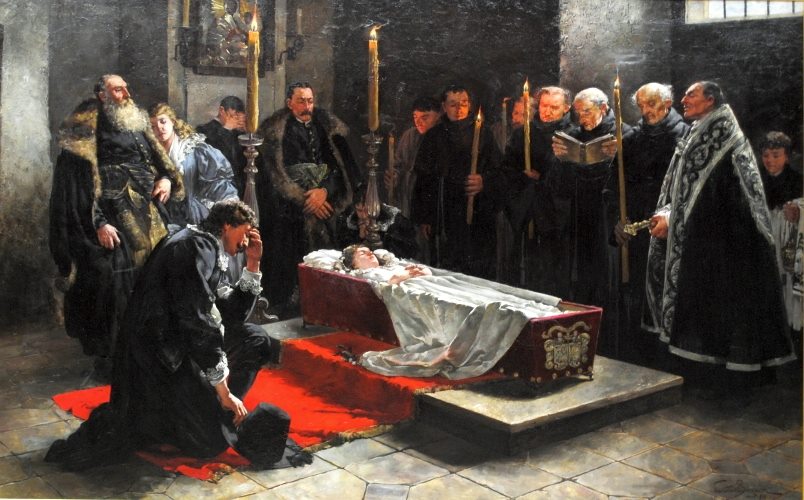
    This week on “The Lost Chord,” we’ll hear one of the six symphonic poems upon which Karlowicz’s reputation, in large part, is based. “Stanislaw and Anna Oswiecim,” inspired by a painting of Stanislaw Bergmann, evokes a tale of forbidden love between brother and sister, ending in inevitable tragedy.

    We’ll follow that with what has been cited as the most performed concerto of the 20th century. Yet, despite its multiple recordings, it is still far from being universally recognized in the West. “The Butterfly Lovers,” for violin and orchestra, is based on an ancient Chinese tale, about the young daughter of a rich landlord, who disguises herself as a boy in order to get an education. Her secret is discovered by a classmate. The two fall in love. However, the girl’s parents have promised her in marriage to a wealthy man. The lovelorn boy dies of grief. On the day of her wedding, the girl passes the boy’s tomb, which opens to receive her. She hurls herself inside, and the lovers emerge as butterflies fluttering freely in the air. The tale has been described as a Chinese “Romeo and Juliet.”

    The concerto was an enormous success at its premiere, in 1959. However, due to the vagaries of totalitarianism, the work was reviled during the Cultural Revolution, condemned for its western influences and evocations of feudal China. Within five years, everyone associated with the work was in prison. The music was branded “bourgeois,” and the composers publicly accused of crimes worse than murder. One of the creators, Chen Gang, spent two years in prison, then several more years under house arrest at the Shanghai Conservatory, with manual labor in the mornings and self-criticism sessions in the afternoons. The soloist in the concerto’s first performance, He Zhanhao, is given co-credit for the work’s composition.

    It was after the Cultural Revolution that “The Butterfly Lovers” really took flight (if you’ll pardon the expression). It has been called the “Tchaikovsky Violin Concerto of the East.”

    I hope you’ll join me for an hour of musical expressions of doomed love, this week – “Valentines, Nay!” – now in syndication on KWAX, the radio station of the University of Oregon!


    Remember, KWAX is on the West Coast, so there’s a three-hour difference for those of you listening in the East. Here are the respective air-times for all three of my recorded shows (with East Coast conversions in parentheses):

    PICTURE PERFECT, the movie music show – Friday on KWAX at 5:00 PM PACIFIC TIME (8:00 PM EST)

    SWEETNESS AND LIGHT, the light music program – ALL NEW! – Saturday on KWAX at 8:00 AM PACIFIC TIME (11:00 AM EST)

    THE LOST CHORD, unusual and neglected rep – Saturday on KWAX at 4:00 PM PACIFIC TIME (7:00 PM EST)

    Stream all three, at the times indicated, by following the link!

    https://kwax.uoregon.edu/


    PHOTO: “Stanislaw Oswiecim at the Body of Anna Oswiecimowna” (1888) by Stanislaw Bergmann
  • Doomed Love Movie Music on KWAX Radio

    Doomed Love Movie Music on KWAX Radio

    There’s no love like doomed love. We all know it’s true. Happily ever after is fine for the neighbors. The rest of us flock to “Titanic,” “Casablanca,” and “The Umbrellas of Cherbourg.” The one that got away hangs heaviest on the heart.

    In accordance with Gothic convention, nothing’s hotter than when two people love one another so intensely, they destroy themselves, each other, and everyone else around them. If impediments fan the flames of desire, then death is the greatest impediment of all.

    This week on “Picture Perfect,” it’s an hour of star-crossed lovers who remain connected beyond the mortal plane.

    Join me for selections from “Somewhere in Time” (John Barry), “The Ghost and Mrs. Muir” (Bernard Herrmann), “Always” (John Williams), and “Wuthering Heights” (Alfred Newman).

    If you can’t stand the heat, stay out of the kitchen. We’ll be fanning the flames of desire on “Picture Perfect,” music for the movies, now in syndication on KWAX, the radio station of the University of Oregon!


    Remember, KWAX is on the West Coast, so there’s a three-hour difference for those of you listening in the East. Here are the respective air-times for all three of my recorded shows (with East Coast conversions in parentheses):

    PICTURE PERFECT, the movie music show – Friday on KWAX at 5:00 PM PACIFIC TIME (8:00 PM EST)

    SWEETNESS AND LIGHT, the light music program – ALL NEW! – Saturday on KWAX at 8:00 AM PACIFIC TIME (11:00 AM EST)

    THE LOST CHORD, unusual and neglected rep – Saturday on KWAX at 4:00 PM PACIFIC TIME (7:00 PM EST)

    Stream all three, at the times indicated, by following the link!

    https://kwax.uoregon.edu/

  • St Valentine Skull Doomed Love on Classical Network

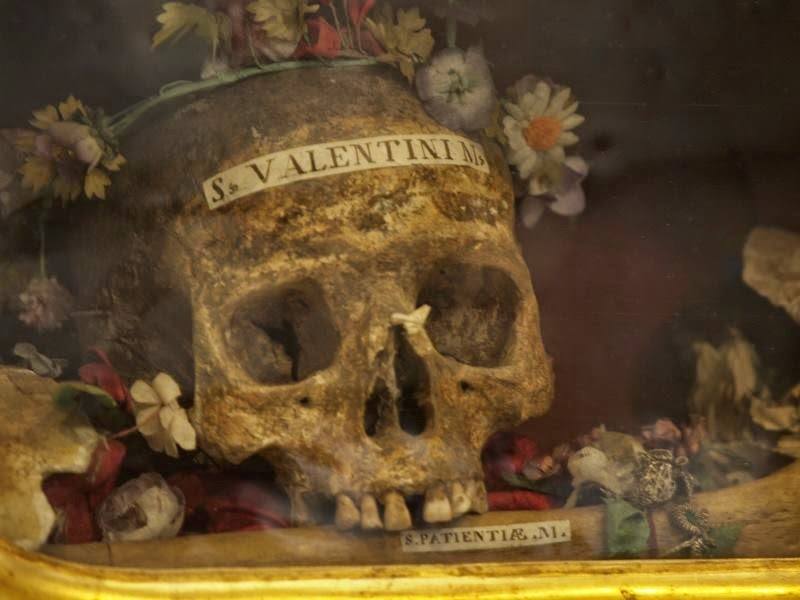
    St Valentine Skull Doomed Love on Classical Network

    Valentine’s memento mori: My annual posting of the skull of St. Valentine.

    I hope you’ll join me for a paean to doomed love – including music from “Somewhere in Time” (John Barry), “The Ghost and Mrs. Muir” (Bernard Herrmann), “Always” (John Williams), and “Wuthering Heights” (Alfred Newman) – on “Picture Perfect,” this Friday evening at 6:00 EST, on WWFM – The Classical Network and wwfm.org.

  • Doomed Love in Film: Picture Perfect

    Doomed Love in Film: Picture Perfect

    There’s no love like doomed love. We all know it’s true. Happily-ever-after is fine for lesser souls. The rest of us can’t look away from “Casablanca,” “The Age of Innocence,” or “The Umbrellas of Cherbourg.” The one that got away hangs heaviest on the heart.

    If impediments fan the flames of desire, then death must be the greatest impediment of all. This week on “Picture Perfect,” it’s an hour of bittersweet wish-fulfillment, as starred-crossed lovers connect beyond the mortal plane.

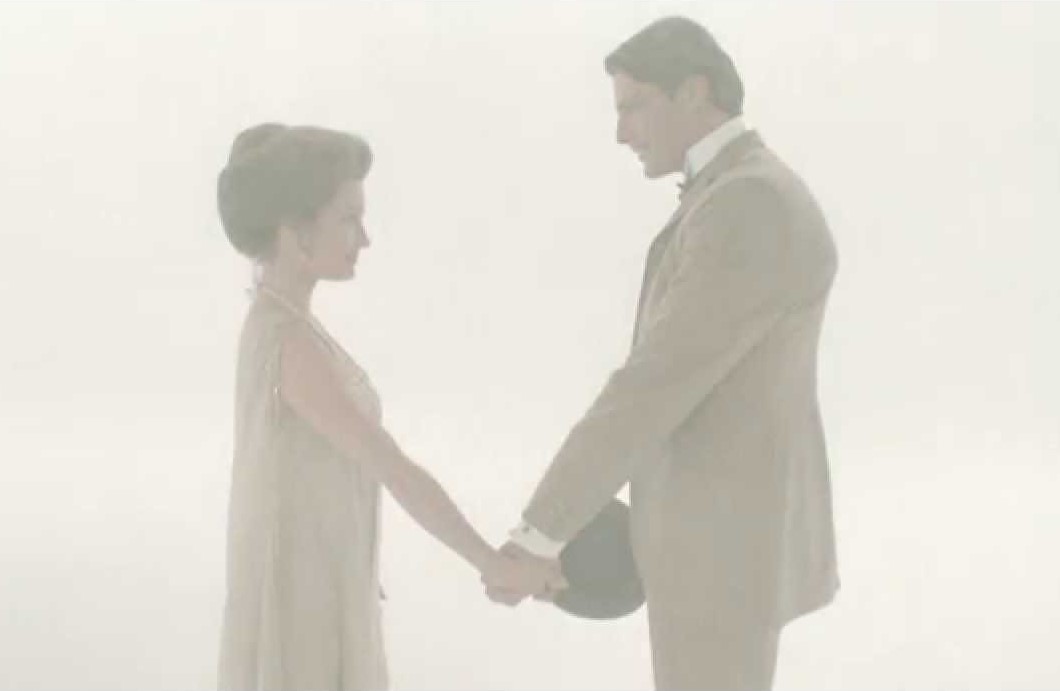
    Modern-day playwright Christopher Reeve is captivated by a portrait of early 20th century actress Jane Seymour, in “Somewhere in Time” (1980). He wills himself, through self-suggestion, back through the decades, and the two fall in love. It doesn’t end particularly well, though a tear-jerking denouement is contrived wherein the couple is ultimately reunited. Critics were not impressed, but “Somewhere in Time” is still ardently embraced by its admirers.

    The hopelessly romantic score is by John Barry. Barry wrote the music shortly after he lost both his parents, which he credited, in part, for its strong emotional content. He scored the film as a favor to Seymour, a friend. The film’s modest budget prohibited the possibility of hiring Barry at his usual fee. There are strong echoes of this music in Barry’s Oscar-winning score for “Out of Africa,” composed a few years later.

    Interestingly, Richard Matheson wrote the screenplay, basing it on one of his own novels. A prolific “Twilight Zone” scribe, Matheson was also responsible for “The Incredible Shrinking Man,” “I am Legend,” and “Hell House.” Remember when William Shatner discovered a gremlin on the wing of his plane? Matheson wrote that, too. ‘Nuff said.

    In “The Ghost and Mrs. Muir” (1947), widow Gene Tierney takes up residence in a seaside cottage in turn-of the century England and engages in philosophical jousts with the ghost of a salty sea captain, played by Rex Harrison. For a time, the tone is divertingly whimsical, but then the film transforms into a poignant love story. The music is by the great Bernard Herrmann.

    It had long been an ambition of Steven Spielberg to remake the Spencer Tracy film, “A Guy Named Joe.” In the original, Tracy’s character is killed while flying a mission during World War II. Then he returns from the Beyond to help his grieving girlfriend, a civilian pilot, played by Irene Dunne, and allow her to begin a new life with another man, played by Van Johnson.

    Spielberg’s “Always” (1989) updates the setting, with Richard Dreyfuss and John Goodman playing aerial firefighters, and Holly Hunter an air traffic controller, in the Pacific Northwest. The film follows the same basic plot line – the spirit of a dead pilot mentoring his replacement, while struggling to accept that his grieving lover needs to move on with her life. The film was not well received, but the music was by Spielberg’s house composer, John Williams.

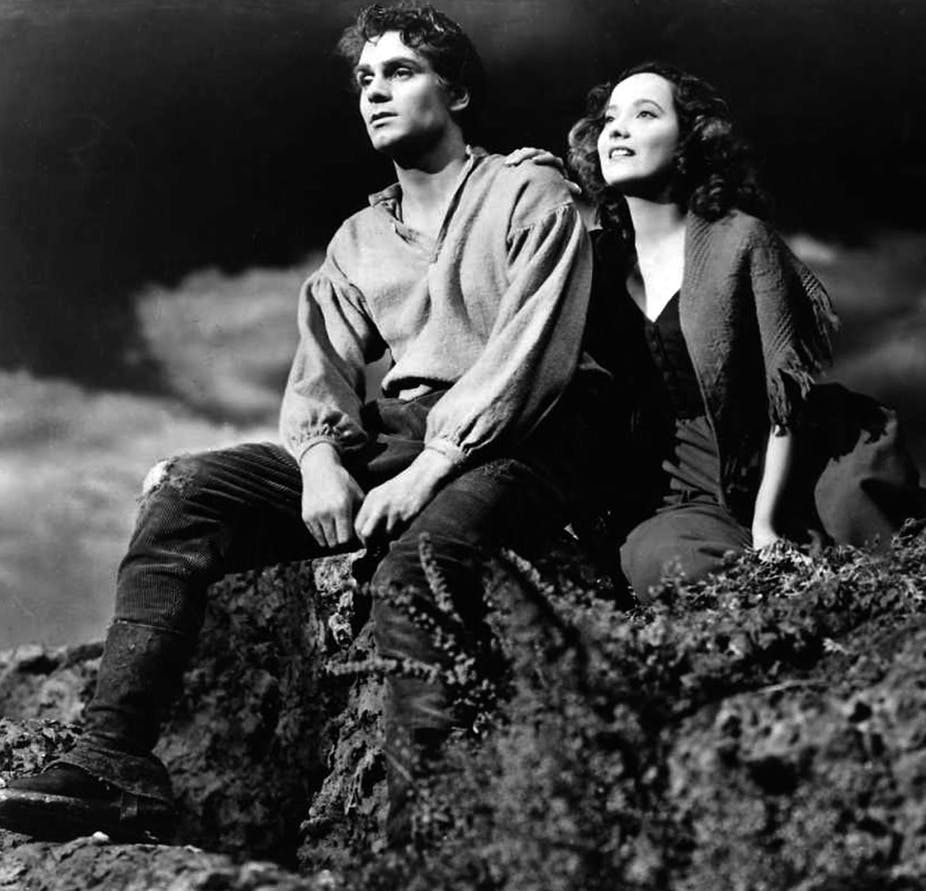
    Finally, “Wuthering Heights” (1939) is one of the all-time classic screen romances. Laurence Olivier plays the Byronic Heathcliff, whose intensity destroys the lives of everyone around him as he is consumed by animal passion for the wayward Cathy, played by Merle Oberon. Alfred Newman wrote the music, one of his best-loved scores. The film takes a lot of liberties with Emily Bronte’s original novel, and the conclusion is pure Hollywood, but we’ll take it.

    Hopeless romantics care not for the limitations of mortality. That’s “Love Eternal,” on “Picture Perfect” – music for the movies – this Friday evening at 6:00 EST, on WWFM – The Classical Network and wwfm.org.

  • Doomed Love: Karlowicz & Butterfly Lovers

    Doomed Love: Karlowicz & Butterfly Lovers

    Nearly as much as New Year’s Eve, Valentine’s Day rankles me. I resent the Hallmark cards and the convenience store chocolates and the commerce-driven peer pressure. I feel much more at home with Mieczyslaw Karlowicz.

    Karlowicz was born in 1876. By all accounts one of the gloomiest of composers, his outlook and philosophy might well be described as pessimism leavened with pantheism. In Karlowicz’s melancholy world, all love is unfulfilled or doomed; all existence leads to tragedy and destruction. In high romantic fashion, he contemplated suicide. The only place he seemed to find solace was in his beloved Tatras. He once noted, “Atop a high mountain, I become one with the surrounding space. I cease to feel individual. I can feel the mighty, everlasting breath of eternal being.”

    It is perhaps a kind of poetic justice that a life spent cultivating suicidal despair, and raising it to a level of high art, would be cut short, when Karlowicz was killed in an avalanche in 1909, aged only 32 years – a most fitting end for this pantheist with fatalistic tendencies.

    This Sunday night on “The Lost Chord,” we hear one of the six symphonic poems upon which Karlowicz’s reputation, in large part, is based. “Stanislaw and Anna Oswiecim,” inspired by a painting of Stanislaw Bergmann, evokes a tale of forbidden love between brother and sister, ending in inevitable tragedy.

    We’ll follow that with what has been cited as the most performed concerto of the 20th century. Yet, despite its multiple recordings, it is still far from being universally recognized in the West. “The Butterfly Lovers,” for violin and orchestra, is based on an ancient Chinese tale, about the young daughter of a rich landlord, who disguises herself as a boy in order to get an education. Her secret is discovered by a classmate. The two fall in love. However, the girl’s parents have promised her in marriage to a wealthy man. The lovelorn boy dies of grief. On the day of her wedding, the girl passes the boy’s tomb, which opens to receive her. She hurls herself inside, and the lovers emerge as butterflies fluttering freely in the air. The tale has been described as a Chinese “Romeo and Juliet.”

    The concerto was an enormous success at its premiere, in 1959. However, due to the vagaries of totalitarianism, the work was reviled during the Cultural Revolution, condemned for its western influences and evocations of feudal China. Within five years, everyone associated with the work was in prison. The music was branded “bourgeois,” and the composers publicly accused of crimes worse than murder. One of the creators, Gang Chen, spent two years in prison, then several more years under house arrest at the Shanghai Conservatory, with manual labor in the mornings and self-criticism sessions in the afternoons. The soloist in the concerto’s first performance, Zhanhao He, is given co-credit for the work’s composition.

    It was after the Cultural Revolution that “The Butterfly Lovers” really took flight (if you’ll pardon the expression). It has been called the “Tchaikovsky Violin Concerto of the East.”

    I hope you’ll join me for an hour of musical expressions of doomed love, this week – “Valentines, Nay!” – this Sunday night at 10 ET, with a repeat Wednesday evening at 6; or that you’ll listen to it later as a webcast at wwfm.org.


    PHOTO: “Stanislaw Oswiecim at the Body of Anna Oswiecimowna” (1888) by Stanislaw Bergmann
Tag Cloud

Aaron Copland (92) Beethoven (95) Composer (114) Film Music (120) Film Score (143) Film Scores (255) Halloween (94) John Williams (185) KWAX (229) Leonard Bernstein (100) Marlboro Music Festival (125) Movie Music (135) Opera (198) Philadelphia Orchestra (88) Picture Perfect (174) Princeton Symphony Orchestra (106) Radio (87) Ralph Vaughan Williams (85) Ross Amico (244) Roy's Tie-Dye Sci-Fi Corner (290) The Classical Network (101) The Lost Chord (268) Vaughan Williams (103) WPRB (396) WWFM (881)

DON’T MISS A BEAT

Receive a weekly digest every Sunday at noon by signing up here


RECENT POSTS