Tag: Dracula

  • Vampires on Film Movie Music from Dracula & More

    Vampires on Film Movie Music from Dracula & More

    This week on “Picture Perfect,” it’s all widow’s peaks and plastic fangs, as we listen to music from film adaptations of novels about vampires.

    “Interview with the Vampire” (1994), based on the novel by Anne Rice, featured some pretty counterintuitive casting, including Tom Cruise as Lestat (Rice would have preferred Rutger Hauer), but thanks largely to director Neil Jordan the film still managed to deliver the goods. Elliot Goldenthal’s music was nominated for an Academy Award. Interestingly, Princeton’s American Boychoir sings the opening “Libera me.”

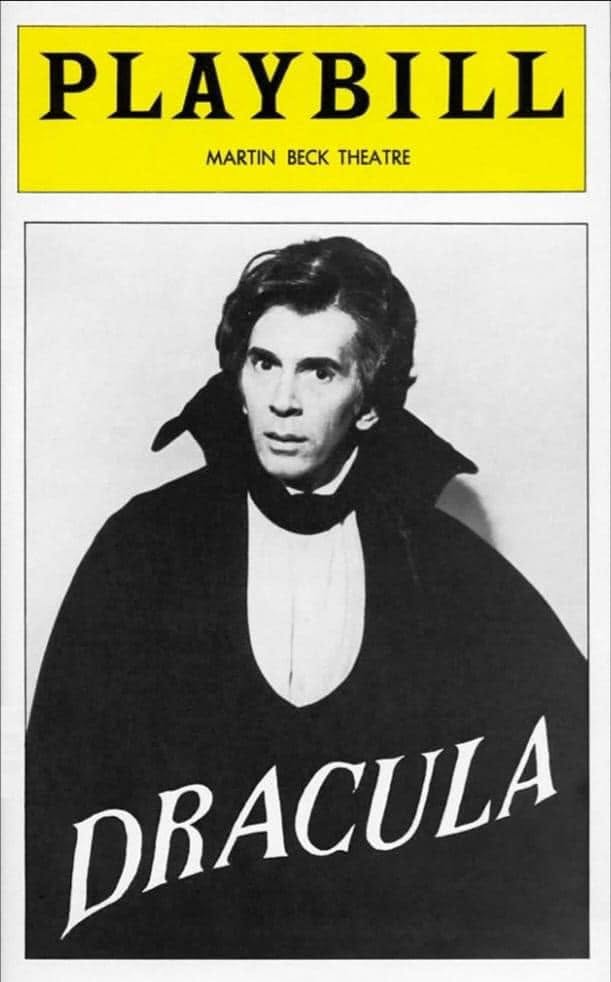
    Frank Langella’s characterization of Bram Stoker’s Dracula drove the critics wild when the play by Hamilton Deane and John L. Balderston was revived on Broadway in 1977. (It was the same adaptation that launched Bela Lugosi on his big screen career.) But when the film “Dracula” (1979) was released a couple of years later, reviews were mixed. Langella retained his dreamy magnetism, and the producers managed to secure Sir Laurence Olivier and Kate Nelligan for the parts of Van Helsing and Mina, respectively, but I wonder if John Badham was the best choice for director. Badham had just come off the enormous box office success of “Saturday Night Fever,” and it looks as if his Dracula retains John Travolta’s hair. You know, just for luck.

    I remember being so excited, as a 13 year-old, watching the trailer at the movies. When Langella leaped through a window and transformed into a wolf in mid-flight to John Williams’ dramatic music, it was almost more than I could bear. Watch the trailer here:

    How could a film called “Abraham Lincoln: Vampire Hunter” (2012) ever live up to its title? The answer is, it can’t, but the adaptation of Seth Grahame-Smith’s supernatural-historical mash-up wasn’t as terrible as everyone says it was. Sure, I would have preferred it had Daniel Day-Lewis played Lincoln, but put anybody in a stove-pipe to fight vampires with an axe, and I’m happy. I probably wouldn’t have been so permissive had I seen it in the theater, where the noise and effects would have pushed me over the edge, but it was a diverting rental, with a gothic score by Henry Jackman that ping-ponged between Americana lyricism and an orchestra bolstered by electronics and heavy metal guitars. But what are you going to listen to when you’re fighting vampires, a string quartet?

    James Bernard’s music for Hammer Studios’ “Dracula,” released in the United States as “Horror of Dracula” (1958), is one of his best-known efforts. His Dracula theme, with its clashing harmonies, laid the groundwork for the sound of the film’s numerous sequels, most of which featured Christopher Lee in his most iconic role. Bernard became so closely associated with Hammer and vampires that he was approached late in life to provide a new score for the silent classic “Nosferatu.”

    Finally, “Bram Stoker’s Dracula” (1992), despite the claims of utmost fidelity in its very title, was not a faithful adaptation of Stoker’s book. Why? WHY??? The film was lovely to look at, with eye-popping costumes and production design that combined Universal Studios in-the-camera trickery and honest-to-goodness miniatures with a few more Jean Cocteau references than perhaps was for its own good. This could have been THE Dracula film. Alas, it wasn’t. However, for me, it had THE Dracula score. It was a stroke of genius to hire Polish composer Wojciech Kilar to give the film just the right Eastern European sound.

    Get your blood up, with page-to-screen vampires this week, on “Picture Perfect,” now in syndication on KWAX, the radio station of the University of Oregon!


    Remember, KWAX is on the West Coast, so there’s a three-hour difference for the Trenton-Princeton area. Here are the respective air-times of my recorded shows (with East Coast conversions in parentheses):

    PICTURE PERFECT, the movie music show – Friday on KWAX at 5:00 PACIFIC TIME (8:00 PM EDT)

    THE LOST CHORD, unusual and neglected rep – Saturday on KWAX at 4:00 PACIFIC TIME (7:00 PM EDT)

    Stream them here!

    https://kwax.uoregon.edu/

  • Classic Horror Film Scores and Halloween Fun

    Classic Horror Film Scores and Halloween Fun

    Whatever happened to my Transylvania twist?

    This week on “Picture Perfect,” with Halloween just around a creepy corner, we’ll pull the blankets up under our noses, as Dracula, Frankenstein’s monster, and the Wolfman headline an hour of creature features.

    We’ll begin with arguably the best of the Frankenstein films, “The Bride of Frankenstein” (1935). Boris Karloff, Colin Clive, and Dwight Frye return. This time, they’re joined by batty and theatrical Ernest Thesiger, as Dr. Pretorius, and of course Elsa Lanchester. One of the greatest sequels ever made, “Bride” manages to deepen and expand elements of the original film, with plenty of atmosphere, a wry sense of humor, abundant pathos, and one of the finest film scores of the era, by Franz Waxman. Previously, Waxman was involved in the German film industry. Portions of his classic score were reused in any number of other Universal pictures over the years, including the Flash Gordon serials.

    Of course, then came “Son of Frankenstein,” “The Ghost of Frankenstein,” “Frankenstein Meets the Wolfman”…

    Four years before Abbott and Costello would meet Frankenstein’s monster, Dracula, and the Wolfman, all in the same film, Universal brought together its most popular creatures for “House of Frankenstein” (1944). This was the sixth film in the “Frankenstein” franchise, a follow-up to “The Ghost of Frankenstein,” but also a sequel of sorts to “Frankenstein Meets the Wolfman.” Here, Karloff graduates from monster to mad scientist, while Glenn Strange dons the make-up and neck-bolts as “the creature,” John Carradine plays the Count, Lon Chaney Jr. returns in his signature role as Lawrence Talbot (a.k.a. the Wolfman), and J. Carrol Naish portrays Karloff’s hunchback assistant.

    The wackadoodle plot involves Karloff and Naish running a traveling horror show. The doctor revives Dracula for his own nefarious purposes; then later in the film thaws Frankenstein’s monster and the Wolfman from frozen waters. It may not be the best of the Universal Pictures Frankenstein films, but it is undoubtedly entertaining, and good, monster-laden fun. The music is also the result of a monster team-up, of sorts, co-composed by Hans J. Salter and Paul Dessau. The popularity of the multi-monster format ensured yet other follow-ups in “House of Dracula” and “Abbott Costello Meet Frankenstein.”

    Decades later, Mel Brooks and Gene Wilder looked back with affection to the series, when they came to make their horror parody, “Young Frankenstein” (1974). The result is Brooks’ richest comedy. The love of detail extends even to the use of some of the authentic laboratory equipment from the original movies. Composer John Morris’ score reflects the underlying pathos of the monster, in brilliant counterpoint to the onscreen comedy.

    Finally, director Francis Ford Coppola also looked back with affection to earlier classics when he undertook “Bram Stoker’s Dracula” (1992). “Bram Stoker’s Dracula” is the NAME of the film. Despite some intriguing elements, it’s doubtful the author would have recognized his creation in Coppola’s cinematic counterpart. Why can’t anyone figure out how to just film the book? The strongest elements of this version include the opulent costume design, the self-consciously retro special effects, the geek references to classic and foreign films, and the spooky music by Polish composer Woijech Kilar. Kilar was an inspired choice, as he provides just the right Eastern European feel.

    All in all, I think you’ll agree, it’s the perfect mix-tape for drafty dungeons and misty moors. I hope you’ll join me for “Monster Mash” on “Picture Perfect,” music for the movies, this Saturday evening at 6:00 EDT, on WWFM – The Classical Network and wwfm.org!


    If you enjoy either of my weekly shows (or both!), or any of the other music you hear on The Classical Network, please consider making a contribution today. We’re celebrating our 40th anniversary on the air and online, right now. If you’re in a position to do so, leave us a Halloween treat at wwfm.org. Thank you for your continued support of WWFM The Classical Network!

    https://wwwfm.secureallegiance.com/wwfm/WebModule/Donate.aspx?P=DEFAULT&PAGETYPE=PLG&CHECK=vOU2bz5JCWmgCDbf53nm9ezWDeZ%2beA1M

  • Dracula Opera? Corigliano’s “Lord of Cries” Arrives

    Dracula Opera? Corigliano’s “Lord of Cries” Arrives

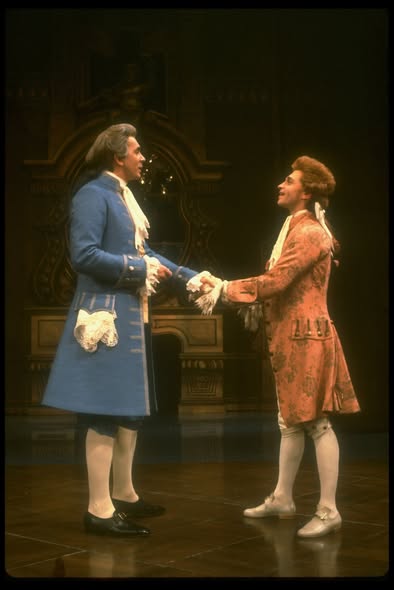
    I always thought “Dracula” would make a terrific opera. Lo and behold! Finally! John Corigliano composes one. But Mark Adamo’s libretto conflates the vampire story with… Euripides’ “The Bacchae?” Countertenor Anthony Roth Costanzo (Princeton ’04) assumes the role of Dionysus. Not quite the “Dracula” opera I envisioned, maybe, but bring it!

    Corigliano’s previous opera, “The Ghosts of Versailles,” was commissioned by the Metropolitan Opera in 1980 to celebrate the organization’s centenary. The premiere had been scheduled for 1983, but it wound up taking seven years to complete. The work was finally staged for the first time in 1991. An extravagant phantasmagoria on Beaumarchais’ “Figaro” cycle, it was described by the composer as a “grand opera buffa.” Despite a light revision of the piece, in which some of the costlier elements were removed, a scheduled Met revival in 2008 was cancelled, because of nerves over the global financial crisis.

    Adamo, Corigliano’s husband since 2008, is also the composer of several operas. “Little Women,” from 1998, has been the most frequently performed. The work has been presented in more than 35 productions and received over 65 international engagements. Adamo served as composer-in-residence with New York City Opera from 2001 to 2006.

    Both operas, “The Ghosts of Versailles” and “Little Women” have been broadcast on PBS (“Ghosts” from the Met, and “Little Women” from Houston Grand Opera).

    Corigliano’s film scores include those for “Altered States,” “Revolution,” and “The Red Violin.”

    “The Lord of Cries” will receive its world premiere at Santa Fe Opera on July 17, with a run of five performances through August 17.

    Don’t go into it expecting Bela Lugosi or Christopher Lee. Too bad nobody ever thought to write a Dracula opera for Lee. He certainly had the pipes. He was singing in a pub in Stockholm one night, when he was overheard by none other than Jussi Björling, who would offer to take him on as a pupil. It was one of the actor’s great regrets that he wasn’t in a position to accept.

    Follow the link for more information about Corigliano and Adamo’s “The Lord of Cries” (the music in the video is actually from “The Red Violin”):

    https://www.santafeopera.org/whats-on/the-lord-of-cries/

    Christopher Lee demonstrates his raw talent as a singer, with selections from “The Flying Dutchman,” and “The Damnation of Faust,” with the added bonus of a recitation of Edgar Allan Poe’s “The Raven”:

    Much later, Lee shares an anecdote and proves that he’s still got it:

    Lee recounts his experience with Björling and his family’s role in bringing opera to Australia:

    “The Lord of Cries” is not the first Dracula opera. Philadelphia composer Robert Moran wrote “The Dracula Diary” in 1994, and Belarusian-born Swedish composer Victoria Borisova-Ollas composed “Dracula,” ostensibly the first opera to actually adhere to the events of Stoker’s book (according to the Royal Swedish Opera), in 2017.

    The best-known vampire opera remains Heinrich Marschner’s “Der Vampyr,” sucking hard since 1828.

  • Halloween Music Crossword Puzzle

    Halloween Music Crossword Puzzle

    “Listen to them, the children of the night. What music they make!”

    So remarks Bram Stoker’s Dracula (in reference to howling wolves). Sink your teeth into this week’s Classic Ross Amico crossword, shrouded in musical presentiments of Halloween. Go bats over 50 clues about the supernatural in music.

    To fill out the puzzle, follow the link and select “solve online” at the bottom of the page. You’ll then be able to type directly into the squares. Once you feel you’ve exhausted the puzzle, you’ll find the solutions by clicking on “Answer Key PDF.”

    Test your knowledge – and your fortitude – against bump-in-the-night classics here:

    https://www.armoredpenguin.com/crossword/Data/2020.10/1811/18113156.205.html

  • Vampire Movie Soundtracks from Page to Screen

    Vampire Movie Soundtracks from Page to Screen

    This week on “Picture Perfect,” it’s all widow’s peaks and plastic fangs, as we listen to music from film adaptations of novels about vampires.

    “Interview with the Vampire” (1994), based on the novel by Anne Rice, featured some pretty counterintuitive casting, including Tom Cruise as Lestat (Rice would have preferred Rutger Hauer), but thanks largely to director Neil Jordan the film still managed to deliver the goods. Elliot Goldenthal’s music was nominated for an Academy Award. Interestingly, the American Boychoir sings the opening “Libera me.”

    Frank Langella’s characterization of Bram Stoker’s Dracula drove the critics wild when the play by Hamilton Deane and John L. Balderston was revived on Broadway in 1977. (It was the same adaptation that launched Bela Lugosi on his big screen career.) But when the film “Dracula” (1979) was released a couple of years later, reviews were mixed. Langella retained his dreamy magnetism, and the producers managed to secure Sir Laurence Olivier and Kate Nelligan for the parts of Van Helsing and Mina, respectively, but I wonder if John Badham was the best choice for director. Badham had just come off the enormous box office success of “Saturday Night Fever,” and it looks as if his Dracula retains John Travolta’s hair. You know, just for luck.

    I remember being so excited, as a 13 year-old, watching the trailer at the movies. When Langella leaped through a window and transformed into a wolf in mid-flight to John Williams’ dramatic music, it was almost more than I could bear. Watch the trailer here:

    https://www.youtube.com/watch?v=ydj01YcD83A

    How could a film called “Abraham Lincoln: Vampire Hunter” (2012) ever live up to its title? The answer is, it can’t, but the adaptation of Seth Grahame-Smith’s supernatural-historical mash-up wasn’t as terrible as everyone says it was. Sure, I would have preferred it had Daniel Day-Lewis played Lincoln, but put anybody in a stove-pipe to fight vampires with an axe, and I’m happy. I probably wouldn’t have been so permissive had I seen it in the theater, where the noise and effects would have pushed me over the edge, but it was a diverting rental, with a gothic score by Henry Jackman that ping-ponged between Americana lyricism and an orchestra bolstered by electronics and heavy metal guitars. But what are you going to listen to when you’re fighting vampires, a string quartet?

    James Bernard’s music for Hammer Studios’ “Dracula,” released in the United States as “Horror of Dracula” (1958), is one of his best-known efforts. His Dracula theme, with its clashing harmonies, laid the groundwork for the sound of the film’s numerous sequels, most of which featured Christopher Lee in his most iconic role. Bernard became so closely associated with Hammer and vampires that he was approached late in life to provide a new score for the silent classic “Nosferatu.”

    Finally, “Bram Stoker’s Dracula” (1992), despite the claims of utmost fidelity in its very title, was not a faithful adaptation of Stoker’s book. Why? WHY??? The film was lovely to look at, with eye-popping costumes and production design that combined Universal Studios in-the-camera trickery and honest-to-goodness miniatures with a few more Jean Cocteau references than perhaps was for its own good. This could have been THE Dracula film. Alas, it wasn’t. However, for me, it had THE Dracula score. It was a stroke of genius to hire Polish composer Wojciech Kilar to give the film just the right Eastern European sound.

    Get your blood up, with page-to-screen vampires this week, on “Picture Perfect.” Watch out for those paper cuts, this Friday evening at 6:00 EDT, on WWFM – The Classical Network and wwfm.org.

Tag Cloud

Aaron Copland (92) Beethoven (95) Composer (114) Film Music (120) Film Score (143) Film Scores (255) Halloween (94) John Williams (185) KWAX (229) Leonard Bernstein (100) Marlboro Music Festival (125) Movie Music (135) Opera (198) Philadelphia Orchestra (88) Picture Perfect (174) Princeton Symphony Orchestra (106) Radio (87) Ralph Vaughan Williams (85) Ross Amico (244) Roy's Tie-Dye Sci-Fi Corner (290) The Classical Network (101) The Lost Chord (268) Vaughan Williams (103) WPRB (396) WWFM (881)

DON’T MISS A BEAT

Receive a weekly digest every Sunday at noon by signing up here


RECENT POSTS