Tag: Easton PA

  • My First Bruckner Easton PA

    My First Bruckner Easton PA

    I remember the first time I encountered the music of Anton Bruckner. It was in the middle of the night in an attic bedroom in Easton, Pennsylvania.

    While growing up in Easton in the 1970s and ‘80s, I always regarded it as a small town. Technically, it’s classified as a city, the third largest in the Lehigh Valley, but the downtown is not all that large and most of the population was distributed across what was then several semi-rural townships. A drifting snow would be enough to close the schools for days.

    Easton is about 70 miles outside Philadelphia. In the car, WFLN, Philadelphia’s 24-hour classical music station, when it still existed, would sometimes cut in and out, depending on where you were driving. But I always had the radio antennae in the house trained to pick up 95.7 FM. And as a teenager, my brain was absorbent enough that I internalized most of the standard repertoire.

    Back in the day, WFLN used to broadcast its overnights ad-free. So other than the distinctive voice of Henry Varlack, it was non-stop music from midnight to 6 a.m. This made it easy to sleep with the radio on, and I did so out of habit in those days, my consciousness rising to the surface now and again to take note of the music.

    On one of those occasions, I emerged right in the middle of an insinuating, sinister scherzo. It made such an impression that I hung around to hear the back-announcement: Bruckner’s Symphony No. 9.

    The word “scherzo” literally means “joke.” In Bruckner, there are no jokes. The early symphonies may flirt with folksy ländler. But once Bruckner knows what he’s about, these are transmogrified into supernatural gallops across moonless skies, Odin leading his warrior band in the Wild Hunt. The symphonies are often compared to “cathedrals in sound.” Bruckner was an organist; once you know that, it’s easy to imagine his structures and textures elucidated on the King of Instruments. But there is nothing sacred about the scherzos.

    From that first encounter, I’ve always been fond of them. So ferocious can these become, so terrible in their sublimity, that it’s hard to associate them with the man who, on the one hand, aspired to convey the ineffable in his heavenly adagios, and on the other, could be so malleable as to allow anyone to make changes to “improve” his music. He was almost perversely humble. Because of this, there are multiple Bruckner performance traditions, with some conductors and scholars divided between the Haas and Nowak editions and others groping toward elusive Brucker urtexts.

    For the Bruckner faithful, no matter how it’s been processed, the music transcends human tampering. With its hypnotic repeating cells, its punctuating silences, its spiritual depth, and its breathtaking grandeur, Bruckner’s art communicates with an unwavering clarity. But as with his instrument of choice, there’s always a lot going on behind the scenes and beneath the surface.

    Still, I’m aware not everyone is a convert. I think wryly back on Simon Roberts, who stocked and held court in the basement of Nathan Muchnick’s (a Philadelphia audio store with a superb classical music compact disc selection), and his withering dismissal of “deranged Bruckner fanatics,” which I recall now, even decades after he uttered it.

    Gustav Mahler, who took lessons with Bruckner at the Vienna Conservatory and considered him his precursor and friend, described him as “half simpleton, half God.”

    Those who love Mahler don’t necessarily feel the same way about Bruckner, and vice versa. So if Grandpa loves his cycle of Bernstein Mahler symphonies (Sony or DG), don’t expect him to turn handsprings for your generous gift of Eugen Jochum’s Bruckner set (EMI or DG). Unless Grandpa happens to be me. I love all these recordings!

    I can’t believe that today marks the 200th anniversary of Bruckner’s birth. I remember when 200 years ago meant powdered wigs.

    In any case, thank you, WFLN, God rest Henry Varlack, and happy bicentennial, Anton Bruckner!


    Bruno Walter conducts Bruckner’s 9th (my first Bruckner recording). The scherzo begins about 24 minutes in.


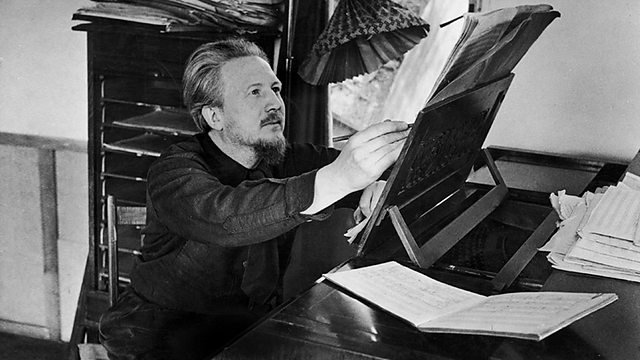
    PHOTO: Anton Bruckner, babe magnet

  • Debussy Clair de Lune Remembering Margaret

    Debussy Clair de Lune Remembering Margaret

    On Claude Debussy’s birthday anniversary, I remember one of my radio listeners, now no longer with us, and her fondness for “Clair de lune.”

    The station I was with at the time had offered, as a fundraising incentive during one of its pledge drives, opportunities for contributors to select a host with whom to co-present two hours of their favorite music. That’s how I met Margaret. Margaret was a retired high school English teacher of 24 years. She was in her early 80s then. It’s been my experience that I get along very well with 80-year-olds. One of her selected pieces was “Clair de lune,” which she said reminded her of her mother, since her mother used to play it on the piano.

    We had a lot in common, including the fact that she lived in my hometown of Easton, PA, and the shared experience of the radio show began a four-year friendship, during which she wrote to me frequently. I responded a little less frequently, but not shamefully so, as can sometimes be the case. She would send me photos of her garden, and the animals that visited, and relate her experiences and impressions of the seasons and her favorite places. She was a delightful person. It was a good, old-fashioned, snail-mail correspondence, nothing electronic. I wasn’t even on Facebook yet.

    The last time I saw her was on a visit to her home in 2012, after she was diagnosed with a terminal illness. She tried to encourage me to take whatever I wanted, but I had a hard time with it. I was not in an acquisitive mood. Also, I felt as if I took something it would be an admission that it really was the end. Finally, after having been urged repeatedly, I selected a rolled-up copy of a poster of a panoramic view of Easton in autumn, of which she had several. She enjoyed quite a view from the window of her living room herself.

    Margaret died nine days later, in December 2012. I still have her letters and a mug she gave me, with a reproduction of Franz Marc’s “The Dream.” We were both fans of the Blue Rider school and had visited an exhibition, separately, at the Philadelphia Museum of Art. Ironically, my mother is buried probably within a mile of her home.

    This is no reflection on Margaret (and I think she would find that aside amusing), but here’s an abridged version of Debussy’s enduring piano piece, played for an 80-year-old elephant.

    This was the version we played on the show.

    Deleted segment from Disney’s “Fantasia,” with an orchestral version conducted by Leopold Stokowski

    Happy birthday, Claude Debussy, and thinking of you, Margaret, wherever you are.

  • Edmund Rubbra & My Easton Neighbor

    Edmund Rubbra & My Easton Neighbor

    Who knew that between the ages of 5 and 10 I lived next door to the world authority on the music of Edmund Rubbra? Who’d have thought that such a figure would have resided in Easton, Pennsylvania?

    Rubbra is a now-underrated British composer of rewarding symphonies and choral music, sometimes overtly inspired by his Roman Catholic faith. The music is full of fantasy and often dreamy melody, but by no means at the expense of architectural logic.

    Ralph Scott Grover joined the faculty of Lafayette College, in Easton, in 1965. He was the first head of Lafayette’s music department. His affection for Rubbra’s music yielded a book, “The Music of Edmund Rubbra,” published in 1993. He was also invited to write the Rubbra entry for “The New Grove Dictionary.”

    Grover himself was a composer of art songs, or so I’m told. I remember he and his wife would spend time each year visiting at Rubbra’s castle in the UK. Earlier, in 1980, he had also written a book titled “Ernest Chausson: The Man and His Music.”

    I find it amusing to reflect that as a boy I would be playing on the sidewalk, around a tree out front, not knowing the first thing about classical music – my grandfather, with whom I lived, was a product of the Great Depression and World War II, who spent most of his life working with his hands – and here I was, living next door to someone totally steeped in English music, which would later become one of my life’s passions.

    Mr. Grover died in 2002. I am happy to say that I met him again later in life, by which time I had already become quite knowledgeable about the subject. In fact, I know he listened to me on WWFM. I remember that he and his wife pledged their financial support during one of my shifts. Grover also expressed an affection for the music of Gerald Finzi, whom I also happen to adore, and was a member of the Peter Warlock Society.

    I do regret not having had more of a master-disciple relationship with him. By that time, I had already left Easton, and though he extended a non-specific invitation to visit, nothing ever came of it. We nearly missed one another entirely. I’m thankful we had the conversations we did, and that he saw that I had become something more than the goofy kid he scarcely regarded.

    Happy birthday, Edmund Rubbra (1901-1986). It is you I have to thank for this reminiscence.

    Here’s a sample of Rubbra’s music: “Overture Resurgam,” from 1975, inspired by a memory of the war and an example of the composer’s religious convictions translated to sound. In March 1941, Nazi planes bombed Plymouth and laid waste to much of the city, including the Church of St. Andrew. Only its tower remained intact. On the north door of the tower stood one word, “Resurgam” – “Risen Again.”

    The Symphony No. 4

    His orchestration of Brahms’ “Handel Variations”

    https://www.youtube.com/watch?v=OXHjZI6tWZw


    PHOTO: Rubbra resurrected

  • Sterling Hayden Easton PA? A Lost Encounter

    Sterling Hayden Easton PA? A Lost Encounter

    Is it possible Sterling Hayden once poured me a drink at a party in Easton, PA? This would have been in the mid-1980s. My bosom chum Matt Anthony seems to think so. But I think by then surely I would have known who he was? Hayden was the hard-bitten noir antihero of John Huston’s “The Asphalt Jungle” (1950) and the title character in Nicholas Ray’s campy, kinky western “Johnny Guitar” (1954).

    Granted, at that point I may not have seen those movies, but I did see “Dr. Strangelove” (1964), which we’ll be discussing tomorrow night on “Roy’s Tie-Dye Sci-Fi Corner.” Hayden plays the rogue, cigar-chomping, machine gun wielding Brigadier General Jack D. Ripper, who hates commies, but sure does value his essence.

    Hayden himself was always a maverick. As early as 1941, he expressed dissatisfaction with Hollywood, calling himself more of a sailor than an actor. He enlisted in the U.S. Army, hoping to fight in World War II, but broke his ankle in basic training. Undeterred, he joined the Marines under an alias, and distinguished himself for his courage, running supplies and conducting rescue missions behind enemy lines.

    After the war, he intimated to the press that he thought it was his patriotic duty to return to the movies. It was an altruistic impulse that was not to last. In 1958, following a bitter divorce, he dropped out again. He defied a court order and took off with his four kids, sailing for Tahiti. Again, he considered himself a sailor, not an actor, and decided to make a go at writing. He had little patience for phonies and turned that same hard judgment on himself, considering himself a failure. Even so, somehow whenever he needed money, there always seemed to be a part waiting for him in Tinseltown.

    He was still active in the 1970s, appearing in “The Godfather” (1972) and in the television miniseries “The Blue and the Gray” (1982, as John Brown no less). It’s sobering to realize, at the time he played Capt. McCluskey in “The Godfather,” he was probably about my age! That may be one of the few times you’ll read the words “Hayden” and “sober” in the same paragraph. He died in Sausalito in 1986 at the age of 70.

    Anyway, I’ve always been fascinated by classic movies, even before I entered elementary school, and by 1985 I would have seen “Dr. Strangelove.” Granted, by that point, Hayden was notorious for having grown a castaway beard and basically living on a barge in Paris. When he wasn’t in the U.S., that is. He also kept homes in Connecticut and California.

    As I say, he hated Hollywood, but he loved money, and he was often in need of it. For all his bluster, on some level he probably also liked acting, since he continued to do theater toward the end of his life. Of course, he also had a few problems with the tax man.

    I’m thinking the best shot that there is any validity to this story of Hayden having poured me a shot is if he happened to be appearing in a show in the Lehigh Valley or New Jersey. Or possibly New York. But I can’t find any record of that being the case online. Does anyone have any recollection of it being so?

    The only other wrinkle is that the party was thrown by a showboat lawyer, who’d gained a degree of notoriety well beyond the boundaries of Easton. Who knows, maybe somehow he attracted the attention of a grizzled, malcontented movie star who didn’t give a damn if we happened to be under 21?

    Everything about life is stranger than fiction in “Dr. Strangelove.” We’ll chuckle about Stanley Kubrick’s doomsday comedy of errors, on the next Roy’s Tie-Dye Sci-Fi Corner. See to the purity of your essence in the comments section. It will be an Armageddon arms race, when we livestream on Facebook, this Friday evening at 7:00 EDT!

    https://www.facebook.com/roystiedyescificorner

  • Mischief Night Tick-Tacking in Pennsylvania

    Mischief Night Tick-Tacking in Pennsylvania

    Tonight is Mischief Night. It’s funny, as a boy growing up in Easton, PA, tick-tacking was a way of life. Shucking corn and scraping kernels into paper bags, later to be taken by the handful and rained against neighbors’ windows and siding, and the occasional passing car. Only it was never just a night. It was more like Mischief Month.

    It was only much later, when recounting these youthful exploits, that I came to realize the looks on auditors’ faces were not so much reactions of disgust as they were disorientation, and that tick-tacking must have been a regional pursuit. I assume kids in other communities still rang doorbells and ran, soaped car windows, and draped trees with toilet paper? Recently, I was amused to discover the now-faded practice of stealing gates off fences, something I gleaned only from its representation on vintage Halloween cards. Presumably, the gate would be left somewhere inconvenient but retrievable.

    Of course, now you would be prosecuted or killed for this sort of behavior, but back in the day, it was all just good clean fun, and largely taken as such – except by the angry farmer who shot at us with rock salt.

    One thing this article left out is the blockbuster in the tick-tacking arsenal – the “doorknocker,” a corn cob soaked in water, then kept in the freezer until showtime!

    Throwing corn kernels (aka “tic-tacking”) is a long-time Mischief Night tradition for our region

    An opposing viewpoint from a writer who grew up in the region and aged into someone very cranky:

    https://www.sun-sentinel.com/news/fl-xpm-1993-10-29-9310280433-story.html

    Long live Halloween!


    My trick-or-treat anthem, “Dance of an Ostracised Imp” by Frederic Curzon:

Tag Cloud

Aaron Copland (92) Beethoven (95) Composer (114) Film Music (120) Film Score (143) Film Scores (255) Halloween (94) John Williams (185) KWAX (229) Leonard Bernstein (100) Marlboro Music Festival (125) Movie Music (135) Opera (198) Philadelphia Orchestra (88) Picture Perfect (174) Princeton Symphony Orchestra (106) Radio (87) Ralph Vaughan Williams (85) Ross Amico (244) Roy's Tie-Dye Sci-Fi Corner (290) The Classical Network (101) The Lost Chord (268) Vaughan Williams (103) WPRB (396) WWFM (881)

DON’T MISS A BEAT

Receive a weekly digest every Sunday at noon by signing up here


RECENT POSTS