Tag: Edgar Allan Poe

  • Halloween Hauntings from Marlboro Music

    Halloween Hauntings from Marlboro Music

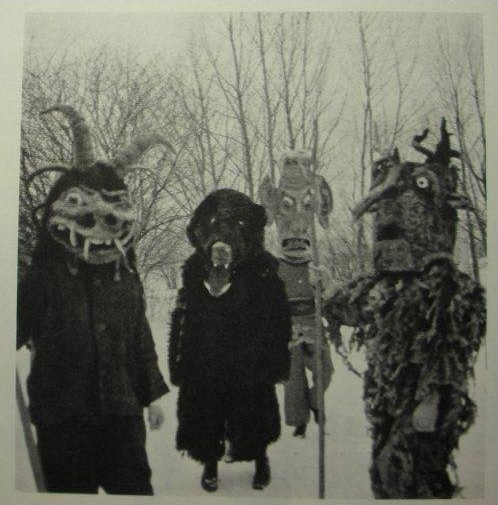
    The end of October is marked by deepening shadows, withered cornstalks, and the leer of carved pumpkins. On this week’s “Music from Marlboro,” with Halloween right around the corner, we’ll get into the spirit of things with chamber music of a supernatural bent.

    French composer André Caplet was winner of the esteemed Prix de Rome in 1901, placing ahead of Maurice Ravel. He played percussion with the Colonne Orchestra and trained as a conductor under Arthur Nikisch. From 1910 to 1914, he served as director of the Boston Opera. While serving in the First World War, he was engulfed in poisonous gas, which resulted in the pleurisy that plagued him for the remainder of his short life. Caplet died in 1925, at the age of 44.

    As the Prix de Rome would suggest, Caplet composed music of considerable merit. Nonetheless, he was fated to be remembered for his work as an orchestrator for Claude Debussy. Debussy’s “Children’s Corner,” “The Martyrdom of Saint Sebastian,” “La Boiîte à joujoux,” and “Clair de lune” would all be draped in Caplet’s finery.

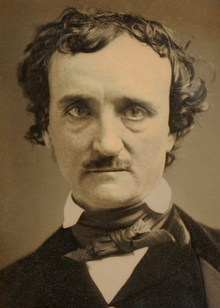
    Of Caplet’s original music, only his “Conte fantastique” (Fantastic Tale), after Edgar Allan Poe’s “The Masque of the Red Death,” retains a foothold on the repertoire. Composed in 1908 for harp and string orchestra, it was arranged for harp and string quartet in 1922. The work crackles with atmosphere, invention and suspense. In fact, the program is brought so vividly to life that one can’t help but think that Caplet would have made an excellent film composer. Savor the chill as Prince Prospero’s decadent revels are curtailed by the implacable chimes of midnight!

    The Marlboro performance, which dates from 2009, features Sivan Magen, harp; Liana Gourdjia and Bella Hristova, violins; Sally Chisolm, viola; and Paul Wiancko, cello. As an added bonus, the music will be prefaced by a reading from Poe’s creepy classic.

    Fifteen years after death of Beethoven, the composer’s star pupil, Carl Czerny, noted that the slow movement of his Piano Trio in D, Op. 70, No.1, reminded him of the ghost of Hamlet’s father. Czerny may not have been all that far off the mark.

    Actually, at the time of the work’s composition, in 1808, Beethoven had been kicking around the idea for opera on the subject of Macbeth. The words “Macbett” and “Ende” appear near sketches for the Largo. It’s been speculated that the music may have been a working out of ideas for a proposed scene featuring the three witches. The ominous mood is heightened by eerie and mournful touches, sudden pauses and outbursts, and the use of a ghostly tremolo. The operatic project collapsed when Beethoven’s librettist, Heinrich Joseph von Collin (to whom Beethoven had dedicated the “Coriolan Overture”), begged off of the project, thinking it was too dark.

    We’ll hear Marlboro musicians Dénes Várjon, piano; Michelle Ross, violin; and Brook Speltz, cello. The performance was captured on tour in Washington, D.C., in 2015. The first of this season’s Marlboro tours will take place November 11-19, with concerts scheduled for D.C., Boston, Brattleboro, Greenwich, New York City, and Philadelphia. You can learn more at marlboromusic.org.

    Join me, if you dare, for “haunting” performances from the legendary Marlboro Music Festival, this Wednesday evening at 6 EDT, on WWFM – The Classical Network and wwfm.org.

    Marlboro School of Music and Festival: Official Page


    Daniel Gardner, “The Three Witches from Macbeth” (1775)
  • Ravel Poe Toys and the Soul of the Machine

    Ravel Poe Toys and the Soul of the Machine

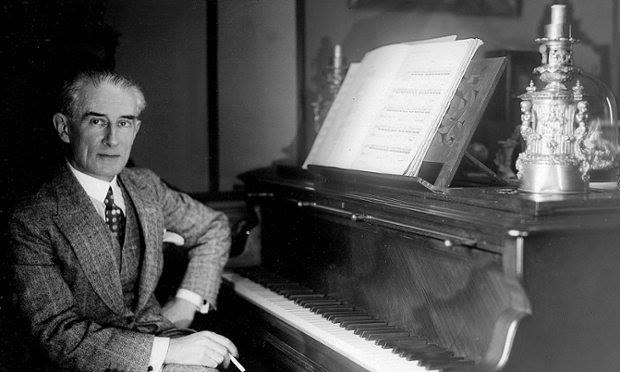
    Maurice Ravel credited Edgar Allan Poe as his “teacher in composition.” From Poe, he learned that “true art is a perfect balance between pure intellect and emotion.”

    Ravel was fond of toys, lots of mechanical toys. His cottage in Montfort-l’Amaury, southwest of Paris, was full of them, including a singing nightingale with a moving beak.

    And he was a natty dresser. He once held up a performance for half an hour so that he would have the correct shoes. His music is as elegant and perfect as was his sartorial sense.

    You can detect the mechanical influence in much of his music, including of course “Bolero” and the opening of the Piano Concerto in G. Miles Davis was obsessed with this classic recording by Arturo Benedetti Michelangeli:

    The slow movement is as good as it gets. Nothing mechanical about it. It’s the soul at the heart of the machine.

    Happy birthday, Maurice Ravel (1875-1937).

  • 10 Reasons Halloween is the Best Holiday

    10 Reasons Halloween is the Best Holiday

    TEN THINGS THAT MAKE HALLOWE’EN GREAT (in no particular order)

    1. You can dress like a pirate, and no one will say anything

    1. “The Devil Rides Out” (Also known as “The Devil’s Bride,” being shown on Turner Classic Movies: TCM tonight at 6:15 ET)

    1. Edgar Allan Poe

    http://www.nps.gov/edal/index.htm

    1. At last! A holiday with minimal family obligations (if you don’t have kids)

    https://en.wikipedia.org/wiki/Trick-or-treating

    1. Jack-o’-Lanterns!

    The Great Jack O’Lantern Blaze

    1. Mischief!

    http://coaches.answerology.com/index.aspx/question/3221105_Soap-the-windows-Steal-the-gate-Move-the-steps-What-Halloween-tricks-did-you-do-when-young-.html

    1. How much candy is too much candy? Let’s find out!

    http://www.thekitchn.com/this-is-what-your-favorite-halloween-candy-says-about-you-225158

    1. Colored leaves, moody skies, and that old devil moon

    https://en.wikipedia.org/wiki/Two_Men_Contemplating_the_Moon

    1. Samuel Ramey as Mefistofele

    1. 2am return to Standard Time. An extra hour of Hallowe’en!

    http://www.telegraph.co.uk/news/worldnews/northamerica/usa/11965818/What-time-do-the-clocks-go-back-in-the-US-November-1st-2015.html

    Have a good time, everyone!

  • Eerie Edgar Allan Poe Music for Hallowe’en

    Eerie Edgar Allan Poe Music for Hallowe’en

    We’re bearing down on Hallowe’en, the perfect time to get out your black frock coat and brood over many a quaint and curious volume of forgotten lore. This Sunday night on “The Lost Chord,” we’ll have music inspired by the verse of Edgar Allan Poe.

    We’ll hear a “melo-declamation,” for narrator and orchestra, on “The Raven” by Arcady Dubensky (1890-1966), a violinist in the New York Philharmonic. The piece was given its world premiere at the Academy of Music in Philadelphia in 1932, captured in an experimental recording by RCA Victor, on 35mm optical film, and issued on a special 78 rpm 2-record set, with the poem, together with monochrome engravings of Stokowski and Poe, etched into the shellac. Benjamin de Loache is the speaker.

    Then we’ll have a symphonic poem inspired by Poe’s “Ulalume” by English composer Joseph Holbrooke (1878-1958). Holbrooke evidently adored Poe, as he wrote a number of pieces inspired by his writings, including “The Raven,” “The Bells” (which predated the work by Rachmaninoff), and “The Masque of the Red Death.” “Ulalume” was first performed in 1905. The composer thought it one of his finest pieces. Again, the source poem is a gloomy meditation on the loss of a loved one.

    From a brand new compact disc, one of the inaugural recordings on the Affetto label, we’ll hear selections from the song cycle “Lenoriana” (which gives the album its name) by Benjamin C.S. Boyle (b. 1979). Boyle is on the faculty of Westminster Choir College of Rider University, as are the performers, baritone Elem Eley and pianist J.J. Penna. Of the seven songs, we’ll hear Boyle’s settings of “Annabel Lee,” “The Conqueror Worm,” and “To Helen.”

    Finally, we’ll have an orchestral etude on “The Haunted Palace,” which Poe incorporated into his story “The Fall of the House of Usher.” The French composer Florent Schmitt (1870-1958) knew the work from the translation by Stéphane Mallarmé. It tells of a king of olden times full of presentiments of impending doom to his palace and himself. The house and the royal family are destroyed, and remnants of the court may still be glimpsed as phantoms flickering in the windows and doors.

    “The Haunted Palace” may be the first piece of music by a French composer to be inspired by Poe. It was completed in 1904, and first performed the following year.

    I hope you’ll join me for “Edgar Allan Poems,” tonight at 10 ET, with a repeat Wednesday evening at 6; or that you’ll listen to it later as a webcast at wwfm.org.

Tag Cloud

Aaron Copland (92) Beethoven (95) Composer (114) Film Music (120) Film Score (143) Film Scores (255) Halloween (94) John Williams (185) KWAX (229) Leonard Bernstein (100) Marlboro Music Festival (125) Movie Music (135) Opera (198) Philadelphia Orchestra (88) Picture Perfect (174) Princeton Symphony Orchestra (106) Radio (87) Ralph Vaughan Williams (85) Ross Amico (244) Roy's Tie-Dye Sci-Fi Corner (290) The Classical Network (101) The Lost Chord (268) Vaughan Williams (103) WPRB (396) WWFM (881)

DON’T MISS A BEAT

Receive a weekly digest every Sunday at noon by signing up here


RECENT POSTS