Tag: Elizabeth I

  • Elizabeth I in Film Music Picture Perfect

    Elizabeth I in Film Music Picture Perfect

    This week on “Picture Perfect,” get ready to don your ruffed collars and codpieces. It’s an hour of music from films about Elizabeth I.

    “Fire Over England” (1937) is most notable, perhaps, for the first screen pairing of future husband-and-wife Laurence Olivier and Vivian Leigh. The couple play young lovers who face down the threat of Spanish invasion. Flora Robson is the queen (naturally). Robson would reprise her role a few years later in the Errol Flynn vehicle “The Sea Hawk.” Raymond Massey, Robert Newton, and James Mason also appear. Based on the novel by A.E.W. Mason, the film was produced by Alexander Korda, who would achieve even greater success when he spearheaded a classic version of Mason’s novel “The Four Feathers” in 1939. The music is by Richard Addinsell – yes, he of “Warsaw Concerto” fame.

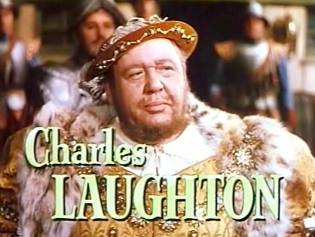
    Following in the footsteps of Leigh and Olivier, Jean Simmons and Stewart Granger were paired both professionally and romantically during the making of “Young Bess” (1953). The film recounts Elizabeth’s early days, from her childhood to the eve of her accession to the throne. Simmons plays the title role and Granger is Thomas Seymour. As an unexpected bonus, Charles Laughton returns to reprise his Oscar-winning portrayal of Henry VIII. Laughton had received the award 20 years earlier, for his characterization in “The Private Life of Henry VIII.” “Young Bess” was also produced by Korda (who, in addition, directed Laughton in the earlier film!). The music is by Miklós Rózsa, composer of choice for so many wonderful period pictures of the 1950s and ‘60s.

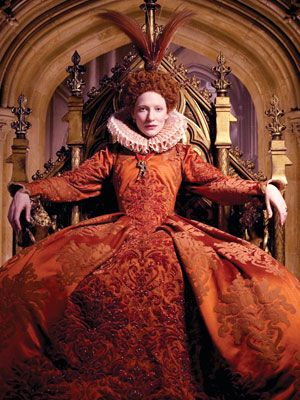
    As an interlude, we’ll enjoy some flavorful dances, heavily indebted to period models, from “Elizabeth” (1998). The composer, David Hirschfelder, is an Australian keyboardist, who has performed mostly with fusion jazz, rock, and pop ensembles. Cate Blanchett, who plays the title role, returned nine years later for a sequel, “Elizabeth: The Golden Age.”

    Finally, Bette Davis will bring it to a grand total of three actresses represented in the hour who portrayed Elizabeth twice. In 1955, Davis starred in “The Virgin Queen;” 16 years earlier, she appeared opposite Errol Flynn in “The Private Lives of Elizabeth and Essex” (1939). For the latter, Erich Wolfgang Korngold provided the characteristically opulent score.

    I hope you’ll join me in basking in the glory of Gloriana. Elizabeth I is our focus, on “Picture Perfect,” music for the movies, now in syndication on KWAX, the radio station of the University of Oregon!


    Clip and save the start times for all three of my recorded shows:

    PICTURE PERFECT, the movie music show – Friday at 8:00 PM EST/5:00 PM PST

    SWEETNESS AND LIGHT, the light music program – ALL NEW! – Saturday at 11:00 AM EST/8:00 AM PST

    THE LOST CHORD, unusual and neglected rep – Saturday at 7:00 PM EST/4:00 PM PST

    Stream them, wherever you are, at the link!
    https://kwax.uoregon.edu/

  • Elizabeth I, Tallis & Byrd: Music, Faith & Intrigue

    Elizabeth I, Tallis & Byrd: Music, Faith & Intrigue

    It was on this date, 450 years ago, that Queen Elizabeth I granted license to Thomas Tallis and William Byrd for the exclusive printing of music and ruled music paper in England for 21 years. Naturally, the composers were quick to dedicate their “Cantiones que ab argumento sacrae vocantur,” a collection of 34 Latin motets and one of the first sets of sacred music printed in England, to the queen. Among the motets is Tallis’ “O Nata Lux.” Unfortunately, the volume proved to be a financial flop, and the composers were forced to petition the queen for aid. She responded by granting the leases to certain lands for the period of their musical monopoly.

    Interestingly, in an era when different sects within one’s own religion were often regarded with suspicion and subject to discrimination, criminalization, violence, and even death (composer Peter Phillips, a Roman Catholic priest, fled to mainland Europe to escape persecution in England, and was imprisoned by the Dutch authorities, for allegedly plotting the assassination of Elizabeth), the queen, who was Protestant, looked past the fact that both Byrd and Tallis were Catholic.

    Tallis, who was clearly either an extremely likeable fellow or a savvy political animal (perhaps both), managed to survive and even thrive, since 1542, as Gentleman of the Chapel Royal, an office for which he composed and performed for Henry VIII, Edward VI, Mary I, and Elizabeth I. Somehow, he always managed to steer clear of religious controversy.

    On the other hand, Byrd, Tallis’ pupil, who also served as Gentleman of the Chapel Royal, beginning in 1572, actually converted to Catholicism in the 1570s, and even rubbed shoulders with Robert Catesby, who formulated the Gunpowder Plot to blow up Parliament in 1605, during the reign of James I, for which Guy Fawkes gained his undying notoriety.

    Though Byrd was never subject to imprisonment for his religious beliefs, he was involved in numerous lawsuits and subjected to heavy fines. Elizabeth interceded on his behalf at least once. He participated in illegal services, and the texts he chose to set to music could, at times, have a subversive edge. In particular, as a Catholic in a Protestant country, he became fond of texts related to persecution. Comparatively speaking, he went unmolested, because of his record of allegiance to the crown.

    A good movie could be made about these two composers and their relationship with the queen. Perhaps Cate Blanchett could be convinced to return for a third time as Elizabeth…


    Byrd, “Ne irascaris Domine” (“Do not be angry, Lord”), from his “Cantiones sacrae”

    Writing for the Anglican Church: “O Lord make They servant Elizabeth our queen”

    It’s not easy being Catholic (in a Protestant country): “Tristitia et Anxietas”

    Tallis, “O Nata Lux”

    “Why fum’th in sight?” (basis for Vaughan Williams’ “Fantasia on a Theme by Thomas Tallis”)

    Tallis’ greatest hit, “Spem in alium”

  • Tudor Music From the Movies

    Tudor Music From the Movies

    This week on “Picture Perfect,” we’ll conclude Early Music Month with a cinematic tour of the Tudors.

    We’ll hear selections from “Young Bess” (1953), which stars Jean Simmons as the future Elizabeth I. The colorful and entertaining cast includes Stewart Granger, Deborah Kerr and most notably Charles Laughton, who reprises his memorable turn as Henry VIII. Laughton was honored with an Academy Award for Best Actor for playing Henry in the 1933 film, “The Private Lives of Henry VIII.” Miklós Rózsa’s score conjures the era of the great MGM Technicolor spectacles.

    By the time of the events portrayed in “Mary, Queen of Scots” (1971), Elizabeth already wears the crown, though uneasy with the existence of her first cousin once removed, who had previously claimed Elizabeth’s throne as her own. Vanessa Redgrave is Mary and Glenda Jackson is Elizabeth, with a supporting cast that includes Timothy Dalton, Nigel Davenport, Patrick McGoohan, Trevor Howard and Ian Holm. As seems to be the custom in dramatic interpretations of the historical events, the film features several fictional meetings between the queens, even though in reality the two never met. The poignant score is by John Barry.

    “Anne of the Thousand Days” (1969) tells the story of Henry’s doomed second wife, Anne Boleyn. This time Richard Burton plays the king. Anne is played by Genevieve Bujold. Despite mixed reviews, the film was nominated for ten Academy Awards and recognized for its exceptional costumes. Among the other nominees was Georges Delerue for his period-flavored music.

    Finally, in a lighthearted change of pace from all the intrigue and execution, we turn to a big screen adaptation of Mark Twain’s “The Prince and the Pauper” (1937). Set in the time of Prince Edward (later Edward VI), Twain’s novel plays on the conceit that the heir apparent at some point had become mixed up with a commoner who bore a remarkable resemblance to him.

    Top-billed Errol Flynn is really a supporting player as the devil-may-care Miles Hendon, who throws himself in with the scraggly-looking prince, though he hardly believes his claims. Though it would still be a year until the release of “The Adventures of Robin Hood,” Flynn was already well on his way to becoming the screen’s quintessential swashbuckler, thanks to his turn in “Captain Blood” (1935). He easily dominates the film, and it’s a treat to see him duel with his old pal Alan Hale.

    Montagu Love plays Henry VIII, though he’s upstaged by the scheming Claude Rains as Edward Seymour, the Earl of Hertford. Composer Erich Wolfgang Korngold follows Flynn all the way, his music full of swagger and fun.

    I hope you’ll join me for music from movies about the Tudors, on “Picture Perfect,” this Friday evening at 6:00 EDT, on WWFM – The Classical Network WWFM and wwfm.org.

Tag Cloud

Aaron Copland (92) Beethoven (95) Composer (114) Film Music (123) Film Score (143) Film Scores (255) Halloween (94) John Williams (187) KWAX (229) Leonard Bernstein (101) Marlboro Music Festival (125) Movie Music (138) Opera (202) Philadelphia Orchestra (89) Picture Perfect (174) Princeton Symphony Orchestra (106) Radio (87) Ralph Vaughan Williams (85) Ross Amico (244) Roy's Tie-Dye Sci-Fi Corner (290) The Classical Network (101) The Lost Chord (268) Vaughan Williams (103) WPRB (396) WWFM (881)

DON’T MISS A BEAT

Receive a weekly digest every Sunday at noon by signing up here


RECENT POSTS