Tag: Elmer Bernstein

  • Novels of the Gilded Age on “Picture Perfect”

    Novels of the Gilded Age on “Picture Perfect”

    When I first assembled this week’s “Picture Perfect,” the Gilded Age was a period of American history most people would have been relieved to have receded into the distant past. Now everything old is new again.

    “The Gilded Age” was a term coined by none other than Mark Twain to describe the era spanning, roughly, from the end of Reconstruction (after the Civil War) to the turn of the 20th century. He didn’t mean it as a compliment. A gilded age is one that conceals serious social problems beneath a veneer of gold. On this week’s program, we look past the dazzle to focus on music from films inspired by novels from, or about, the period.

    “The Heiress” (1949) was adapted from a play by Ruth and Augustus Goetz, which in turn was based on the book “Washington Square,” by Henry James. Olivia De Havilland plays the “plain Jane” heiress of the title, Ralph Richardson her overbearing father, and Montgomery Clift, the adventurer who may or may not be out for her fortune. De Havilland won an Oscar for her portrayal, as did the music, by Aaron Copland.

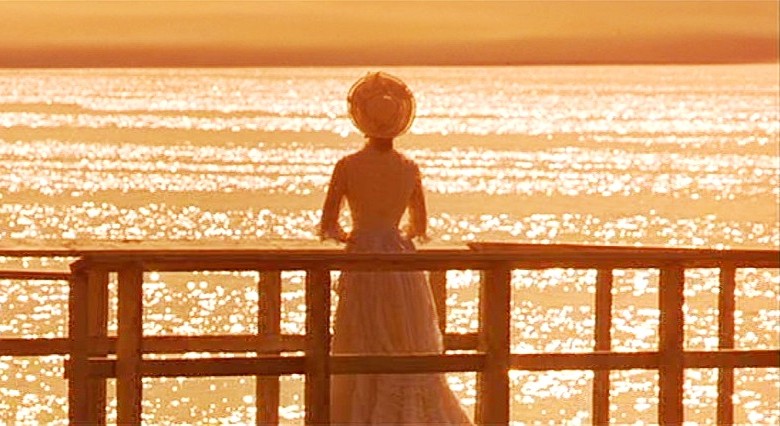
    “The Age of Innocence” (1993) was written by one-time James correspondent, his close friend, Edith Wharton. The book was published in 1920, but looks back to the 1870s, its story dealing with the impending marriage of an upper class couple and the appearance of a disreputable interloper who threatens their happiness. The title is an ironic play on the contrast between the outward manners of New York society and its inward machinations. The novel earned Wharton a Pulitzer Prize, the first ever to be awarded to a woman. The film was something of a curve ball from director Martin Scorsese, who made his reputation on arguably meaner streets. Veteran composer Elmer Bernstein provided the lovely, Brahmsian score.

    “The Magnificent Ambersons” (1942) is based on another Pulitzer Prize winner, this time by Booth Tarkington, from 1918. The novel is part of trilogy that traces the declining fortunes of three generations of an aristocratic Midwestern family. With industrialism on the rise, the Ambersons’ “old money” wealth and prestige wane.

    “Ambersons” was only the second film directed by Orson Welles. Sadly, the financial failure of “Citizen Kane” and Welles’ uncompromising artistic vision caused the project to be removed from his control and re-cut by the studio, shaving a full hour off the original running time. It says something about the strength of Welles’ material that what survives yet remains a magnificent achievement.

    The score was by Bernard Herrmann, CBS staff composer from Welles’ radio days. Herrmann had followed Welles to Hollywood to supply the music for “Kane.” With the trimming of “Ambersons,” his score was drastically edited and half the music removed. The famously irascible Herrmann, who had just written his Academy Award winning music for “The Devil and Daniel Webster,” was so angry that he threatened legal action if his name was not removed from the credits. (The studio complied.)

    The action of “Mr. Skeffington” (1944), based on a 1940 novel by Elizabeth von Arnim, begins at a point some consider to be the twilight of the Gilded Age, the eve of World War I. Bette Davis stars as a woman so enamored with her own beauty, and the suitors it attracts, that she fails to value the affections of the man who eventually becomes her husband. Mr. Skeffington, played by Claude Rains, is a Jewish financier, riding high in the ‘teens, but his fortunes change when he’s caught in Europe during the rise of the Nazis.

    Davis and Rains both earned Academy Award nominations for their work. The vivid score is by Franz Waxman. Davis was going through a period of emotional turmoil during the filming, so that she was allegedly insufferable to be around throughout the entire shoot. Someone finally poisoned her eyewash. When the police questioned the director, Vincent Sherman, he wished them good luck with their investigation. “If you asked everyone on the set who would have committed such a thing, everyone would raise their hand!”

    Certainly all that glitters is not gold. We peel back the veneer of prosperity, this week, with “Novels of the Gilded Age,” on “Picture Perfect,” music for the movies, now in syndication on KWAX Classical Oregon!

    ———-

    Clip and save the start times for all three of my recorded shows:

    PICTURE PERFECT, the movie music show – Friday at 8:00 PM EDT/5:00 PM PDT

    SWEETNESS AND LIGHT, the light music program – Saturday at 11:00 AM EDT/8:00 AM PDT (***now with a repeat Sunday at 9:00 PM EDT/6:00 PM PDT***)

    THE LOST CHORD, unusual and neglected rep – Saturday at 7:00 PM EDT/4:00 PM PDT

    Stream them, wherever you are, at the link
    !https://kwax.uoregon.edu/

  • “The Ten Commandments” on “Picture Perfect”

    “The Ten Commandments” on “Picture Perfect”

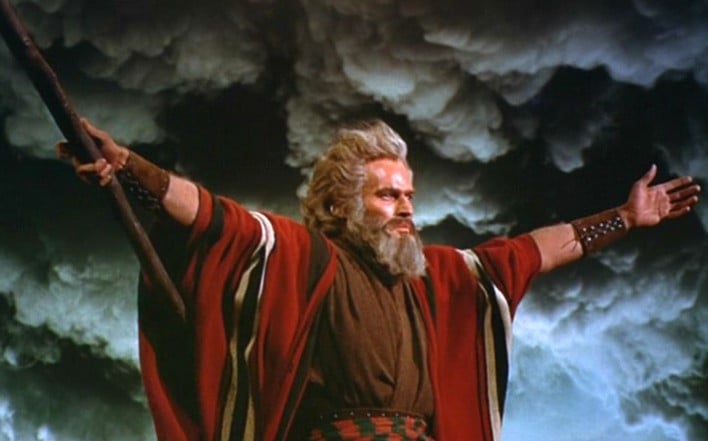
    This week on “Picture Perfect,” for the 70th anniversary of the release of Cecil B. DeMille’s “The Ten Commandments – and just in time for Passover – we’ll hear selections from Elmer Bernstein’s classic score.

    From a 6-CD set on the Intrada label – that includes the complete 2 ½ hour score, three commercial soundtrack releases, and bonus material intriguing enough to curl Charlton Heston’s beard – we’ll hear lovingly remastered highlights from the 1960 Dot and 1966 United Artists soundtrack re-recordings, the Pillar of Fire and parting of the Red Sea sequence from the original score, as heard in the film, and rare demos, prepared for Mr. DeMille by the composer, who announces his themes as he plays them, from the piano.

    So let it be written, so let it be done!

    It’s the collector’s equivalent of stone tablets handed down from Mount Sinai. Join me for the definitive “The Ten Commandments,” on “Picture Perfect,” music for the movies, now in syndication on KWAX Classical Oregon!

    ——–

    Clip and save the start times for all three of my recorded shows:

    PICTURE PERFECT, the movie music show – Friday at 8:00 PM EDT/5:00 PM PDT

    SWEETNESS AND LIGHT, the light music program – Saturday at 11:00 AM EDT/8:00 AM PDT

    THE LOST CHORD, unusual and neglected rep – Saturday at 7:00 PM EDT/4:00 PM PDT

    Stream them, wherever you are, at the link!

    https://kwax.uoregon.edu

  • A Hollywood Bowl Super-concert on “Picture Perfect”

    A Hollywood Bowl Super-concert on “Picture Perfect”

    Regardless of how you feel about the current state of the industry or the awards ceremony itself, you have to concede, there’s quite a rich history of impressive music written for film. And the Academy Awards is always the perfect excuse to look back.

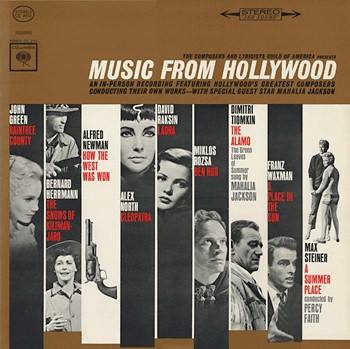
    This week on “Picture Perfect,” I’ll be leaning heavily into the nostalgia, as virtually every major composer from the golden age of Hollywood comes together at the Hollywood Bowl for a concert of now-classic film scores, originally broadcast on CBS Television in 1963. The event is often referred to as “the greatest film music concert in history.”

    Participants included, among others, Alfred Newman (“How the West Was Won”), David Raksin (“Laura”), Alex North (“Cleopatra”), Johnny Green (“Raintree County”), Franz Waxman (“A Place in the Sun”), Bernard Herrmann (“North by Northwest”), Dimitri Tiomkin (“High Noon”), and Miklós Rózsa (“Ben-Hur”). They were joined by Mahalia Jackson, Andy Williams, and Jack Benny!

    An album was released on LP, but understandably the three-hour concert was severely truncated. This was somewhat remedied on a CD-reissue on the Columbia Legacy label in 1995 that included 70 minutes of music. Among the casualties, however, was Elmer Bernstein conducting the theme to “The Magnificent Seven.” I will perform a service to film music by restoring that cut from another source.

    Based on my reading and the fact that I’m finding other selections in my personal library that were recorded at the venue on the same date, there’s still much that remains to be compiled. Put out whatever you’re holding back on a double-disc, please, Sony Classical!

    Hollywood couldn’t assemble this much musical talent today if it tried. Fortunately, recordings like this one endure. I hope you’ll join me for “Once Upon a Time in Hollywood” on “Picture Perfect,” music for the movies, now in syndication on KWAX Classical Oregon!

    ——–

    Clip and save the start times for all three of my recorded shows:

    PICTURE PERFECT, the movie music show – Friday at 8:00 PM EDT/5:00 PM PDT

    SWEETNESS AND LIGHT, the light music program – Saturday at 11:00 AM EDT/8:00 AM PDT

    THE LOST CHORD, unusual and neglected rep – Saturday at 7:00 PM EDT/4:00 PM PDT

    Stream them, wherever you are, at the link!

    https://kwax.uoregon.edu

  • Bustin’ Out of the Joint on “Picture Perfect”

    Bustin’ Out of the Joint on “Picture Perfect”

    This week on “Picture Perfect,” get yourself free. It’s an hour of music from movies about prison breaks.

    Indomitable Steve McQueen does hard time on Devil’s Island in “Papillon” (Jerry Goldsmith); Paul Newman sticks it to The Man in “Cool Hand Luke” (Lalo Schifrin); Tim Robbins makes good use of a Rita Hayworth poster in “The Shawshank Redemption” (Thomas Newman); and an all-star cast, led by a barbed-wire hopping McQueen, flee their Nazi captors in “The Great Escape” (Elmer Bernstein).

    Let’s face it, nobody looks good in orange. Grab a shank and a file. We’re bustin’ out of the joint, on “Picture Perfect,” music for the movies, now in syndication on KWAX Classical Oregon!

    ——–

    Clip and save the start times for all three of my recorded shows:

    PICTURE PERFECT, the movie music show – Friday at 8:00 PM EST/5:00 PM PST

    SWEETNESS AND LIGHT, the light music program – Saturday at 11:00 AM EST/8:00 AM PST

    THE LOST CHORD, unusual and neglected rep – Saturday at 7:00 PM EST/4:00 PM PST

    Stream them, wherever you are, at the link!

    https://kwax.uoregon.edu
  • Villa-Lobos’s Amazonian Hollywood Tale

    Villa-Lobos’s Amazonian Hollywood Tale

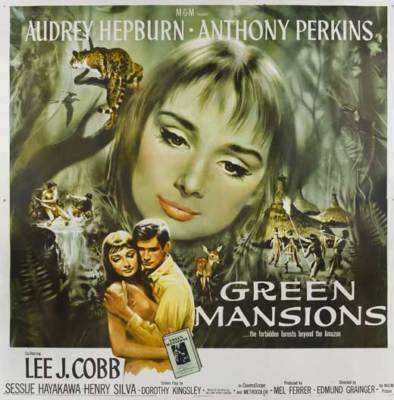
    When Heitor Villa-Lobos was contracted by M-G-M to write music for a big screen adaptation of W.H. Hudson’s novel “Green Mansions” (1959), expectations ran high on both sides. The Brazilian master began immediately, diving into the project with characteristic gusto. After all, he had been writing music inspired by the rain forest for his entire career.

    Unfortunately, he had very little affinity for the practicality of the filmmaking process, turning in musical impressions of scenes from the book. The studio was befuddled. Since Villa-Lobos was unable to adapt to the customary way of doing things, he was replaced by M-G-M house composer Branislau Kaper, who used the Villa-Lobos material as a springboard for his own dramatic conception. The result is part Villa-Lobos, part Kaper, and all M-G-M gloss.

    Villa-Lobos was a little embittered by his Hollywood experience. He promptly assembled a multi-movement symphonic poem, “Forest of the Amazon” (1958), some 75 minutes in length, which employed his rejected sketches. He made a recording of 45 minutes of the music in 1959, for which the soprano Bidu Sayão came out of retirement.

    This week on “Picture Perfect,” we’ll have selections from both versions of “Green Mansions,” as well as from the Mayan adventure “Kings of the Sun” (1963), composed by Elmer Bernstein, and “The Night of the Mayas” (1939), by Mexican composer Silvestre Revueltas.

    I hope you’ll join me for cinematic evocations of the indigenous peoples of Latin America, on “Picture Perfect,” music for the movies, now in syndication on KWAX, the radio station of the University of Oregon!


    Clip and save the start times for all three of my recorded shows:

    PICTURE PERFECT, the movie music show – Friday at 8:00 PM EDT/5:00 PM PDT

    SWEETNESS AND LIGHT, the light music program – Saturday at 11:00 AM EDT/8:00 AM PDT

    THE LOST CHORD, unusual and neglected rep – Saturday at 7:00 PM EDT/4:00 PM PDT

    Stream them, wherever you are, at the link!

    https://kwax.uoregon.edu/


    PHOTO: The project that left Villa-Lobos feeling green around the gills

Tag Cloud

Aaron Copland (94) Beethoven (95) Composer (114) Film Music (148) Film Score (143) Film Scores (255) Halloween (97) John Williams (196) KWAX (232) Leonard Bernstein (105) Marlboro Music Festival (125) Movie Music (163) Mozart (91) Opera (215) Philadelphia Orchestra (90) Picture Perfect (174) Princeton Symphony Orchestra (110) Radio (90) Ross Amico (244) Roy's Tie-Dye Sci-Fi Corner (290) The Classical Network (101) The Lost Chord (269) Vaughan Williams (107) WPRB (397) WWFM (881)

DON’T MISS A BEAT

Receive a weekly digest every Sunday at noon by signing up here


RECENT POSTS