Tag: Eugene Goossens

  • English Composers and the Occult

    English Composers and the Occult

    Since I am such a musical anglophile, and since Halloween happens to be my favorite holiday, I suppose it’s hardly surprising that my thoughts would gravitate to the influence of the occult on English music.

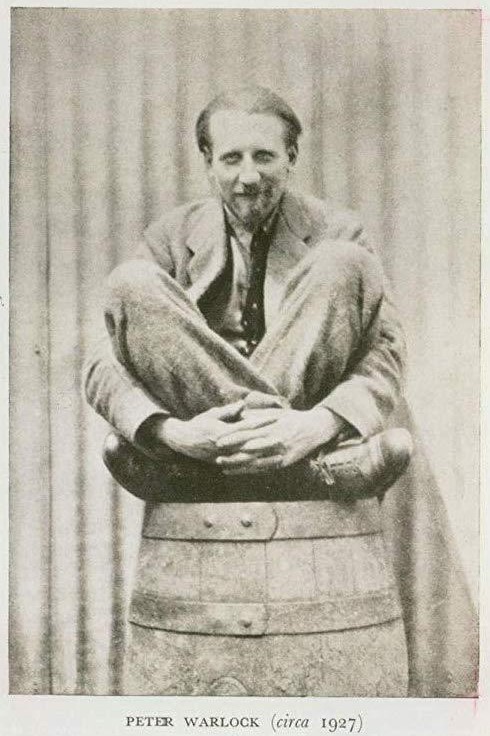
    Most notorious, perhaps, would be the case of Philip Heseltine, who composed under the name of Peter Warlock. Heseltine was born on this date in 1894. He lived a scandalous life – carousing, trolling his enemies, riding naked on a motorcycle, and using one of D.H. Lawrence’s manuscripts as toilet paper – while pursuing his fascination with “the science known as Black Magic.” His life ended when he was only 36 years-old, his body found in his flat – the cause of death: gas poisoning. He left behind 100 songs, a number of choral works, and a handful of orchestral pieces. Whether or not his end was accidental has never been unanimously accepted.

    The first time Heseltine assumed the pen name Warlock was for a 1916 article on the chamber music of Eugene Goossens. Goossens, who would later be honored with a knighthood, spent the better part of a decade in Australia, conducting the Sydney Symphony Orchestra and directing the NSW State Conservatorium of Music.

    It wasn’t all work and no play, however. During his leisure hours, Goossens entered into a passionate affair with Rosaleen Norton, soon to be known as the Witch of Kings Cross. Norton was an artist and occultist, whose paintings of demons and phalluses were decidedly out-of-step with the spirit of the time.

    In 1955, a scandal involving a mentally ill woman who claimed she had participated in a Satanic Black Mass at Norton’s flat had a domino effect. Sure, Norton had her own coven, but she denied ever being a Satanist. She did however stand by her charms and hexes. Her paintings were removed from public exhibitions and photographs were confiscated from her home. Arrests on obscenity and blasphemy charges came fast and furious. The tabloids had a field day.

    Unfortunately, Goossens became collateral damage. Incriminating letters, which he had asked Norton to destroy after reading, were found stashed beneath her sofa. Though he was in England when the storm broke, wholly ignorant of the antipodean moral panic, the authorities lay in wait upon his return. Among his luggage were found 800 “pornographic” photos, film, masks, and incense. As a high-profile musical figure, for all intents and purposes, the conductor’s Goossens was cooked.

    Then there was the matter of the Hermetic Order of the Golden Dawn. The order, which sported Aleister Crowley among its members, was a secret society devoted to occult, metaphysical, and paranormal activities. I once wrote a post about the composer John Ireland’s relationship with Welsh writer of the supernatural Arthur Machen, who also belonged to the society. Ireland wrote several works profoundly influenced by Machen’s philosophies and dedicated his piece for piano and orchestra, “Legend,” to him.

    Even Sir Edward Elgar, composer of “Land of Hope and Glory,” had his brush with the occult, by way of supernatural writer Algernon Blackwood, also a member of the Hermetic Order. Elgar provided incidental music for “The Starlight Express,” based on Blackwood’s “A Prisoner in Fairyland.” The two men struck up a friendship, and though there is no evidence to link Elgar to actual involvement with the Golden Dawn, there are those who allege there to be Rosicrucian symbols in the “Enigma Variations,” completed years earlier, in 1899.

    Sir Arthur Conan Doyle, Gustav Meyrink, Sax Rohmer, Bram Stoker, and William Butler Yeats were also members of the secret order. I imagine them all, like something out of Dennis Wheatley, gathering in their robes to offer up sacrifices to the Goat of Mendes!


    Peter Warlock and the occult
    https://interlude.hk/peter-warlock-league-devil/

    Eugene Goossens and the occult
    https://www.smh.com.au/lifestyle/the-conservatorium-director-and-the-witch-20150702-gi3h8y.html?fbclid=IwAR0-i_0lvKp5RUSECBdAKlZRzkRQdiHQfrSJFvARsJayM2ofjGUjSk18nao

    John Ireland and the occult
    https://www.overgrownpath.com/2011/11/secret-life-of-english-pastoralist.html?fbclid=IwAR09ZE8Xj8lEzgQnOIh49Kpqz9u-5VNKPODWg0e-KNfoo2PhSHJ9z0-dhU0

    Edward Elgar and the occult
    https://www.overgrownpath.com/2011/01/elgar-and-occult.html

    Warlock’s melancholy masterpiece, “The Curlew,” after poetry of Yeats

    Eugene Goossens, Concertino for Double String Orchestra

    John Ireland, “Legend”

    Sir Edward Elgar, “The Starlight Express”

    My post on Arthur Machen and John Ireland

  • Occult Influences on English Music

    Occult Influences on English Music

    Since I am such a musical anglophile, and since Halloween happens my favorite holiday, I suppose it’s hardly surprising that my thoughts would gravitate to the influence of the occult on English music.

    Most notorious, perhaps, would be the case of Philip Heseltine, who composed under the name of Peter Warlock. Heseltine was born on this date in 1894. He lived a scandalous life – carousing, trolling his enemies, riding naked on a motorcycle, and using one of D.H. Lawrence’s manuscripts as toilet paper – while pursuing his fascination with “the science known as Black Magic.” His life ended when he was only 36 years-old, his body found in his flat – the cause of death: gas poisoning. He left behind 100 songs, a number of choral works, and a handful of orchestral pieces. Whether or not his end was accidental has never been unanimously accepted.

    The first time Heseltine assumed the pen name Warlock was for a 1916 article on the chamber music of Eugene Goossens. Goossens, who would later be honored with a knighthood, spent the better part of a decade in Australia, conducting the Sydney Symphony Orchestra and directing the NSW State Conservatorium of Music.

    It wasn’t all work and no play, however. During his leisure hours, Goossens entered into a passionate affair with Rosaleen Norton, soon to be known as the Witch of Kings Cross. Norton was an artist and occultist, whose paintings of demons and phalluses were decidedly out-of-step with the spirit of the time.

    In 1955, a scandal involving a mentally ill woman who claimed she had participated in a Satanic Black Mass at Norton’s flat had a domino effect. Sure, Norton had her own coven, but she denied ever being a Satanist. She did however stand by her charms and hexes. Her paintings were removed from public exhibitions and photographs were confiscated from her home. Arrests on obscenity and blasphemy charges came fast and furious. The tabloids had a field day.

    Unfortunately, Goossens became collateral damage. Incriminating letters, which he had asked Norton to destroy after reading, were found stashed beneath her sofa. Though he was in England when the storm broke, wholly ignorant of the antipodean moral panic, the authorities lay in wait upon his return. Among his luggage were found 800 “pornographic” photos, film, masks, and incense. As a high-profile musical figure, for all intents and purposes, the conductor’s Goossens was cooked.

    Then there was the matter of the Hermetic Order of the Golden Dawn. The order, which sported Aleister Crowley among its members, was a secret society devoted to occult, metaphysical, and paranormal activities. A couple of weeks ago, I wrote about the composer John Ireland’s relationship with Welsh writer of the supernatural Arthur Machen, who also belonged to the society. Ireland wrote several works profoundly influenced by Machen’s philosophies and dedicated his piece for piano and orchestra, “Legend,” to him.

    Even Sir Edward Elgar, composer of “Land of Hope and Glory,” had his brush with the occult, by way of supernatural writer Algernon Blackwood, also a member of the Hermetic Order. Elgar provided incidental music for “The Starlight Express,” based on Blackwood’s “A Prisoner in Fairyland.” The two men struck up a friendship, and though there is no evidence to link Elgar to actual involvement with the Golden Dawn, there are those who allege there to be Rosicrucian symbols in the “Enigma Variations,” completed years earlier, in 1899.

    Sir Arthur Conan Doyle, Gustav Meyrink, Sax Rohmer, Bram Stoker, and William Butler Yeats were also members of the secret order. I imagine them all, like something out of Dennis Wheatley, gathering in their robes to offer up sacrifices to the Goat of Mendes!

    Peter Warlock and the occult
    https://interlude.hk/peter-warlock-league-devil/

    Eugene Goossens and the occult
    https://www.smh.com.au/lifestyle/the-conservatorium-director-and-the-witch-20150702-gi3h8y.html

    John Ireland and the occult
    https://www.overgrownpath.com/2011/11/secret-life-of-english-pastoralist.html

    Edward Elgar and the occult
    https://www.overgrownpath.com/2011/01/elgar-and-occult.html

    Warlock’s melancholy masterpiece, “The Curlew,” after poetry of Yeats:

    Eugene Goossens, Concertino for Double String Orchestra

    John Ireland, “Legend”

    Sir Edward Elgar, “The Starlight Express”

  • Goossens’ Downfall Masks Incense and Scandal

    Goossens’ Downfall Masks Incense and Scandal

    Everything was going swimmingly for Sir Eugene Goossens – until they found the rubber masks and incense in his luggage at Sydney Airport.

    Goossens was the third generation in a dynasty of conductors, all of whom bore the same name. However, the family being of Belgian origin, his forebears employed an accent grave (i.e. Eugène). Eugene III was born in London, and studied in Bruges, Liverpool, and at the Royal Academy of Music under Sir Charles Villiers Stanford.

    He was a violinist, and later assistant conductor, under Sir Thomas Beecham. Ultimately, he would carry out Beecham’s notorious arrangement of Handel’s “Messiah.”

    Even so, he was a considerably talented composer. He wrote symphonies, operas, concertos and chamber music. He was also the guiding force behind a collection of patriotic fanfares, of which Aaron Copland’s “Fanfare for the Common Man” was destined to become the most famous.

    Goossens accepted several conducting positions in the United States, including at the Rochester Philharmonic Orchestra (while he taught at the Eastman School) and the Cincinnati Symphony (where he succeeded Fritz Reiner).

    He then spent the better portion of a decade in Australia, where he conducted the Sydney Symphony Orchestra and directed the NSW State Conservatorium of Music.

    While “Down Under,” he entered into a passionate affair with Rosaleen Norton, also known as Thorn, later referred to as the Witch of Kings Cross. Norton was an artist and occultist, whose paintings of demons and phalluses were decidedly out-of-step with the spirit of the time.

    In 1955, a scandal involving a mentally ill woman who claimed she had participated in a Satanic Black Mass at Norton’s flat had a domino effect. (Sure, Norton had her own coven, but she denied being a Satanist; she did however stand by her charms and hexes.) Her paintings were removed from public exhibitions and photographs were confiscated from her home. Arrests on obscenity and blasphemy charges came fast and furious. The tabloids had a field day.

    Unfortunately, Goossens became collateral damage. Incriminating letters, which he had asked Norton to destroy after reading, were found stashed beneath her sofa. Though he was in England when the storm broke, wholly ignorant of the antipodean moral panic, the authorities lay in wait upon his return. Among his luggage were found 800 “pornographic” photos, some film, and the aforementioned masks and incense. As a high profile musical figure, for all intents and purposes, the conductor’s Goossens was cooked. He resigned from his posts in disgrace.

    Later he was engaged by the BBC, and especially by Everest Records, for which he made some very fine recordings late in his career. But by all accounts, by that time he was a broken man. You wouldn’t know it from his discography. The conductor continued to turn in powerful performances to the very end.

    Happy birthday, Sir Eugene Goossens (1893-1962).

    Here is Ottorino Respighi’s “Feste Romane” (Goossen’s final recording, released posthumously):

    Circuses https://www.youtube.com/watch?v=45GaSoDpbg0
    The Jubilee https://www.youtube.com/watch?v=UKnQyRXFmd4
    The October Festival https://www.youtube.com/watch?v=t-xWO2Lmf9g
    The Epiphany https://www.youtube.com/watch?v=Bwk3EyrsMZ0

    There are many other examples of his artistry on YouTube, but unfortunately, as above, most of them seem to be saved in segments.

    Here is some of Goossens’ own music, a Baxian tone poem, “The Eternal Rhythm,” composed at the age of 19:

    https://www.youtube.com/watch?v=djZQsdCqj5U

    PHOTOS: Eugene Goossens (left), bewitched, bothered and bewildered; the charming Rosaleen Norton

Tag Cloud

Aaron Copland (92) Beethoven (95) Composer (114) Film Music (120) Film Score (143) Film Scores (255) Halloween (94) John Williams (185) KWAX (229) Leonard Bernstein (100) Marlboro Music Festival (125) Movie Music (135) Opera (198) Philadelphia Orchestra (88) Picture Perfect (174) Princeton Symphony Orchestra (106) Radio (87) Ralph Vaughan Williams (85) Ross Amico (244) Roy's Tie-Dye Sci-Fi Corner (290) The Classical Network (101) The Lost Chord (268) Vaughan Williams (103) WPRB (396) WWFM (881)

DON’T MISS A BEAT

Receive a weekly digest every Sunday at noon by signing up here


RECENT POSTS