Tag: Fairy Tales

  • German Christmas: A Time for Fantastic Fairy Tale Operas

    German Christmas: A Time for Fantastic Fairy Tale Operas

    How many people do you know that own TWO recordings of Hans Pfitzner’s “Das Christ-Elflein” (“The Christmas Elf”)? Well, now you know ONE.

    I was riding around in the car yesterday, trying to knock out some last-minute, long-distance Christmas shopping, and after listening to Josef Rheinberger’s “The Star of the Bethlehem,” I popped in the Orfeo recording of “Das Christ-Elflein,” with Helen Donath in the title role and Kurt Eichhorn conducting. (That’s right, my car still has a CD player. In fact, it was the deciding factor in purchasing the vehicle.) If you’re curious, my other recording is a more recent one, on the CPO label, with Marlis Petersen as the Elf and Claus Peter Flor conducting.

    The plot, based on an airy-fairy play by Ilse van Stach, concerns an Elf, who’s never heard of Christmas, and a grumpy old Fir Tree, who has and doesn’t like it. (Firs get chopped down at Christmas.) Despite the Fir Tree’s warnings about the heartlessness of the human race, the inquisitive Elf ventures into the world of men. It turns out it’s a rather depressing place.

    When the Christ Child appears on Christmas Eve, the Elf wants to follow Him into heaven. But the Christ-Child has work to do: He’s to escort the soul of a dying girl. When the guileless Elf offers himself in her place, the Christ-Child accepts. The girl is restored, and the Elf returns every year at Christmas as the Christmas Elf. The opera concludes with a joyous Christmas party with the girl’s family.

    In the Eichhorn recording, Donath makes a good Elf. Her voice and characterization convey innocence and purity. The jaded and embittered Fir Tree, on the other hand, is sung by Alexander Malta, whose pleasingly resonant voice belies a gruff exterior. Bass-baritones, it happens, are thick on the ground, and Nikolaus Hillebrand sings an authoritative, even noble Knecht Ruprecht (a gift-bearing companion of St. Nicholas).

    The work itself is entertaining – it’s got some good bits, especially fun in the parts that incorporate quotations of “O Tannenbaum,” and there’s obviously also an ample amount of Christmas sentiment (okay, schmaltz) – but if I’m to be honest, it doesn’t hold a Christmas candle to the ne plus ultra of the genre, Engelbert Humperdinck’s “Hansel und Gretel.”

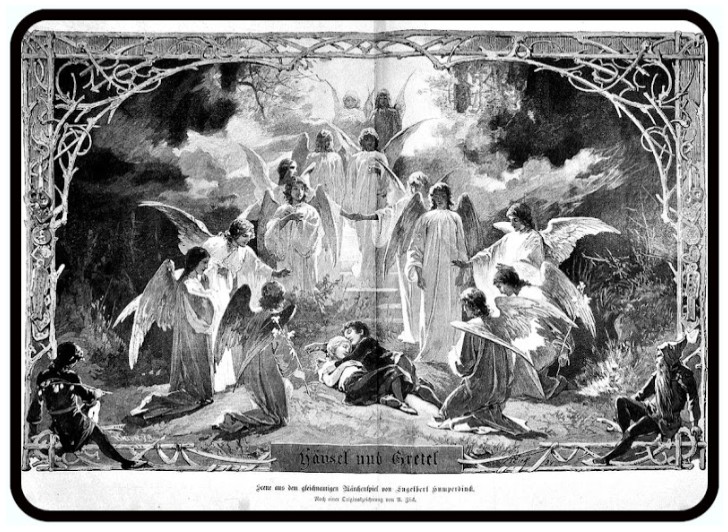
    For a time, the fairy tale opera was to Germany what the ghost story was to England, a cherished Christmas tradition. “Hansel und Gretel” was given its first performance on this date in 1893 – with Richard Strauss, no less, directing the orchestra and cueing singers from the pit of Weimar’s Hoftheater. With its folk-like simplicity, visions of sweets, and Evening Prayer (replete with angels), it’s been part of the Christmas season ever since.

    “Hansel und Gretel” had a foundational advantage in the familiar Brothers Grimm fairy tale. “Das Christ-Elflein” is a much stranger concoction, mixing sacred and secular – indeed pagan – elements into a heady Christmas punch.

    The opera, really a singspiel (an entertainment with sung parts linked by spoken passages), first appeared in 1906 and was revised in 1917. It still gets revived in German-speaking countries, but in the two recordings I own, anyway, there is the drawback of interludes delivered by a German narrator. I would have preferred had the singer’s spoken dialogue been retained.

    “Hansel and Gretel” was the first opera broadcast live on the radio from the Metropolitan Opera in 1931. Here’s a lovely, classic staging from the Met, prior to the current rage for Regietheater:

    My favorite recording of the “Dream Pantomime,” with Otto Klemperer:

    Elisabeth Schwarzkopf and Irmgard Seefried, with Josef Krips conducting, from 1947:

    “Das Christ-Elflein”

  • Once Upon a Time and Happily Ever After on “Picture Perfect”

    Once Upon a Time and Happily Ever After on “Picture Perfect”

    This week on “Picture Perfect,” we’ll play on the inherent nostalgia of the holidays by recalling the magic of childhood, by way of our collective and personal interactions with the world of fairy tales.

    George Pal’s “The Wonderful World of the Brothers Grimm” (1962) was filmed in Cinerama and features the producer-director’s trademark stop motion effects. Among the all-star cast are Laurence Harvey, Claire Bloom, Barbara Eden, Russ Tamblyn, and Buddy Hackett. The narrative incorporates a number of familiar Grimm tales, while relating the brothers’ “real-life” struggles.

    The music is by Leigh Harline. Harline was an integral part of the Disney team that scored an earlier fairy tale adaptation, “Snow White and the Seven Dwarfs.” He would win two Academy Awards for his work on “Pinocchio,” including one for Best Original Song, for “When You Wish Upon a Star.”

    “The Company of Wolves” (1984), one of Neil Jordan’s earlier films, explores the psychological underpinnings of the tale of “Little Red Riding Hood,” here presented as an allegory of adolescence and the loss of innocence. Angela Carter co-wrote the screenplay, based on a selection of her original short stories. The film features Angela Lansbury, any number of werewolves, and Terence Stamp as the Devil. The music is by George Fenton.

    With the advent of computer animation, a snarkier, post-modern take on the fairy tale predominates, most notably with the “Shrek” series, beginning in 2001. The “Shrek” films were so successful, they led to a spin-off, centered on the character of “Puss in Boots” (2011).

    Voiced by Antonio Banderas, Puss provides ample opportunity to vamp on the actor’s swashbuckler image, especially as portrayed in “The Mask of Zorro.” Likewise, the composer, Henry Jackman, chooses to rib James Horners’ “Zorro” score.

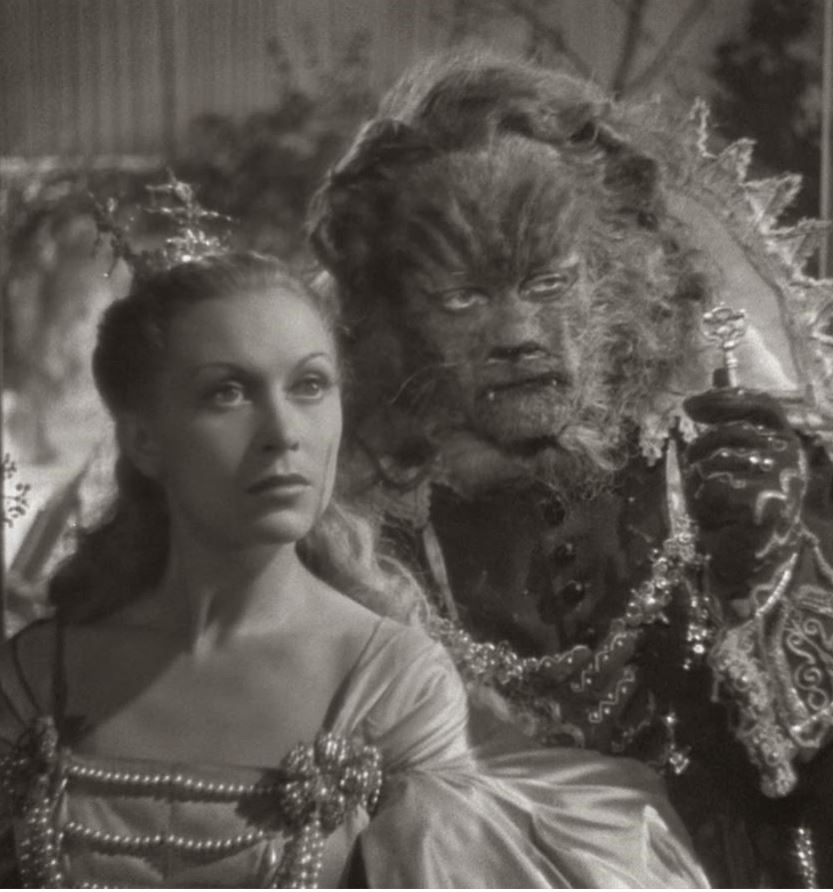
    Finally, we’ll hear selections from perhaps the finest fairy tale ever committed to film, Jean Cocteau’s “La Belle et la Bête” – “Beauty and the Beast” (1946). Moody, atmospheric, dreamy, clever, hypnotic, funny, and romantic, and sporting production design that looks like something Gustav Doré might have dreamed up in a haze of Dutch Masters cigars, Cocteau’s masterpiece stars Jean Marais and Josette Day.

    The alternately mysterious and majestic score is by Georges Auric. Cocteau, you’ll recall, was the one-man publicity machine that propelled Auric and his composer-colleagues, Francis Poulenc, Darius Milhaud, Arthur Honegger, Germaine Tailleferre, and Louis Durey, to fame in Paris, circa 1920, dubbing them “Les Six.”

    I hope you’ll join me for an hour of once-upon-a-time and happily-ever-after, on “Picture Perfect,” music for the movies, now in syndication on KWAX, the radio station of the University of Oregon!

    ——–

    Clip and save the start times for all three of my recorded shows:

    PICTURE PERFECT, the movie music show – Friday at 8:00 PM EST/5:00 PM PST

    SWEETNESS AND LIGHT, the light music program – Saturday at 11:00 AM EST/8:00 AM PST

    THE LOST CHORD, unusual and neglected rep – Saturday at 7:00 PM EST/4:00 PM PST

    Stream them, wherever you are, at the link!

    https://kwax.uoregon.edu/
  • The Dark Allure of Bluebeard’s Tale

    The Dark Allure of Bluebeard’s Tale

    Do you know the tale of Bluebeard?

    Hot on the heels of yesterday’s “Picture Perfect” featuring Gothic romances, my mind is full of this disturbing fairy story, which, like any myth worth its salt, embeds itself in the recesses of the unconscious, only to color and confirm certain anxieties or perceived truths about the wider world.

    The best known version of the story is the one by Charles Perrault, set down in the 17th century. Perrault’s popular retellings of Little Red Riding Hood, Cinderella, The Sleeping Beauty, and Puss in Boots served to codify these timeless folk tales for the modern age.

    Bluebeard as an archetype informs the characterizations of so many of the tortured antiheroes of the Gothic novel – the mysterious and brooding nobleman who lives in a dank castle of many chambers that surely contain their share of skeletons, be they literal or figurative.

    Sometimes Bluebeard really is the menace of Perrault, the volatile madman who lives in a house full of corpses. At others (as in “Jane Eyre”), he is a tragic hero who harbors a guilty secret that cuts him off from all happiness, love, and normalcy. Only gradually do the heavy doors grind open on rusty hinges to reveal their truths. The chambers are like the dark corners of his psyche, vulnerabilities he holds close, to the point of near-destruction and sometimes beyond. Only understanding and acceptance have the power to alter his world.

    That said, sometimes Bluebeard really is a murderous creep who’s all about control and over-the-top cruelty.

    And what about his bride, named Judith in Béla Bartók’s opera, “Bluebeard’s Castle?” Is her curiosity a liberating force or a destructive one? The parable of fatal curiosity extends back through the Biblical stories of Lot’s wife and Eve and the Classical myths of Pandora, Orpheus and Psyche.

    The tale positively drips with allegory. If there is anything that is clear about the Bluebeard story, it’s that it would take two very special people to make this unusual relationship work. There’s no way any outside observer would ever, ever, EVER understand.

    Bartók’s “Bluebeard’s Castle” will be heard worldwide as part of a double-bill – with Tchaikovsky’s “Iolanta,” a happier tale extolling the virtues of faith (in this case literally blind) – on The Metropolitan Opera’s weekly radio broadcast, which will commence today at 12:30 p.m. EST. If you’re interested, Google yourself an affiliate.


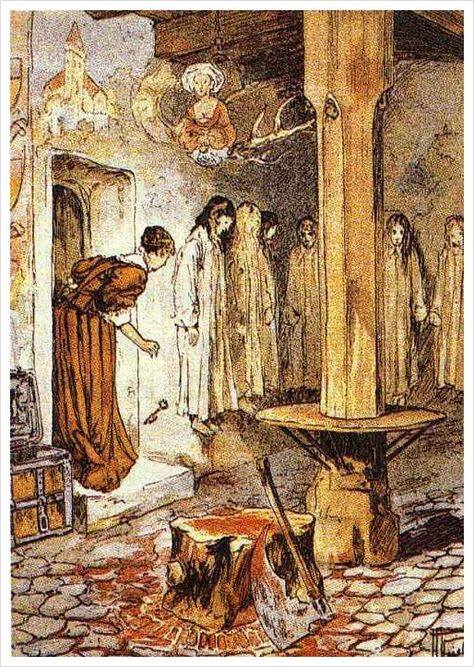
    Illustration from “Bluebeard” (1887) by Hermann Vogel

  • Ross Amico’s Mother’s Day Radio Magic

    Ross Amico’s Mother’s Day Radio Magic

    Once upon a time (today), Classic Ross Amico beat the alarm on Mother’s Day. He drank some caffeine, took a quick shower, and double-checked his radio bag, just to be sure it was still full of music inspired by nursery rhymes and fairy tales and bedtime stories he recollected from childhood. So much nostalgia and security was contained in that bag that he had to try very hard to resist falling back to sleep.

    In fatigue and despair, he cried out to his fairy godmother, “O Fairy Godmother! Why must I get up so early on Sundays, when other, more sensible mortals get to sleep in on their days off?” Then he glanced in the bathroom mirror and noticed that he had been transformed into a raccoon.

    So he traded the family cow for some magic coffee beans at the House of Wawa and set off for Princeton University’s Bloomberg Hall. There he found the equipment left in disarray by DJ Bluebeard, who had evidently been cavorting with the Bridge Trolls. It was with some frustration and embarrassment that he began his carefully prepared air shift, since the condition of the studio directly impacted the playing of both underwriting and music, until he reconnected the machinery and located the station log, which is often the first quest of the morning. But when at last he played his first selection, the good people of New Jersey and Pennsylvania and more distant lands awoke delighted from their enchanted sleep, and were refreshed by the Raccoon-Man’s noble sacrifice.

    The Fairy Godmother smiled and waved her magic wand, and after spending the rest of Sunday in a fog, Classic Ross Amico awoke as if from an enchanted sleep to discover that it was Monday, and time to go back to work.

    Not all the nursing takes place in the nursery on Mother’s Day. I’ll call for my pipe, I’ll call for my bowl, and I’ll call for my fiddles three, from 7 to 10 EDT, on WPRB 103.3 FM and wprb.com. You’ll find me living still, if I am not yet dead, on Classic Ross Amico.

  • Mother’s Day Fairy Tale Music on WPRB

    Mother’s Day Fairy Tale Music on WPRB

    It will be the mother of all Mother’s Day shows!

    Tell Mom to tune in to WPRB a few days early to enjoy a full playlist of music inspired by fairy tales, nursery rhymes, children’s books, and fables. Composers will include Daniel Dorff, Paul Hindemith, Gustav Holst, Libby Larsen, Anatole Liadov, Robert Moran, Josef Suk, Ernst Toch, and Ralph Vaughan Williams, among others.

    Wash behind your ears and wipe your feet before entering, this Thursday morning from 6 to 11 EDT, on WPRB 103.3 FM and wprb.com. We’ll remember Mama, on Classic Ross Amico.

Tag Cloud

Aaron Copland (92) Beethoven (95) Composer (114) Film Music (121) Film Score (143) Film Scores (255) Halloween (94) John Williams (185) KWAX (229) Leonard Bernstein (100) Marlboro Music Festival (125) Movie Music (136) Opera (198) Philadelphia Orchestra (88) Picture Perfect (174) Princeton Symphony Orchestra (106) Radio (87) Ralph Vaughan Williams (85) Ross Amico (244) Roy's Tie-Dye Sci-Fi Corner (290) The Classical Network (101) The Lost Chord (268) Vaughan Williams (103) WPRB (396) WWFM (881)

DON’T MISS A BEAT

Receive a weekly digest every Sunday at noon by signing up here


RECENT POSTS