Tag: Field of Dreams

  • James Earl Jones Voice of A Generation

    James Earl Jones Voice of A Generation

    Everyone knows James Earl Jones is the indelible voice of Darth Vader, one of the most recognizable of all movie villains; but he’s also the voice of democracy in my favorite recording of Aaron Copland’s “Lincoln Portrait.” No one delivers “of the PEOPLE, by the PEOPLE, and for the PEOPLE” like Jones. I’ll be thinking of him when I pull the lever, or whatever the hell they’ll have us do now, this November.

    In “Field of Dreams,” he plays a character who’s not even in the book upon which it’s based. (That would be “Shoeless Joe,” by W.P. Kinsella; believe it or not, in the book – which for me lacks the resonance of the movie – the character is J.D. Salinger!)

    Jones steals home and steals the movie here:

    A great voice and a great loss. R.I.P.

  • Movie Music for Father’s Day on KWAX

    Movie Music for Father’s Day on KWAX

    Even if you’re not appreciated by your former employer, Father knows best; and my old man says I’m better off at KWAX!

    This week on “Picture Perfect,” with Father’s Day right around the corner, we’ll celebrate by listening to music for movie dads.

    Vito Corleone may not exactly have been a model father, but he did adhere to a certain code of ethics. Besides, what father doesn’t love “The Godfather” (1972)? “The Godfather” was recognized with 11 Academy Award nominations – of which it won three, including Best Picture. However, the awards were not without controversy.

    Of course, Brando sent Sacheen Littlefeather to the ceremony to decline his Oscar, in protest over Hollywood’s portrayal of Native Americans in television and film. Then there was the matter of the score, by Nino Rota. Rota was nominated, but the nomination was withdrawn when it was discovered that he had used one of the themes in a 1958 film, “Fortunella,” which starred Giulietta Masina and Alberto Sordi. In the end, the Academy turned around and gave Rota the award anyway, two years later, for “The Godfather Part II.”

    “Field of Dreams” (1989) is one of those rare movies that has the ability to reduce manly men – even those without daddy issues – to a pool of tears. Phil Alden Robinson’s superior adaptation of W.P. Kinsella’s novel, “Shoeless Joe,” is a male wish-fulfillment fantasy, in which a man finds redemption, and a new understanding of his father, in the enchanted cornfields of America’s heartland. And it’s all brought about courtesy of America’s pastime, baseball. The evocative score is by James Horner, who rides on the shoulders of Aaron Copland. The composer seems particularly smitten with Copland’s “Our Town.”

    William Powell plays Clarence Day, the irascible paterfamilias of an upper-class family of redheads, in the comedy “Life with Father” (1947), for which Max Steiner wrote the music.

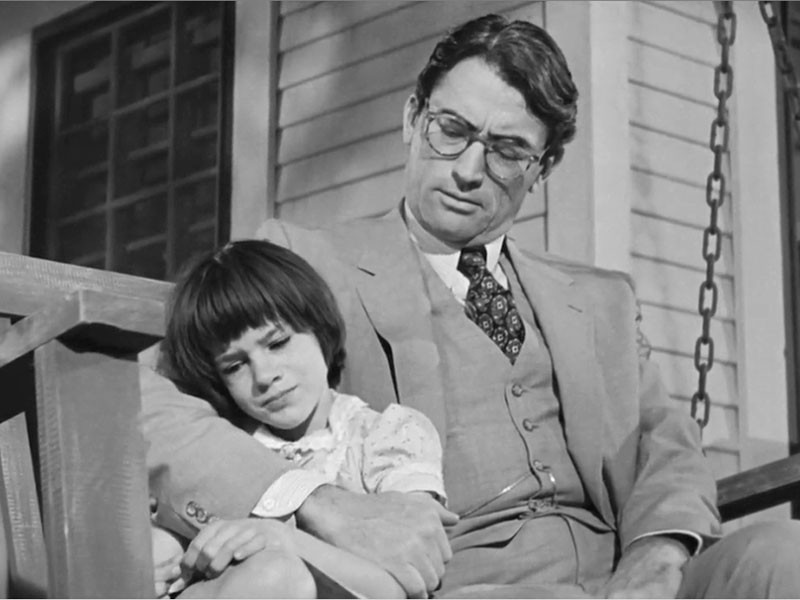
    And Gregory Peck plays one of his most memorable roles as defense attorney – and model father – Atticus Finch, in “To Kill a Mockingbird” (1962), based on Harper Lee’s beautiful “coming of age” novel. The book was awarded the Pulitzer Prize for Fiction in 1961. Peck won the Academy Award for Best Actor a year later. The score is one of the best-loved of Elmer Bernstein.

    You can try to rank the music, but Father’s Day generally yields a tie. (Yes, it’s a pun. Dads love puns.) Spare a thought for dear old Dad, this Friday evening, on “Picture Perfect,” now in syndication on KWAX, the radio station of the University of Oregon!

    See below for streaming information for both of my recorded shows.


    Keep in mind, KWAX is on the West Coast, so there’s a three-hour difference for the Trenton-Princeton area. Here are the respective air-times of my shows (with East Coast conversions in parentheses):

    PICTURE PERFECT, the movie music show – Friday on KWAX at 5:00 PACIFIC TIME (8:00 PM EDT)

    THE LOST CHORD, unusual and neglected rep – Saturday on KWAX at 4:00 PACIFIC TIME (7:00 PM EDT)

    Stream them here!

    https://kwax.uoregon.edu/

  • Movie Dads Father’s Day Special on WWFM

    Movie Dads Father’s Day Special on WWFM

    This week on “Picture Perfect,” we anticipate Father’s Day with an hour of music celebrating movie dads.

    Vito Corleone may not exactly have been a model father, though he did adhere to a particular code of ethics. Besides, what father doesn’t love “The Godfather” (1972)? “The Godfather” was recognized with 11 Academy Award nominations – of which it won three, including Best Picture. However, the awards were not without controversy.

    Of course, Brando sent Sacheen Littlefeather to the ceremony to decline his Oscar, in protest over Hollywood’s portrayal of Native Americans in television and film. Then there was the matter of the score, by Nino Rota. Rota was nominated, but the nomination was withdrawn when it was discovered that he had used one of the themes in a 1958 film called “Fortunella,” which starred Giulietta Masina and Alberto Sordi. In the end, the Academy turned around and gave Rota the award anyway, two years later, for “The Godfather Part II.”

    “Field of Dreams” (1989) is one of those rare films that has the ability to reduce manly men – even those without father issues – to a pool of tears. Phil Alden Robinson’s superior adaptation of W.P. Kinsella’s novel, “Shoeless Joe,” is a male wish-fulfillment fantasy, in which a man finds redemption, and a new understanding of his father, in the enchanted cornfields of America’s heartland. And it’s all brought about courtesy of America’s pastime, baseball. The evocative score is by James Horner, who rides on the shoulders of Aaron Copland. The composer seems particularly smitten with Copland’s “Our Town.”

    William Powell plays Clarence Day, the irascible paterfamilias of an upper class family of redheads, in the comedy “Life with Father” (1947), for which Max Steiner wrote the music.

    And Gregory Peck plays one of his most memorable roles as defense attorney – and model father – Atticus Finch, in “To Kill a Mockingbird” (1962), based on Harper Lee’s beautiful “coming of age” novel. The book was awarded the Pulitzer Prize for Fiction in 1961. Peck won the Academy Award for Best Actor a year later. The score is one of the best-loved of Elmer Bernstein.

    You can try to rank the music, but Father’s Day generally yields a tie. (Yes, it’s a pun. Dads love puns.) Spare a thought for dear old Dad, this Friday evening at 6:00 EDT, on WWFM – The Classical Network and wwfm.org.

  • Thanksgiving Movies Celebrating American Ideals

    Thanksgiving Movies Celebrating American Ideals

    There’s more to Thanksgiving than just turkey and football. This week on “Picture Perfect,” we count our blessings and aspire to do better, with music from movies reflective of what’s best in human nature and most admirable in the American character.

    Aaron Copland’s work on “The Cummington Story” (1945), a semi-documentary produced by the Office of War Information, underscores the gradual acceptance of European war refugees into a cautious but fundamentally decent New England community. The music is pure Americana, with some of the material later finding its way into Copland’s Clarinet Concerto and “Down a Country Lane.”

    “Field of Dreams” (1989) is one of those rare films that has the ability to reduce manly men – even those without father issues – to a pool of tears. Phil Alden Robinson’s superior adaptation of W.P. Kinsella’s novel, “Shoeless Joe,” is a male wish-fulfillment fantasy, in which a man finds redemption, and a new understanding of his father, in the enchanted cornfields of America’s heartland. And it’s all brought about courtesy of America’s pastime, baseball. The evocative score, much indebted to Copland, is by James Horner.

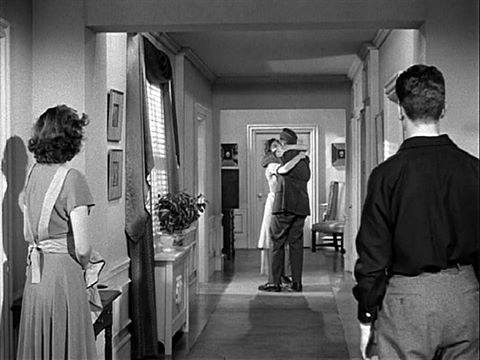
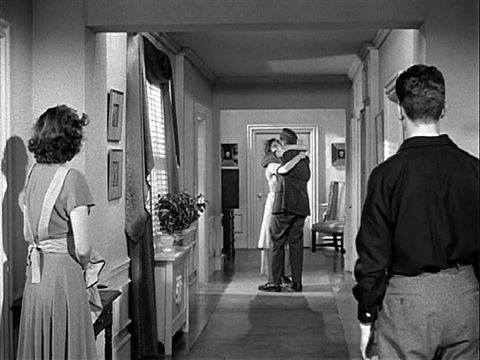
    “The Best Years of Our Lives” (1946) is one of the great American classics. This touching film tells the tale of the three WWII veterans struggling to readjust to civilian life. It isn’t easy, but with the support of family and friends, there’s plenty of hope for the future. Hugo Friedhofer wrote the Academy Award-winning score, earning the film one of its seven Oscars. The orchestrations were by Copland protégé (and composer of “The Big Country”) Jerome Moross.

    Finally, Daniel Day-Lewis elevated Steven Spielberg’s “Lincoln” (2012) to greatness with one of the most uncanny performances ever captured on film. Day-Lewis’ gentle but shrewd Man of Destiny would go to any lengths to hold the country together. John Williams tapped into America’s proud musical heritage, clearly influenced by Copland and Ives, to create a score of stirring nobility.

    I hope you’ll join me as we give thanks for family, community and country on “Picture Perfect,” music for the movies, this Friday evening at 6:00 EST, on WWFM – The Classical Network and at wwfm.org.


    And thank you, YouTube, for making “The Cummington Stoy” available online!

    Watching it again, it’s interesting to reflect on what an influence, for good or ill, media and government have had in shaping the popular consciousness.

  • Thanksgiving Movies Family Community Country

    Thanksgiving Movies Family Community Country

    This week on “Picture Perfect,” with Thanksgiving right around the corner, the focus is on movies that celebrate family, community and country.

    In 1945, Aaron Copland scored a short semi-documentary for the Office of War Information. “The Cummington Story” relates the gradual acceptance of European war refugees into a cautious but fundamentally decent New England community. The score is pure Americana, with some of the material later finding its way into Copland’s Clarinet Concerto and “Down a Country Lane.”

    Thank you, amazing YouTube, for making the complete film available online!

    “Field of Dreams,” from 1989, is one of those rare films that has the ability to reduce manly men – even those without father issues – to a pool of tears. Phil Alden Robinson’s superior adaptation of W.P. Kinsella’s novel, “Shoeless Joe,” is a male wish-fulfillment fantasy, in which a man finds redemption, and a new understanding of his father, in the enchanted cornfields of America’s heartland. And it’s all brought about courtesy of America’s pastime, baseball. The evocative score is by James Horner.

    “The Best Years of Our Lives,” from 1946, is one of the great American classics. This touching film tells the tale of the three WWII veterans struggling to readjust to civilian life. It isn’t easy, but with the support of family and friends, there’s plenty of hope for the future. Hugo Friedhofer wrote the Academy Award-winning score, earning the film one of its seven Oscars. The orchestrations were by Copland protégé (and composer of “The Big Country”) Jerome Moross.

    Finally, from 2012, Daniel Day-Lewis elevated Steven Spielberg’s “Lincoln” to greatness with one of the most amazing performances ever captured on film. Day-Lewis’ gentle but shrewd Man of Destiny would go to any lengths to hold the country together. John Williams tapped into America’s proud musical heritage, clearly influenced by Copland and Ives, to create a score of stirring nobility.

    I hope you’ll join me as we give thanks for family, community and country on “Picture Perfect,” music for the movies, this Friday evening at 6 EST, on WWFM – The Classical Network and at wwfm.org.

Tag Cloud

Aaron Copland (92) Beethoven (95) Composer (114) Film Music (120) Film Score (143) Film Scores (255) Halloween (94) John Williams (185) KWAX (229) Leonard Bernstein (100) Marlboro Music Festival (125) Movie Music (135) Opera (198) Philadelphia Orchestra (88) Picture Perfect (174) Princeton Symphony Orchestra (106) Radio (87) Ralph Vaughan Williams (85) Ross Amico (244) Roy's Tie-Dye Sci-Fi Corner (290) The Classical Network (101) The Lost Chord (268) Vaughan Williams (103) WPRB (396) WWFM (881)

DON’T MISS A BEAT

Receive a weekly digest every Sunday at noon by signing up here


RECENT POSTS